Artwork
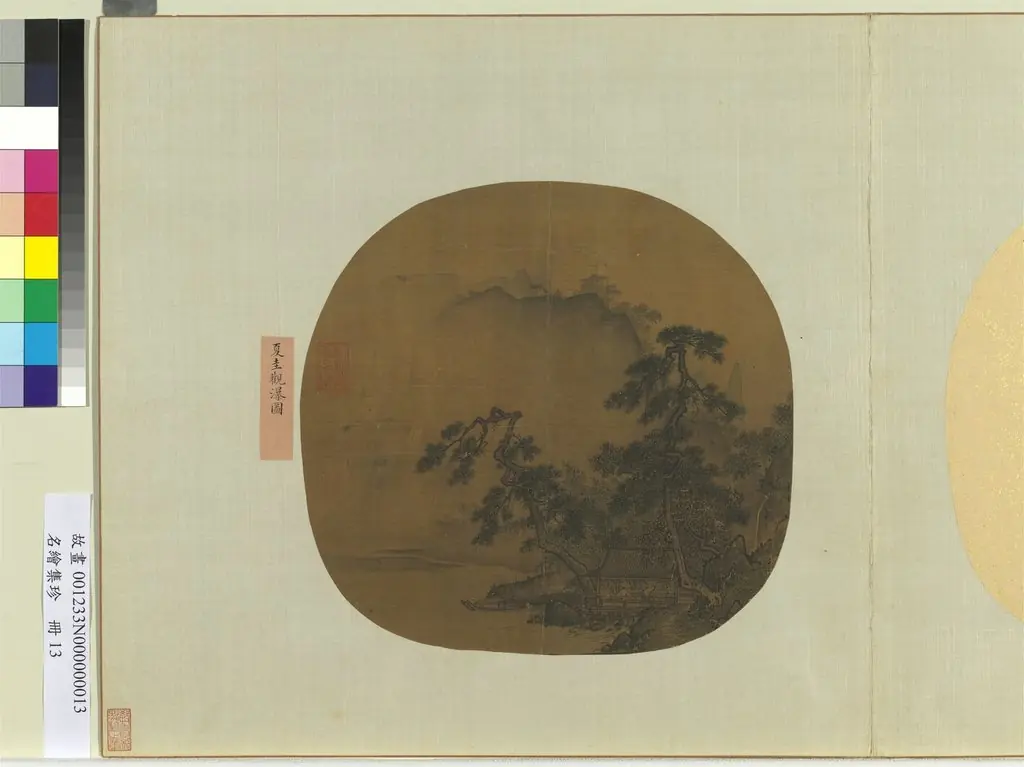
名繪集珍 冊 宋夏珪松厓客話
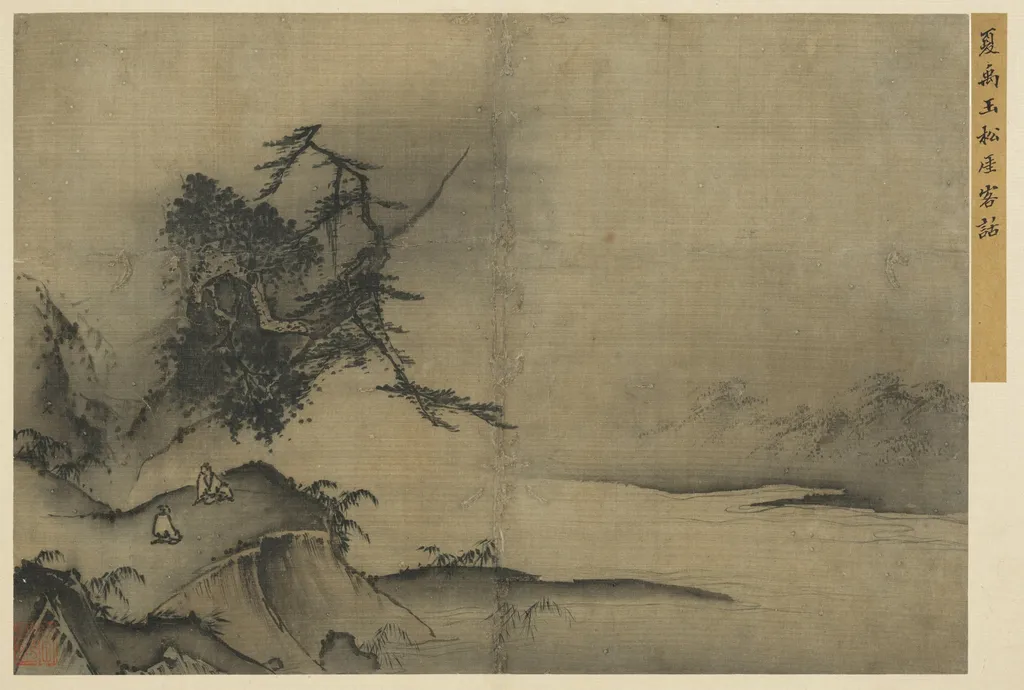
名繪集珍 冊 宋夏珪松厓客話 is an unspecified painting by the Chinese Orthodox School artist Xia Gui. It dates from 1219 and is held in the collection of the National Palace Museum.
About this work
Overview
' It belongs to the Southern Song dynasty tradition of ink landscape painting, where natural elements are rendered with restrained elegance.
This silk painting, attributed to Xia Gui and dated around 1219, is part of a curated album titled 'Collection of Masterful Paintings.' It belongs to the Southern Song dynasty tradition of ink landscape painting, where natural elements are rendered with restrained elegance. The work is preserved in the National Palace Museum, Taipei, as a representative example of early 13th-century Chinese ink aesthetics.
Subject & Meaning
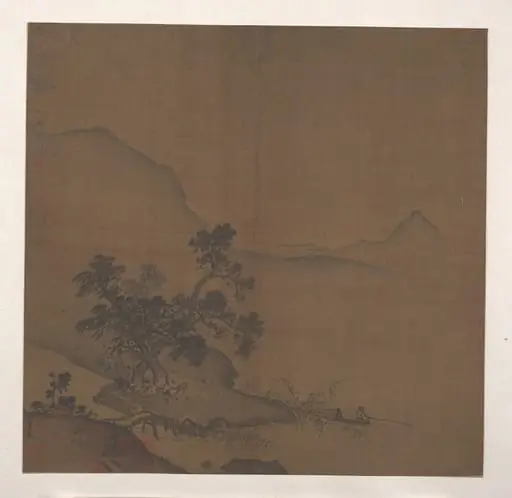
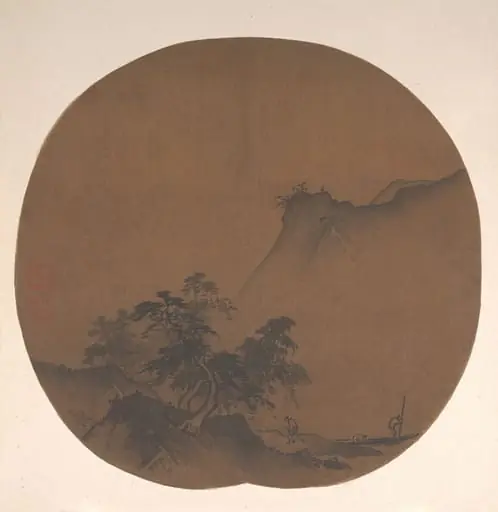
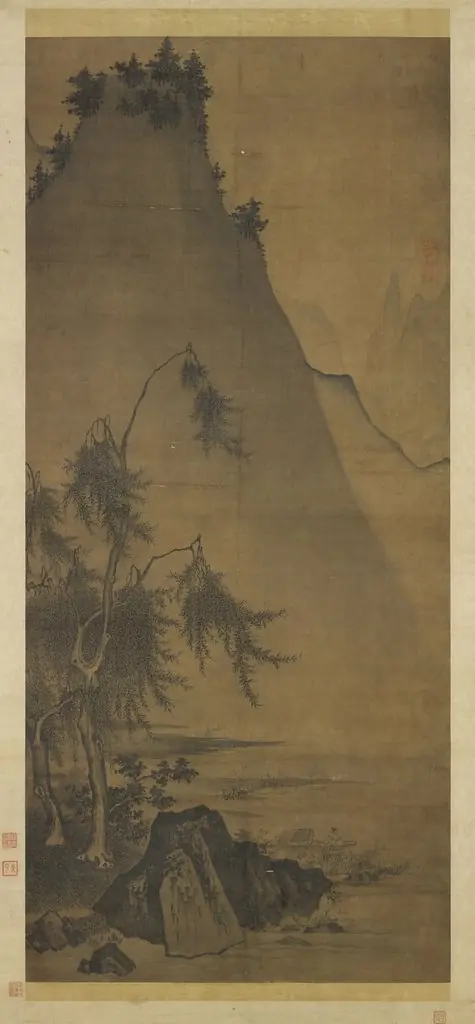
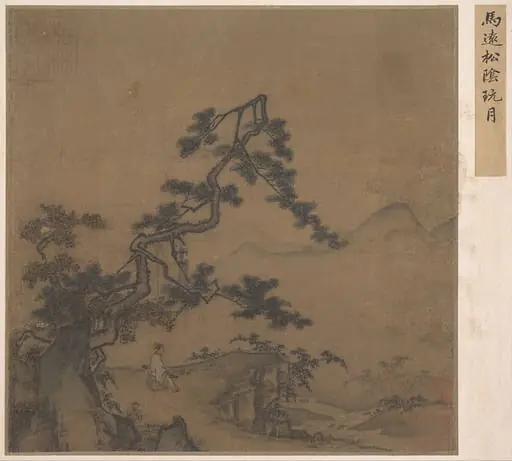
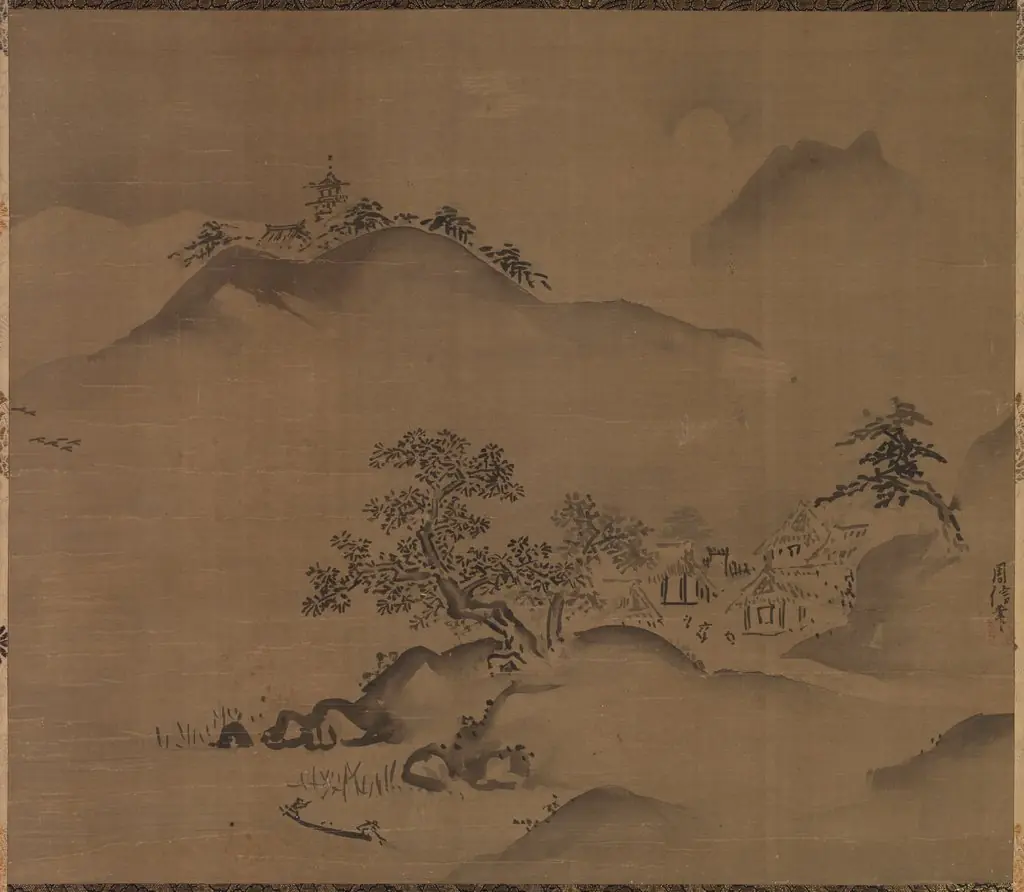
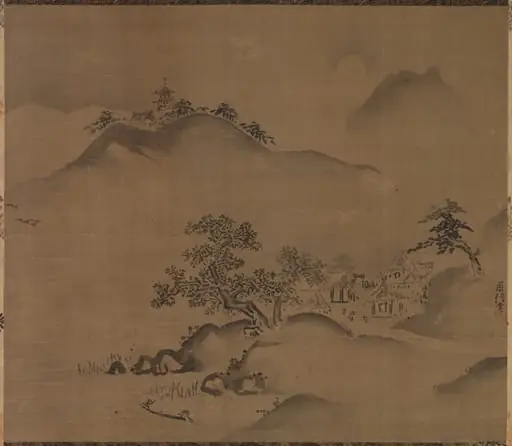
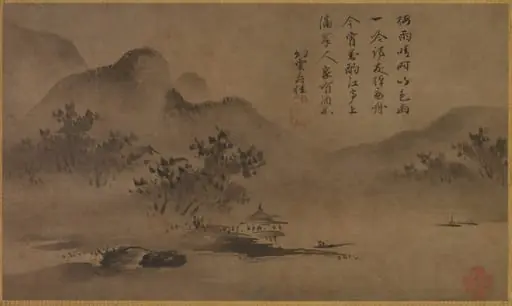
The scene presents a quiet mountainscape with a distant figure seated on a slope, suggesting contemplation or solitude. A lone pine on the left anchors the composition, while misty water in the foreground reflects the hazy peaks. The imagery evokes a Daoist ideal of harmony between human presence and the vastness of nature, emphasizing stillness over narrative.
Technique & Style
Xia Gui employs wet brushwork and graded ink washes to suggest depth and atmosphere. The silk support allows for subtle tonal transitions, enhancing the softness of distant forms. Sparse, deliberate strokes define the tree and figure, while the mountain contours are rendered with minimal line, relying on ink density to convey mass and recession.
History & Provenance
The painting was likely created during Xia Gui’s active years at the Southern Song imperial painting academy. It entered the imperial collection and remained in royal hands through successive dynasties. After the fall of the Qing, it was transferred to the National Palace Museum in Taipei, where it continues to be studied as a key work of Southern Song ink painting.
Context
Produced during a period when Southern Song artists favored intimate, atmospheric landscapes over grandiose compositions, this work reflects a shift toward lyrical minimalism. Artists like Xia Gui and Ma Yuan developed the 'one-corner' style, leaving much of the surface empty to imply space and silence, aligning with Chan Buddhist and Daoist sensibilities of the era.
Legacy
Xia Gui’s approach influenced later generations of East Asian painters, particularly in Japan, where his ink techniques were emulated in Zen monastic art. His emphasis on suggestion over detail became a model for expressive landscape traditions. This album leaf remains a reference point for understanding the evolution of ink painting beyond literal representation.
Own this work as a print
Artist & collection