Artwork
清 蕭雲從 山水圖 冊|Landscapes
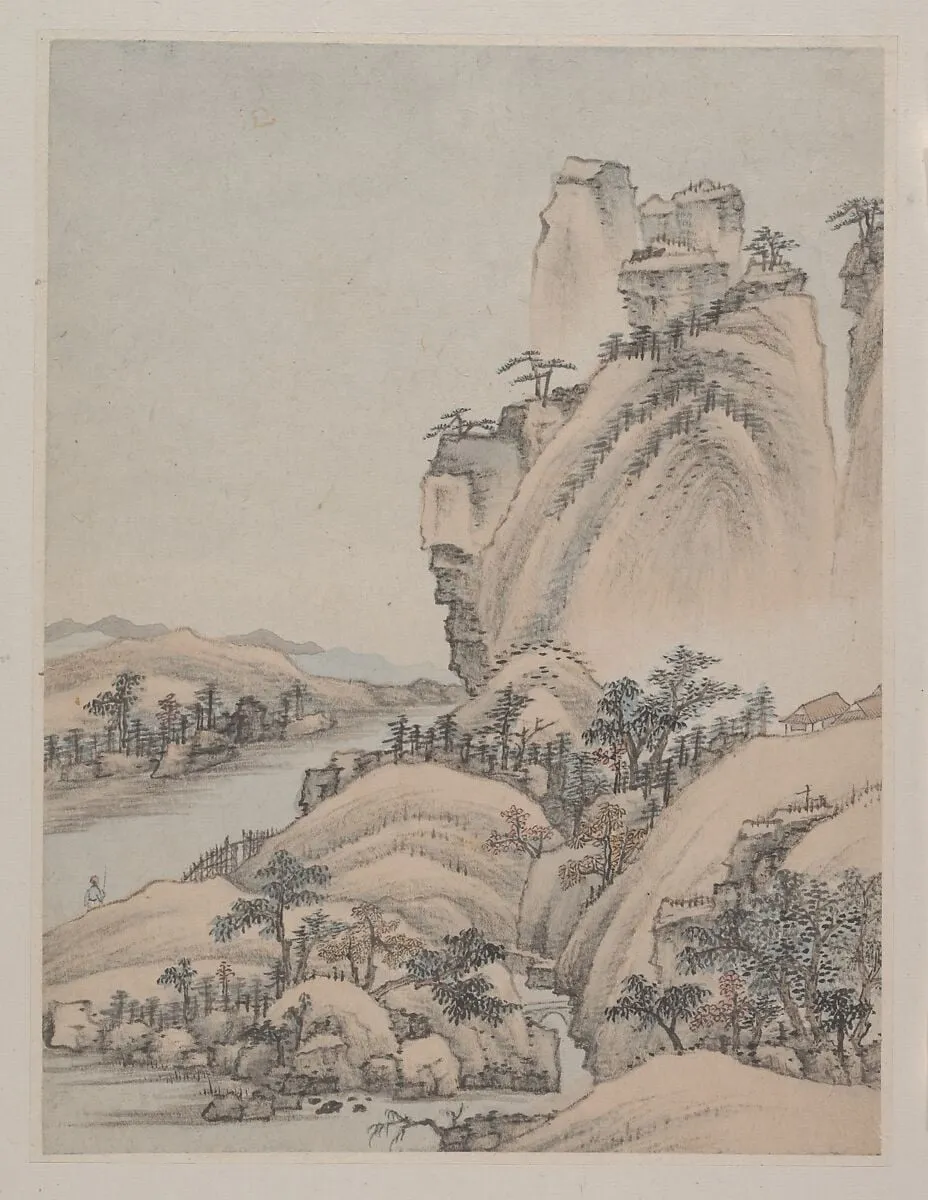
清 蕭雲從 山水圖 冊|Landscapes is an ink painting by the Baroque artist Xiao Yuncong. It dates from 1668 and is held in the collection of the Metropolitan Museum of Art.
- Accession no.
- 2003.394a–i
- Credit line
- Gift of Florence and Herbert Irving Collection, in memory of Douglas Dillon, 2003
About this work
If you like these, search for the technique cross-hatching, it’s how later artists built texture with tiny crisscrossed lines.
You see eight small ink-and-color scenes of misty mountains, winding rivers, and tiny scholars in pavilions.
Xiao Yuncong painted these in 1668, right after the Ming dynasty fell. The quiet brushstrokes feel like a private diary, no grand battles, just a person missing home. Look at the way the ink bleeds into wet paper: it’s called “broken ink,” and it makes the rocks look soft, almost alive.
If you like these, search for the technique cross-hatching, it’s how later artists built texture with tiny crisscrossed lines.
Subject & Meaning
Xiao Yuncong’s 1668 album of eight paintings, created in China, presents a river as the central visual element within a traditional landscape composition; the work belongs to the landscape painting genre and was produced for an album format. The river is identified in the cataloguing data of both the internal corpus and Wikidata as the depicted subject, linking the piece to the broader tradition of Chinese landscape imagery. The painting is part of the Metropolitan Museum of Art’s collection, underscoring its significance within museum holdings of Chinese art.
Technique & Style
Xiao Yuncong’s 1668 album of eight paintings, titled 清 蕭雲從 山水圖 冊, is executed in ink and polychrome on paper sheets that function as a portable support. The work belongs to the Chinese landscape genre and portrays a river scene, reflecting the artist’s mastery of ink wash and subtle color washes. As a hand‑bound album, the pieces are intended for intimate handling and sequential viewing, a format typical of Qing‑period scholarly collections.
The formal composition employs layered brushstrokes, varying tonal contrasts, and a balanced spatial arrangement that emphasizes atmospheric depth. The Metropolitan Museum of Art’s catalogue records the dimensions (23.2 × 17.1 cm per leaf) and confirms the medium as ink with color on paper.
History & Provenance
The album of eight landscape paintings by Xiao Yuncong, dated 1668, is recorded with an inception year aligning to the Qing dynasty. The work entered the collection of the Metropolitan Museum of Art, where it is listed under Xiao Yuncong’s oeuvre. The album’s small format and refined execution suggest it was produced as a private commission or for intimate circulation among connoisseurs rather than for a public context.
The album of eight landscapes by Xiao Yuncong, dated to 1668, is held in the collection of the Metropolitan Museum of Art. The work, classified as ink and color on paper, depicts river scenes and measures 23.2 cm in height by 17.1 cm in width. While the sources confirm the artwork's current location within the museum's holdings and its creation date, they do not provide specific accession numbers, inventory codes, or a record of past exhibitions featuring this piece.
Legacy
Xiao Yuncong’s 1668 album of eight ink and colored landscape paintings, recorded in, is classified as a Qing dynasty river scene and held in the Metropolitan Museum of Art. Its presence in a leading Western museum has contributed to scholarly attention on Qing landscape traditions, positioning the work as a reference point for studies of Chinese artistic exchange. The album’s detailed depiction of natural forms and its technical mastery are cited in art historical literature as influencing later interpretations of Chinese landscape aesthetics, thereby cementing its reputation as a seminal example within both Chinese and international art discourse.
Overview
Created in 1668, this album of eight landscapes by Xiao Yuncong (1596–1673) exemplifies the literati painting tradition of the early Qing dynasty. Executed in ink and color on paper, the work depicts a series of intimate scenes featuring mist-shrouded mountains, meandering rivers, and diminutive figures within pavilions. The composition relies on delicate, restrained brushwork to evoke a sense of quietude and seclusion, characteristic of the artist's response to the political upheaval following the fall of the Ming dynasty.
Rather than depicting grand historical narratives or battles, these pages function as a visual meditation on displacement and nostalgia, reflecting the sentiments of many scholar-officials who refused to serve the new regime. The album format allows for a sequential exploration of varied topographical moods, unified by a consistent atmospheric perspective and a palette that balances subtle earth tones with soft washes. This work stands as a significant example of Xiao Yuncong's mature style, demonstrating his ability to synthesize classical references with personal expression during a period of profound cultural transition in Chinese art history.
Context
Created in 1668, this album emerged shortly after the collapse of the Ming dynasty in 1644. This period of dynastic transition often led artists, particularly those loyal to the fallen Ming, to withdraw from official life and express their sentiments through landscape painting. Xiao Yuncong's contemplative scenes can be understood within this historical context of personal introspection amidst political upheaval.
Artist & collection


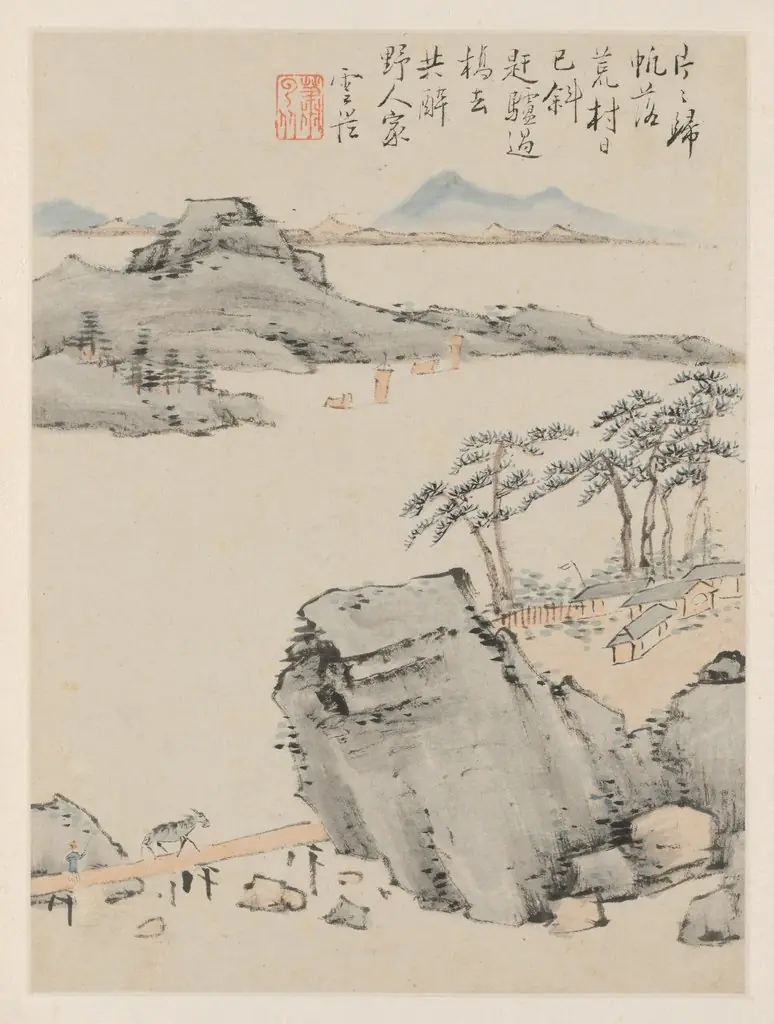
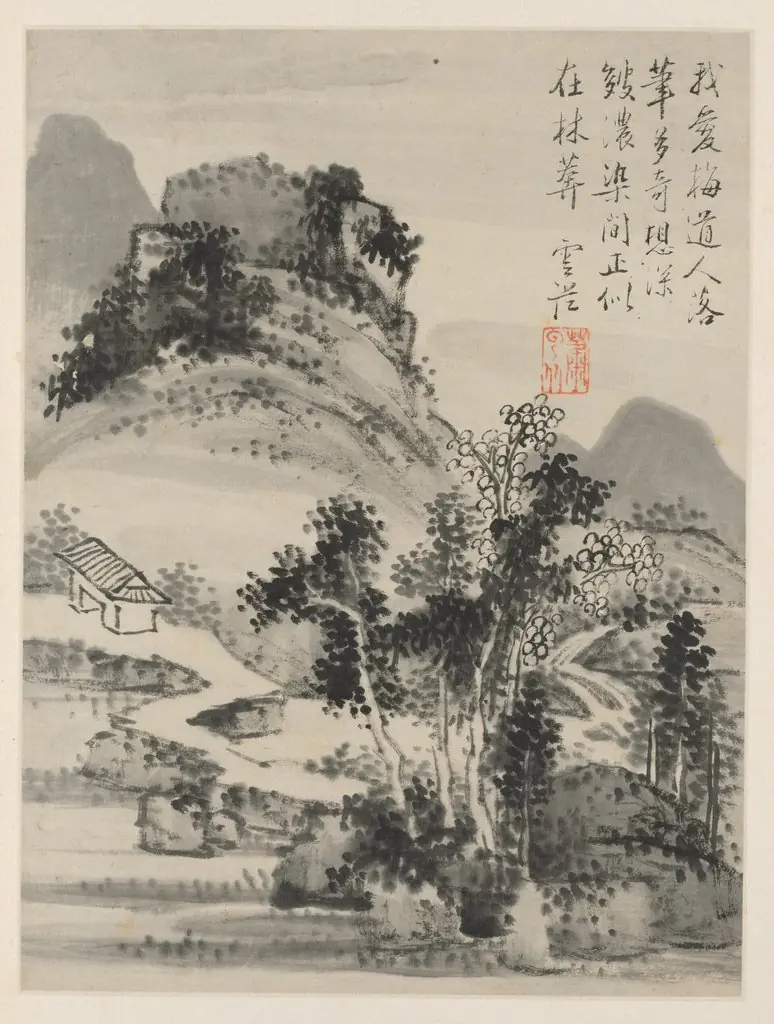 Album of Seasonal Landscapes, Leaf D (previous leaf 2)
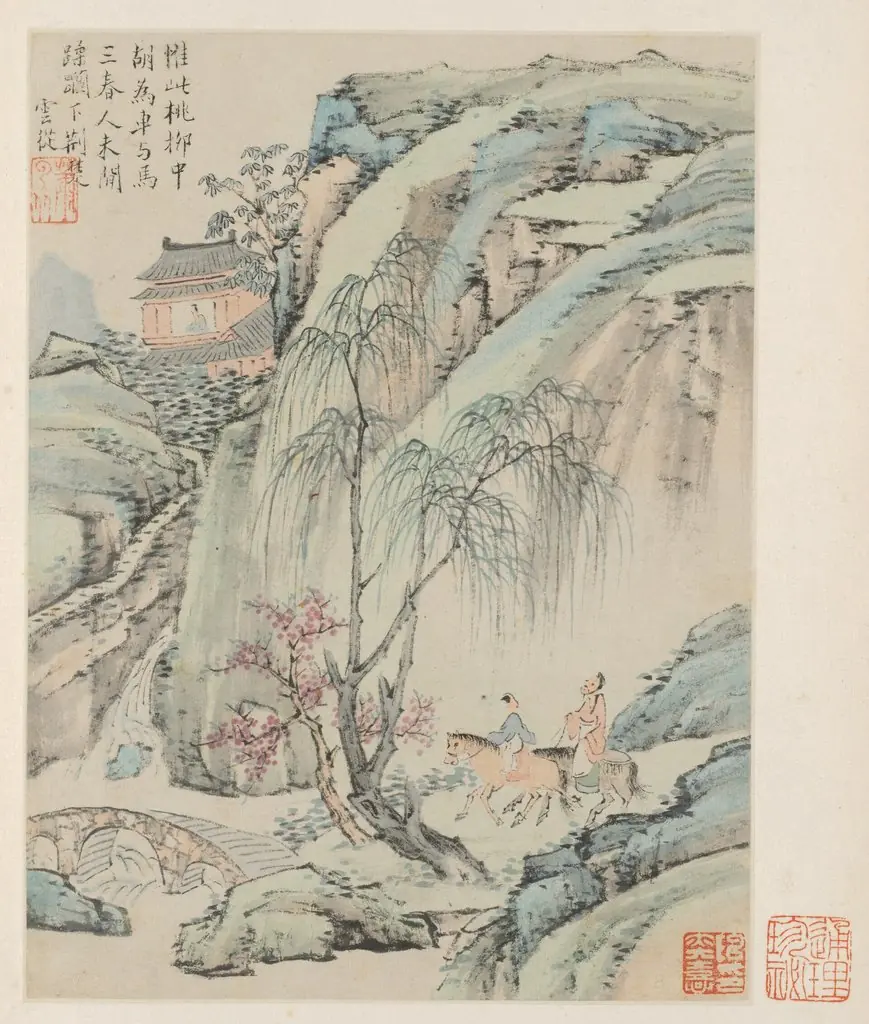 Album of Seasonal Landscapes, Leaf B (previous leaf 1)
- Album of Seasonal Landscapes, Leaf C (previous leaf 6)
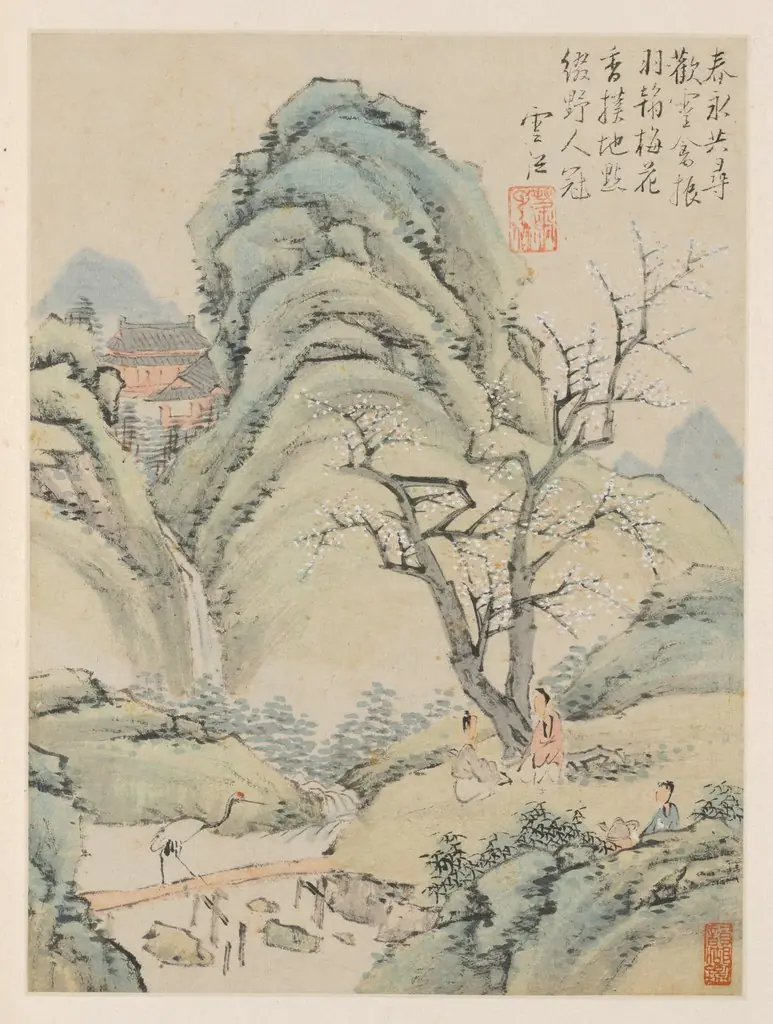 Album of Seasonal Landscapes, Leaf A (previous leaf 4)
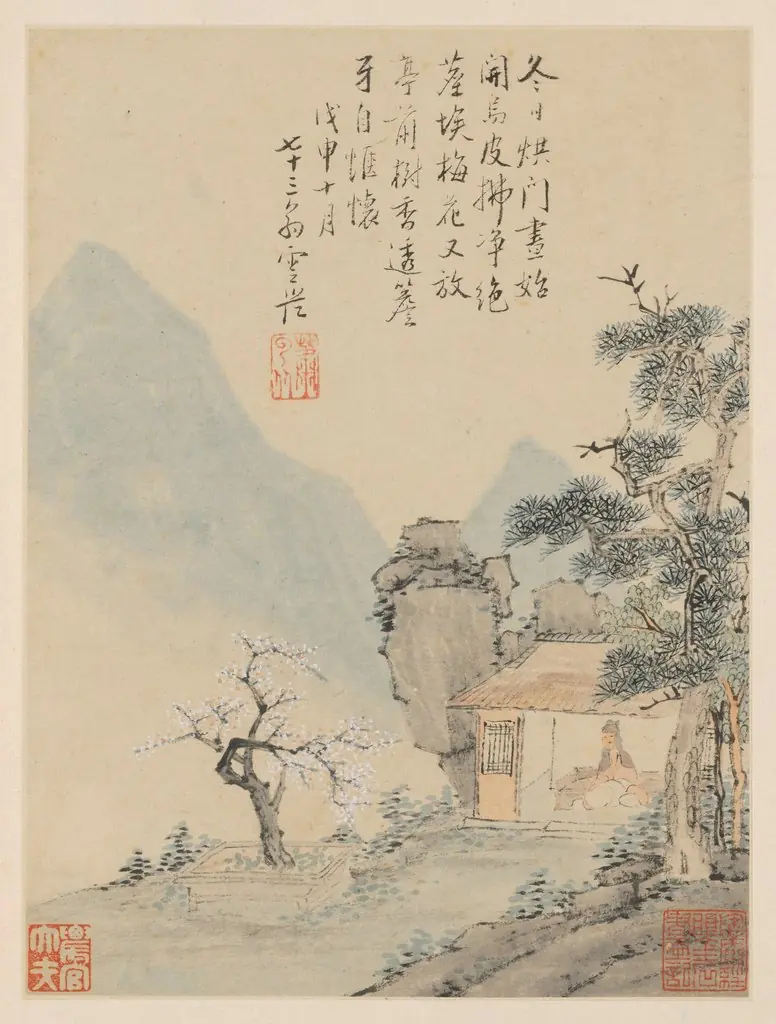 Album of Seasonal Landscapes, Leaf H (previous leaf 8)
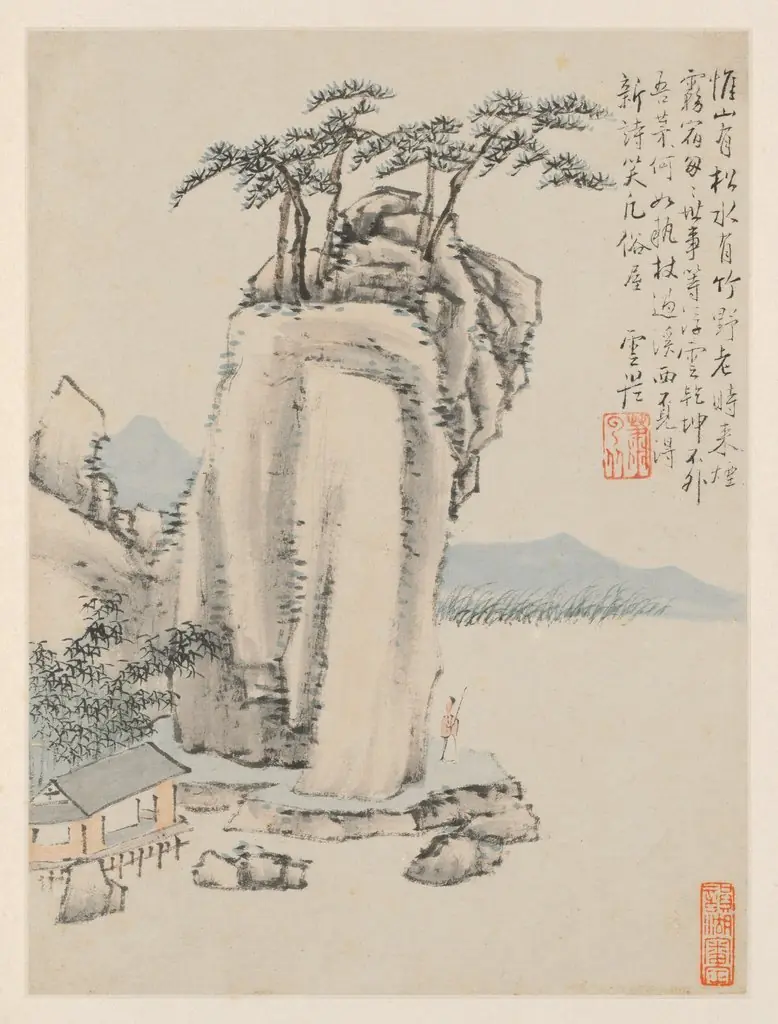 Album of Seasonal Landscapes, Leaf G (previous leaf 7)
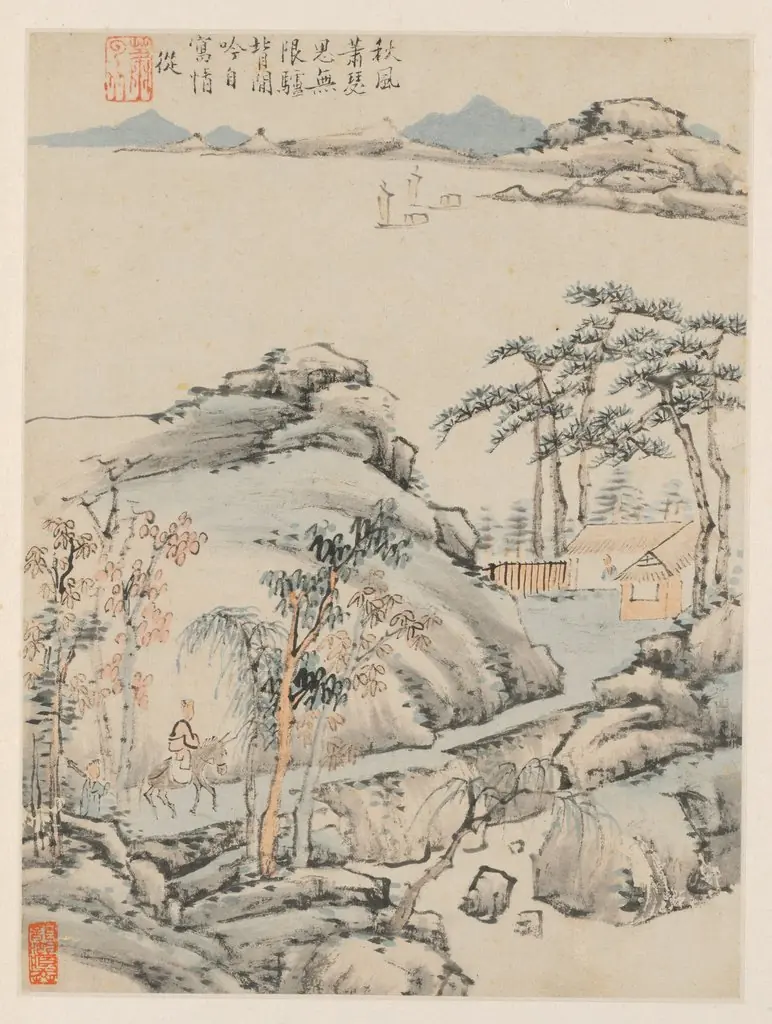 Album of Seasonal Landscapes, Leaf F (previous leaf 5)
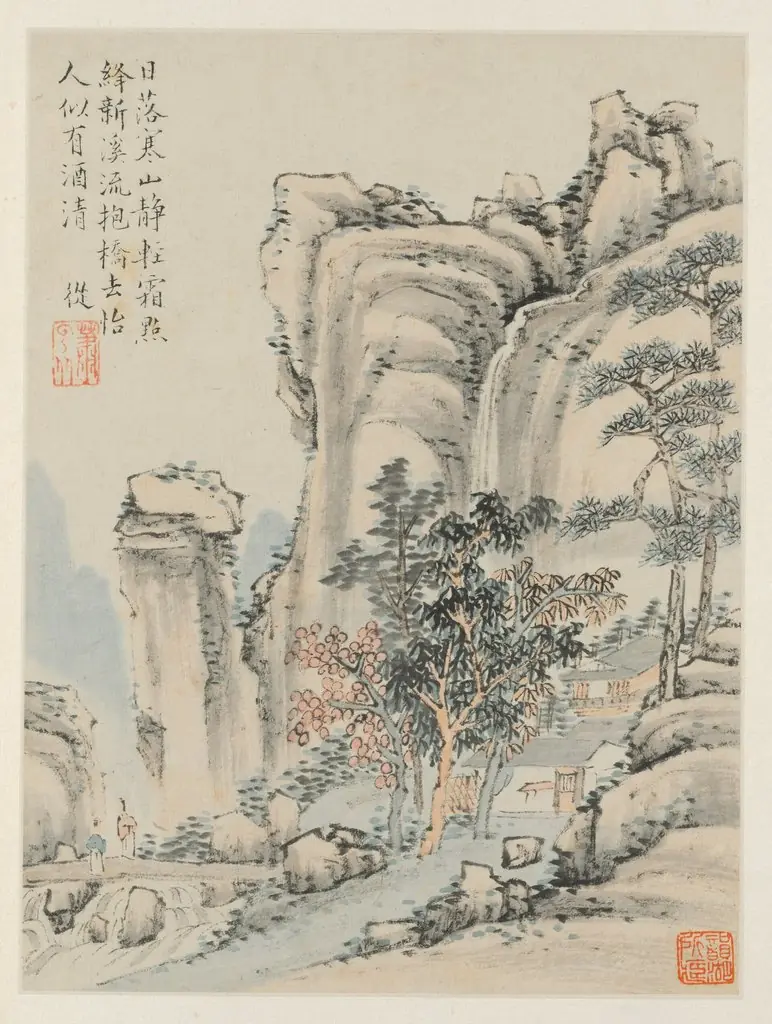 Album of Seasonal Landscapes, Leaf E (previous leaf 3)
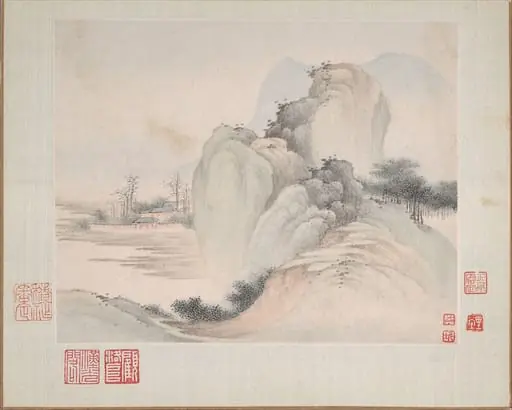 清 樊圻 為玉翁作山水圖 冊|Landscapes Painted for Yuweng
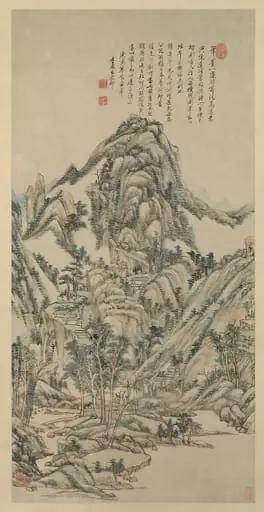 清 王原祁 為瞻亭畫七發妙劑圖 軸|Landscape for Zhanting
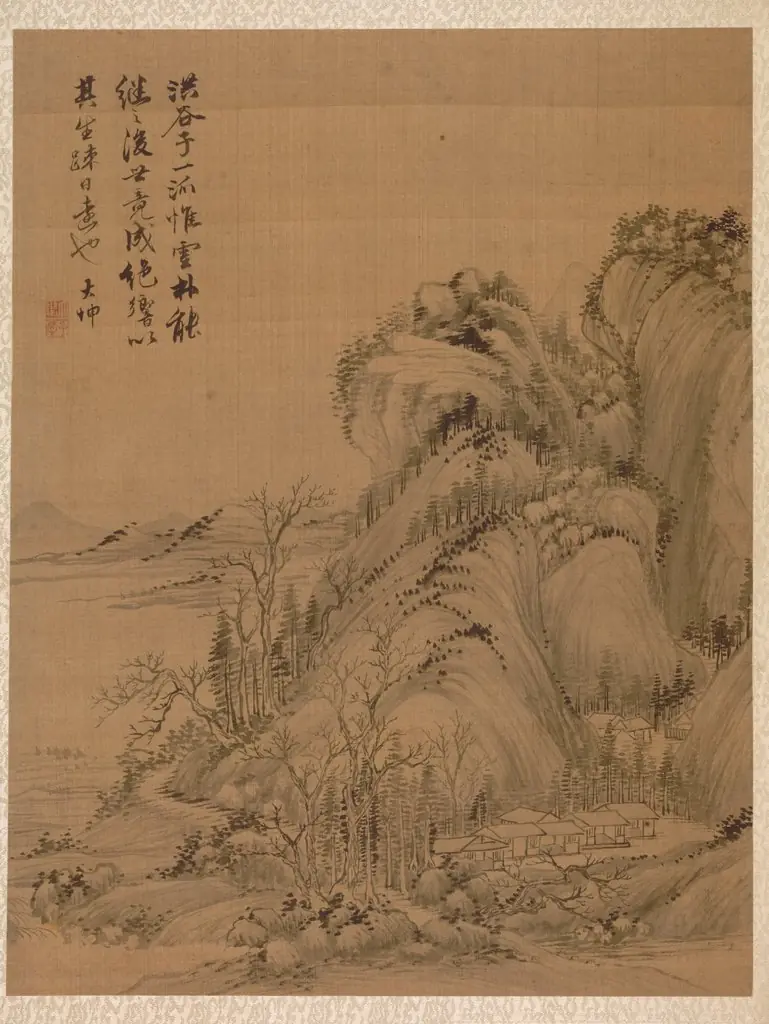 Landscape in the Style of Ching Hao
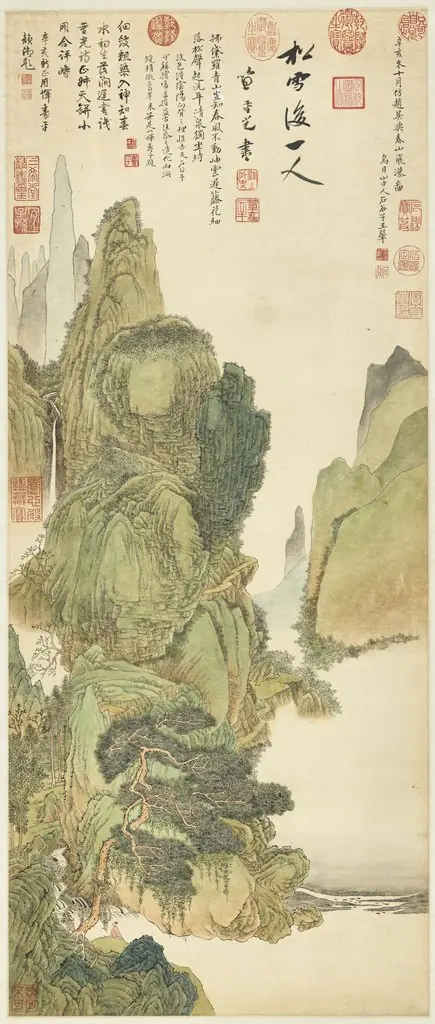 Cascading Water in the Spring Mountains after Zhao Mengfu
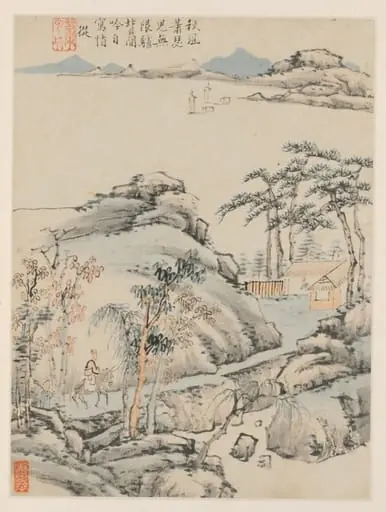 Album of Seasonal Landscapes, Leaf F (previous leaf 5)
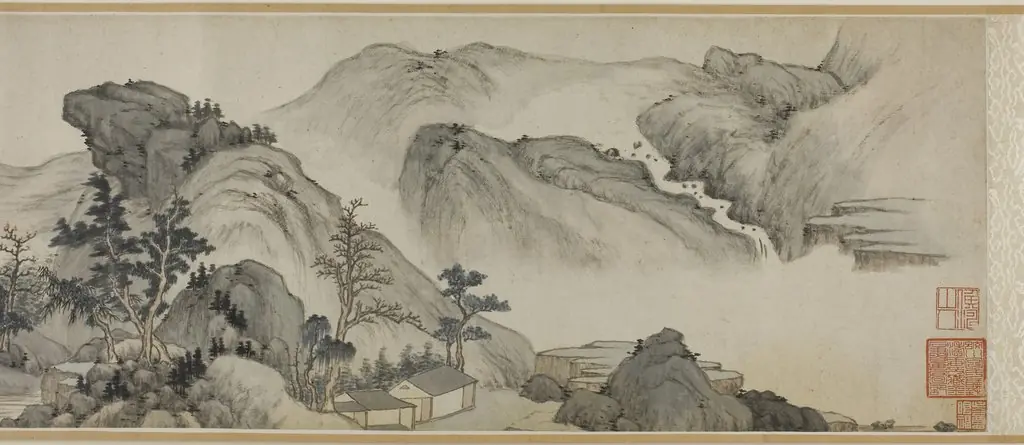 Recluse Dwellings in the Autumn Mountains
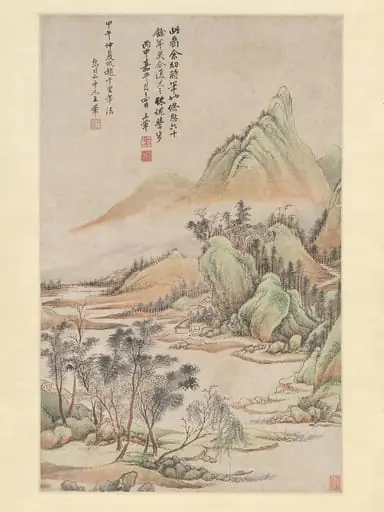 倣趙伯駒山水圖 軸|Landscape in the Style of Zhao Boju (Fang Zhao Boju shanshui)
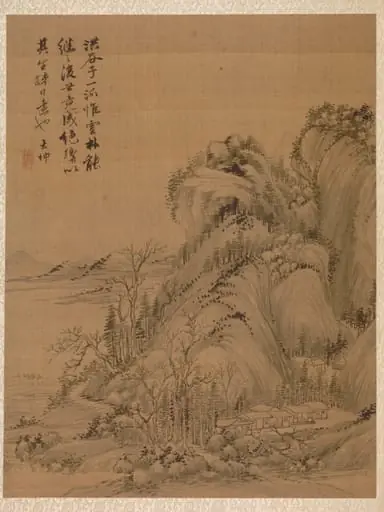 Landscape in the Style of Ching Hao
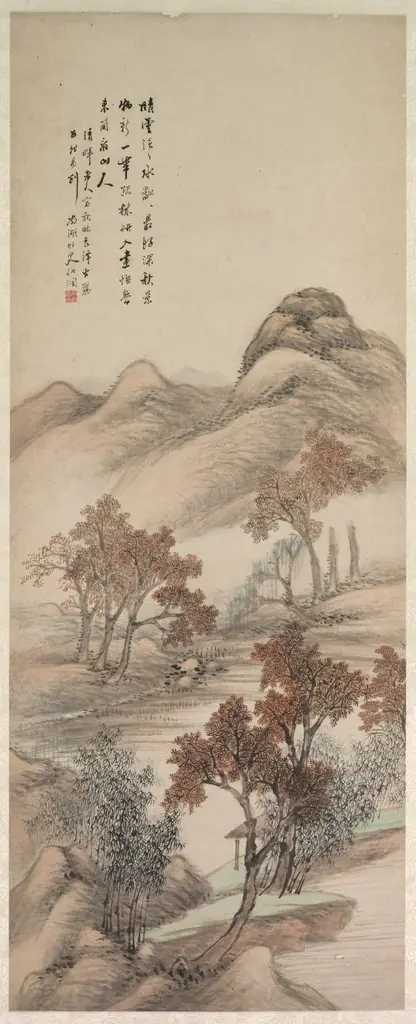 Autumn Landscape
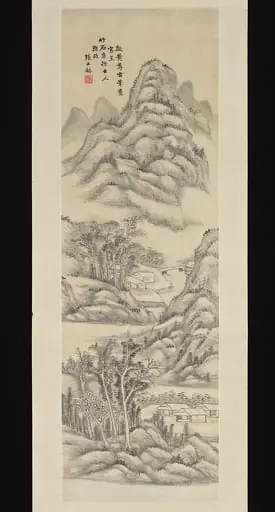 清 張上龢 山水 軸|Landscape