Artwork
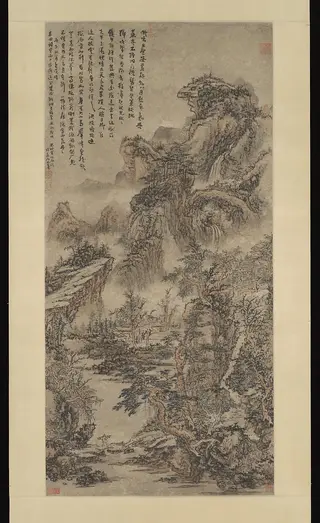
清 王原祁 為瞻亭畫七發妙劑圖 軸|Landscape for Zhanting
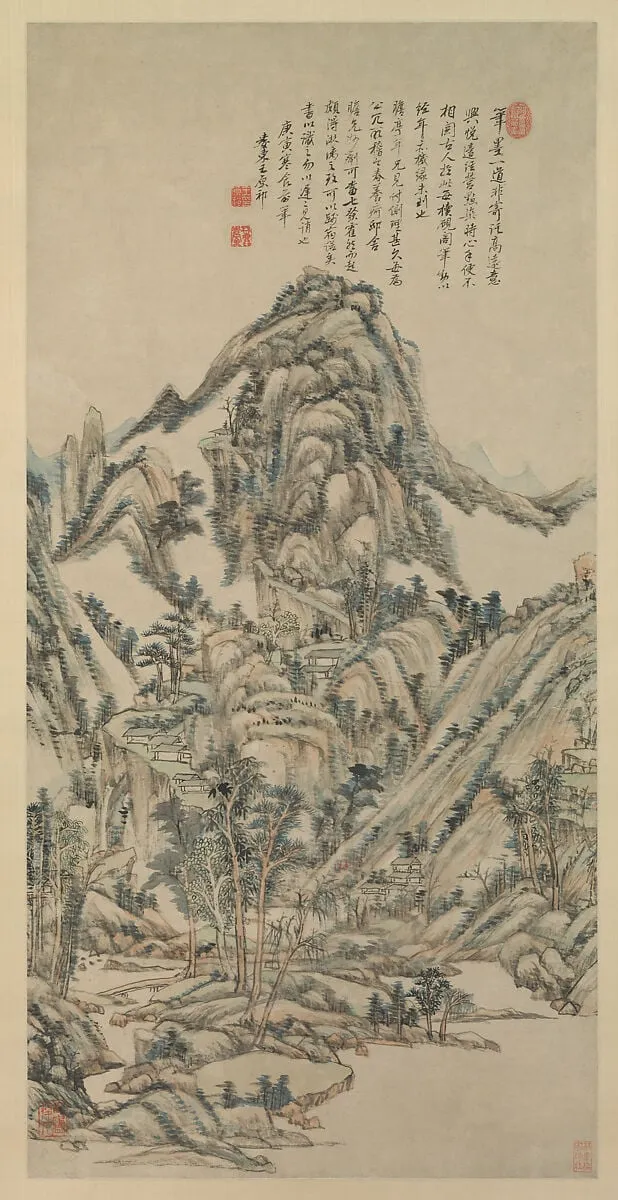
清 王原祁 為瞻亭畫七發妙劑圖 軸|Landscape for Zhanting is an ink painting by the Baroque artist Wang Yuanqi. It dates from 1710 and is held in the collection of the Metropolitan Museum of Art.
- Accession no.
- 2011.574
- Credit line
- Gift of Marie-Hélène Weill and Guy A. Weill, 2011
About this work
Subject & Meaning
The composition serves as a visual tribute to the natural world, consistent with the artist's focus on mountain subjects during the Qing dynasty.
Created in 1710, this hanging scroll by Wang Yuanqi is fundamentally a landscape painting that depicts mountains. The work's title, "Landscape for Zhanting," indicates it was executed for a specific patron or location named Zhanting. While the piece is classified within the landscape genre, the provided documentation does not elaborate on specific literary allusions, detailed iconographic programs, or complex symbolic narratives beyond its primary representation of mountainous terrain.
The composition serves as a visual tribute to the natural world, consistent with the artist's focus on mountain subjects during the Qing dynasty. The painting currently resides in the collection of the Metropolitan Museum of Art, where it is recognized as a significant example of early eighteenth-century Chinese landscape art.
Technique & Style
The painting is a hanging scroll rendered in ink and color on paper, a format typical of Qing dynasty landscape works. Executed by Wang Yuanqi in 1710 in China, it portrays a stylized mountain scene characteristic of the period’s landscape genre. The composition employs layered ink washes combined with subtle pigment washes to suggest depth, while the brushwork remains restrained, allowing the natural contours of the terrain to dominate.
The work is classified as a landscape painting and is presently housed in the Metropolitan Museum of Art.
History & Provenance
The hanging scroll titled "Landscape for Zhanting" was painted in 1710 in China by the Qing dynasty artist Wang Yuanqi. Executed in ink and color on paper, the work depicts a mountain landscape and is classified as a landscape painting. According to the Metropolitan Museum of Art’s catalogue, the scroll entered the museum’s collection, making it the current owner.
Its creation history is anchored to the date 1710 and the place of production in China, while the provenance traces from its making to acquisition by the Metropolitan Museum of Art, where it remains on display.
The hanging scroll Landscape for Zhanting by Wang Yuanqi, dated 1710, is held in the collection of the Metropolitan Museum of Art, as recorded in its institutional and Wikidata documentation. The work is catalogued as a painting within the museum's holdings, classified as a landscape executed in ink and color on paper. No accession number, specific gallery location, or prior exhibition history is recorded in the available sources.
Context
Wang Yuanqi’s 1710 hanging scroll, titled Landscape for Zhanting, exemplifies Qing dynasty landscape painting through its delicate ink and color washes and its focus on a solitary mountain motif. Scholars have highlighted the work as a representative example of the artist’s mature style, which blended traditional Southern school techniques with personal expressive brushwork, positioning it within broader discussions of Qing artistic exchange. Its inclusion in the Metropolitan Museum of Art’s collection underscores its significance as a cross‑cultural artifact, illustrating how 18th‑century Chinese painters engaged with both local patronage and international museum narratives.
Overview
Painted in 1710 by Wang Yuanqi, a leading master of the Orthodox School during the Qing Dynasty, this hanging scroll titled 'Landscape for Zhanting' (Qing Wang Yuanqi Wei Zhanting Hua Qi Fa Miao Ji Tu) was created as a gift for a friend suffering from illness. The work functions as a visual prescription, with its title translating to 'Seven Stimuli for a Wonderful Remedy,' suggesting the landscape itself serves as curative medicine. Executed in ink and light color on paper, the composition features towering mountains, swirling mist, and diminutive trees arranged to evoke a serene, dawn-like atmosphere.
Wang employs his signature dry, layered brushwork, often described as 'flying white,' where strokes appear light and sketch-like yet build substantial, textured rock forms. This technique reflects his deep engagement with the Northern Song master Huang Gongwang, whom he revered. The painting exemplifies Wang Yuanqi's late style, characterized by a complex, abstracted structure that prioritizes rhythmic brush energy and theoretical depth over literal representation.
It stands as a significant example of literati landscape painting, where the act of viewing is intended to harmonize the viewer's spirit and restore health through the contemplation of nature's enduring order.
Artist & collection


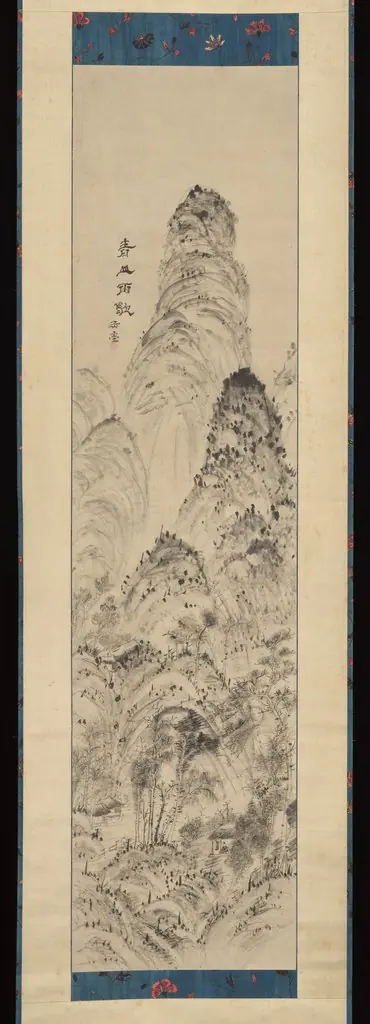 Green Mountains as the Rain Ceases
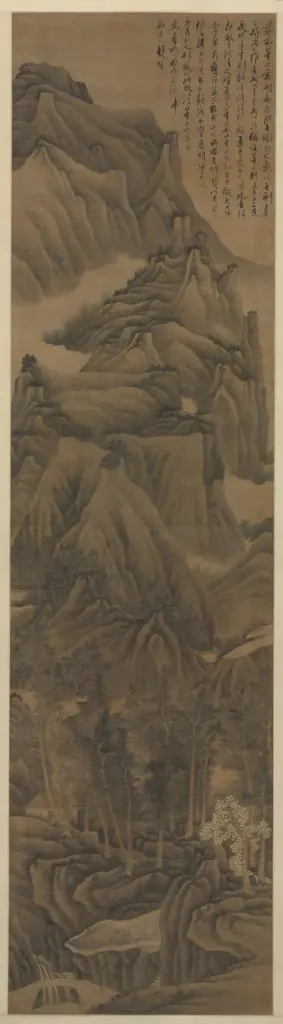 Landscape in the Style of Dong Yuan and Juran
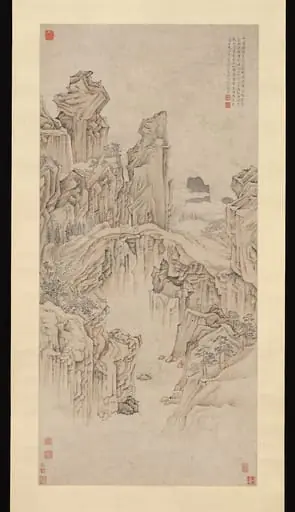 Untitled
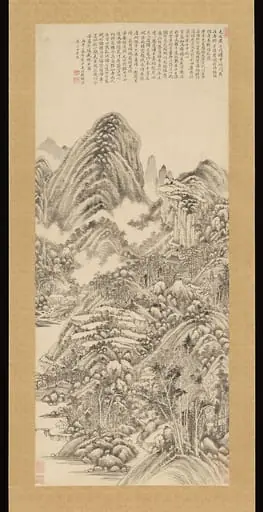 清 王時敏 仿黃公望山水圖 軸 絹本|Landscape in the style of Huang Gongwang
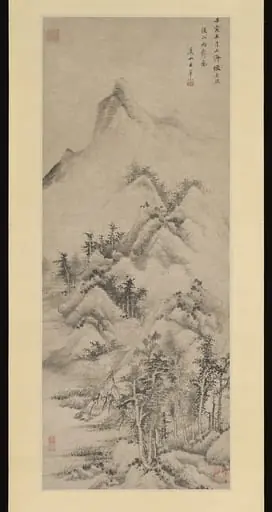 清 王翬 溪山雨霽圖 軸|Clearing after Rain over Streams and Mountains
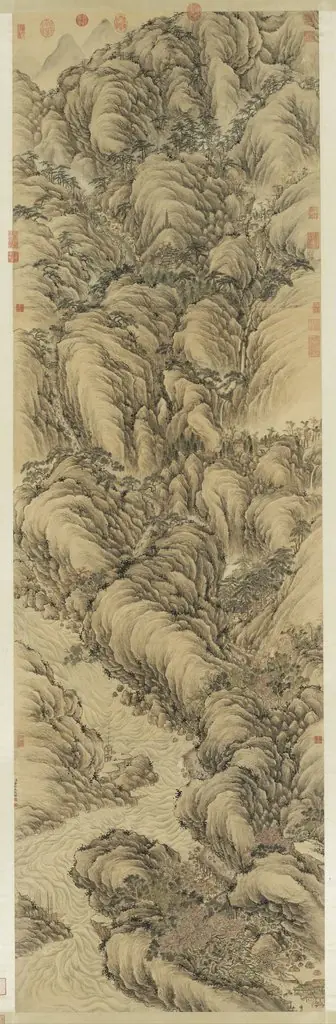 Travellers amongst the Streams and Mountain Passes
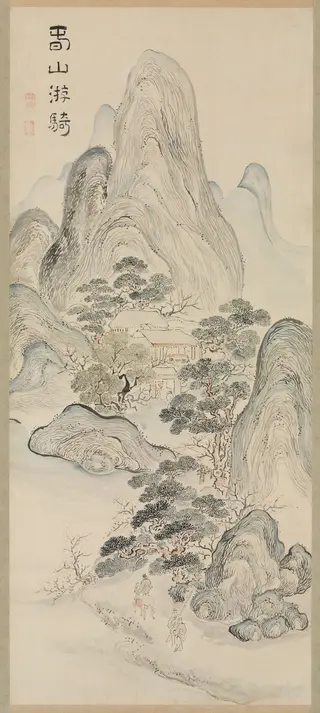 Spring Landscape
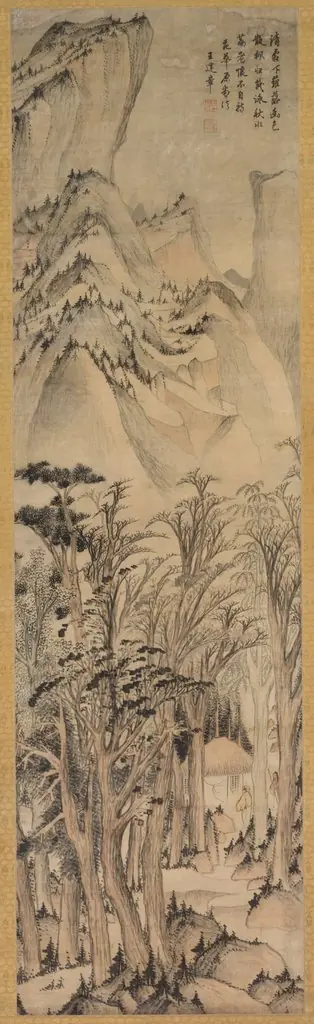 Solitary Colors of the Autumn Woods
 清 倣髡殘 蒸嵐昏巒圖 軸|Wooded Mountains at Dusk
- 明 莫是龍 倣黃公望山水圖 軸|Landscape in the style of Huang Gongwang