Artwork
明 謝時臣 谿山春曉圖 軸|Spring Morning in the Mountains
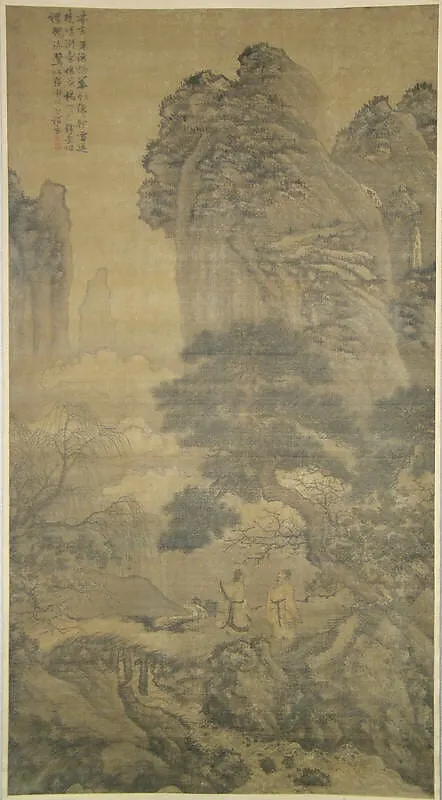
明 謝時臣 谿山春曉圖 軸|Spring Morning in the Mountains is an ink painting by the Ming dynasty painting artist Xie Shichen. It dates from 1527 and is held in the collection of the Metropolitan Museum of Art.
About this work
History & Provenance
The Spring Morning in the Mountains scroll (1527) is attributed to Xie Shichen based on its date inscription.
The Spring Morning in the Mountains scroll (1527) is attributed to Xie Shichen based on its date inscription. The work entered the collection of the Metropolitan Museum of Art, where it is currently held. No documented commission or early ownership records are provided in the sources; the earliest verifiable provenance begins with its inclusion in the museum's holdings.
The painting's dating to 1527 aligns with Xie Shichen's active period in the Ming dynasty, though further provenance details prior to the 20th century remain unrecorded in the cited sources.
The painting is held by the Metropolitan Museum of Art in New York. Its accession number is 1973.120.1, assigned upon entry to the museum's collection.
Context
Xie Shichen created the hanging scroll titled Spring Morning in the Mountains in 1527, executed in ink and color on silk and classified as a landscape painting within the Ming dynasty corpus. The work is held by the Metropolitan Museum of Art. Dating to 1527, it belongs to the mid-Ming period and reflects the literati landscape tradition.
Its provenance and stylistic character contribute to broader assessments of the development of the landscape genre in sixteenth-century Chinese art.
Overview
Spring Morning in the Mountains, executed by Xie Shichen in 1527, is a hanging scroll painted in ink and color on silk. The composition depicts a vast, misty mountain landscape characteristic of the Ming Dynasty literati tradition, yet executed with the detailed realism favored by the Wu School. The artist employs light, atmospheric ink washes to render the peaks, creating an effect of morning fog that softens the distant ridges.
A prominent waterfall descends as a slender white thread, providing vertical movement and auditory suggestion within the silent scene. Tiny figures of travelers traverse a winding path, their diminutive scale deliberately contrasting with the monumental geography to emphasize the insignificance of humanity before nature. Xie Shichen, active in Suzhou, is known for synthesizing the expressive brushwork of the Zhe School with the scholarly restraint of the Wu School.
This work exemplifies his mature style, balancing dynamic composition with poetic subtlety. The painting serves as a visual meditation on the harmony between human presence and the natural world, a central theme in Chinese landscape painting.
Subject & Meaning
The deliberate portrayal of human figures as minuscule elements within the vast landscape is a significant aspect of this painting. These small travelers, nearly absorbed by their surroundings, serve to underscore the immense power and scale of the natural world. This artistic choice highlights humanity's modest place in the grandeur of mountains and valleys, a common theme in traditional Chinese landscape art.
Technique & Style
Xie Shichen employed a subtle application of ink, creating an ethereal quality reminiscent of morning mist or fog. This delicate rendering contributes to the tranquil atmosphere of the scene. The use of ink and color on silk allows for a nuanced interplay of washes and lines, defining the contours of the mountains and the fine details of the waterfall, while maintaining a sense of atmospheric depth.
Artist & collection


 Landscape
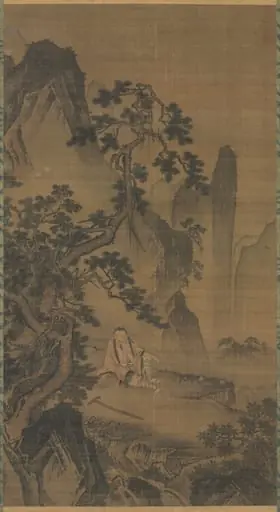 The Hermit Xu You Resting by a Stream
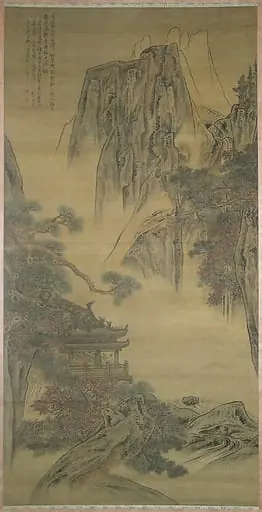 清 李寅 高閣觀瀑圖 軸|Viewing a waterfall from a mountain pavilion
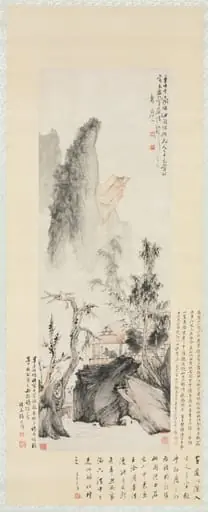 Conversation in Autumn
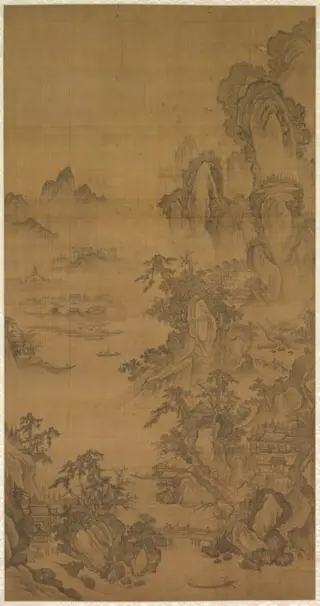 Mountain Market, Clear with Rising Mist
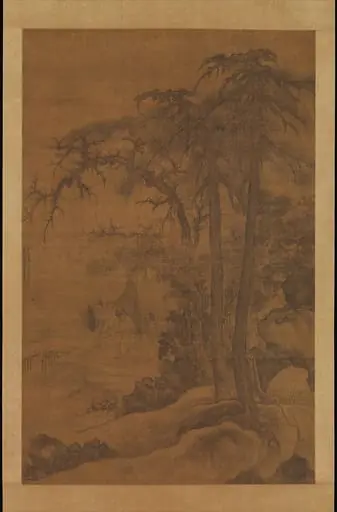 元 唐棣 松溪歸漁圖 軸|Returning Fishermen
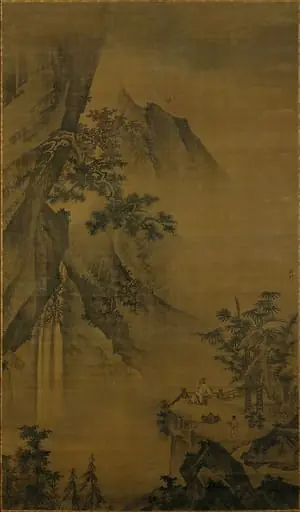 明 鍾禮 觀瀑圖 軸|Li Bai gazing at the waterfall on Mount Lu
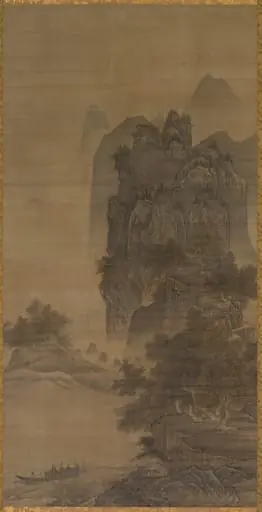 Sunset Glow over a Fishing Village, from Eight Views of Xiao-Xiang
 南宋 佚名 賞梅圖 軸|Scholar admiring plum blossoms