Artwork
Streams and Mountains
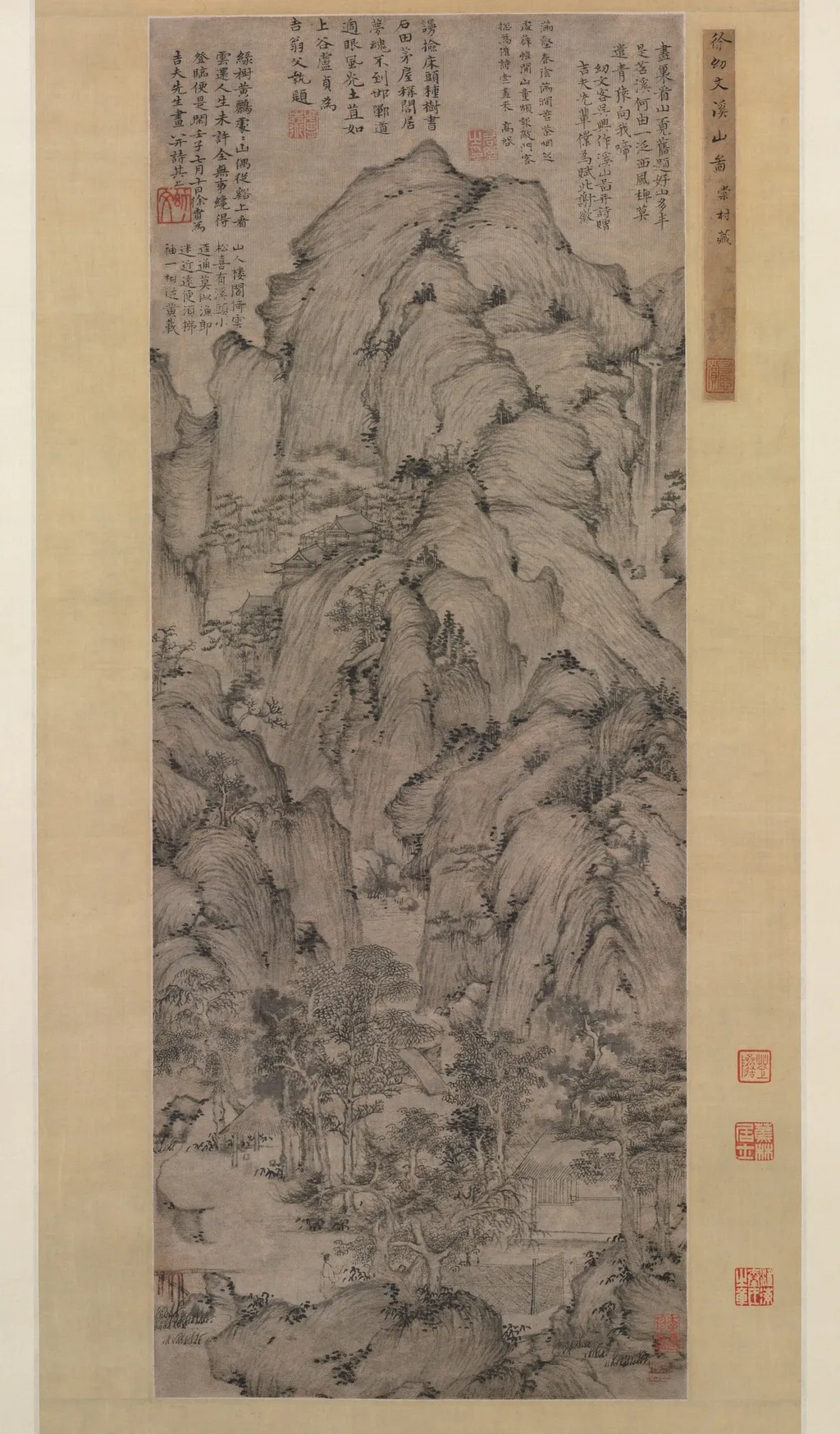
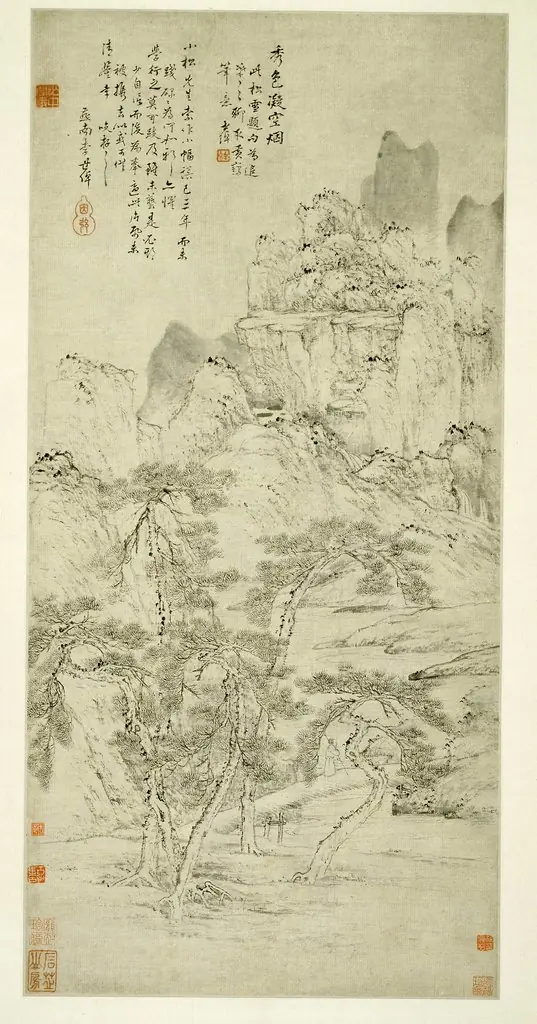
Streams and Mountains is an unspecified painting by the Ming dynasty painting artist Xu Ben. It dates from 1372 and is held in the collection of the Cleveland Museum of Art.
About this work
Subject & Meaning
Streams and Mountains portrays a stylized mountain range intersected by a flowing stream, a solitary tree, and a diminutive human figure, elements that together embody the shan shui ideal of harmonious integration between nature and humanity. The mountain serves as a symbol of permanence and spiritual ascent, while the tree and figure suggest contemplation and the transient presence of mortals within the vast landscape. Executed in 1372 in China, the work reflects the early Ming period's emphasis on landscape painting as a vehicle for expressing cosmological balance and scholarly reflection.
History & Provenance
Its creation is documented in contemporary records that note the artist’s active years (1335–1380) and classify the piece as a shan shui painting.
The work titled Streams and Mountains was painted in 1372 by the Yuan‑period artist Xu Ben in China. Its creation is documented in contemporary records that note the artist’s active years (1335–1380) and classify the piece as a shan shui painting. Following its execution, the artwork entered the collection of the Cleveland Museum of Art, where it remains on display.
The painting’s early ownership is not detailed in surviving documents, but its presence in a major museum suggests a formal acquisition process after its removal from its original Chinese context. The dating of 1372 is corroborated by both the artist’s dated oeuvre and the museum’s cataloguing data.
Legacy
Xu Ben's Streams and Mountains (1372) is represented in the Cleveland Museum of Art, a placement that underscores its recognized status in the canon of early Chinese landscape painting. As a Yuan‑period shan shui work, it exemplifies the synthesis of naturalistic detail and poetic abstraction that influenced later landscape artists across East Asia. Scholars cite the painting when discussing the development of ink‑wash techniques and the philosophical dimensions of nature in Chinese art, reinforcing its lasting reputation as a benchmark for the genre.
Overview
Titled Streams and Mountains, this ink painting presents a towering, craggy peak emerging from a veiled valley. Rendered primarily in shades of gray and black, the composition features subtle red seals positioned on the right. A calligraphic inscription, though difficult to decipher, spans the upper portion of the work, contributing an additional layer of expressive content to the visual landscape.
Technique & Style
The artist employed a distinctive technique characterized by rapid, gestural brushwork. Rather than meticulous detail, the painting emphasizes broad forms and suggested textures, achieved through bold ink lines. These strokes define the rough surfaces of cliffs and the foliage of trees.
The monochromatic palette of grays and blacks is subtly contrasted by the presence of faint red seals, which serve as visual accents within the composition.
Context
The stylistic approach evident in Streams and Mountains shares affinities with the work of other artists of its period. For those interested in comparable aesthetic sensibilities and brush techniques, the oeuvre of Xu Ben offers a relevant point of reference. This connection suggests a broader artistic dialogue and shared visual language within the landscape painting traditions of the time.
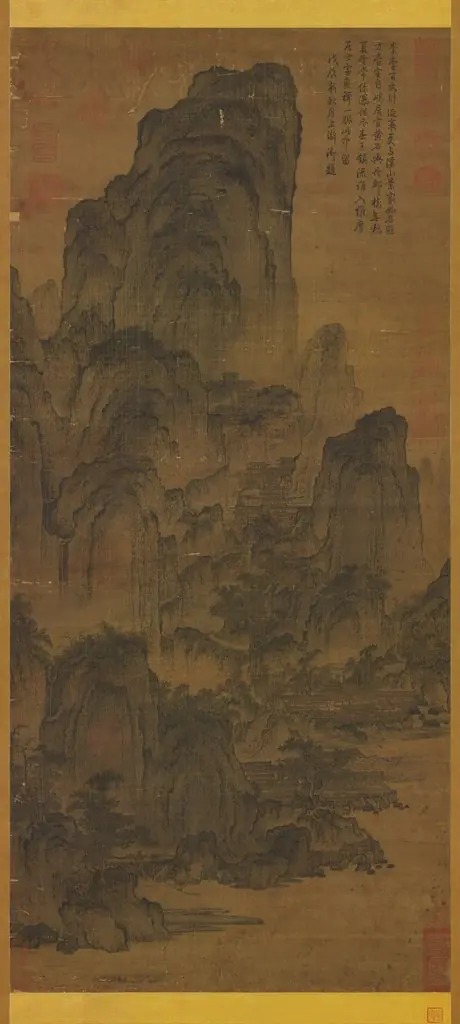
Own this work as a print
Artist & collection

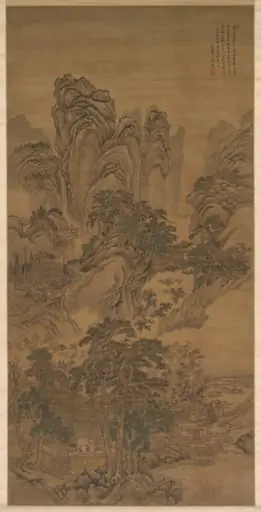 Landscape
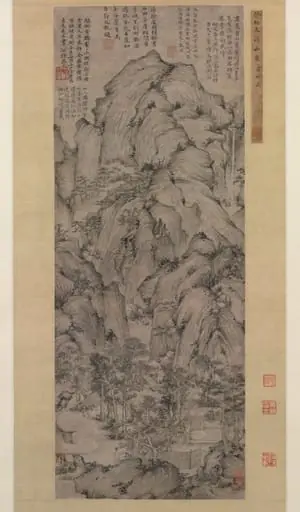 Streams and Mountains
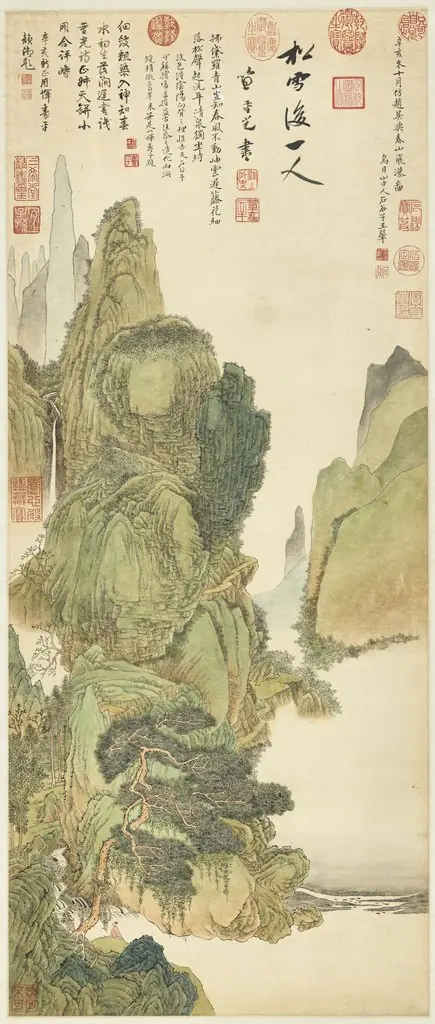 Cascading Water in the Spring Mountains after Zhao Mengfu
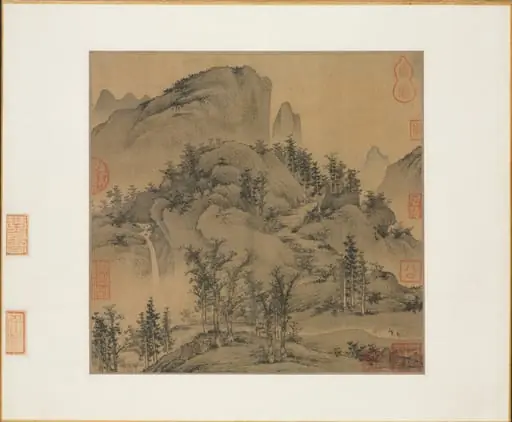 Travelers in Autumn Mountains
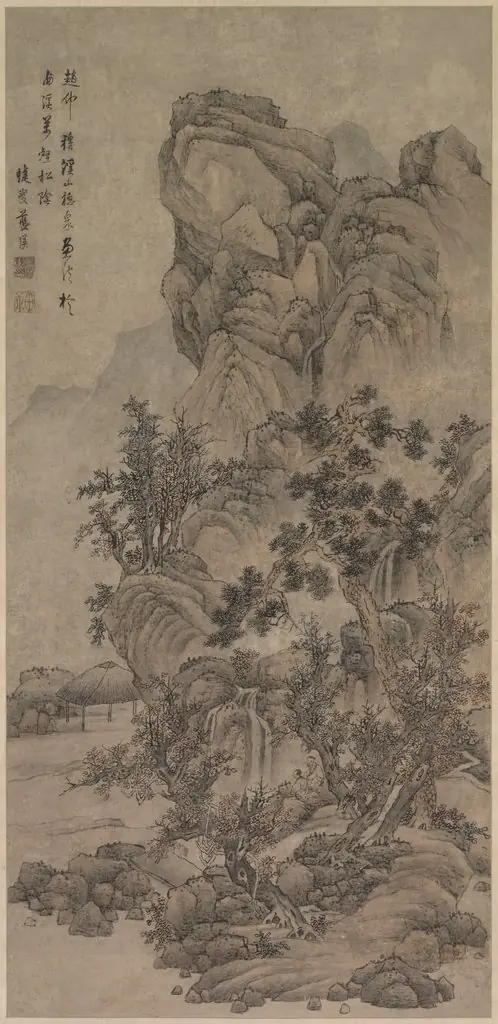 Landscape with Figures
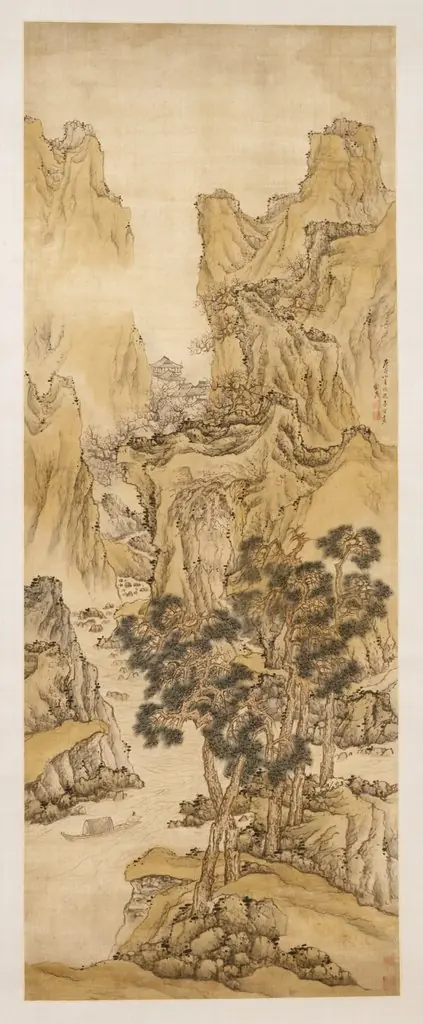 The Peach Blossom Spring
 Snowy Mountains
 南宋 夏珪 山市晴嵐圖 冊頁|Mountain Market, Clearing Mist
 The Peach Blossom Spring
 Landscape
 Landscape: Beautiful Scenery Frozen in Mist
- Pavilions Among Streams and Mountains