Artwork
Streams and Mountains
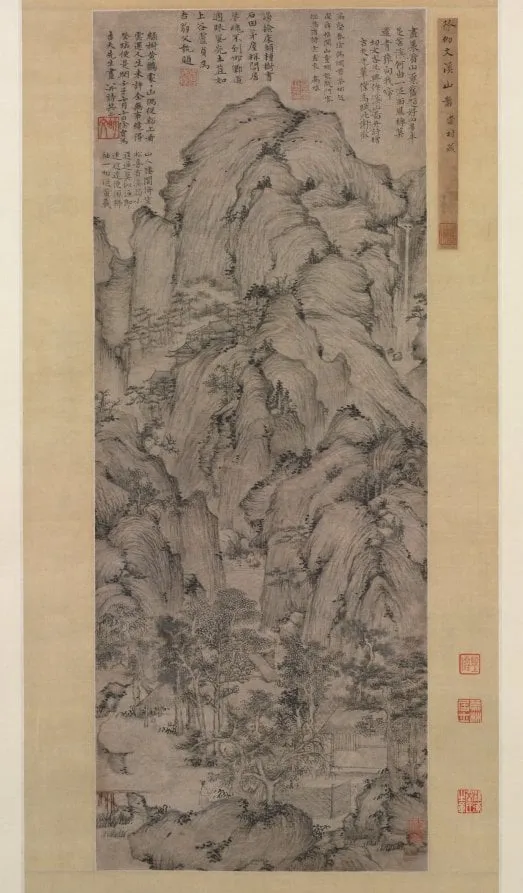
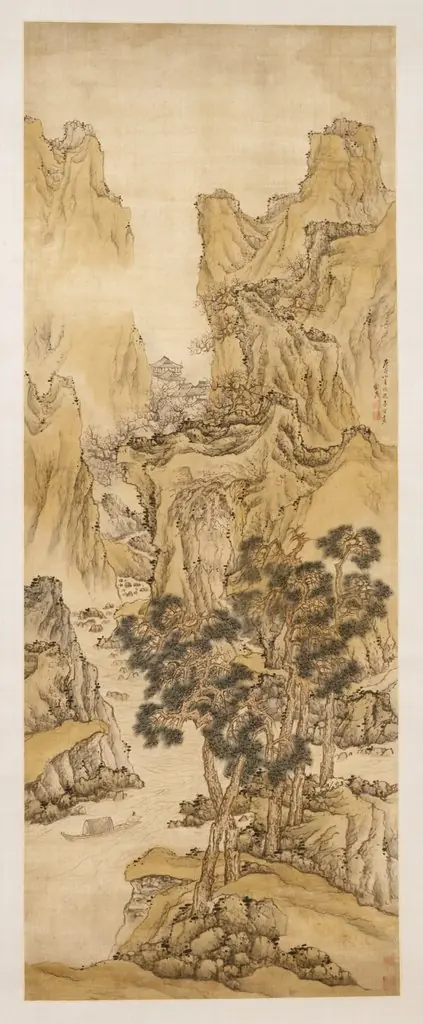
Streams and Mountains is an unspecified painting by the Yuan dynasty literati painting artist Xu Ben. It dates from 1372 and is held in the collection of the Cleveland Museum of Art.
- Accession no.
- 1997.96
- Credit line
- Bequest of Mrs. A. Dean Perry
About this work
To see how other Yuan artists used those same strokes, look up the subject “china, yuan dynasty (1271-1368).
You see a tall scroll of misty mountains, waterfalls, and tiny pavilions tucked between cliffs.
Xu Ben painted this in 1372 while hiding from court life. He used thousands of short, wavy lines, called “hemp-fiber” strokes, to make the rocks feel alive. The same strokes repeat like a quiet heartbeat across the whole scene.
To see how other Yuan artists used those same strokes, look up the subject “china, yuan dynasty (1271-1368).”
Overview
Created in 1372 by the Yuan‑Ming transitional painter Xu Ben, this hand‑scroll depicts a lofty, mist‑shrouded landscape of craggy peaks, cascading waterfalls and diminutive pavilions perched on cliffs. The composition is dominated by a rhythmic field of fine, wavy brush marks that suggest the texture of rock and foliage, giving the scene a sense of unified movement.
Subject & Meaning
The painting presents a solitary scholar’s journey toward a rustic retreat nestled among shady trees at the foot of a mountain. Inscribed poetry praises the surrounding peaks and reflects on the fleeting nature of human ease, suggesting that true leisure is found in the contemplation of high, remote places.
Technique & Style
Xu Ben employs thousands of short, undulating strokes known as “hemp‑fiber” lines to render the texture of stone and vegetation. These repetitive marks generate a visual pulse that ties together the towering masses of rock, the waterfalls and the distant pavilions, exemplifying the literati emphasis on brushwork as an expression of inner rhythm.
History & Provenance
During a period of self‑imposed reclusion from official duties, Xu Ben completed the work and dedicated it to a friend named Jifu (吉夫), adding his own inscription among five at the top of the scroll. The piece remained in private collections before entering a museum setting, where it is now displayed as a representative example of late Yuan landscape painting.
Context
The late Yuan and early Ming eras were marked by political upheaval, prompting many scholar‑officials to retreat into artistic and poetic pursuits. Xu Ben’s landscape reflects this broader cultural turn toward reclusion, using the natural world as a venue for personal expression and philosophical reflection.
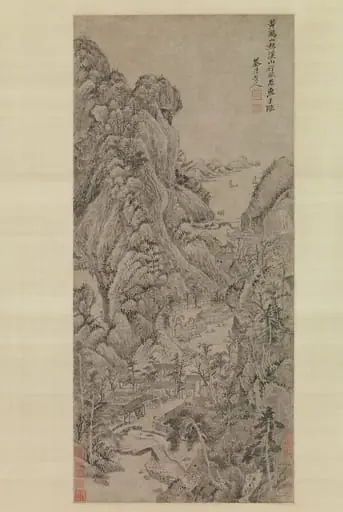
Artist & collection

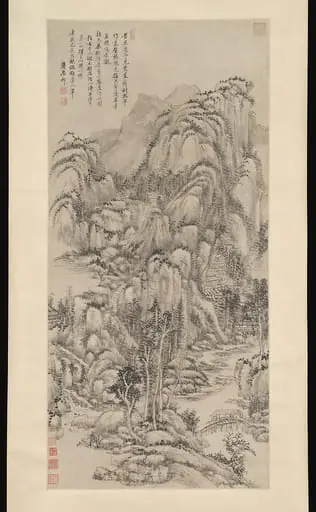 清 王原祁 倣吳鎮山水圖 軸|Landscape after Wu Zhen
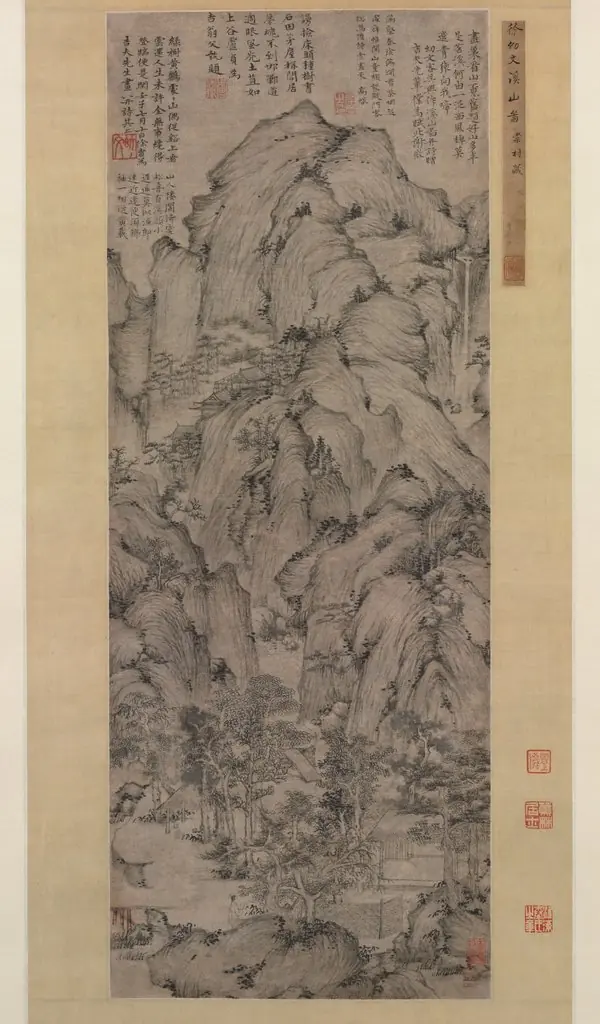 Streams and Mountains
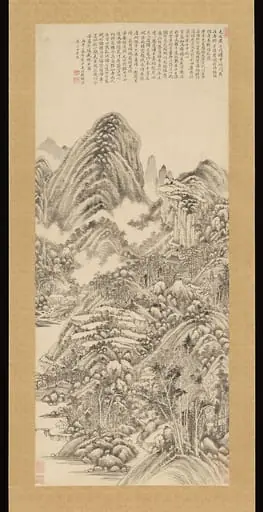 清 王時敏 仿黃公望山水圖 軸 絹本|Landscape in the style of Huang Gongwang
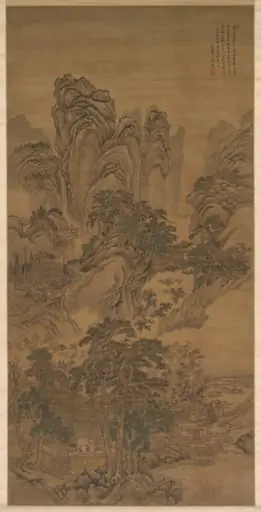 Landscape
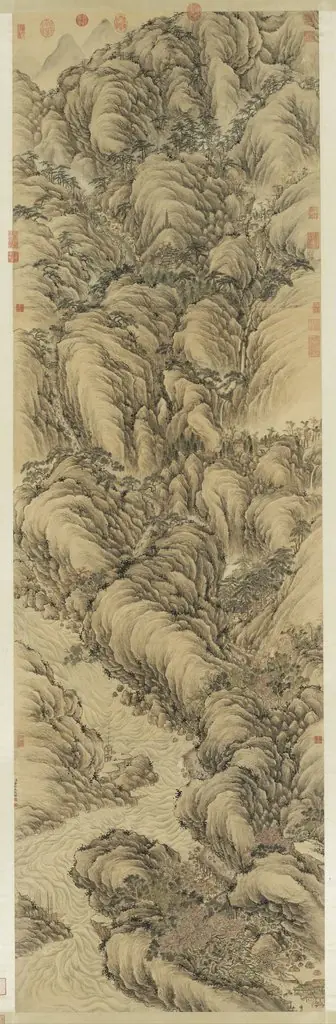 Travellers amongst the Streams and Mountain Passes
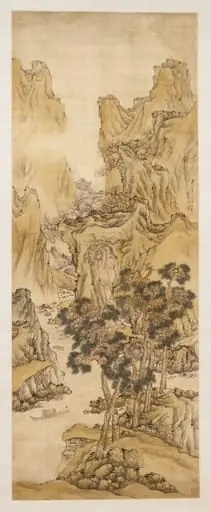 The Peach Blossom Spring
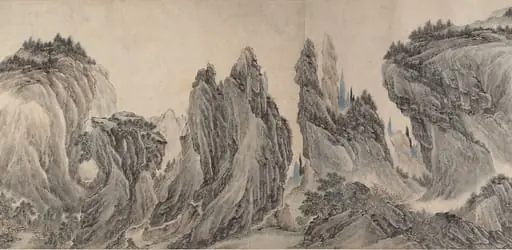 明/清 李在 董巨馬夏合風山水圖 卷|Landscape after Dong Yuan, Juran, Ma Yuan, and Xia Gui
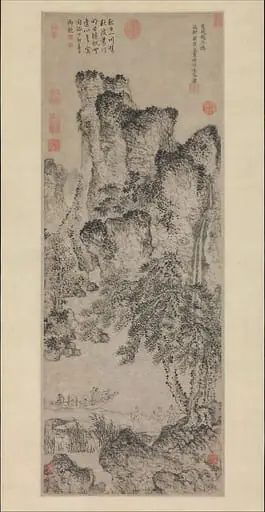 元 趙原 (元) 晴川送客圖 軸|Farewell by a Stream on a Clear Day
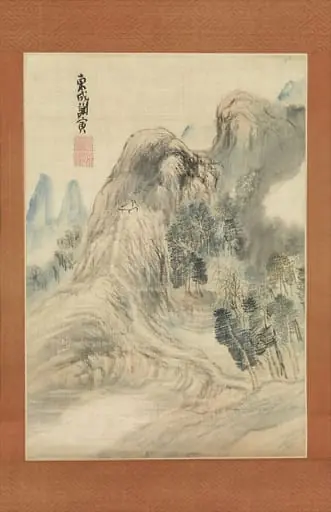 Untitled
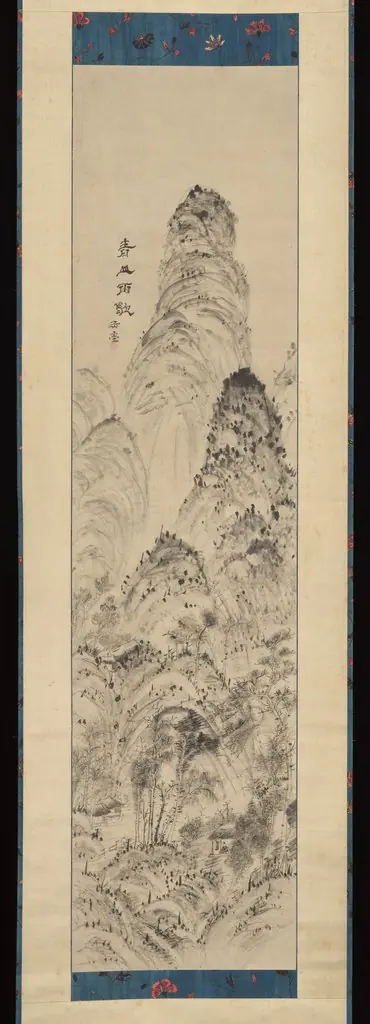 Green Mountains as the Rain Ceases
 The Peach Blossom Spring
- 清 吳歷 倣王蒙溪山行旅圖 軸|Travelers among Streams and Mountains