Artwork
山本梅逸筆 蓮池白鷺図|Egrets in a Lotus Pond
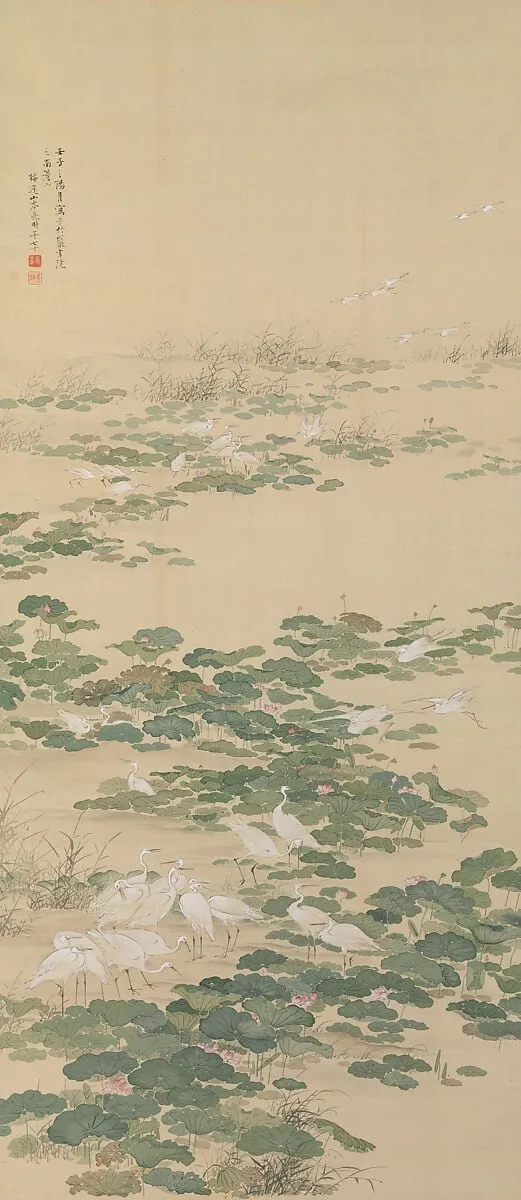
山本梅逸筆 蓮池白鷺図|Egrets in a Lotus Pond is an ink painting by the Impressionist artist Yamamoto Baiitsu. It dates from 1852 and is held in the collection of the Metropolitan Museum of Art.
About this work
Subject & Meaning
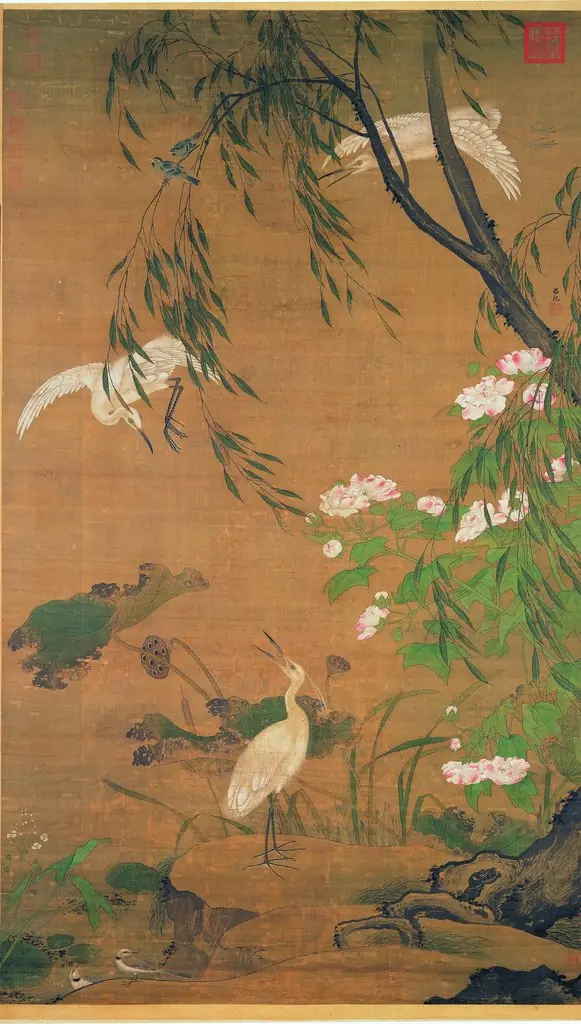
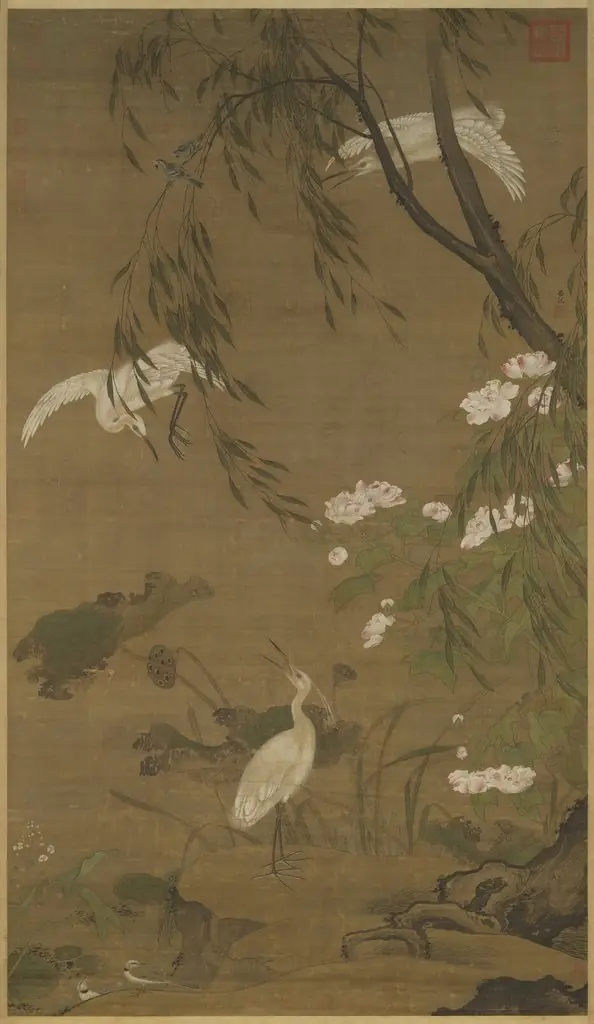
The painting depicts a tranquil lotus pond where egrets stand among blooming lotus leaves and blossoms, a scene that evokes the quiet harmony of nature.
The painting depicts a tranquil lotus pond where egrets stand among blooming lotus leaves and blossoms, a scene that evokes the quiet harmony of nature. The lotus, a recurring motif in East Asian art, symbolizes purity and renewal, while the egrets suggest elegance and attentiveness, reinforcing a sense of serene observation within the natural world. The composition emphasizes stillness and balance, reflecting the artist’s interest in capturing fleeting moments of natural beauty.
Such imagery often conveys ideals of harmony between humanity and the environment, aligning with traditional literati values of contemplation and refined aesthetics.
Technique & Style
Created in 1852, Yamamoto Baiitsu's Egrets in a Lotus Pond is executed as a hanging scroll utilizing ink and color applied to a silk support. The work belongs to the landscape genre, formally depicting an artificial pond populated with birds and leaves. Stylistically, the piece reflects the artist's approach to natural subjects through traditional Japanese painting methods, where the silk ground accommodates both the fluidity of ink washes and the application of pigments.
The composition focuses on the interaction between the avian figures and the aquatic vegetation within the man-made pond setting. This specific combination of materials and the hanging scroll format situates the work within the Edo period's painting traditions, emphasizing the delicate rendering of nature typical of the artist's output during this era.
History & Provenance
Egrets in a Lotus Pond was created by Yamamoto Baiitsu in 1852, executed as a hanging scroll in ink and color on silk. The work was produced in Japan during the late Edo period. It subsequently entered the collection of the Metropolitan Museum of Art, where it is currently held.
No further details concerning intermediate ownership, commission history, or early provenance prior to the museum's acquisition are documented in the available sources.
Yamamoto Baiitsu’s hanging scroll Egrets in a Lotus Pond (1852) is part of the Metropolitan Museum of Art’s collection in New York. The work is catalogued as a painting in the museum’s holdings, though the specific inventory or accession number is not disclosed in the available records. No exhibition history is documented in the sources examined; the painting’s presence in the museum’s collection is noted, but its display history is not detailed.
Overview
Egrets in a Lotus Pond is a hanging scroll painting created by Yamamoto Baiitsu in 1852. Executed with ink and color on silk, this artwork presents a serene natural scene. It features two white egrets positioned within a pond abundant with lotus plants, including both their broad leaves and delicate pink blossoms. The composition offers a glimpse into the artist's engagement with naturalistic subjects.
Context
Yamamoto Baiitsu was active during the 19th century, a period when Japanese artistic practices frequently emphasized the depiction of natural environments. His work, such as "Egrets in a Lotus Pond," reflects a prevailing aesthetic interest in combining detailed natural observation with an evocation of quiet contemplation. This approach allowed artists to explore the beauty of the natural world while also conveying a sense of inner calm.
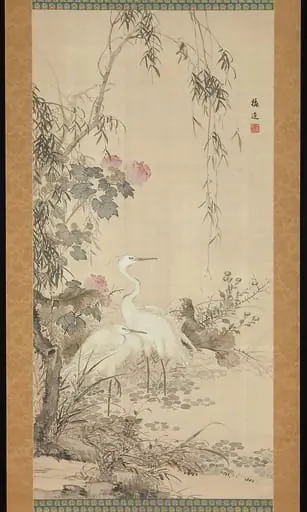
Artist & collection