Artwork
山本梅逸筆 柳鷺図|Egrets, Peonies, and Willows
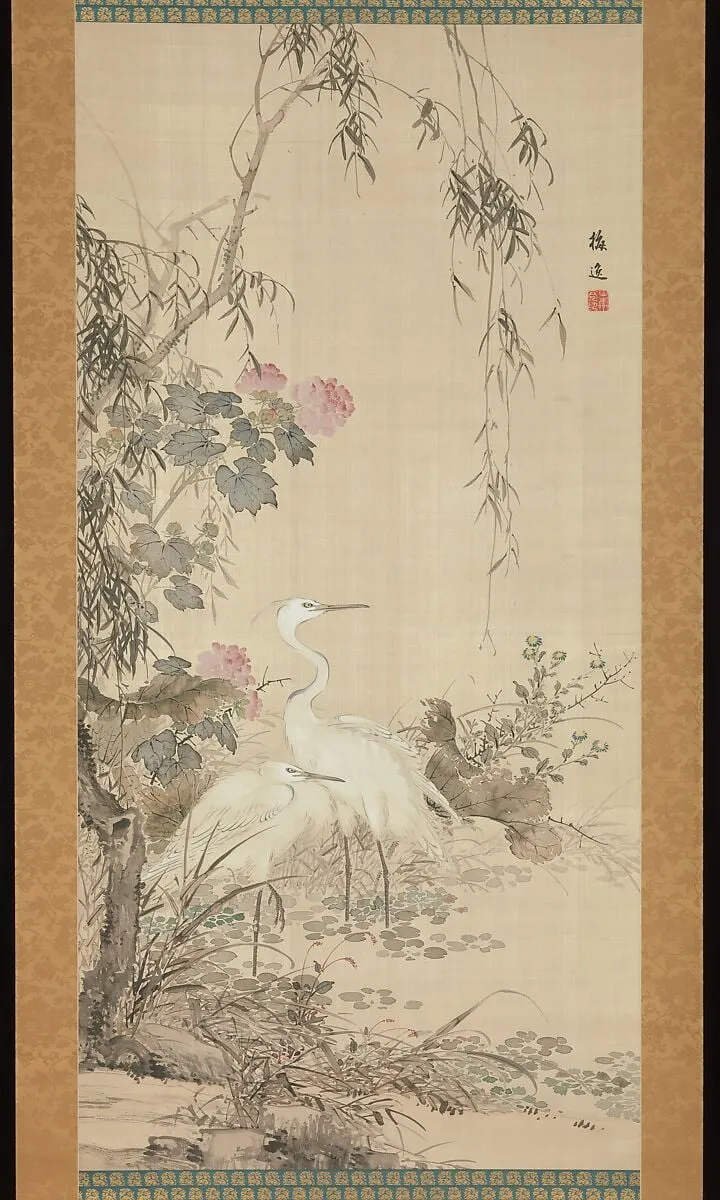
山本梅逸筆 柳鷺図|Egrets, Peonies, and Willows is a paint painting by the Nihonga artist Yamamoto Baiitsu. It dates from 1816 and is held in the collection of the Metropolitan Museum of Art.
- Accession no.
- 1975.268.109
- Credit line
- The Harry G. C. Packard Collection of Asian Art, Gift of Harry G. C. Packard, and Purchase, Fletcher, Rogers, Harris Brisbane Dick, and Louis V. Bell Funds, Joseph Pulitzer Bequest, and The Annenberg Fund Inc. Gift, 1975
About this work
Technique & Style
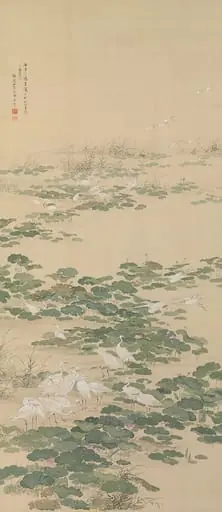
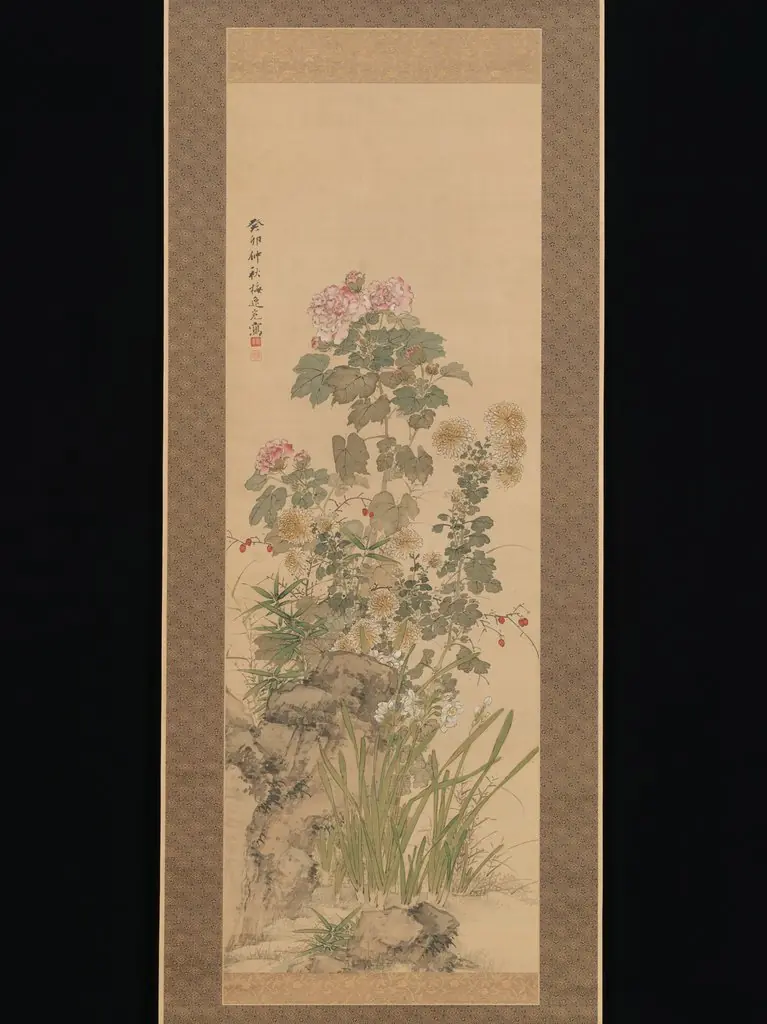
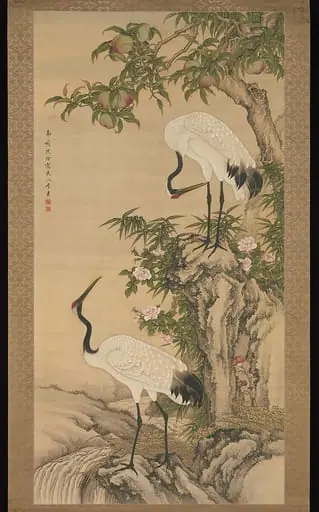
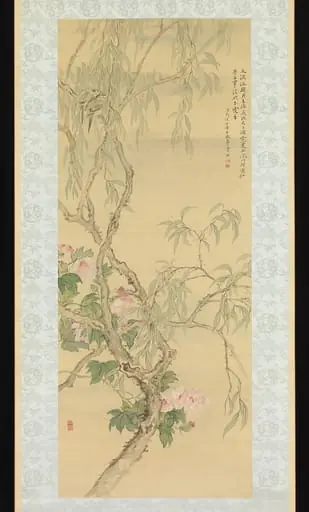
The hanging scroll is painted on silk in ink and color. Yamamoto Baiitsu combines mineral pigments and refined washes to articulate the willow’s supple branches, the layered petals of the peonies, and the plumage of the egrets. Foliage and petals are rendered with soft, blended washes that modulate from deep greens to pale pinks, creating atmospheric recession, while the willow’s cascading fronds and the birds’ upright postures are defined with controlled brushwork.
The composition balances dense botanical detail with open space, guiding the viewer’s eye along the scroll’s vertical axis in keeping with late Edo bird-and-flower painting.
History & Provenance
No documented commission or earlier ownership chain is recorded in the available sources, and no specific exhibition history is detailed.
The hanging scroll Egrets, Peonies, and Willows is dated to 1816, the date given by the artist’s inscription. Yamamoto Baiitsu completed the painting in Japan during the late Edo period. It is held in the collection of the Metropolitan Museum of Art, New York, where it is catalogued among the museum’s Japanese paintings as a color-on-silk work depicting birds among peonies and willows.
No documented commission or earlier ownership chain is recorded in the available sources, and no specific exhibition history is detailed.
Context
The hanging scroll dated 1816, titled 山本梅逸筆 柳鷺図|Egrets, Peonies, and Willows, exemplifies Yamamoto Baiitsu’s synthesis of bird and floral motifs within the Japanese painting tradition. As a color-on-silk work, it portrays egrets among peonies and willows, a composition noted in scholarly discussions of late Edo bird‑and‑flower painting. The piece entered the collection of the Metropolitan Museum of Art, underscoring its recognized significance beyond Japan.
Its creation in Japan and 1816 inception align with the artist’s broader output, situating the work as a representative example of his mature style.
Overview
“Egrets, Peonies, and Willows” (Ryūrozu) is a hanging scroll painting created by the Japanese artist Yamamoto Baiitsu in 1816. Executed with color on silk, this artwork presents a serene natural scene. It features a composition centered around avian life and flora, characteristic of the artist's engagement with the natural world.
Subject & Meaning
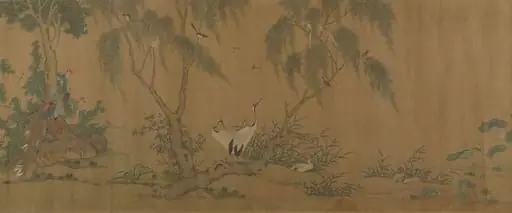
The painting portrays two white egrets standing in shallow water, positioned beneath a cluster of blooming peonies. A willow branch gracefully descends from above, framing the scene. The composition evokes a sense of tranquility and stillness, capturing a specific, un-dramatized moment in nature. The artist's focus appears to be on the subtle beauty found in everyday observations.
Artist & collection