Artwork
Strange Peaks and Myriad Trees
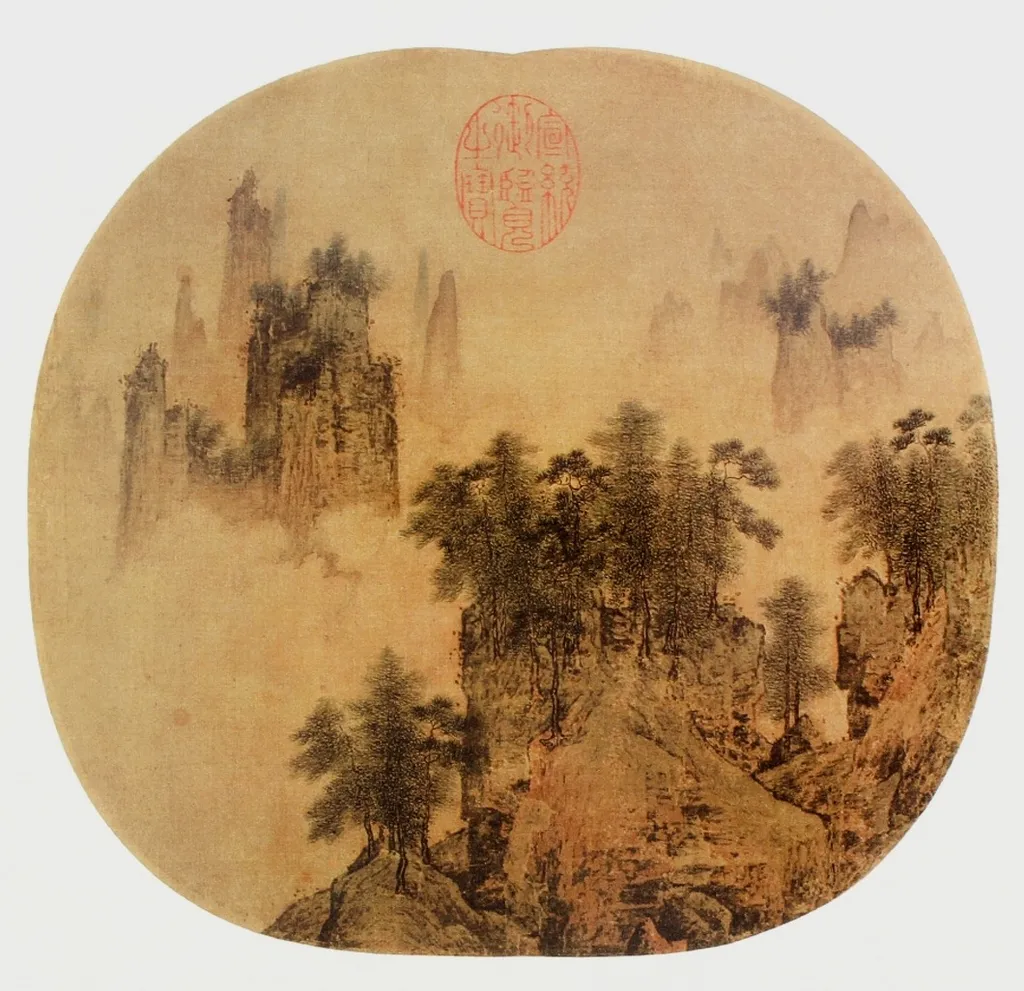
Strange Peaks and Myriad Trees is an unspecified painting by Yan Wengui. It dates from 1015 and is held in the collection of the National Palace Museum.
About this work
Overview
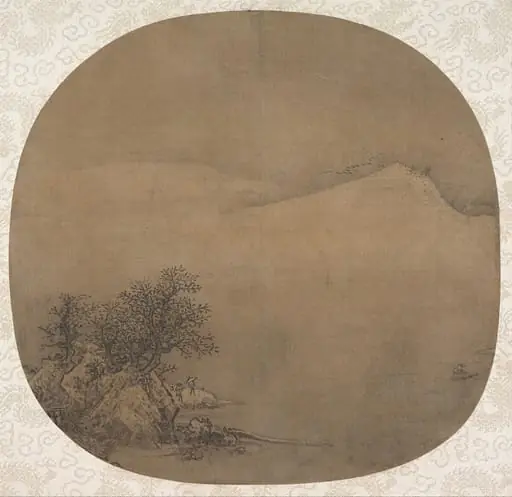
The composition presents a quiet, elevated view of natural terrain, emphasizing spatial depth through layered forms and restrained tonal variation.
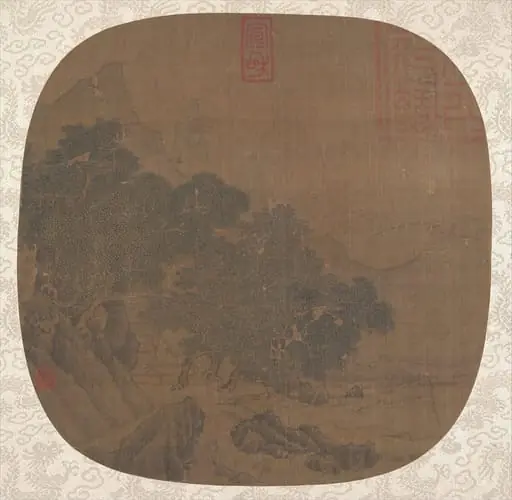
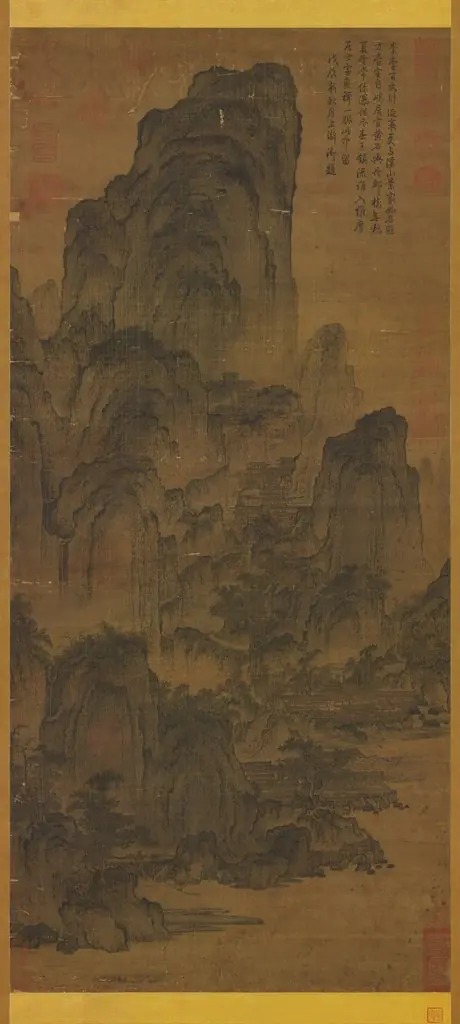
Painted around 1015 by Yan Wengui, this landscape work belongs to the early Northern Song tradition of ink-on-paper painting. It is currently preserved in the National Palace Museum in Taipei. The composition presents a quiet, elevated view of natural terrain, emphasizing spatial depth through layered forms and restrained tonal variation. No human figures appear, reinforcing the painting’s meditative character.
Subject & Meaning
The scene depicts distant, mist-wrapped peaks and scattered, gnarled trees growing from rocky outcrops. The absence of human activity and the sparse vegetation suggest an untouched, timeless wilderness. This reflects Daoist ideals of harmony with nature and the quiet reverence for remote, elevated landscapes as spaces of spiritual retreat and contemplation.
Technique & Style
Yan Wengui employs fine ink washes and delicate brushwork to model mountain forms, using gradations of gray and brown to suggest volume and atmospheric distance. Trees are rendered with minimal strokes, their placement deliberate rather than dense. The muted palette and lack of sharp outlines create a hazy, ethereal atmosphere, characteristic of early Northern Song landscape conventions.
History & Provenance
The painting has been part of imperial collections since the Song dynasty and later entered the holdings of the National Palace Museum following the relocation of artifacts from Beijing in the mid-20th century. Its continuous preservation within elite collections underscores its recognized status among early Chinese landscape works, though little is documented about its early circulation.
Context
Created during the early Northern Song period, this work aligns with a broader shift toward monumental, introspective landscape painting. Artists like Yan Wengui moved away from decorative or narrative elements, focusing instead on the emotional resonance of natural forms. This aesthetic was supported by scholar-officials who valued painting as an expression of inner cultivation.
Legacy
Though Yan Wengui’s oeuvre is limited, this painting exemplifies the foundational style that influenced later masters such as Fan Kuan and Guo Xi. Its emphasis on quiet grandeur and atmospheric depth helped define the Northern Song landscape canon. It remains a key reference for understanding the evolution of Chinese ink painting’s philosophical underpinnings.
Artist & collection

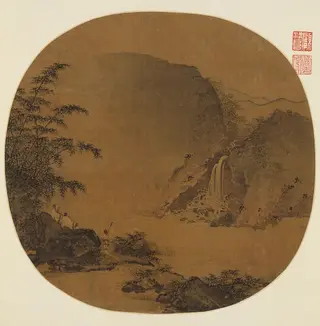
- 宋 佚名 觀瀑圖 團扇|Gentlemen gazing at a waterfall
 Untitled
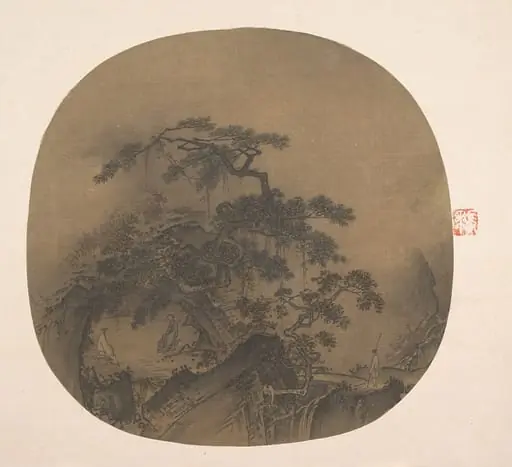 南宋 佚名 洞天論道圖 團扇|Conversation in a cave
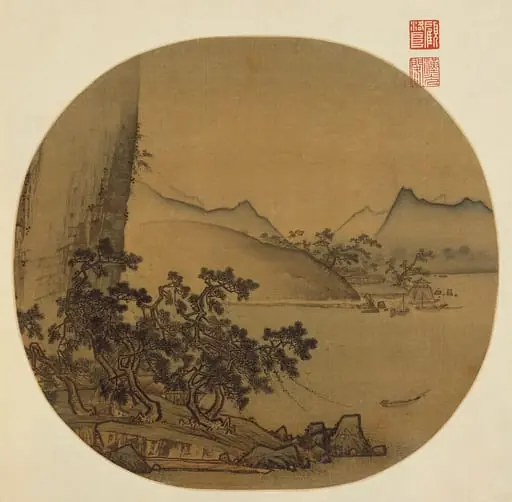 南宋 佚名 舊傳閻次于 風雨維舟圖 團扇|Boats Moored in Wind and Rain
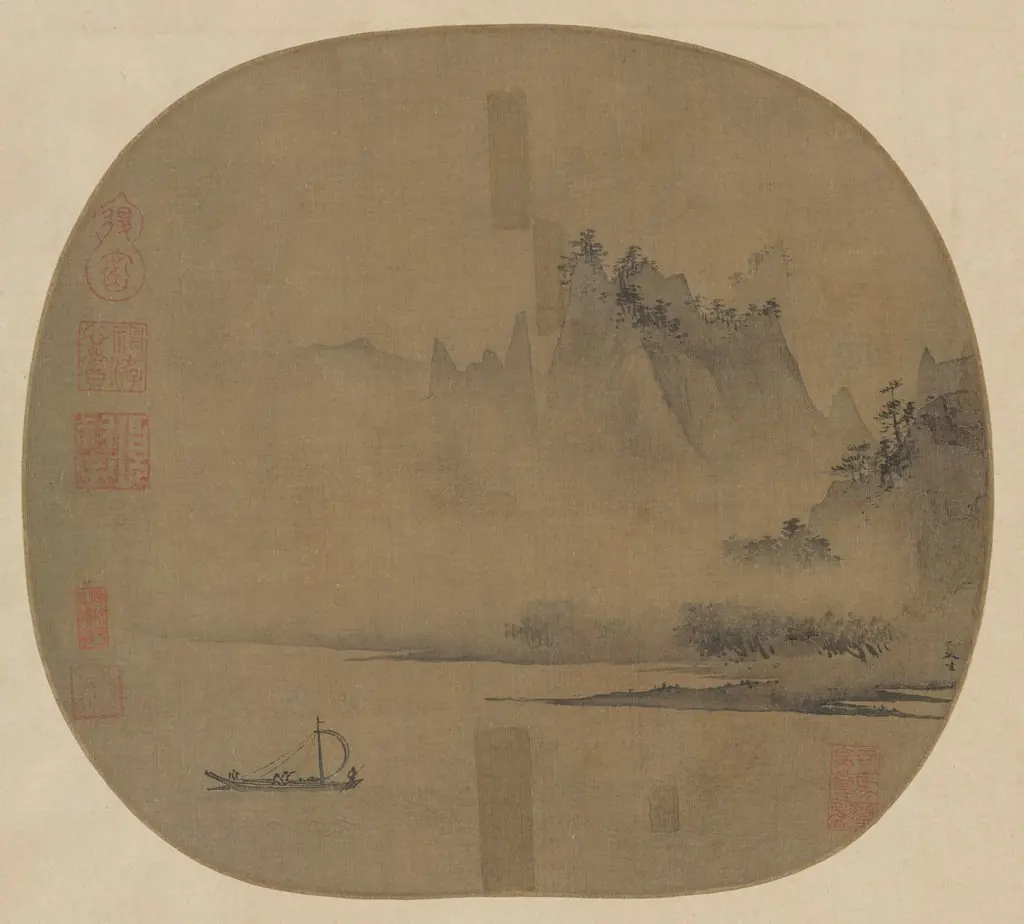 Full Sail on the Misty River
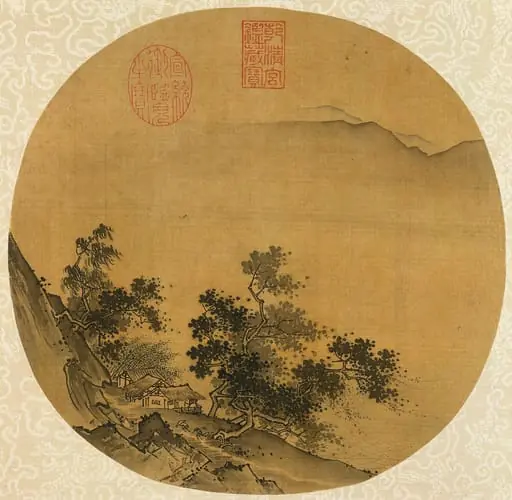 南宋 佚名 倣夏珪 冒雨尋莊圖 團扇|Returning Home in a Driving Rain
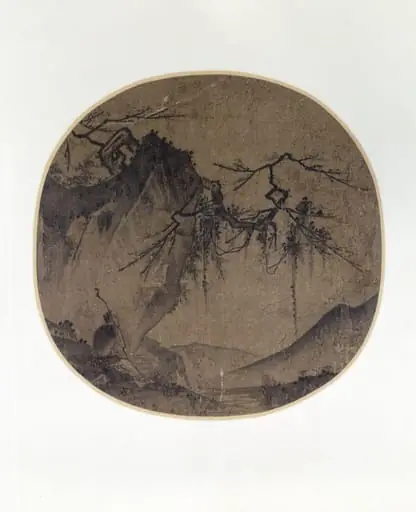 A Figure in Landscape
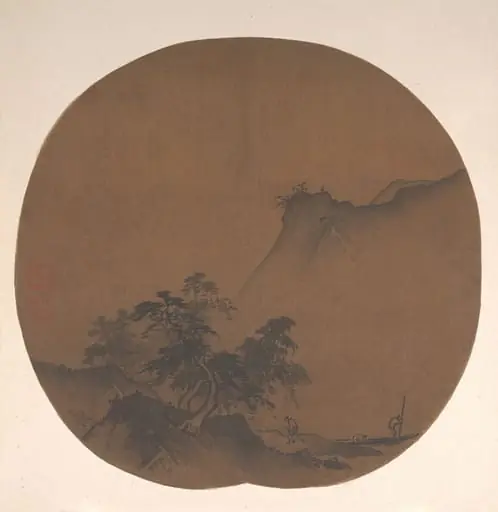 南宋 傳夏珪 澤畔疾風圖 團扇|Windswept lakeshore
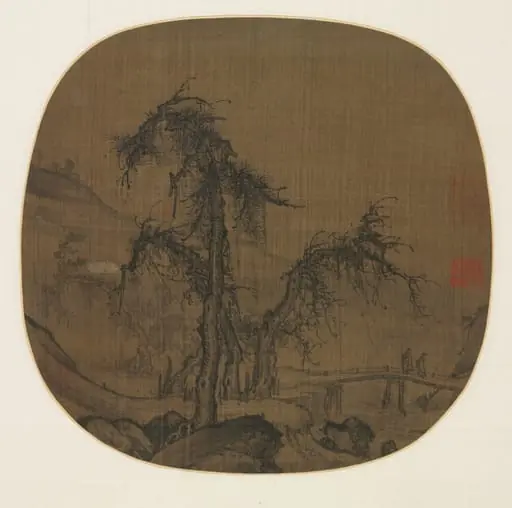 Ramblers over a Winding Stream
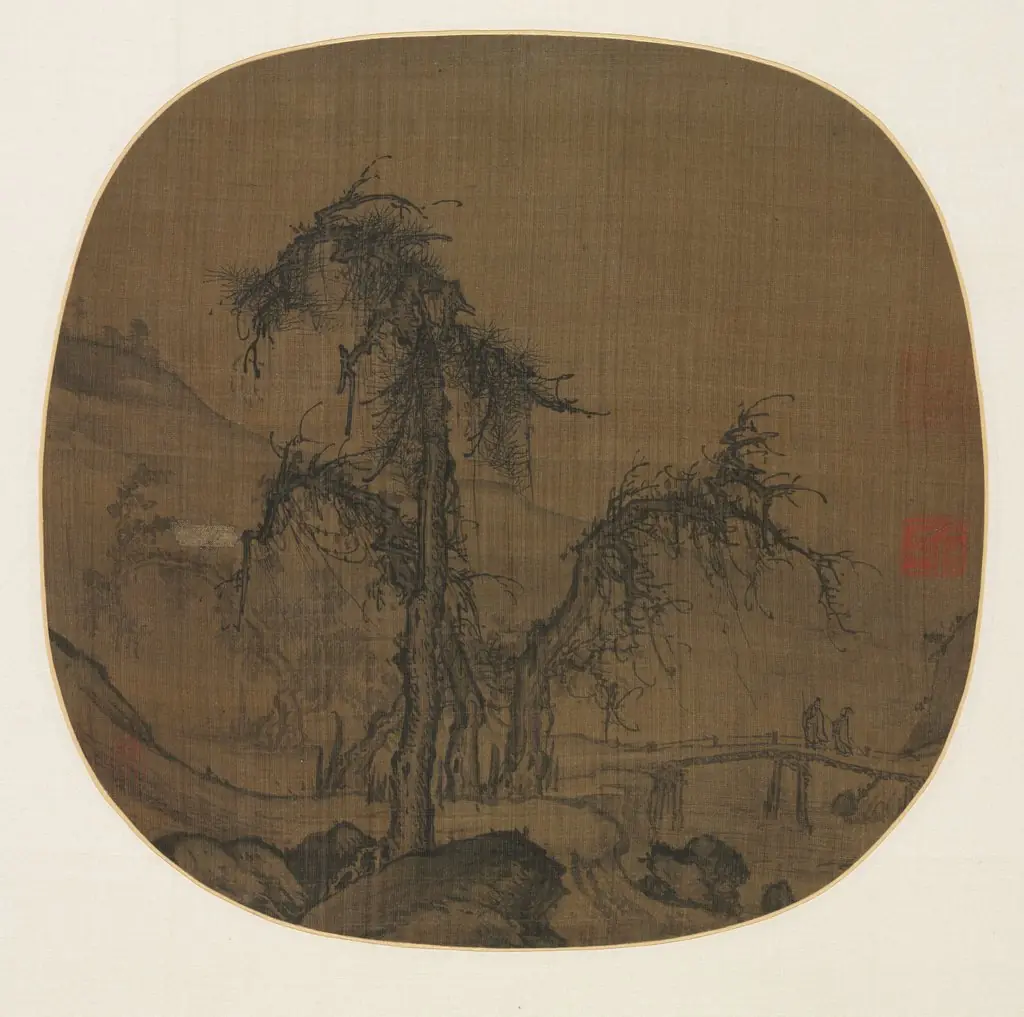 Ramblers over a Winding Stream
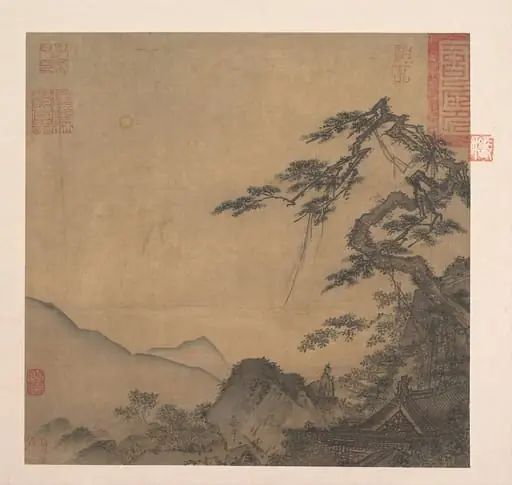 南宋 馬麟 松下高士圖 冊頁 絹本|Landscape with great pine
 南宋 佚名 雪景待渡圖 團扇|Waiting for the Ferry