Artwork
Untitled
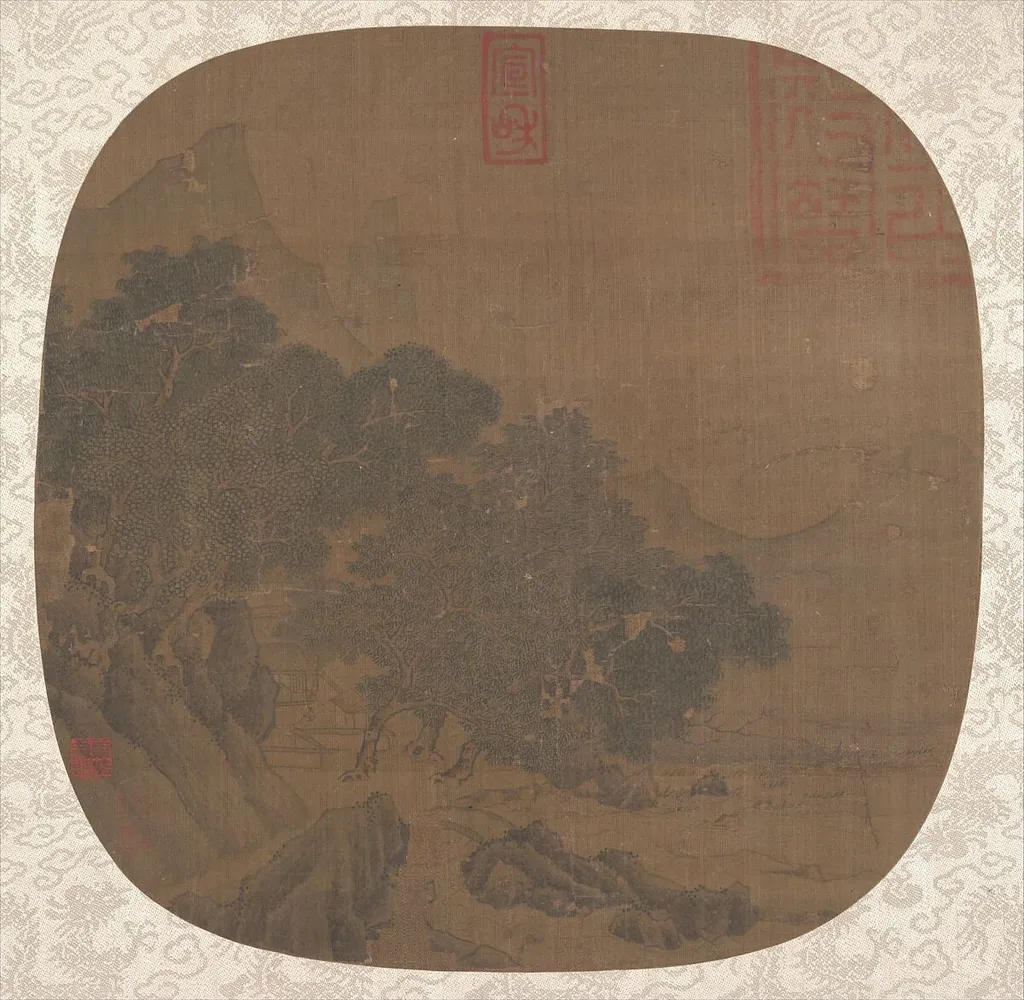
Untitled is an ink painting by the Ming dynasty painting artist Yan Wengui. It is held in the collection of the Metropolitan Museum of Art.
- Accession no.
- 13.100.118
- Credit line
- John Stewart Kennedy Fund, 1913
About this work
Subject & Meaning
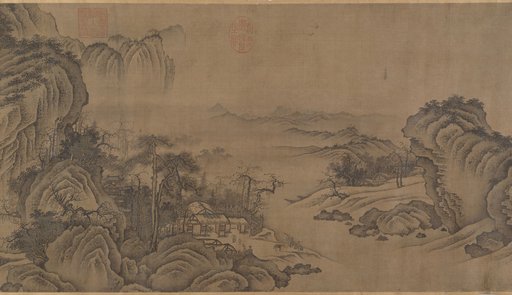
The work is a landscape painting that depicts a mountain, serving as the primary subject of the composition.
The work is a landscape painting that depicts a mountain, serving as the primary subject of the composition. Created in 1639, the piece is executed in ink and color on silk, mounted as a fan within an album leaf. As a landscape genre work from China, the mountain imagery functions as the central iconographic element, representing the natural world within the artistic tradition of the period.
The anonymous artist, sometimes attributed to Yan Wengui, focuses entirely on this natural form without depicting human figures or architectural structures in the available descriptions. The subject matter aligns with the broader category of Chinese landscape painting, where mountains often symbolize permanence and spiritual elevation, though the specific symbolic interpretation is defined by the depiction of the mountain itself.
Technique & Style
Created in 1639, this work is executed in ink and color on silk, originally fashioned as a fan before being remounted as an album leaf. The piece measures 23.5 by 23.8 centimeters and originates from China. Stylistically, it belongs to the landscape genre, featuring a depiction of a mountain.
The medium of silk supports the application of both ink and pigment, characteristic of Chinese painting traditions of the period. While the artist is generally identified as Yan Wengui or remains anonymous, the formal qualities align with traditional landscape painting techniques of the era. The current presentation as an album leaf indicates a specific handling method for preservation and display within a collection, such as that of the Metropolitan Museum of Art.
History & Provenance
The work titled Untitled was produced in 1639 in China as a fan leaf mounted in an album, executed in ink and color on silk. It is attributed to the painter Yan Wengui or to an unidentified hand, and depicts a mountain landscape. The piece entered the collection of the Metropolitan Museum of Art, where it remains on view.
Its creation is recorded as part of a landscape painting genre, and its dimensions measure 23.5 × 23.8 cm. The work’s provenance traces from its origin in 17th‑century China to its acquisition by the museum, documented in the museum’s collection records.
Overview
This untitled landscape, executed in ink and color on silk, was created by Yan Wengui in 1639. Originally a fan painting, it depicts a mountain scene and was later affixed into an album. The work showcases the artist's approach to natural forms, rendered with delicate brushwork and subtle washes. Its preservation as an album leaf offers insight into historical collecting practices.
Legacy
The depiction of misty, towering peaks in this work reflects a long-standing tradition in Chinese landscape art. Such compositions frequently served as inspiration for subsequent generations of painters. Artists often studied and reinterpreted these established motifs, contributing to an evolving visual dialogue around the representation of natural grandeur and the symbolic significance of mountains within the cultural imagination.
Artist & collection

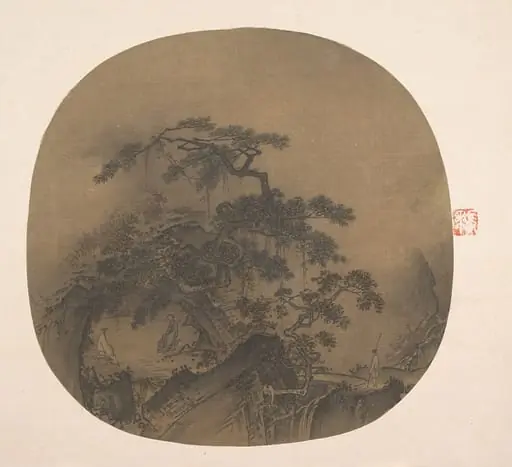 南宋 佚名 洞天論道圖 團扇|Conversation in a cave
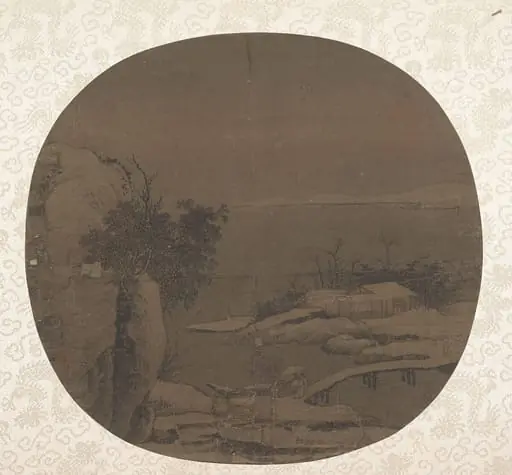 明? 佚名 舊傳燕文貴 雪橋送別 扇|Bridge in Snow
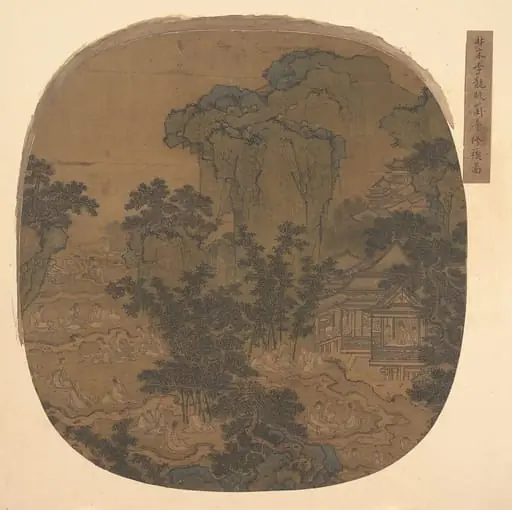 明 佚名 舊傳李公麟 蘭亭修禊圖 團扇|Gathering at the Orchid Pavilion
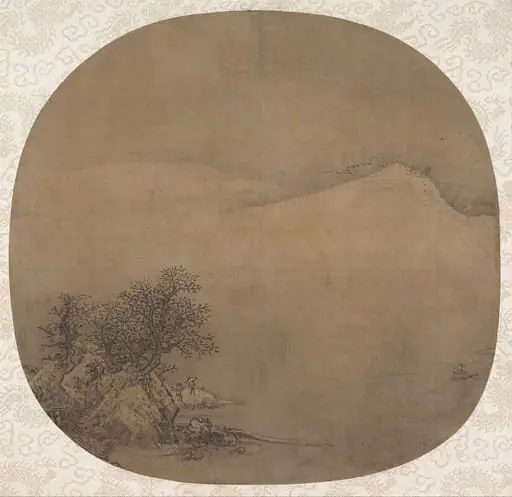 南宋 佚名 雪景待渡圖 團扇|Waiting for the Ferry
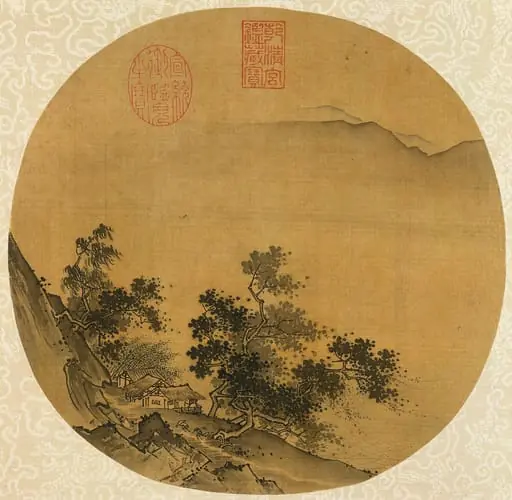 南宋 佚名 倣夏珪 冒雨尋莊圖 團扇|Returning Home in a Driving Rain
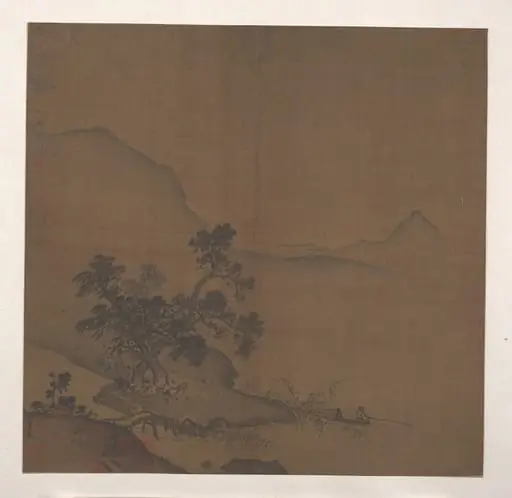 Untitled
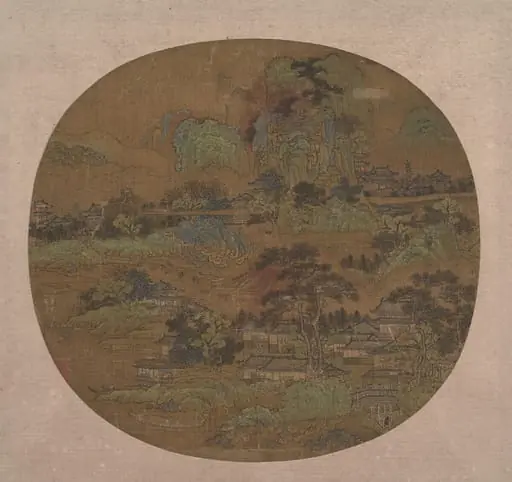 明 佚名 樓閣江帆圖 團扇|Village and Temples in Jiangnan
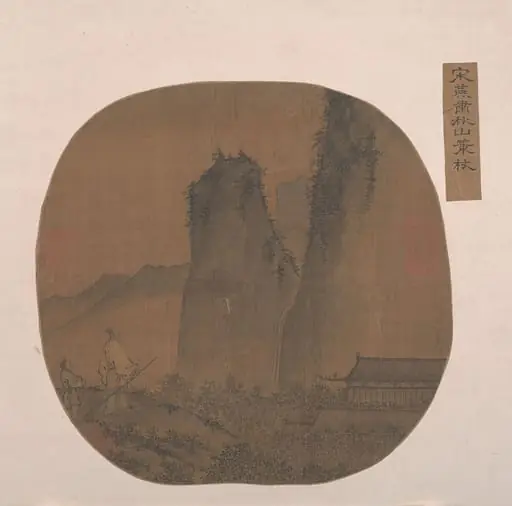 Untitled
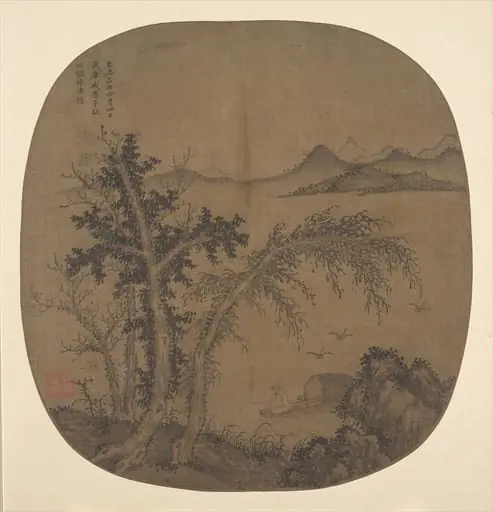 元 盛懋 秋林漁隱圖 團扇|Recluse Fisherman, Autumn Trees
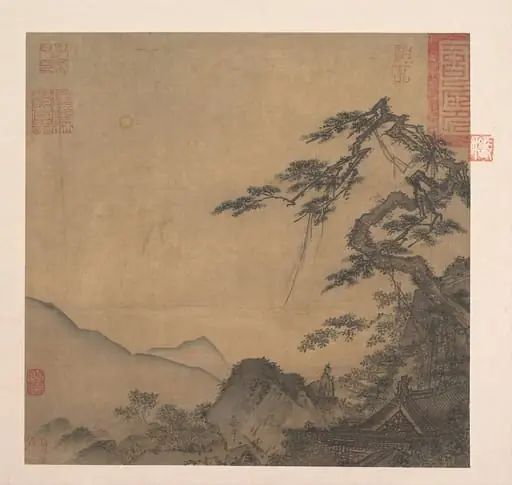 南宋 馬麟 松下高士圖 冊頁 絹本|Landscape with great pine