Artwork
Figures with Calligraphy of a Passage from the "Heike Monogatari" ("The Tales of Heike")
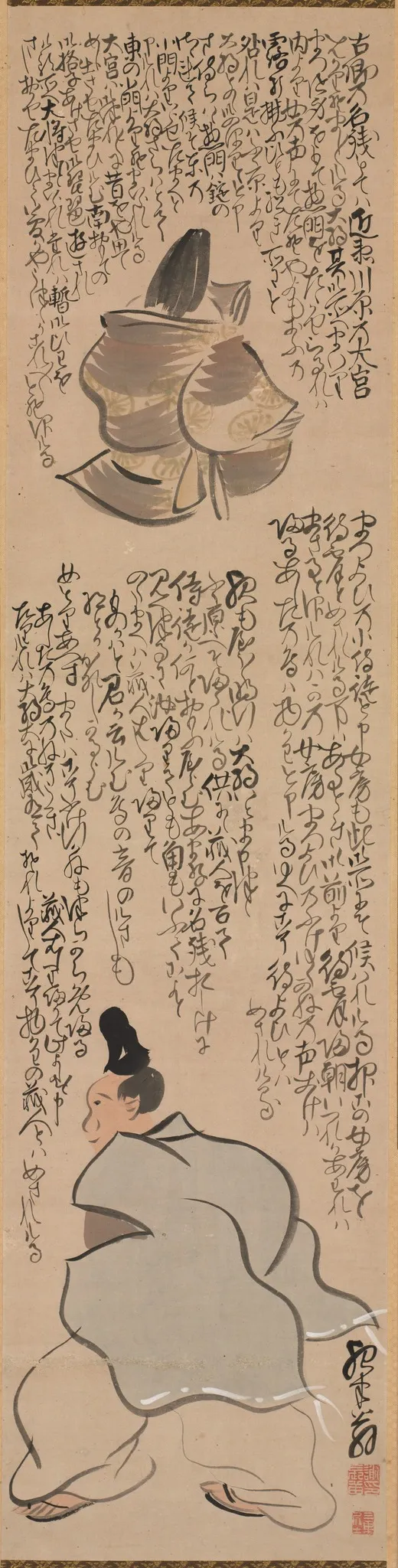
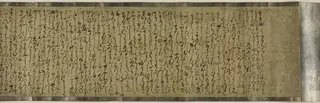
Figures with Calligraphy of a Passage from the "Heike Monogatari" ("The Tales of Heike") is an unspecified painting by the Joseon dynasty painting artist Yosa Buson. It dates from 1756 and is held in the collection of the Cleveland Museum of Art.
About this work
History & Provenance
No further details regarding specific commissions, previous owners, or the exact circumstances of its creation are provided in the available records.
Created in 1756 by the Japanese artist Yosa Buson, this painting originates from Japan. The work, which depicts figures alongside calligraphy from "The Tales of Heike," has been part of the collection at the Cleveland Museum of Art since at least 1971, where it is cataloged under the accession number 1971.233. No further details regarding specific commissions, previous owners, or the exact circumstances of its creation are provided in the available records.
The painting is part of the Cleveland Museum of Art's collection, listed under inventory number 1971.233. It was created in Japan in 1756 and is cataloged as a painting by Yosa Buson. The work has been featured in exhibitions at the museum, including a 1971 exhibition of Japanese paintings.
Context
Yosa Buson created Figures with Calligraphy of a Passage from the Heike Monogatari in 1756, a work reflecting his mastery of Edo-period literati painting and poetic sensibility. The painting, housed in the Cleveland Museum of Art, exemplifies his integration of visual art with classical Japanese literature, particularly war tales like The Tales of Heike. Its composition and stylistic elements align with Buson's broader artistic practice, which blended haiku composition with brush painting, situating the piece within the cultural milieu of 18th-century Edo Japan.
Legacy
The painting has influenced later Japanese artists through its synthesis of poetic narrative and visual composition. Its presence in a major museum collection has contributed to renewed scholarly attention on Edo-period narrative painting. The work is frequently referenced in studies of Buson’s role in integrating literary themes into visual art. Its legacy is tied to its cultural significance within Japanese art history.
Overview
Created in 1756 by the Edo‑period poet‑painter Yosa Buson, this work is a painted composition that combines imagery with extensive calligraphic text. It is part of the collection of the Cleveland Museum of Art. The piece presents a juxtaposition of human figures, a stylized aquatic creature, and a dense field of vertical script drawn from a classic Japanese narrative.
Subject & Meaning
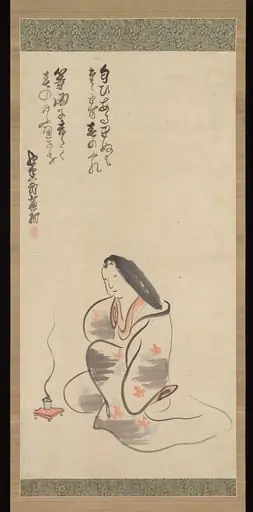
The scene features two seated individuals dressed in loose robes and black headgear, positioned before a large, exaggerated fish whose mouth is opened wide. The surrounding space is filled with continuous vertical writing taken from a passage of the Heike Monogatari, a medieval chronicle of war and tragedy, suggesting a meditation on the story’s themes through visual and textual interplay.
Technique & Style
Buson employs a restrained palette and bold, uncomplicated outlines to delineate the figures and the fish, allowing the surrounding script to dominate the visual field. The calligraphic characters are rendered in a flowing, brush‑stroke style that integrates with the painted forms, creating a balanced composition where text and image share equal prominence.
Artist & collection


 四季の花|Poetry, from the illustrated book Flowers of the Four Seasons
 Three poems from the “Collection of Poems Ancient and Modern” (Kokin wakashū), known as the “Imaki Fragment” (Imaki-gire)
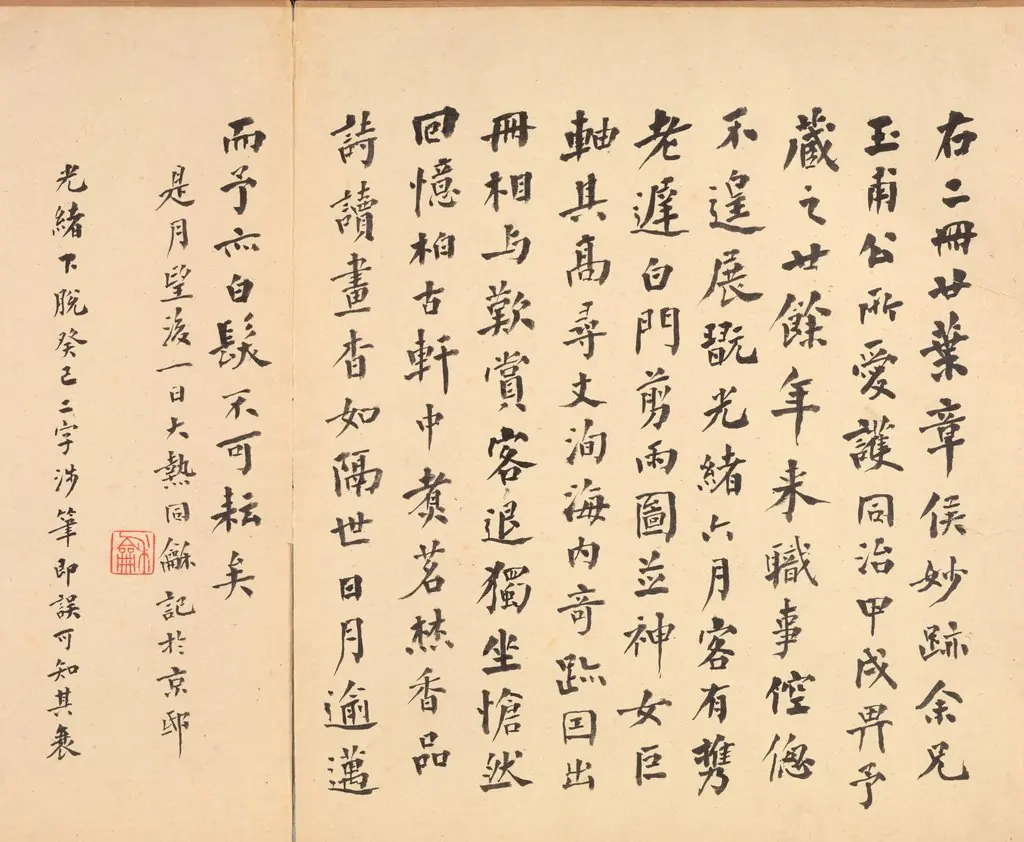 Paintings after Ancient Masters: Calligraphy
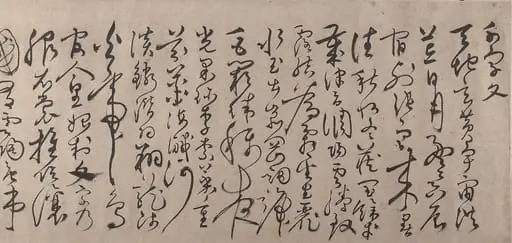 Untitled
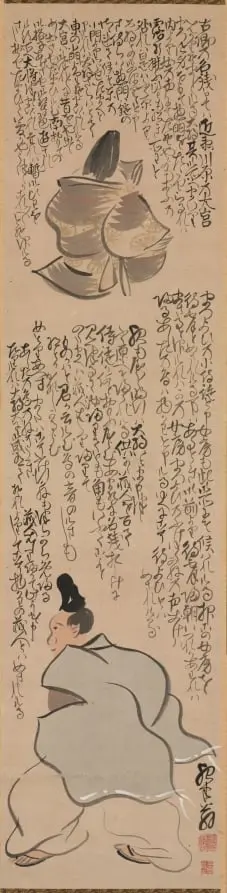 Moon Viewing, from The Tale of Heike
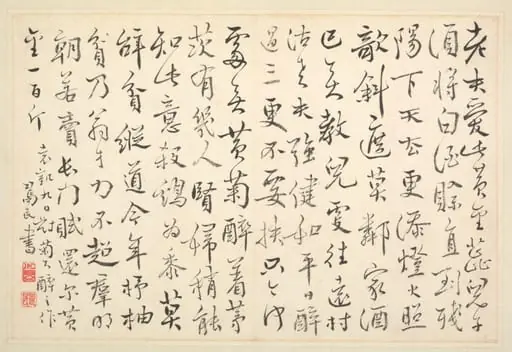 Album of Calligraphy and Paintings
 Sumiyoshi Monogatari