Artwork
与謝蕪村筆 奥の細道図扇面|Scene from The Narrow Road to the Deep North
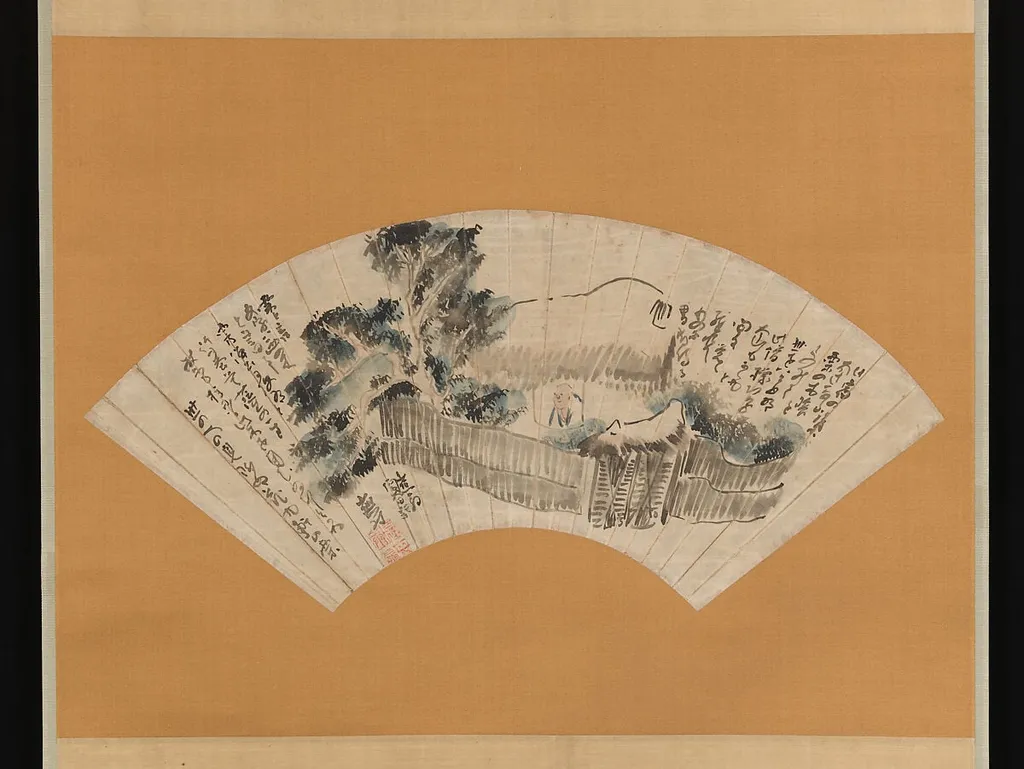
与謝蕪村筆 奥の細道図扇面|Scene from The Narrow Road to the Deep North is an ink painting by the Baroque artist Yosa Buson. It dates from 1780 and is held in the collection of the Metropolitan Museum of Art.
About this work
Subject & Meaning
The fan painting by Yosa Buson, dated 1780, depicts a scene from The Narrow Road to the Deep North, showing a man standing beside a fence in a simple landscape. The work, executed in ink and color on paper and mounted as a hanging scroll, reflects the Japanese Edo-period interest in travel literature and modest natural settings. It is part of the collection of the Metropolitan Museum of Art.
Technique & Style
The artist employed ink and color applied to a paper support, a medium choice that accommodates the delicate, linear qualities typical of his landscape style.
Created in 1780, this work by Yosa Buson originated as a painting on a folding fan before being remounted as a hanging scroll. The artist employed ink and color applied to a paper support, a medium choice that accommodates the delicate, linear qualities typical of his landscape style. The composition depicts a man and a fence, rendered with the formal precision characteristic of Buson's late career.
The transformation from a handheld fan to a vertical hanging scroll alters the viewing context, presenting the scene as a permanent wall-mounted object rather than a portable item. The physical condition and specific handling details of the mounting are not specified in the available records, though the survival of the piece in the collection of the Metropolitan Museum of Art indicates its preservation as a significant example of Edo-period fan painting.
History & Provenance
The work is held by the Metropolitan Museum of Art, New York, where it is recorded under accession number 2015.500. The fan painting entered the museum's collection in 2015. The available sources do not record a detailed exhibition history for the work.
Overview
Created in 1780 by Yosa Buson, a renowned Edo-period painter and haiku poet, this work depicts a scene inspired by Matsuo Bashō's travelogue Oku no Hosomichi (The Narrow Road to the Deep North). Executed in ink and light color on paper, the composition is originally a folding fan that has been remounted as a hanging scroll. The image features a solitary traveler wearing a wide straw hat, navigating a narrow path alongside a zigzagging wooden fence.
Buson's brushwork is characterized by swift, economical lines that define the fence and path with rhythmic precision, evoking the structure of haiku poetry. The pale sky and sparse landscape emphasize a sense of quiet solitude and the transient nature of the journey. This piece exemplifies Buson's unique synthesis of visual art and literary sensibility, where the arrangement of forms mirrors the cadence of verse.
As a late work from the final years of his life, it reflects his mature style, which prioritizes atmospheric suggestion and poetic resonance over detailed realism, securing his legacy as a master of the literati painting tradition in 18th-century Japan.
Context
As a prominent haiku poet, Yosa Buson often integrated literary sensibilities into his visual art. This fan, likely carried by an admirer of his verse, would have served as a portable object connecting the owner to Buson's artistic and poetic world. The artwork's intimate scale and personal nature align with the cultural practice of exchanging and appreciating such items among literati of the Edo period.
Artist & collection


 「残雨半村」図|“Lingering Rain over Half the Village”
 Snowy Landscape (Sekkei sansui zu)
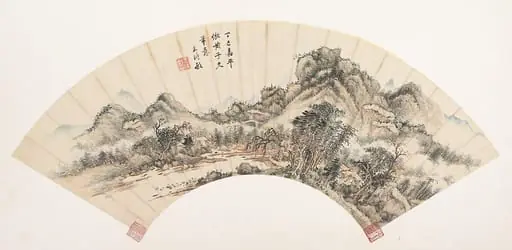 清 王時敏 倣黃子久筆意山水 扇頁|Landscape after Huang Gongwang
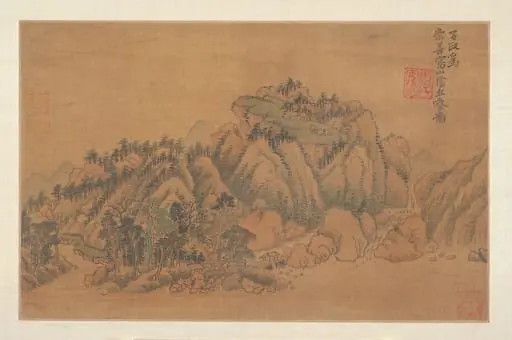 Untitled
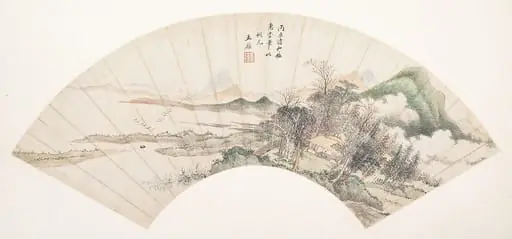 清 佚名 倣王鑑 倣惠崇山水圖 扇|Landscape in the Style of Huichong
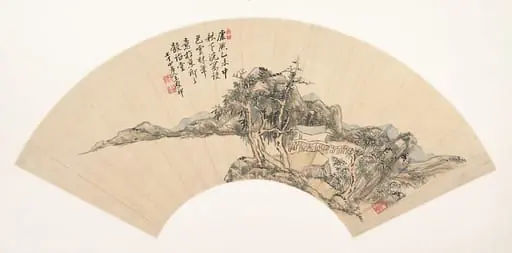 清 倣王原祁 倪雲林筆意山水 扇面|Landscape in the Style of Ni Zan
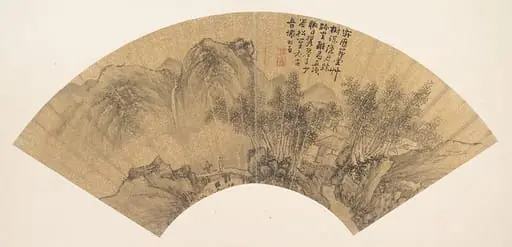 明 謝時臣 隱居圖 扇面|Landscape with Figure
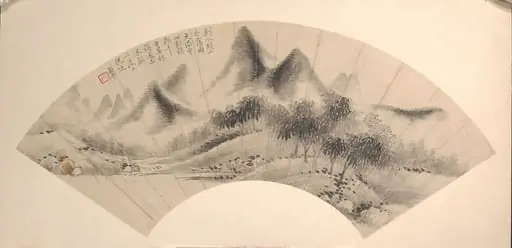 清 佚名 倣惲壽平 倣米家山水圖 扇|Landscape
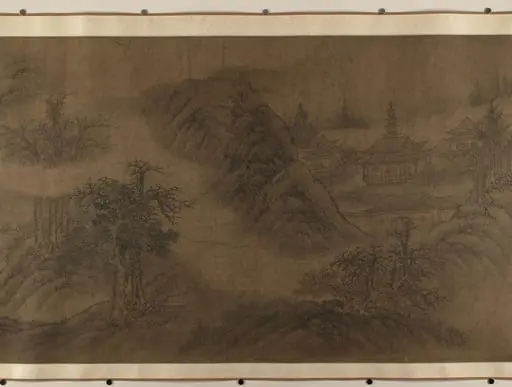 明 佚名 舊傳燕文貴 溪山行旅圖 卷|Landscape