Artwork
Untitled
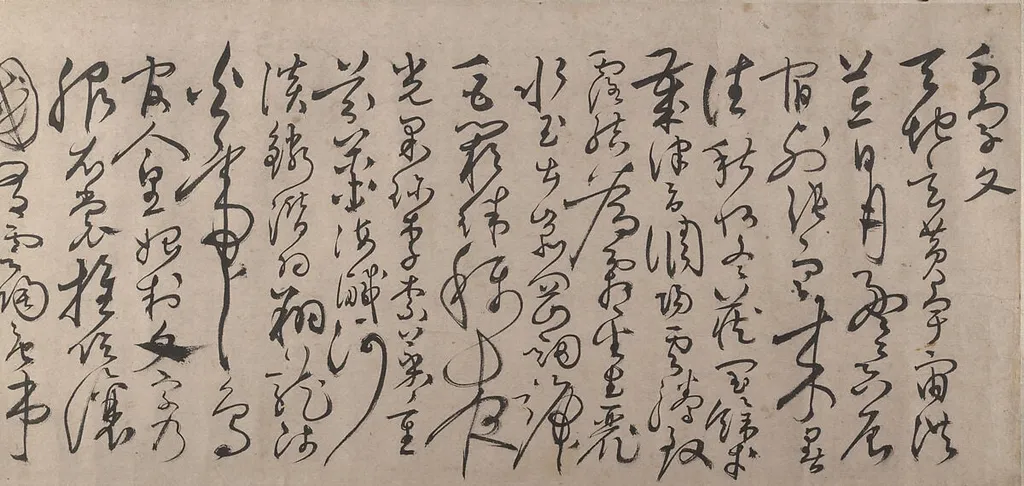
Untitled is an ink painting by the Ming dynasty painting artist Zhang Bi. It dates from 1478 and is held in the collection of the Metropolitan Museum of Art.
About this work
You see black ink on a long strip of paper, tiny, precise strokes forming mountains, trees, and a few lines of Chinese characters.
This scroll was made in 1478, when artists often mixed painting and writing. The characters aren’t just labels; they’re part of the scene, like a quiet conversation between the hand and the brush.
If you like how the ink flows, look up the subject: calligraphy.
Subject & Meaning
The piece, held at the Metropolitan Museum of Art, exemplifies how calligraphic form can serve as symbolic language within painting.
The handscroll by Zhang Bi, dated 1478, centers on the motif of calligraphy, presenting written characters as the visual subject rather than a representational scene. In Chinese literati tradition, calligraphy functions as both artistic expression and a conduit for philosophical thought, often embodying spiritual or scholarly ideals. By foregrounding the act of writing, the work suggests a meditation on the relationship between language, nature, and the self, aligning with the landscape genre’s contemplative tone.
The piece, held at the Metropolitan Museum of Art, exemplifies how calligraphic form can serve as symbolic language within painting.
Technique & Style
Untitled is a Chinese handscroll painted in ink on paper during the late fifteenth century. The work belongs to the painting category and is classified as a landscape, yet its imagery incorporates calligraphic forms that echo the brush strokes of contemporary calligraphy. Executed in China, the piece was created in 1478 and later entered the collection of the Metropolitan Museum of Art, where it remains on display.
Its formal qualities reflect the restrained tonal modulation and linear precision typical of ink‑based landscape scrolls, while the support’s elongated format dictates a sequential viewing experience.
History & Provenance
The handscroll was created in 1478 by Zhang Bi, executed in ink on paper as a landscape work that incorporates calligraphy. According to its cataloguing, the painting was produced in China. It is now part of the collection of the Metropolitan Museum of Art, where it is held as a classified painting.
The available records do not specify the circumstances of its commission, any intermediate ownership between its creation and its arrival at the Metropolitan Museum of Art, or details of its acquisition by the institution.
Overview
Created in 1478, this hand‑scroll by Zhang Bi presents a monochrome landscape rendered in ink on paper. The work unfolds as a narrow, elongated composition where delicate brushwork suggests distant mountains, sparse trees, and interspersed Chinese characters. The integration of pictorial and textual elements reflects a unified visual discourse rather than a simple illustration.
Artist & collection


- Album of Calligraphy and Paintings
 四季の花|Poetry, from the illustrated book Flowers of the Four Seasons
 Untitled
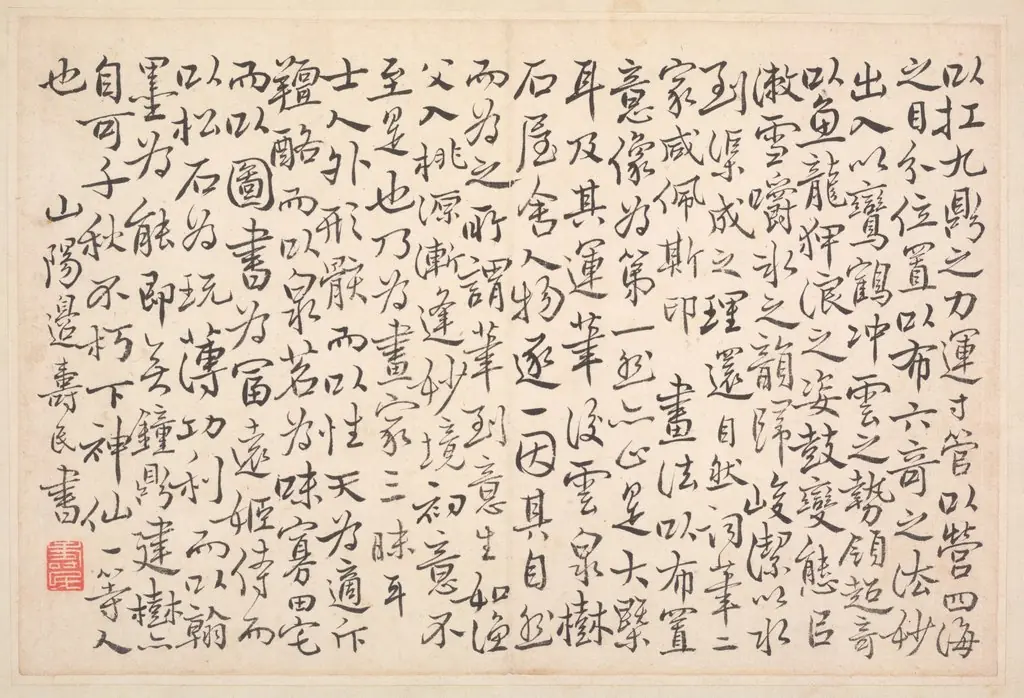 Album of Calligraphy and Paintings
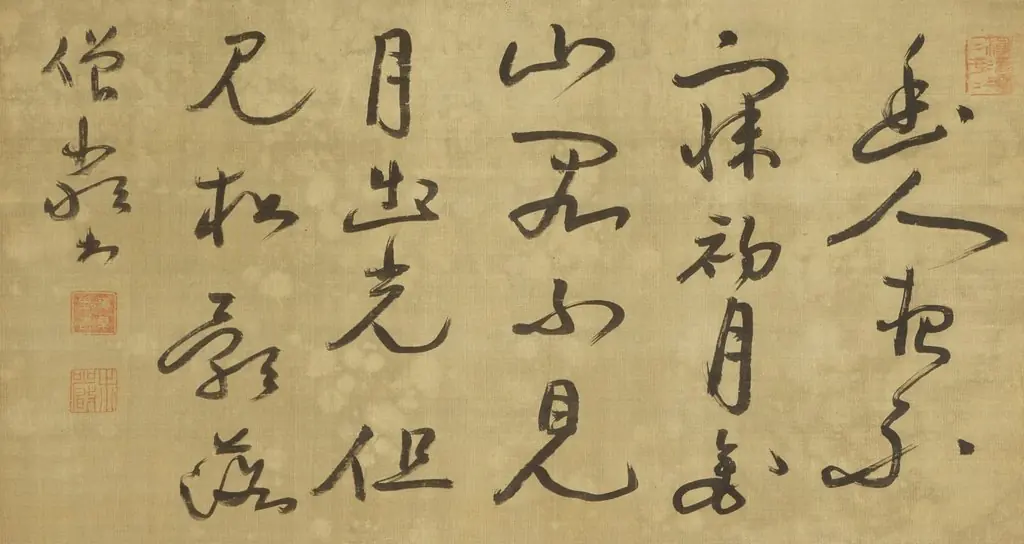 Poem (The Hermit Does Not Sleep at Night)
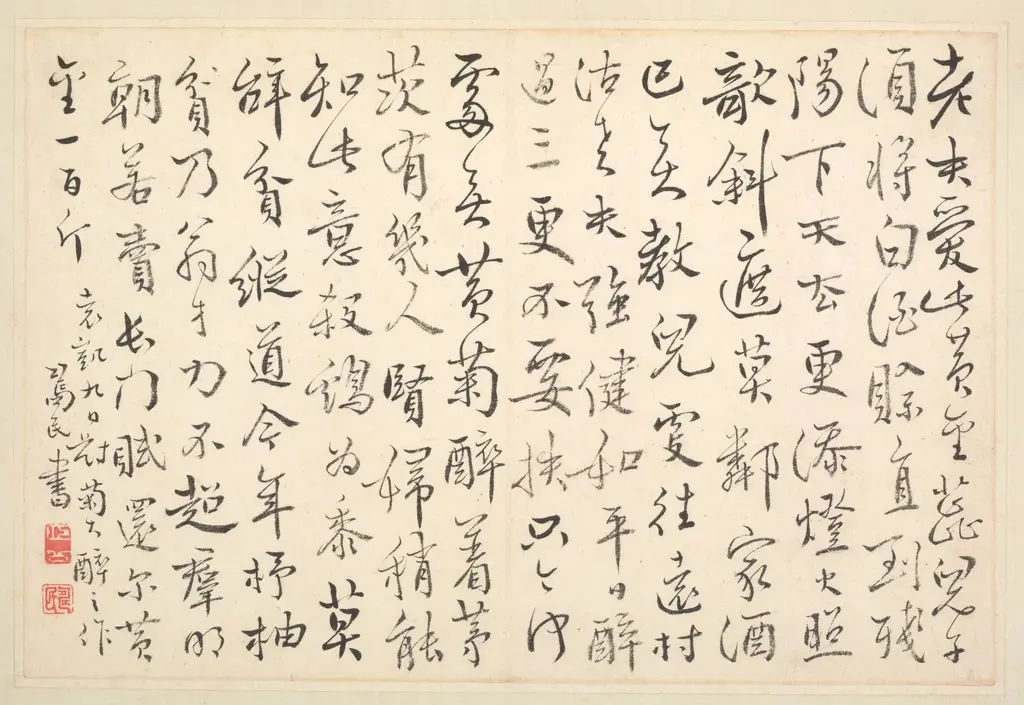 Album of Calligraphy and Paintings
 Sumiyoshi Monogatari
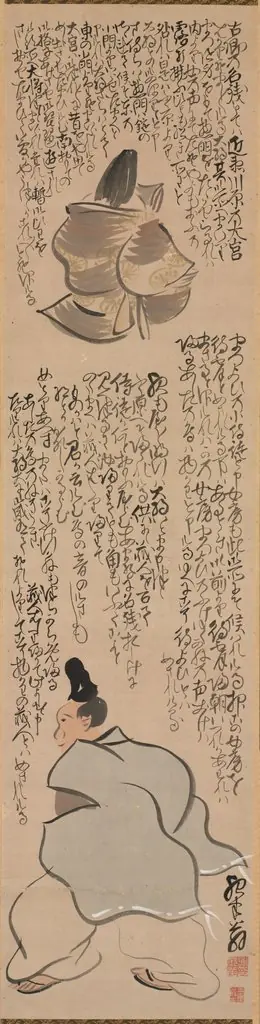 Figures with Calligraphy of a Passage from the "Heike Monogatari" ("The Tales of Heike")
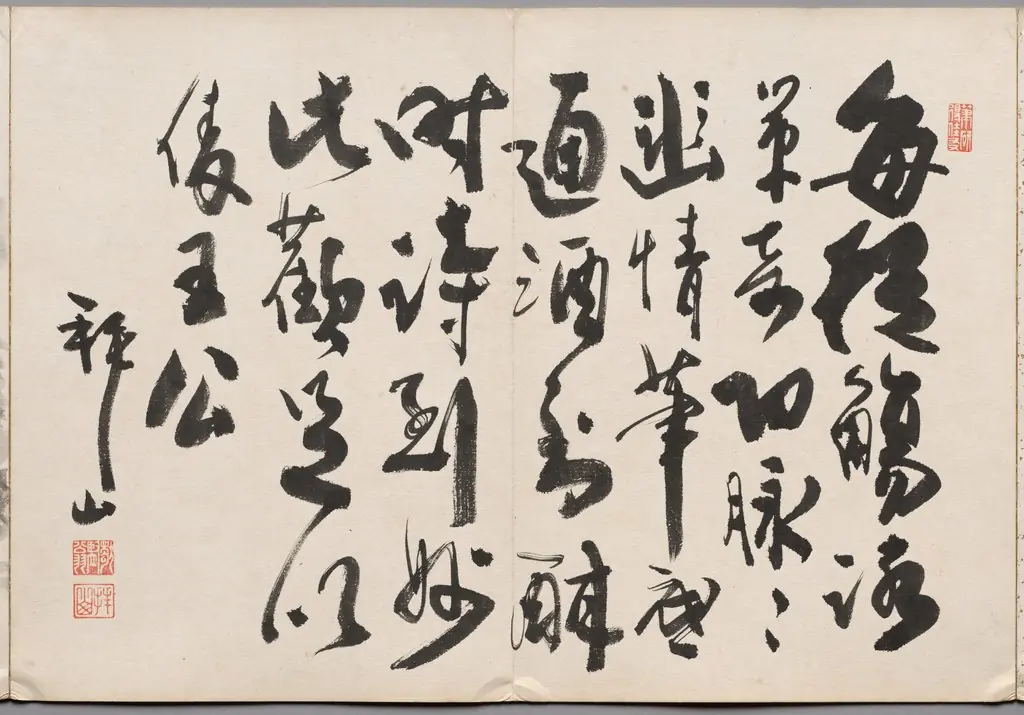 Preface from Album of Paintings by Haizan
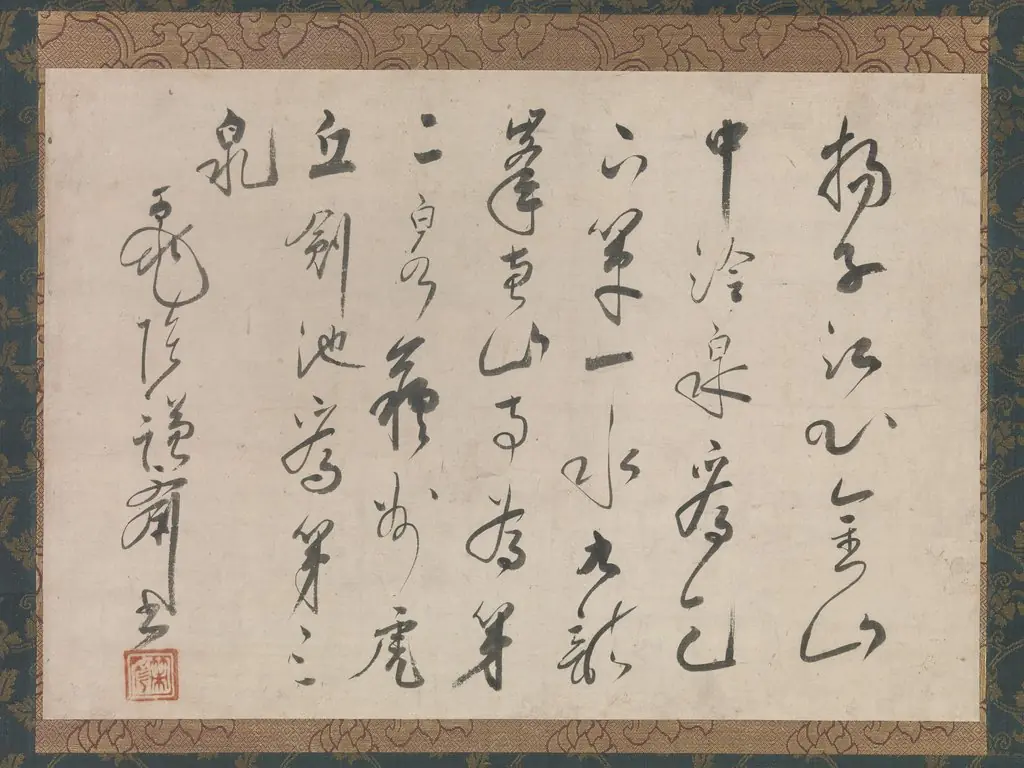 Account of the Three Springs of Jiangsu Province in China
 Preface from Album of Paintings by Haizan
 Picking Lotuses
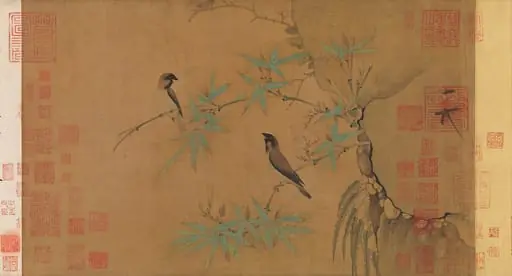 北宋 徽宗 竹禽圖 卷|Finches and bamboo
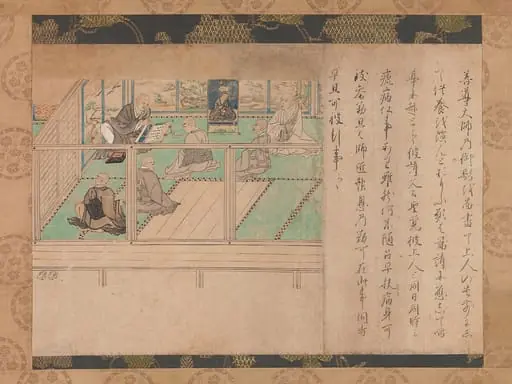 拾遺古徳伝絵断簡|Illustrated Biography of Hōnen (Shūikotokūden-e)
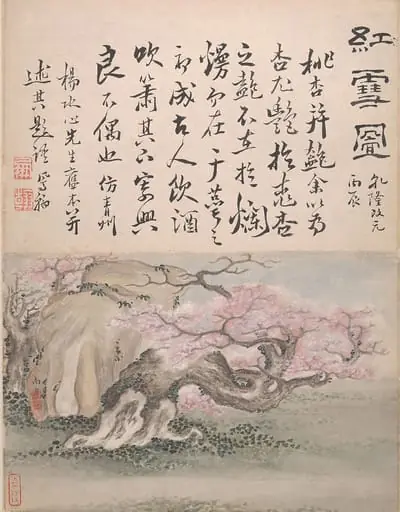 清 傳高鳳翰 書畫合璧 冊|Landscapes and Calligraphy
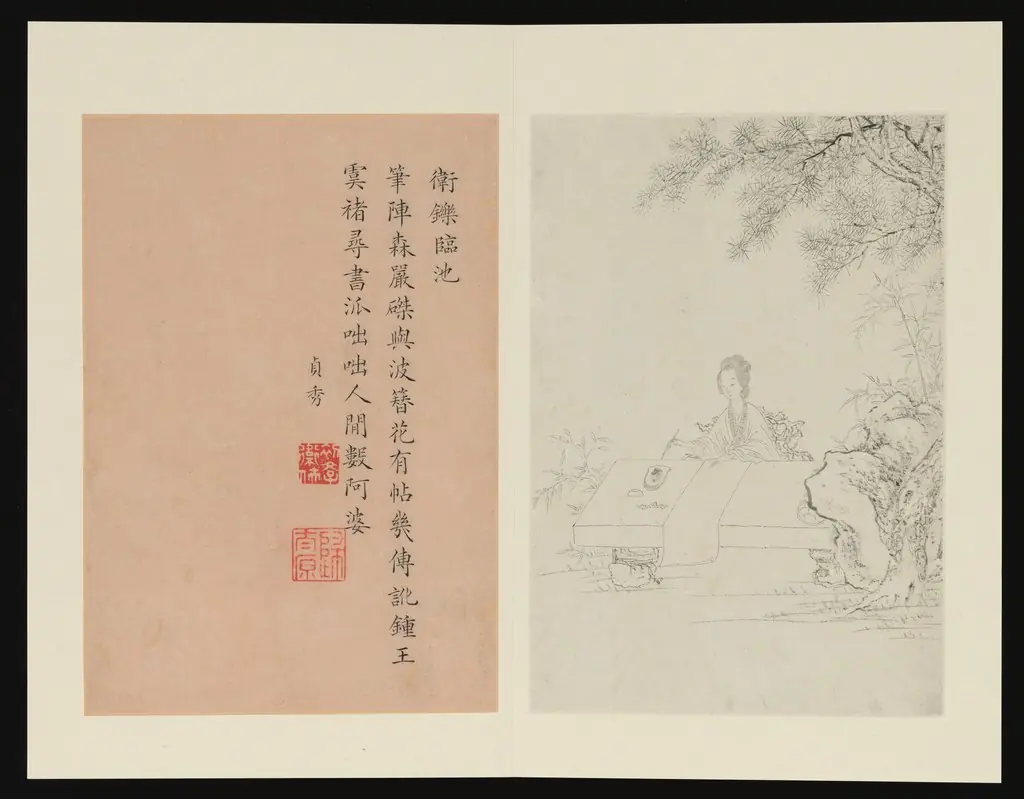 Famous Women
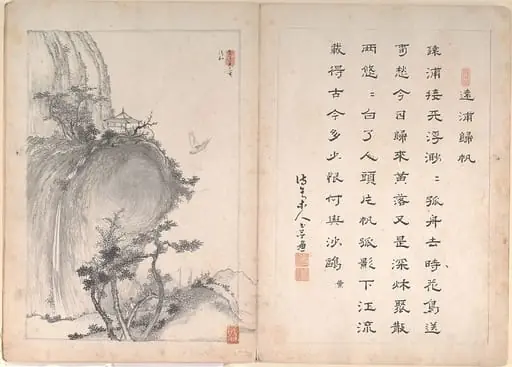 清 詩午閑人 瀟湘八景詩畫 冊|Eight Landscape Scenes and Calligraphy
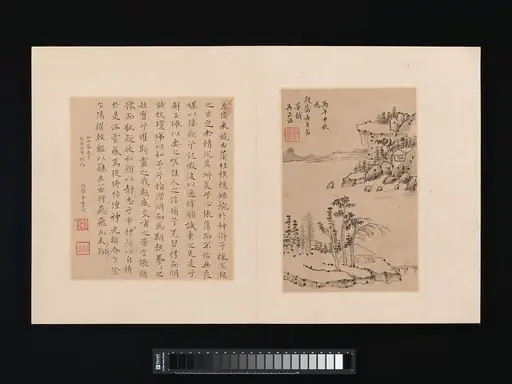 清 諸家 名家書畫 冊|Album of painting and calligraphy for Maoshu
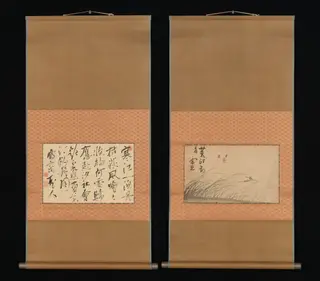 Fishing Boat on Reed Covered Bank and Calligraphy
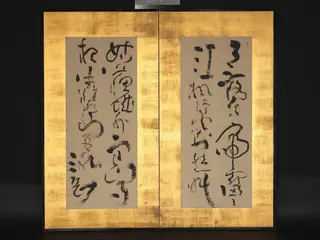 池大雅書 「楓橋夜泊」屏風|"Maple Bridge Night Mooring"