Artwork
Maria van der Burght, eerste echtgenote van François Leidecker
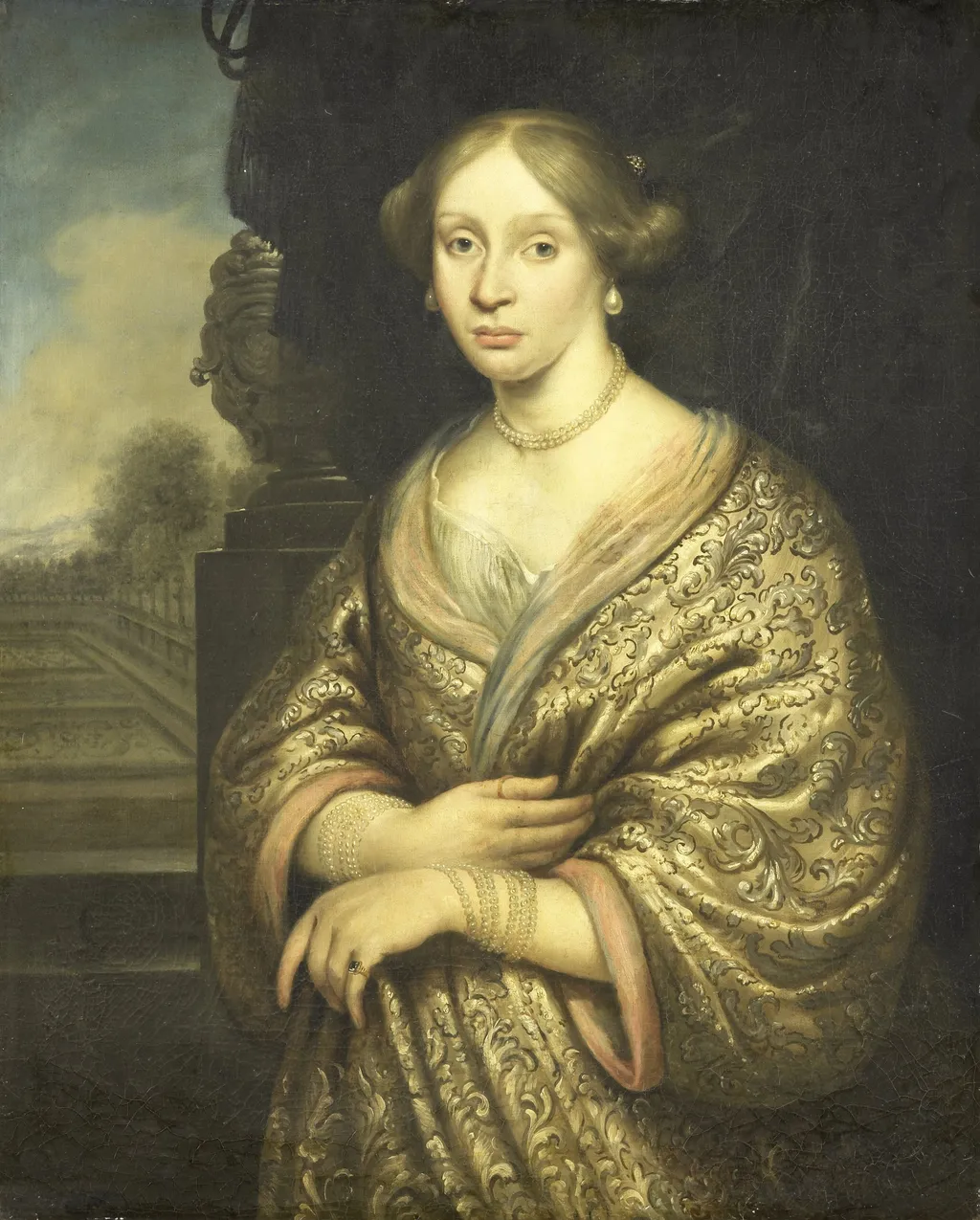
Maria van der Burght, eerste echtgenote van François Leidecker is an oil painting by the Dutch Golden Age artist Zacharias Blyhooft. It dates from 1674 and is held in the collection of the Rijksmuseum.
About this work
The way light hits her face and the dark background creates a strong contrast.
A woman stands in front of a dark background, holding a draped cloth. She wears a fancy gold-patterned robe with a white undergarment. Her hands are bare, and she has a serious look on her face. The background shows a faint landscape with trees and a sky.
This painting was made in 1674 by Zacharias Blyhooft. The way light hits her face and the dark background creates a strong contrast.
Look up chiaroscuro to see how this lighting trick works.
Technique & Style
The portrait of Maria van der Burght, painted by Zacharias Blyhooft in 1674, is executed in oil paint on a canvas support. As a formal portrait, the work adheres to the conventions of the genre while capturing the likeness of the sitter, who was the first wife of François Leidecker. The painting measures 88.5 cm in height and 72 cm in width, presenting a standard vertical format for portraiture of the period.
The medium and support combination typical of Dutch Golden Age portraiture ensures the durability and richness of the oil application.
History & Provenance
The portrait of Maria van der Burght, first wife of François Leidecker, was painted by Zacharias Blyhooft in 1674, executed in oil on canvas. The work entered the collection of Jan van Swinderen, an early owner documented in the provenance record. It subsequently passed into the holdings of the Rijksmuseum, where it is currently held.
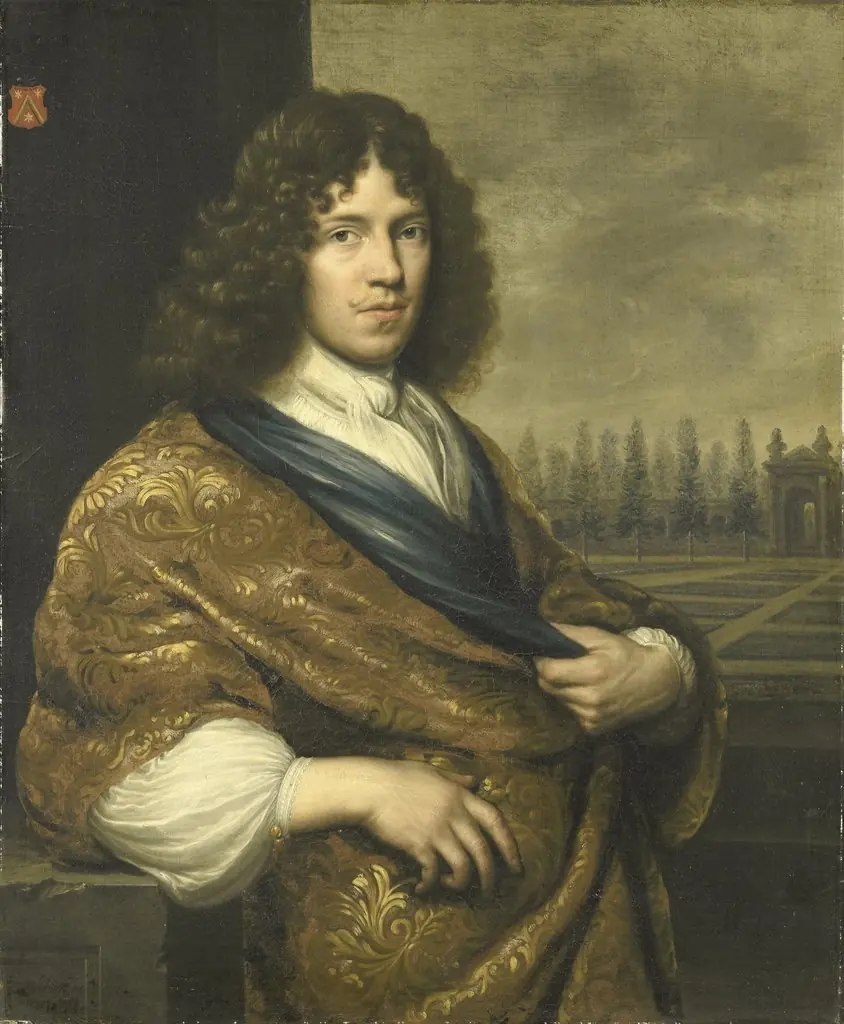
The painting was produced in the same year as the artist's other documented portrait of the couple's husband, François Leidecker, suggesting the two works were conceived as a pendant pair commissioned together in 1674.
Overview
Zacharias Blyhooft painted this oil-on-canvas portrait in 1674 during his working period in Middelburg, where he was active from 1658 or 1659 until his death in 1681. The work represents one of the limited number of paintings that survive from his hand. It is now preserved in the Rijksmuseum collection.
Subject & Meaning
The sitter is Maria van der Burght, identified as the first wife of François Leidecker. She appears against a dark ground, grasping a piece of draped fabric. Her expression is grave, and her uncovered hands are visible.
The costume consists of an ornate robe with gold patterning over a white underlayer, signaling the social standing typical of Dutch marriage portraiture.
Context
The work belongs to the Dutch Golden Age, the seventeenth-century period of economic expansion and cultural production in the Netherlands. Portraits of this type served to affirm the status and domestic alliances of prosperous families. Blyhooft's activity in Middelburg placed him within a regional market for such commissions outside the dominant artistic centers of Amsterdam and The Hague.
Own this work as a print
Artist & collection
Artist
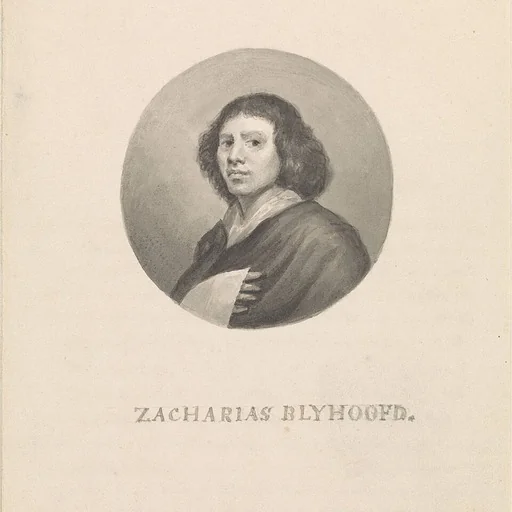
Zacharias Blyhooft (or Zacharias Blijhooft; c. 1630 – 1681, Middelburg) was a Dutch painter, of whom but little is known; he lived in Middelburg from 1658/9 until his death in 1681, but probably learnt his trade…

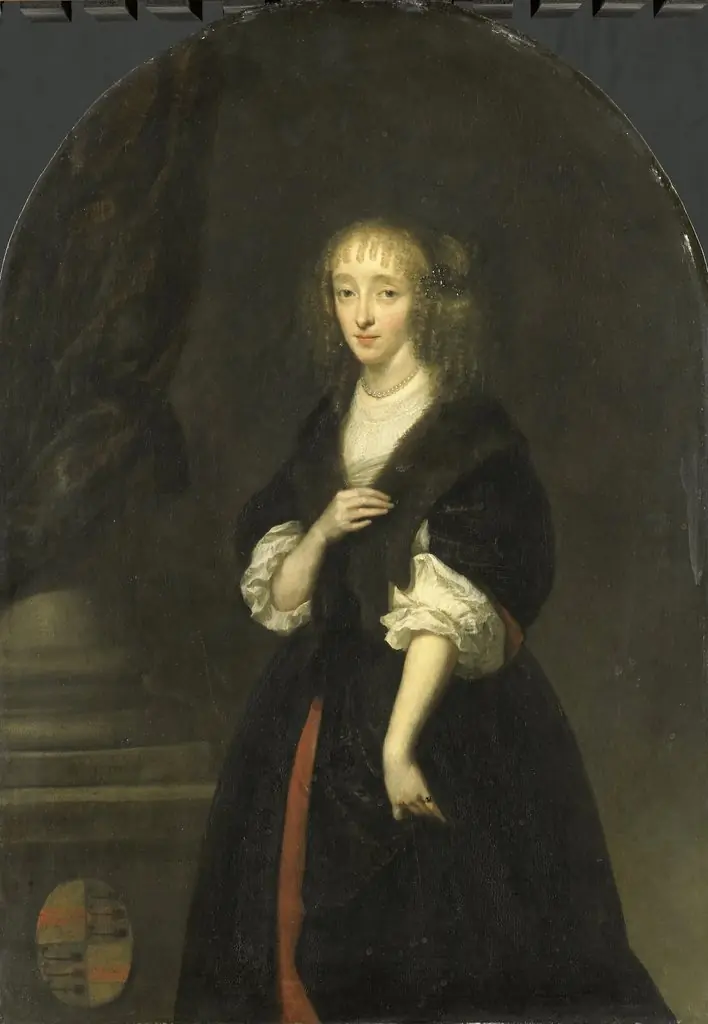 Portrait of Jacoba Bicker (1640-95), wife of Pieter de Graeff
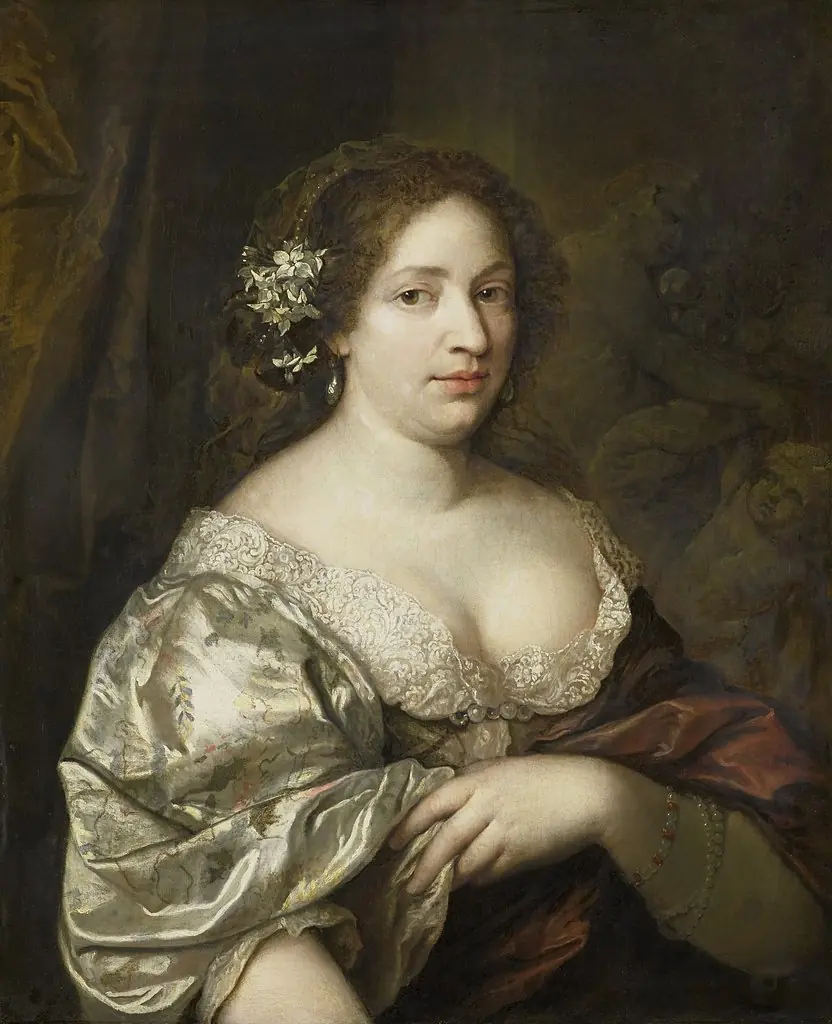 Portrait of Margaretha Godin (d. 1694), wife of the artist
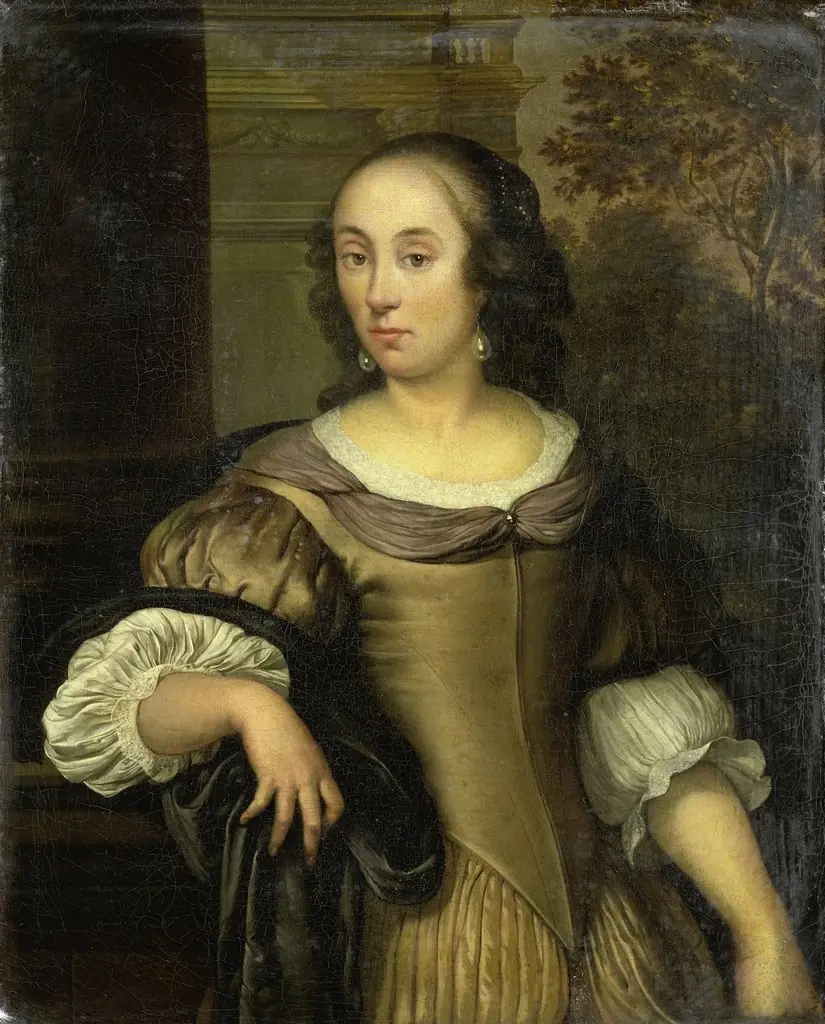 Portrait of a young woman
 Portrait of a young woman
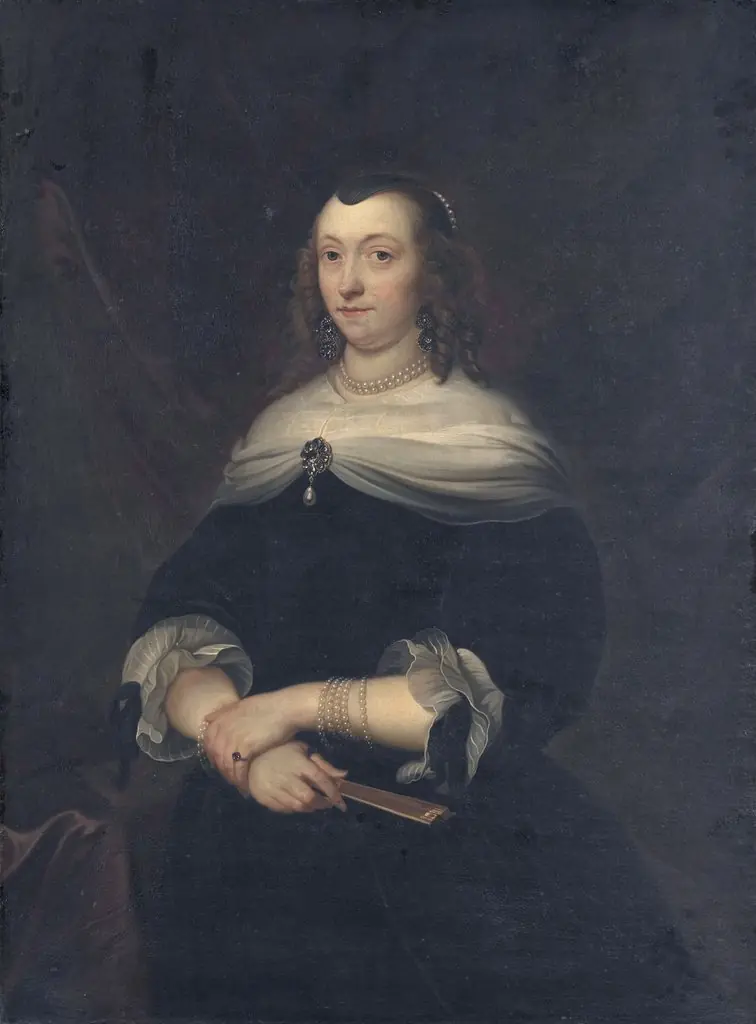 Portrait of a woman, thought to be Lucretia Boudaen
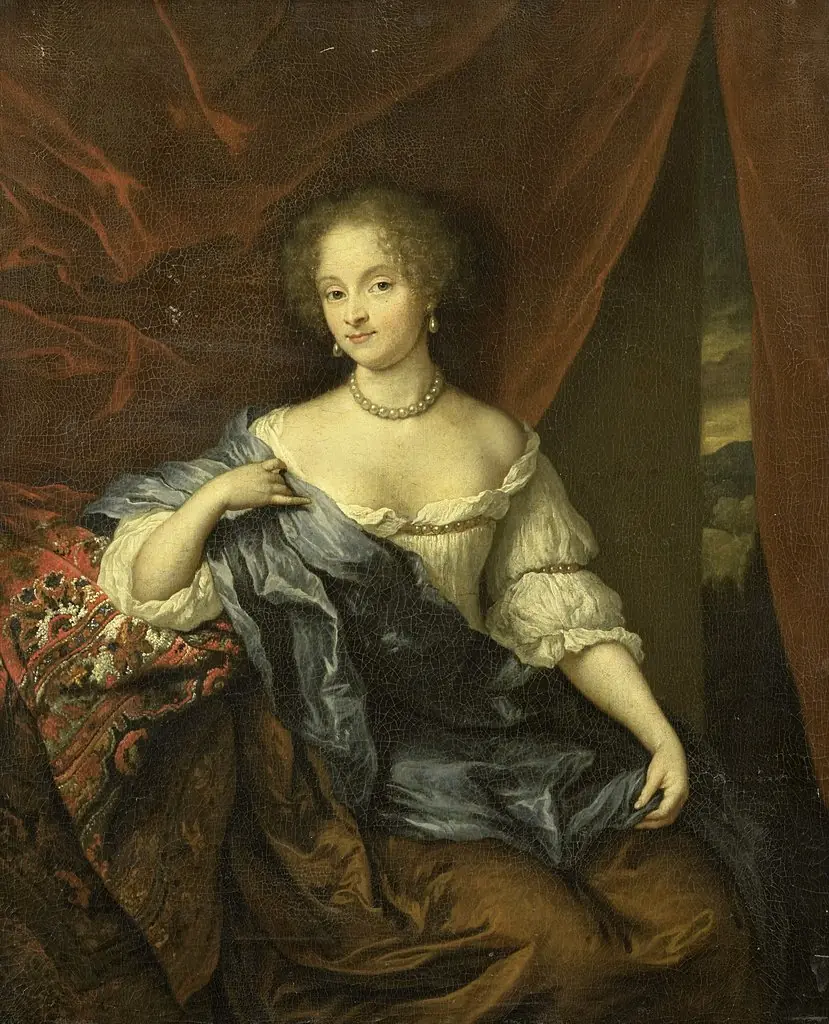 Portrait of a woman, possibly a member of the van Citters family
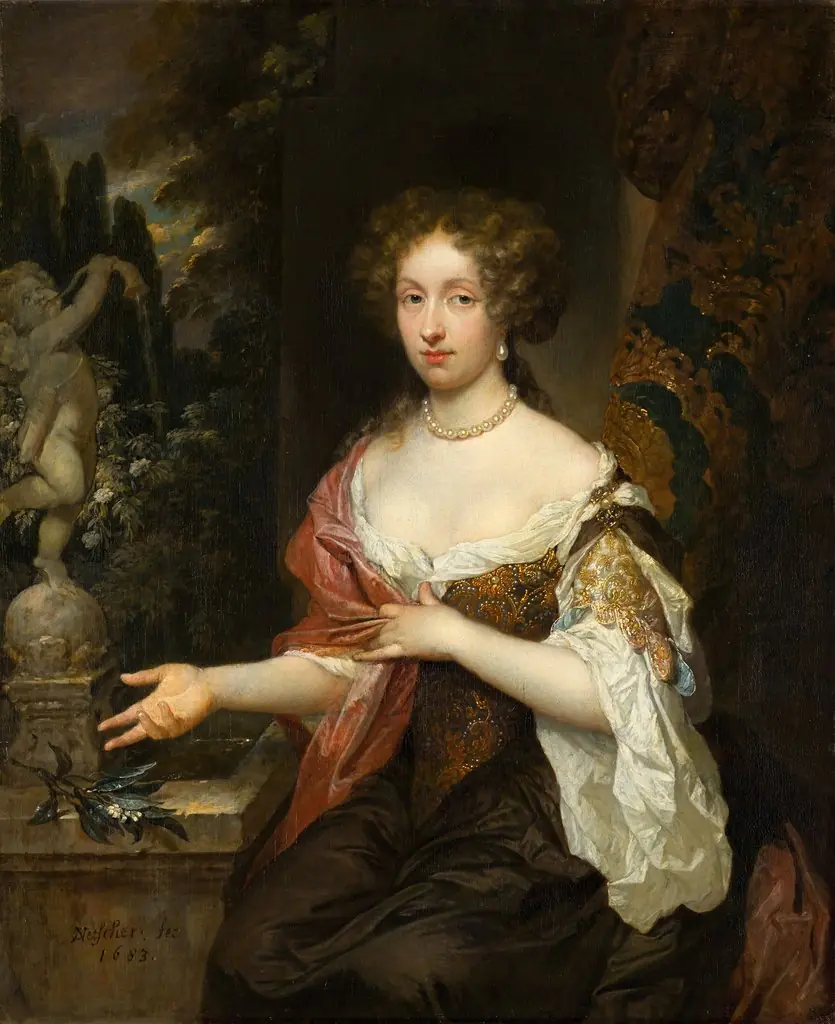 Portrait of Maria Timmers (1658-1753)
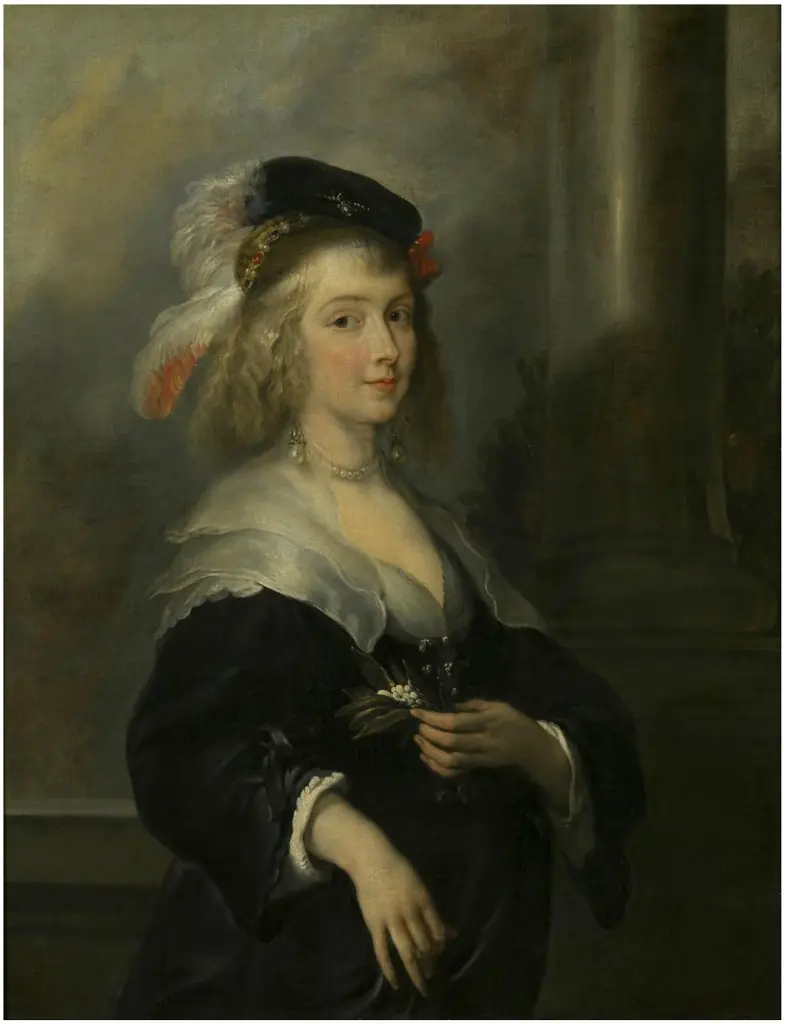 Helena Fourment
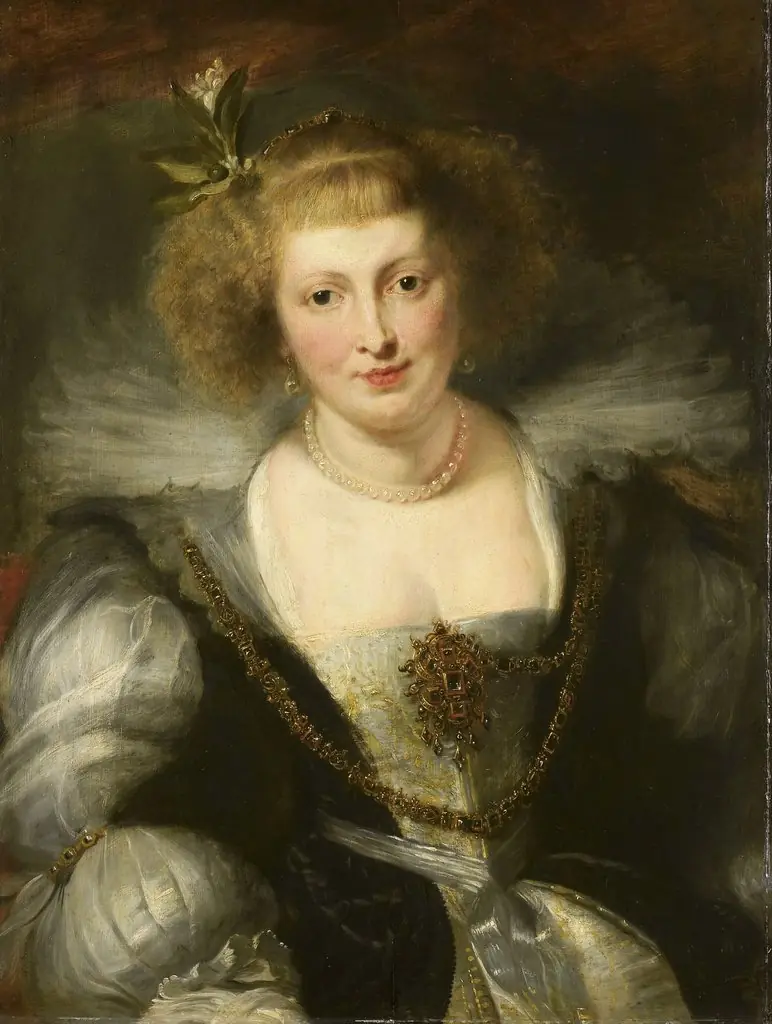 Helena Fourment (1614-73). The artist's second wife
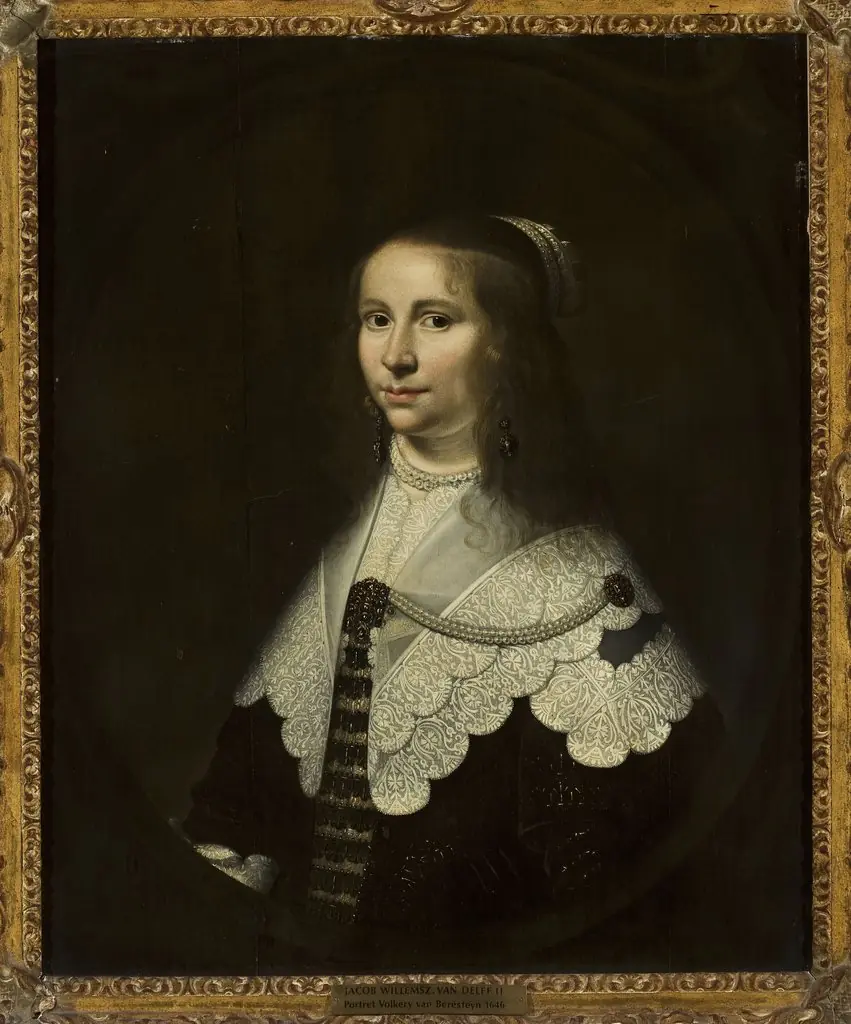 Portrait of Volkera van Beresteyn (1624–1653), wife of Salomon van Schoonhoven (1617–1653)
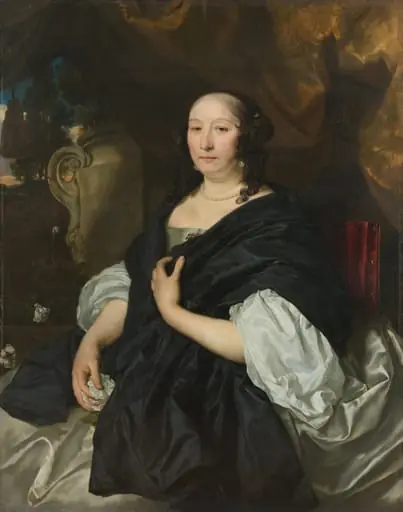 Portrait of Catharina van der Voort