Artwork
The Nun
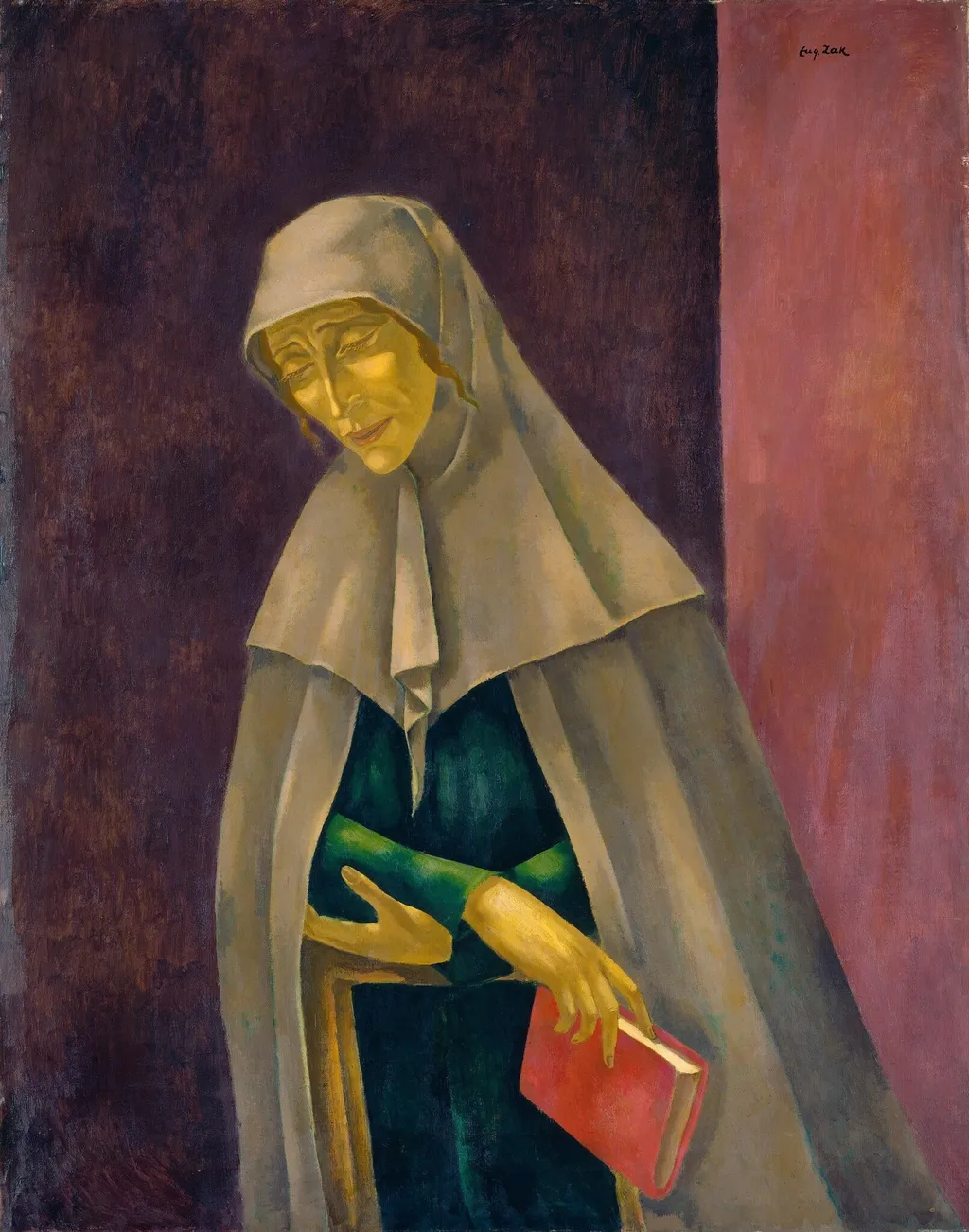
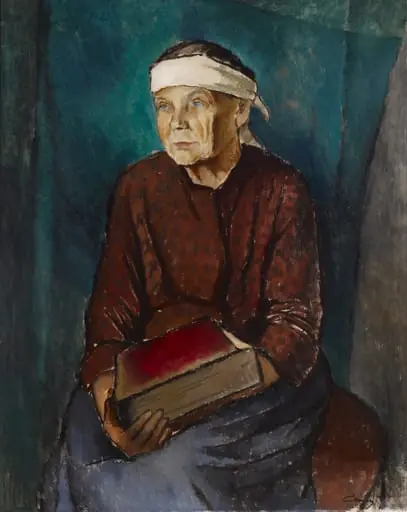
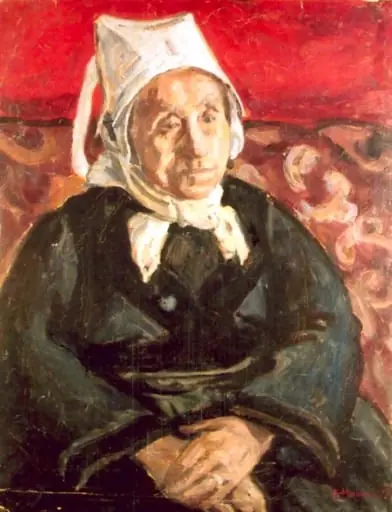
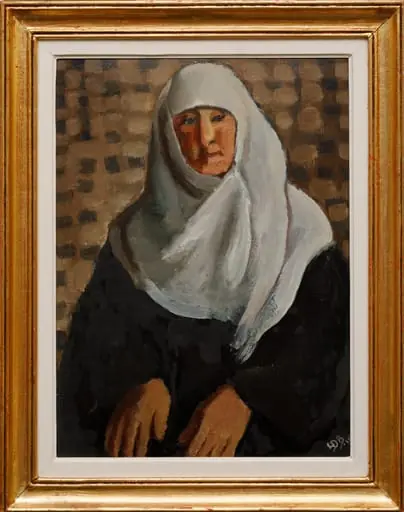
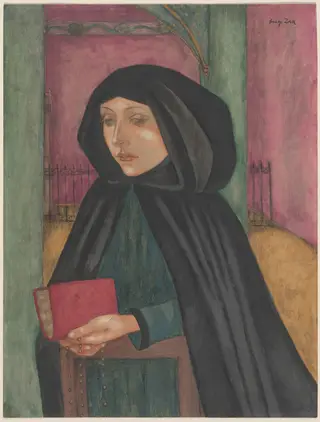
The Nun is an oil painting by the Impressionist artist Eugène Zak. It dates from 1905 and is held in the collection of the National Gallery of Art.
- Inscription
- Inscribed:upper right: Eug. Zak
About this work
Technique & Style
Eugène Zak's The Nun is an oil painting executed on a canvas support. The work measures 99.7 cm in height and 79.5 cm in width. Classified as a painting, the piece utilizes oil paint as its primary medium.
The physical dimensions and material composition confirm its status as a standard easel painting of the early 20th century.
History & Provenance
Its ownership history traces from Galerie Zak in Paris to the dealer Durand-Ruel et Cie, which sold the work to Chester Dale of New York in January 1929.
Eugène Zak executed The Nun as an oil painting on canvas. The work's documented ownership begins with the Galerie Zak in Paris, from which it was acquired by the firm Durand-Ruel et Cie, also based in Paris. In January 1929, Durand-Ruel sold the painting to Chester Dale of New York.
Following Dale's death in 1962, the artwork remained part of his estate until it was bequeathed to the National Gallery of Art in Washington, D.C., in 1964.
The painting is held in the collection of the National Gallery of Art in Washington, D.C. Its ownership history traces from Galerie Zak in Paris to the dealer Durand-Ruel et Cie, which sold the work to Chester Dale of New York in January 1929. Following Dale's death, the piece passed to his estate and was subsequently bequeathed to the National Gallery of Art in 1964. The provided records do not contain specific inventory numbers or a list of public exhibitions for this work.
Overview
Eugène Zak’s 1905 oil on canvas, titled The Nun, depicts a solitary female figure clothed in a somber dark dress and a white head covering. She holds a red book in her right hand, her gaze directed downward, and her head turned slightly to the left, creating a quiet, introspective presence.
Subject & Meaning
The attire and the book suggest a religious or scholarly devotion, inviting viewers to contemplate the inner life of the figure. The muted expression and downward eyes reinforce a mood of contemplation, while the red volume of the book provides a subtle focal point that hints at personal or spiritual significance.
Own this work as a print
Artist & collection