Artwork
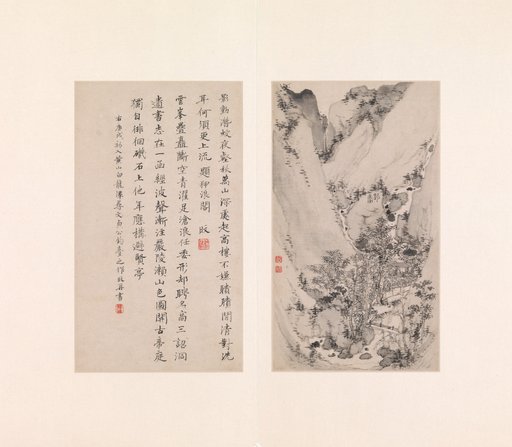
鄭旼 黃山八景 水墨紙本 九開冊|Eight views of the Yellow Mountains
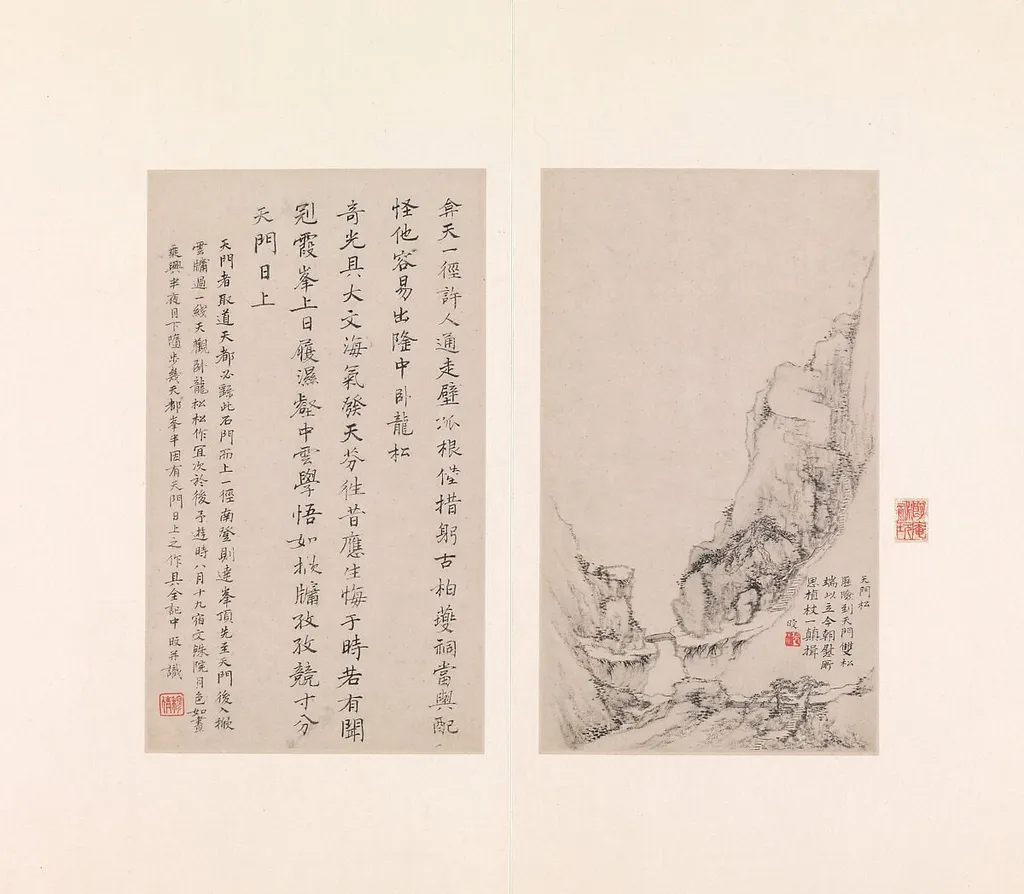
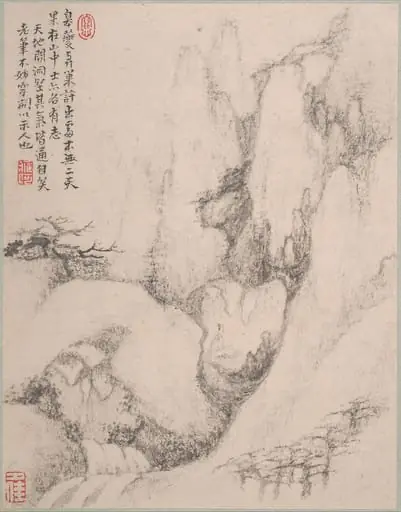
鄭旼 黃山八景 水墨紙本 九開冊|Eight views of the Yellow Mountains is an ink painting by the Baroque artist Zheng Min. It dates from 1681 and is held in the collection of the Metropolitan Museum of Art.
About this work
Nine small sheets show misty peaks, twisted pines, and tiny temples clinging to cliffs, the ink wet in some places and dry in others, as if the mountain were breathing. Zheng Min painted these views in 1681 without ever seeing the Yellow Mountains, working instead from older poems and sketches. On the third leaf, a single stroke becomes a waterfall that seems to roar.
Subject & Meaning
Each leaf of the nine-folding album devotes itself to a distinct scenic prospect of the range, rendering the topography in ink on paper.
The album presents eight views of Mount Huang (Huangshan) in Anhui province, a celebrated mountain range in eastern China long revered in Chinese landscape tradition for its dramatic peaks, mist, and pine-clad crags. Each leaf of the nine-folding album devotes itself to a distinct scenic prospect of the range, rendering the topography in ink on paper. The subject belongs to the established genre of "eight views" (bajing), a compositional formula in which a single celebrated site is broken into multiple discrete vantage points, allowing the viewer to experience the landscape as a sequence of moods and seasonal impressions rather than a single panorama.
By choosing Huangshan, Zheng Min participates in a long tradition of literati painters who treated the range as a locus of Daoist and Confucian contemplation, where towering granite formations, clouds, and ancient trees served as emblems of permanence, moral steadfastness, and communion with nature. The Metropolitan Museum of Art holds the work as a representative example of this subject in late seventeenth-century ink painting.
History & Provenance
Created in 1681 by the artist Zheng Min, this album comprises nine leaves featuring ink wash paintings and calligraphy on paper. The work depicts the Huangshan mountain range located in Anhui province, China. While the specific circumstances of its commission or early ownership history are not detailed in the available records, the album is currently held in the collection of the Metropolitan Museum of Art.
The inception date is firmly established as 1681, placing the work's creation in the late 17th century within China.
Context
Dated 1681, the album of nine leaves of ink on paper titled 'Eight Views of the Yellow Mountains' records Zheng Min's engagement with the Huangshan landscape of Anhui, situating the work within the landscape genre of Chinese painting. Its depiction of mountain scenery aligns with early Qing artistic interests in nature, and its presence in the Metropolitan Museum of Art underscores its significance within the broader narrative of Chinese art history.
Overview
Created in 1681, Zheng Min's 'Eight Views of the Yellow Mountains' is an album consisting of nine leaves of ink on paper. The work depicts the iconic misty peaks, twisted pines, and cliffside temples characteristic of the Huangshan range. Unusually for a landscape of this subject, Zheng Min never visited the mountains; instead, he synthesized the imagery from earlier poems and established visual traditions.
The composition varies across the nine sheets, utilizing both wet and dry ink techniques to render atmospheric depth and textural contrast. This approach reflects the literati tradition of painting from memory or textual sources rather than direct observation. As a late-Ming to early-Qing artist, Zheng Min's contribution lies in his ability to evoke the spiritual essence of the Yellow Mountains through calligraphic brushwork and poetic allusion.
The album stands as a significant example of how Chinese landscape painting prioritized internal imagination and cultural continuity over topographical accuracy.
Technique & Style
Zheng Min's approach to ink painting in this album demonstrates a nuanced control over the medium. He employs varying degrees of ink saturation, from washes that evoke atmospheric mists to drier brushstrokes that define rugged rock formations. This dynamic application of ink creates a sense of vitality within the landscapes.
Notably, one leaf features a waterfall rendered with a singular, powerful stroke, conveying both its visual presence and implied sound.
Artist & collection

 Untitled
 南宋 夏珪 山市晴嵐圖 冊頁|Mountain Market, Clearing Mist
 天下名山圖(亨) 冊 晉戴逵蕺山仙館圖
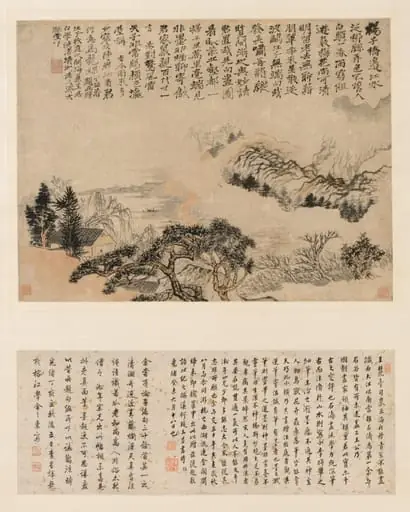 Spring Mist over Jiangnan
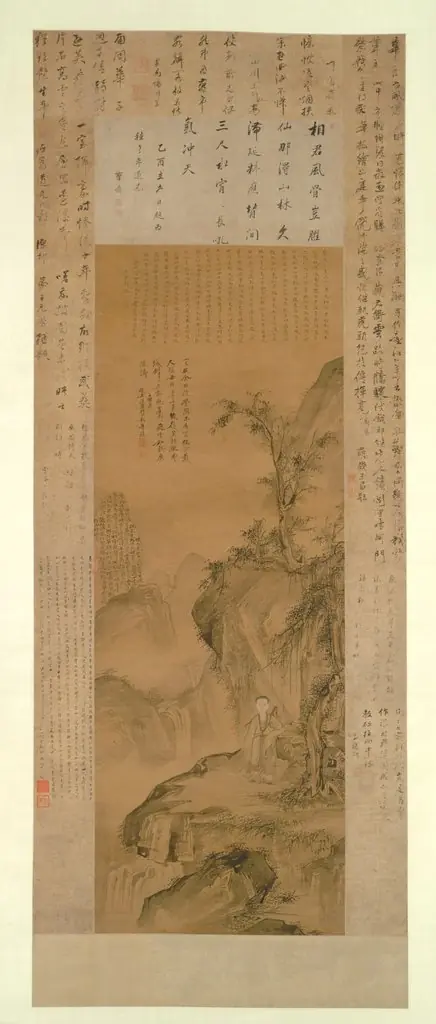 Layered Peaks and Splashing Waterfall: Portrait of Hua Yan as a Young Man
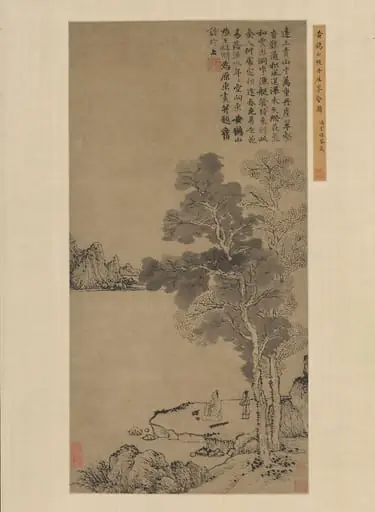 元 王蒙 丹崖翠壑圖 軸|Red Cliffs and Green Valleys
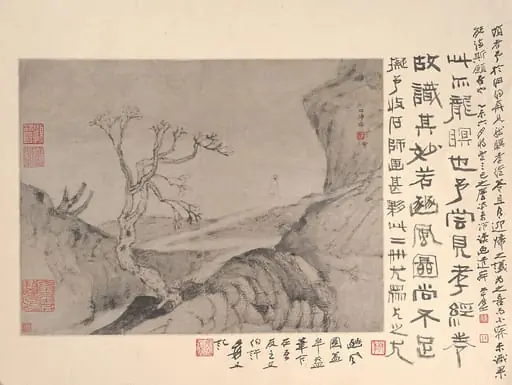 清 石濤 (朱若極) 山水人物圖 冊頁|Landscape with solitary figure
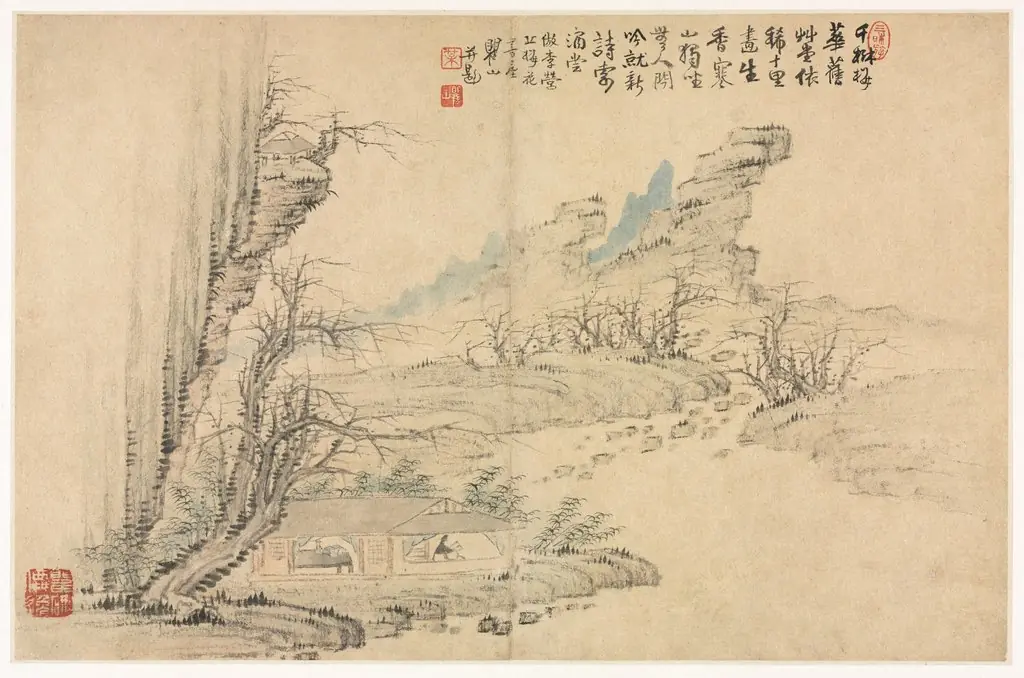 Landscapes in Various Styles after Old Masters
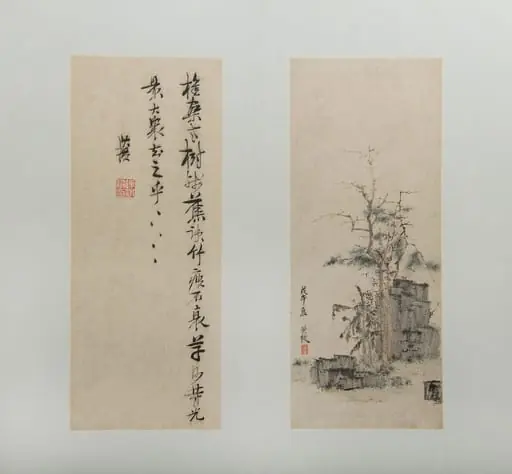 明/清 陳洪綬 山水人物花卉圖 冊|Landscapes, Figures, and Flowers