Artwork
Landscapes in Various Styles after Old Masters
Landscapes in Various Styles after Old Masters is an unspecified painting by the Qing dynasty painting artist Mei Qing. It dates from 1696 and is held in the collection of the Cleveland Museum of Art.
About this work
History & Provenance
No exhibition records are noted in the available documentation, indicating that the piece has not been publicly exhibited according to the sources consulted.
The painting Landscapes in Various Styles after Old Masters is attributed to Mei Qing (1623–1697) and dated to 1690. It entered the Cleveland Museum of Art’s collection as accession number 1962.157.1, where it remains housed. The work’s creation aligns with Mei Qing’s late period, reflecting his mature engagement with historical landscape traditions. No documented commission or earlier ownership chain is recorded in available sources.
The painting titled Landscapes in Various Styles after Old Masters by Mei Qing (1690) is part of the Cleveland Museum of Art's collection, listed under accession number 1962.157.1. Its current location is the Cleveland Museum of Art in Cleveland, Ohio. The work is classified as a painting and a landscape, reflecting Qing‑era Chinese artistic practice.
No exhibition records are noted in the available documentation, indicating that the piece has not been publicly exhibited according to the sources consulted.
Context
The 1690 painting titled Landscapes in Various Styles after Old Masters by Mei Qing exemplifies the artist’s engagement with earlier masters while developing a distinct Chinese landscape idiom. Documented in both the internal catalogue and the Cleveland Museum of Art’s collection record, the work is classified as a landscape painting that draws on compositional strategies of European old‑master scenery yet incorporates local stylistic motifs. Its creation in China and inclusion in a major museum collection have been noted in scholarly references to Mei Qing’s oeuvre, positioning the piece at the intersection of East‑West artistic exchange and the evolution of landscape genre in late Ming‑early Qing art.
Overview
Mei Qing, a multifaceted artist of the Qing Dynasty, created Landscapes in Various Styles after Old Masters in 1696. This painting exemplifies his work as a landscape artist, calligrapher, and poet. The piece is a significant example of his artistic output from the late 17th century and is currently held in the collection of the Cleveland Museum of Art. It reflects the prevalent artistic traditions of its era.
Subject & Meaning
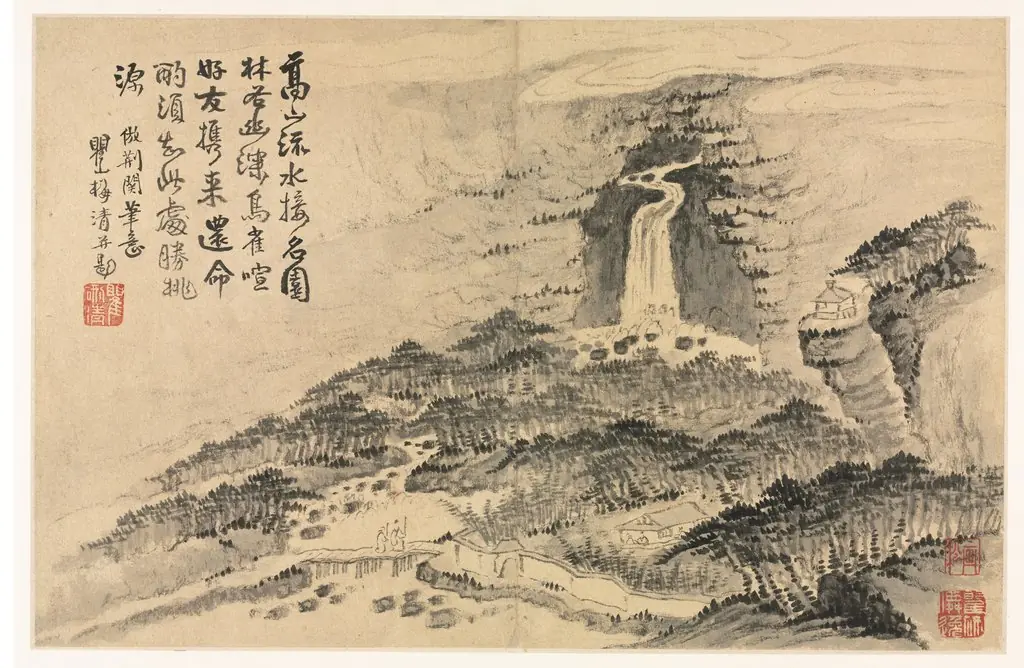
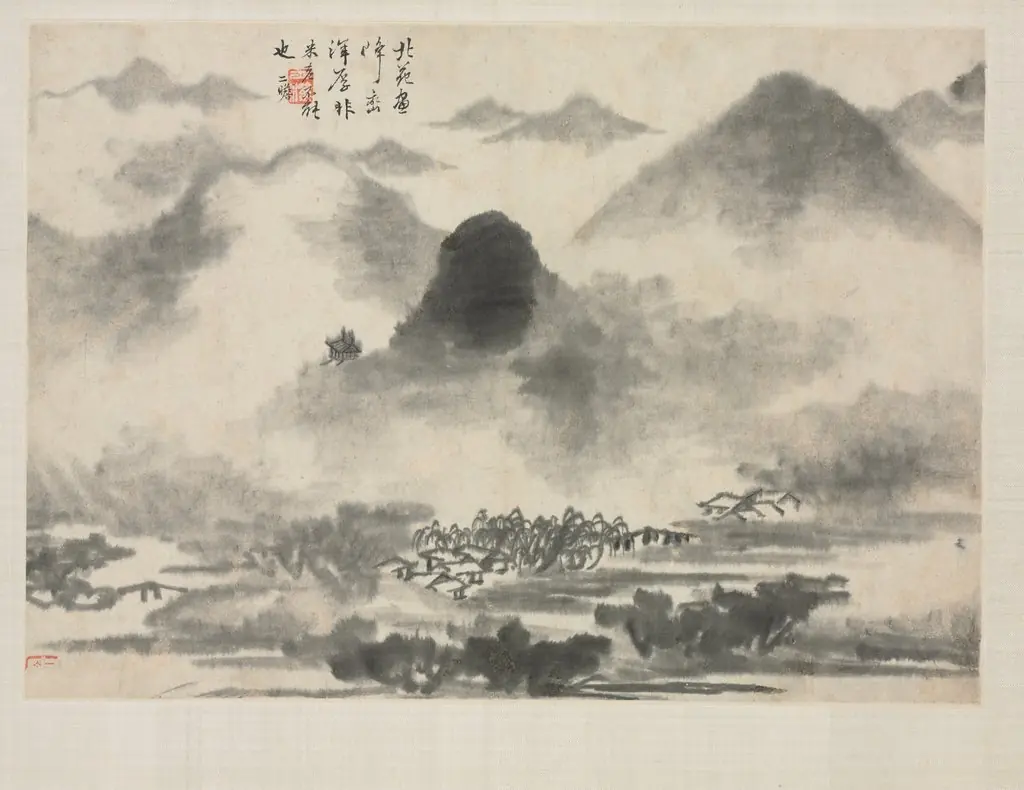
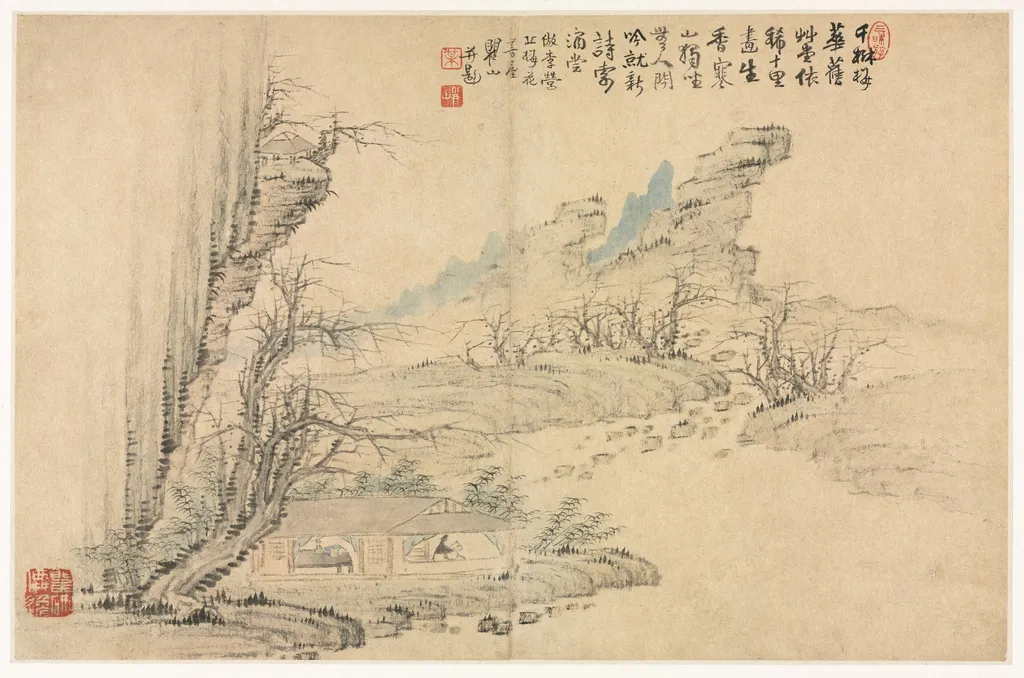
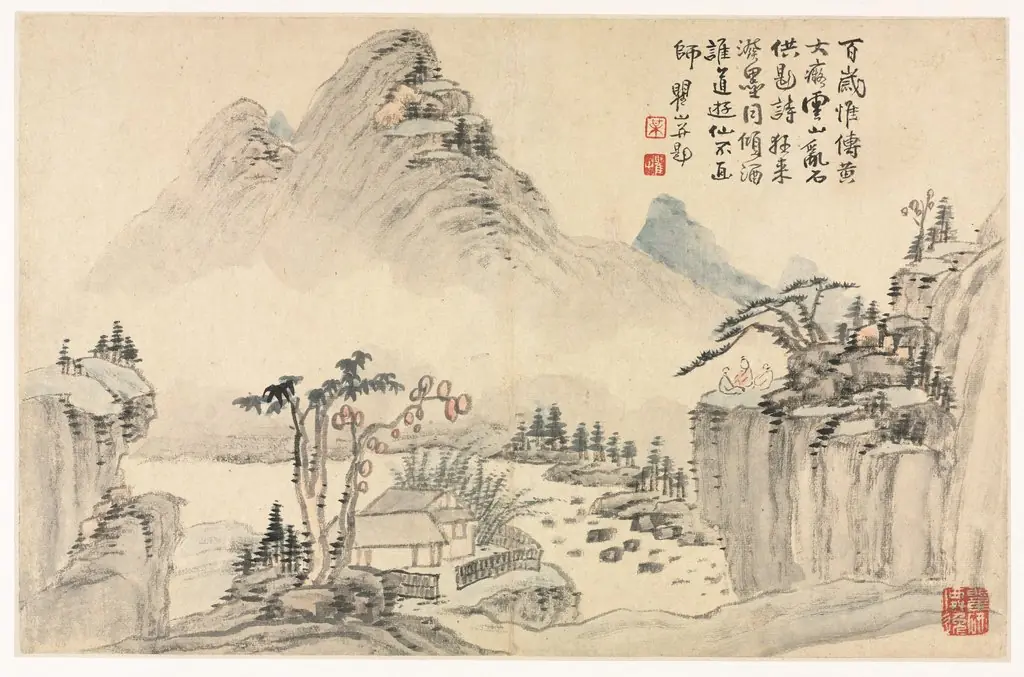
The painting presents a traditional landscape composition, featuring prominent trees in the foreground, rolling hills, and subtle architectural elements in the distance. While the title suggests an engagement with historical precedents, the imagery draws from the artist's personal experiences, particularly his travels to the Yellow Mountain. This blend of established forms and individual observation characterizes much of Mei Qing's landscape work.
Technique & Style
Executed in a traditional manner, the artwork employs a restrained palette dominated by browns and grays, accented by touches of blue in the sky. The artist utilized clear, simple lines and forms to define the scene, characteristic of the Qing painting tradition. The presence of Chinese characters inscribed at the top of the composition further integrates calligraphy, a key element of classical Chinese art, into the visual experience.
Own this work as a print
Artist & collection

Artist
Mei Qing (Chinese: 梅清; pinyin: Méi Qīng; Wade–Giles: Mei Ch'ing; ca. 1623–1697) was a Chinese landscape painter, calligrapher and poet active during the Qing Dynasty. Mei was born in Xuancheng, Anhui Province. His…

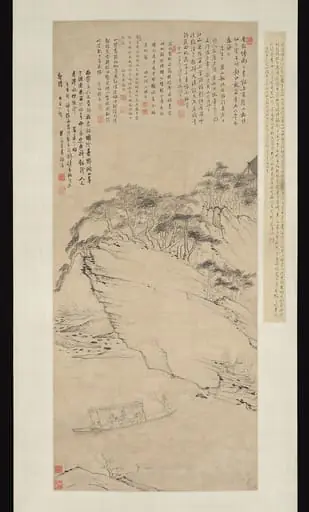 清 倣梅清 響山泛舟圖 軸|Boating beneath Echo Hill
- Landscapes in Various Styles after Old Masters
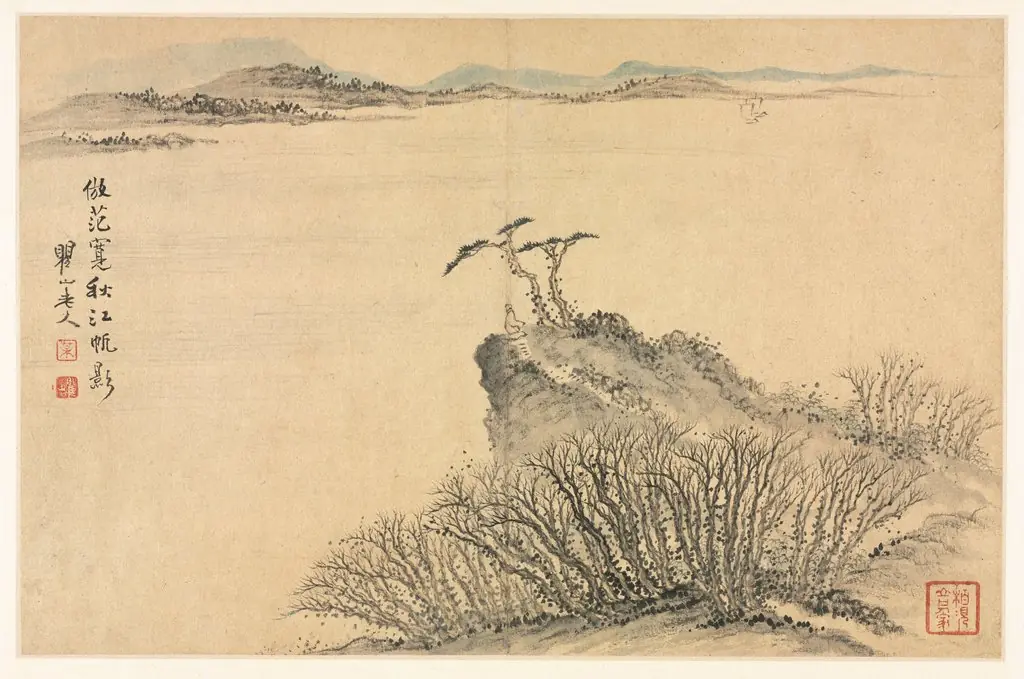 Landscapes in Various Styles after Old Masters
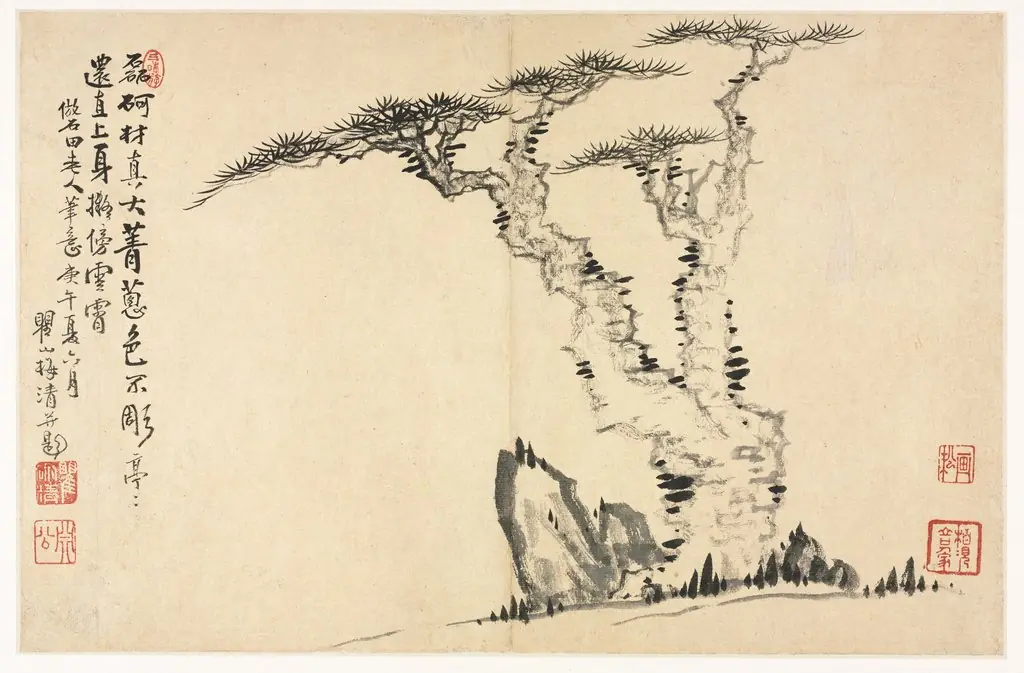 Landscapes in Various Styles after Old Masters
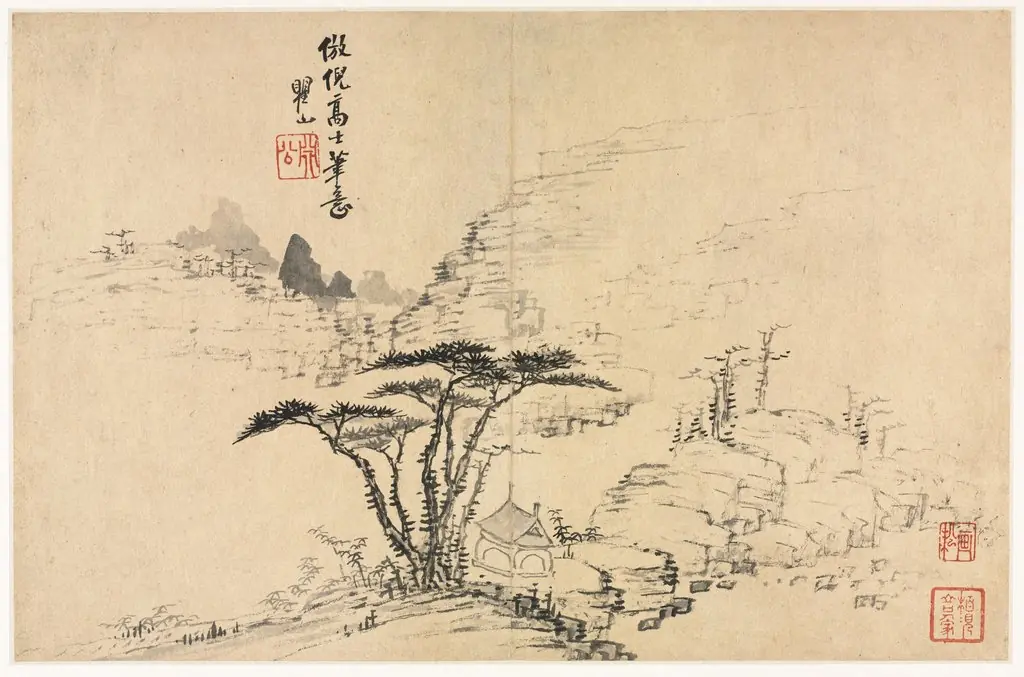 Landscapes in Various Styles after Old Masters
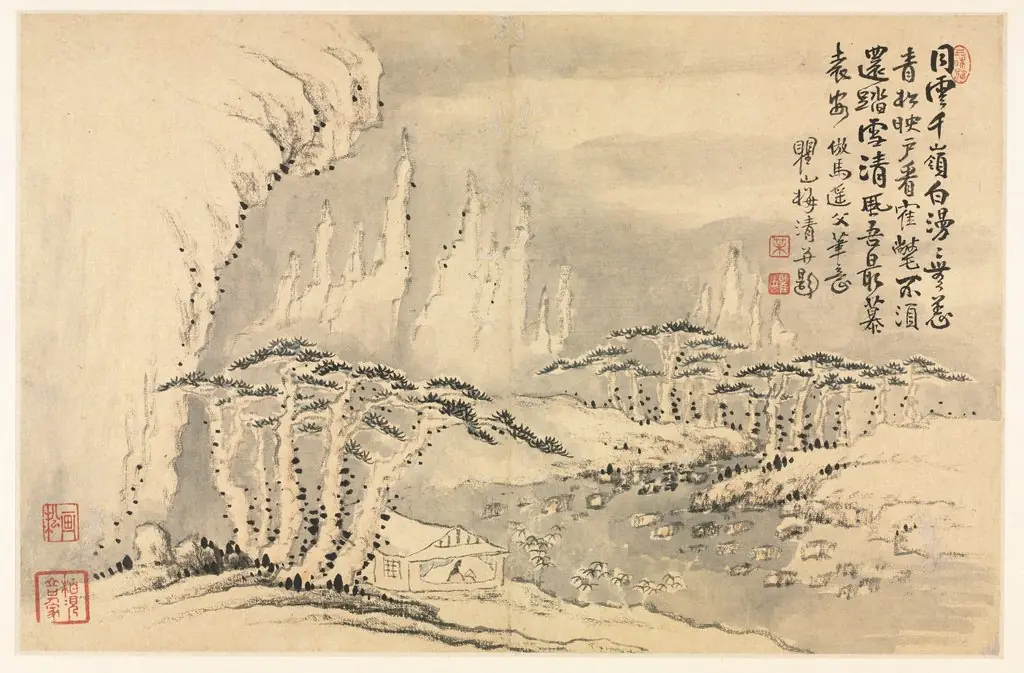 Landscapes in Various Styles after Old Masters
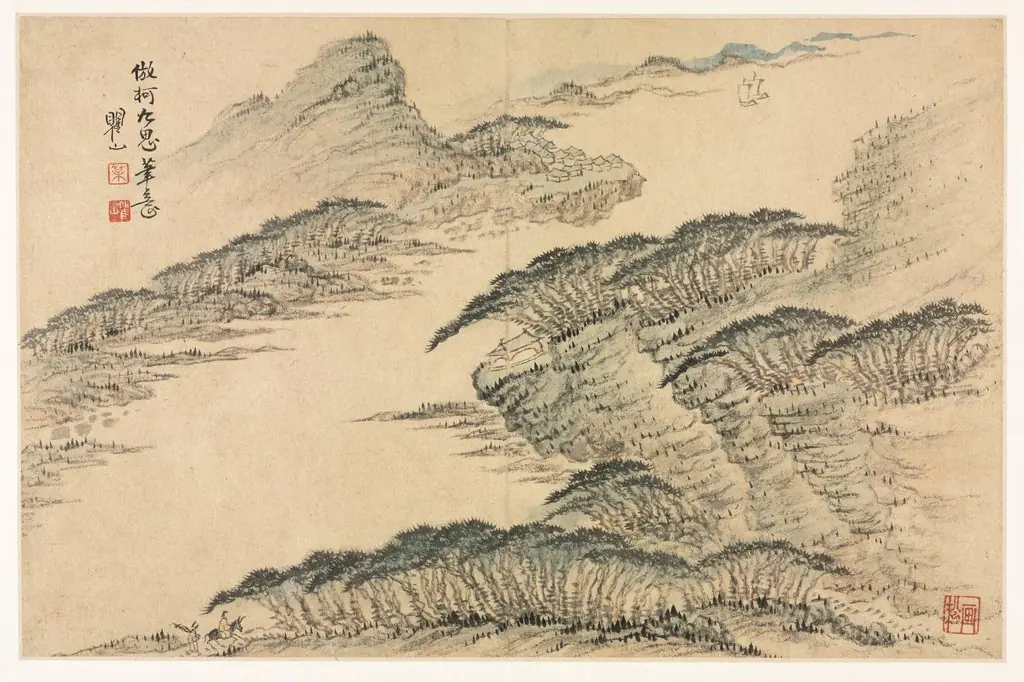 Landscapes in Various Styles after Old Masters
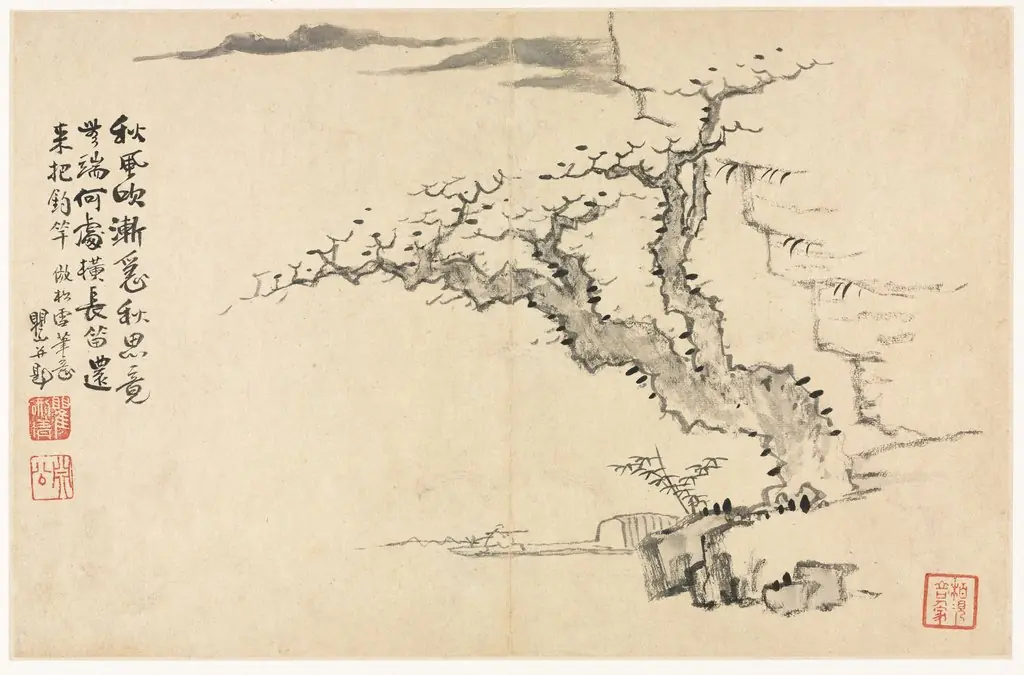 Landscapes in Various Styles after Old Masters