Artwork
清 朱偁 松鷹圖 軸|Hawk, pine, plum, and rock
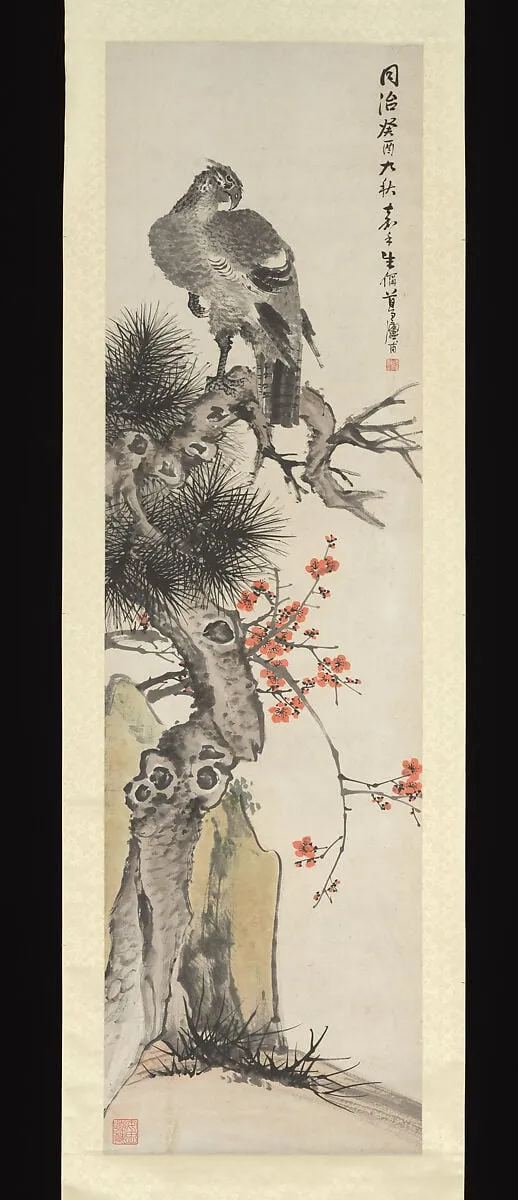
清 朱偁 松鷹圖 軸|Hawk, pine, plum, and rock is an ink painting by the Impressionist artist Zhu Cheng. It dates from 1873 and is held in the collection of the Metropolitan Museum of Art.
About this work
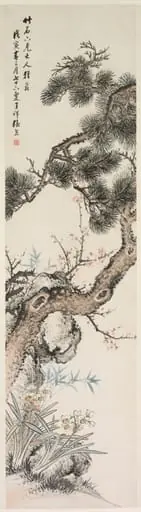
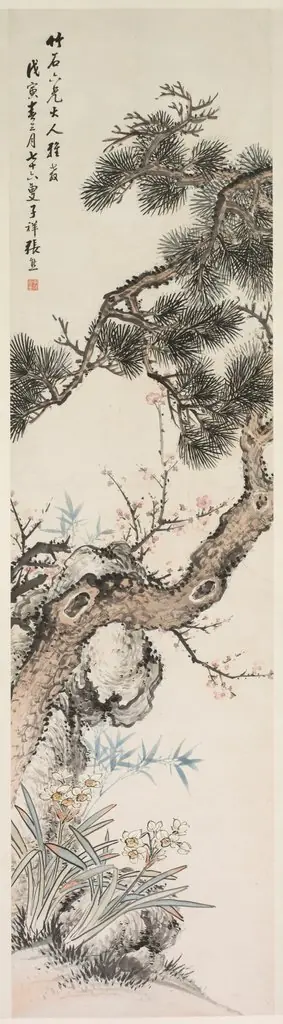
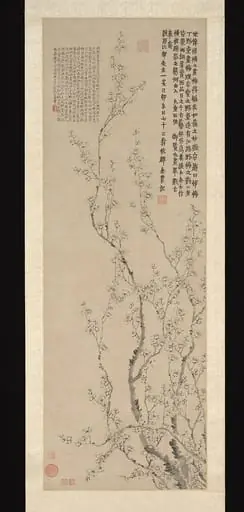
A hawk perches on a gnarled pine branch, claws gripping tight, while a few plum blossoms peek from below.
A hawk perches on a gnarled pine branch, claws gripping tight, while a few plum blossoms peek from below. Rocks sit at the bottom, rough and still.
Zhu Cheng painted this in 1873, using ink and light color on paper. The hawk’s feathers are built with tiny, crisscrossing lines, no smooth shading here. It’s quiet but full of energy, like the bird might take off any second.
If you like how the ink lines feel alive, look up cross-hatching.
Subject & Meaning
Executed in 1873 by Zhu Cheng, this hanging scroll presents a hawk perched within a naturalistic setting that includes pine trees, plum blossoms, and rock formations. The composition centers on the bird of prey, which serves as the primary subject of the depiction.
In the context of traditional Chinese painting, the combination of these specific elements carries established symbolic weight. The pine and plum are enduring motifs representing resilience and vitality, often associated with winter survival and the arrival of spring. The hawk typically embodies power, keen vision, or heroic ambition.
Together, these components create an allegorical image likely intended to convey themes of strength and perseverance through adversity.
History & Provenance
Created by the Qing dynasty artist Zhu Cheng, this hanging scroll depicting a hawk among pine, plum, and rock is dated to 1873. The work was executed using ink and color on paper. It eventually entered the collection of the Metropolitan Museum of Art in New York, where it is cataloged under the accession number 1986.267.65.
No further details regarding its specific commission, intermediate ownership history, or creation circumstances prior to its museum acquisition are provided in the available records.
The hanging scroll titled 松鷹圖 (Hawk, pine, plum, and rock) by Zhu Cheng is part of the Metropolitan Museum of Art’s collection, listed under accession number 1986.267.65. Its current location is the museum’s Asian art department in New York. The work was accessioned in 1986, and available records do not reference any special exhibitions or loan events involving this piece.
Documentation from the museum’s catalogue entry confirms the scroll’s hanging‑scroll format, ink and color on paper, and its depiction of a hawk within a landscape of pine, plum, and rock.
Context
The hanging scroll dated 1873 by Zhu Cheng is executed in ink and color on paper and is classified as a landscape painting within the Qing corpus.
It depicts a hawk, a motif traditionally linked to auspicious symbolism, and is held in the Metropolitan Museum of Art, where it is catalogued as a representative example of Qing bird-and-flower painting.
Scholars reference the piece when examining the development of landscape genre painting in late‑Qing art, noting its technical execution and symbolic content.
Overview
Painted in 1873 by the late Qing artist Zhu Cheng (1826–1900), this hanging scroll depicts a hawk perched upon a gnarled pine branch, a composition that integrates traditional symbols of endurance and nobility. Executed in ink and light color on paper, the work features a dynamic arrangement where the bird's talons grip the textured bark tightly, contrasting with the delicate plum blossoms emerging below and the rugged rocks anchoring the lower section. Zhu Cheng employs a distinctive technique for the hawk's plumage, constructing the feathers through a network of tiny, crisscrossing ink lines rather than relying on smooth tonal gradations.
This linear approach highlights the artist's skill in the 'boneless' style often associated with the Shanghai School, emphasizing structural clarity and rhythmic energy over realistic modeling. The inclusion of the pine, plum, and rock alongside the raptor creates a symbolic ensemble representing resilience and high character, themes prevalent in literati painting. As a representative work from the artist's mature period, this piece demonstrates Zhu Cheng's ability to synthesize rigorous draftsmanship with the expressive vitality characteristic of mid-to-late nineteenth-century Chinese bird-and-flower painting.
Technique & Style
Zhu Cheng employs fine cross‑hatching to construct the hawk’s plumage, avoiding smooth gradations in favor of intersecting strokes that convey texture and vitality. The pine’s bark is rendered with irregular, wiry lines, while the blossoms are suggested by delicate washes of colour. The overall effect is a restrained palette that emphasizes the expressive quality of the ink marks.
Artist & collection