Artwork
明 朱鷺 墨竹詩畫 摺扇|Bamboo and poem
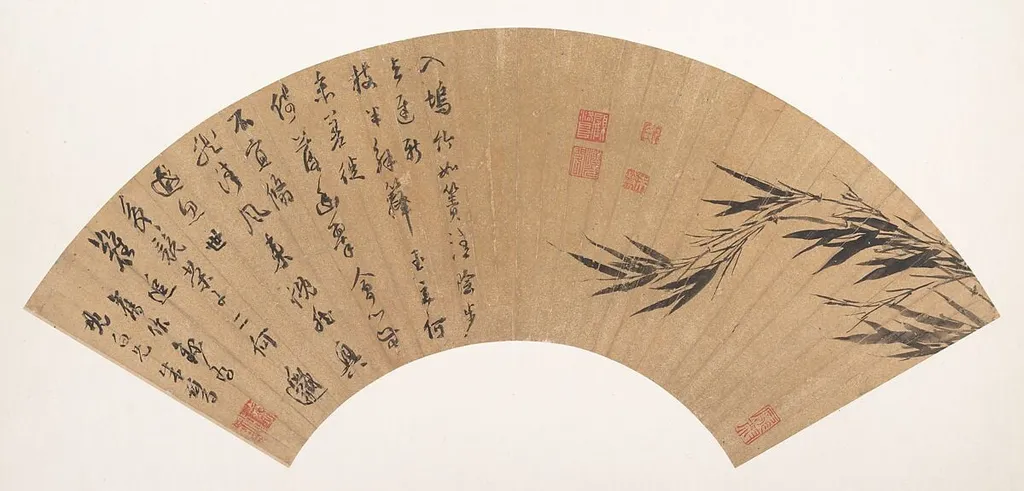
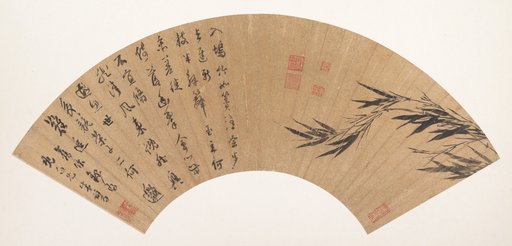
明 朱鷺 墨竹詩畫 摺扇|Bamboo and poem is an ink painting by the Baroque artist Zhu Lu. It dates from 1616 and is held in the collection of the Metropolitan Museum of Art.
About this work
Subject & Meaning
The work depicts bamboo (Bambusoideae) alongside poetic text, executed in ink on gold-flecked paper.
The work depicts bamboo (Bambusoideae) alongside poetic text, executed in ink on gold-flecked paper. Created by the artist Zhu Lu in 1616, the composition integrates the visual representation of the plant with literary elements, a common practice in Chinese literati art where calligraphy and painting share the same surface. The inclusion of poetry alongside the bamboo imagery suggests a unified expression of scholarly ideals, where the resilience and elegance of the bamboo serve as a metaphor for moral character.
This combination reflects a tradition where the natural world is not merely observed but interpreted through the lens of poetic sentiment and personal cultivation.
Technique & Style
The work is a folding fan executed in ink on gold‑flecked paper, mounted as a single album leaf. Zhu Lu applied traditional brushwork to render stylized bamboo stems (Bambusoideae), accompanied by a poetic inscription that integrates text and image. The fan’s support consists of a thin, foldable paper substrate, typical of Ming‑era portable albums, and the gold flecks provide a subtle luminous background that heightens the graphic contrast of the ink lines.
The composition balances sparse brushstrokes with delicate calligraphic lettering, reflecting the literati aesthetic of the early 17th century. The piece measures approximately 16.8 × 52.4 cm and is part of the Metropolitan Museum of Art collection (inception 1616, made in China).
History & Provenance
The work titled 明 朱鷺 墨竹詩畫 摺扇, also known as Bamboo and poem, was created in 1616 in China by the artist Zhu Lu as a folding fan mounted as an album leaf, executed in ink on gold‑flecked paper. It depicts bamboo (Bambusoideae) together with a poem and measures 16.8 × 52.4 cm. The piece is housed in the Metropolitan Museum of Art in New York as part of the museum’s painting holdings. The specific accession or inventory number is not provided in the available documentation, and no exhibition history for this piece is recorded in the cited sources.
Overview
Created in 1616 by the Ming dynasty artist Zhu Lu, this folding fan depicts a single bamboo stalk rendered in ink on gold-flecked paper. The composition features a slender stem arching across the surface, its leaves executed in rapid, dark strokes that contrast with the shimmering background. Accompanying the visual element is a calligraphic inscription, likely a poem that complements the imagery.
In the tradition of literati painting, the bamboo serves as a symbolic vehicle for virtues such as resilience and humility, qualities associated with the scholar-official class. The work exemplifies the integration of poetry, calligraphy, and painting, a hallmark of Chinese artistic practice during the late Ming period. As a portable object mounted later as an album leaf, it reflects the intimate scale of fan painting while adhering to the aesthetic principles of the era.
Zhu Lu, active during a time of significant cultural transition, utilized this format to explore the expressive potential of ink wash and the metaphorical depth of natural forms.
Artist & collection

 清 吳熙載 杏花 扇面|Apricot
 明 吳彬 翠壁丹楓 扇|Azure Cliff with Red Maples
 明/清 項聖謨 梅花 扇|Branch of Blossoming Plum
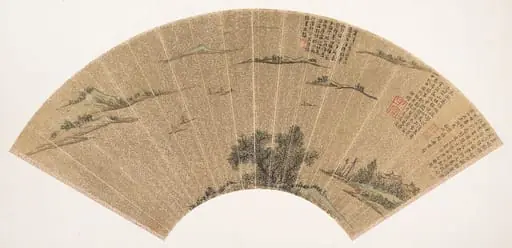 明 文徵明 太湖群嶼圖 扇面|View of Lake Tai
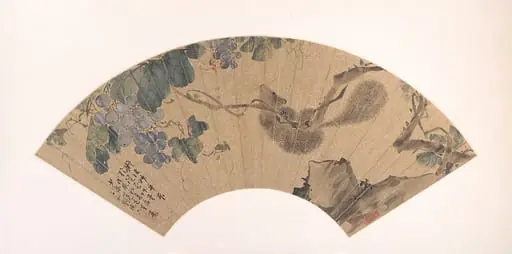 清 劉德六 松鼠葡萄 扇面|Squirrel and Grape
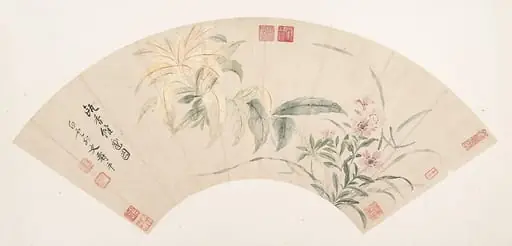 清 惲壽平 花卉圖 摺扇|Carnations and amaranthus
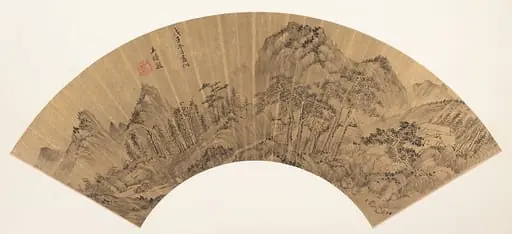 清 倣王時敏 山水 扇面|Landscape
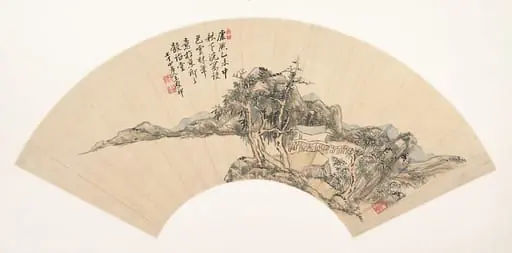 清 倣王原祁 倪雲林筆意山水 扇面|Landscape in the Style of Ni Zan
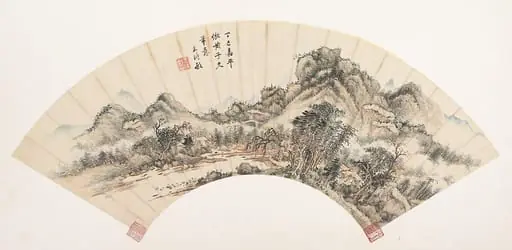 清 王時敏 倣黃子久筆意山水 扇頁|Landscape after Huang Gongwang