Artwork
明 文徵明 太湖群嶼圖 扇面|View of Lake Tai
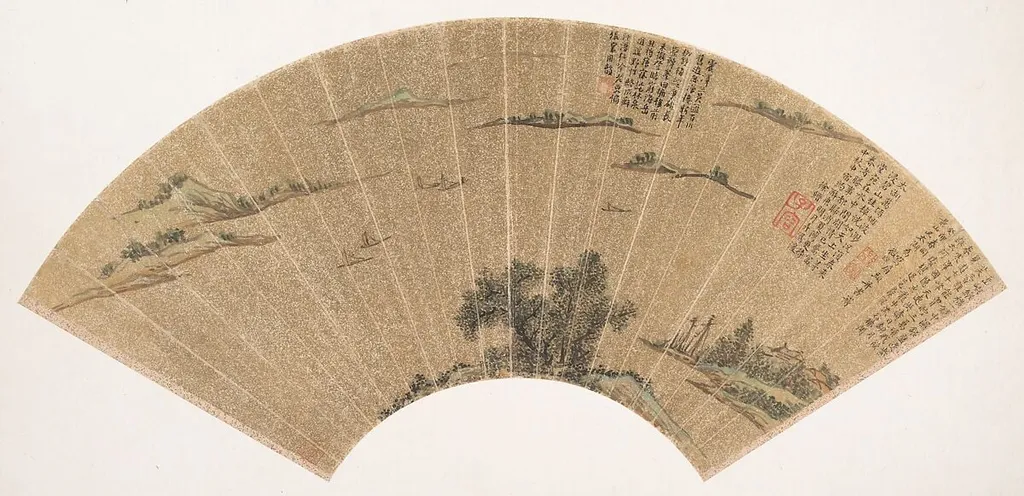
明 文徵明 太湖群嶼圖 扇面|View of Lake Tai is an ink painting by the Ming dynasty painting artist Wen Zhengming. It dates from 1543 and is held in the collection of the Metropolitan Museum of Art.
About this work
This is a folding fan with six panels showing quiet scenes of hills, trees, and small boats on water.
This is a folding fan with six panels showing quiet scenes of hills, trees, and small boats on water. The colors are soft, mostly browns, greens, and blues, with some gold specks in the paper. Each panel has writing along the edges, and the images feel calm, like a gentle breeze over a lake.
The artist used fine lines to build up shapes, almost like tiny strokes stacking up. This fan was made in 1543, and the artist signed it.
If you like this, look up cross-hatching to see how artists create depth with lines.
Technique & Style
The View of Lake Tai by Wen Zhengming is executed as a folding fan mounted as an album leaf. It employs ink and subtle color on gold-flecked paper, a support that enhances the luminosity of the composition. The handling is delicate and precise, characteristic of Wen’s literati style, with fine brushwork defining the misty mountains, rocky outcrops, and distant islands of Lake Tai.
Stylistically, the work adheres to Ming dynasty literati conventions, emphasizing atmospheric perspective and a restrained palette. The gold flecks in the paper contribute to a shimmering effect, while the ink washes create depth and texture in the landscape elements.
History & Provenance
The work titled View of Lake Tai was produced in 1543 by the Ming dynasty painter Wen Zhengming as a folding fan, later mounted as an album leaf on gold‑flecked paper. It exemplifies Chinese landscape painting of the mid‑sixteenth century and measures 24.8 cm × 52.7 cm. The piece entered the collection of the Metropolitan Museum of Art, where it remains on view, establishing its modern ownership lineage from creation to present custodianship. The painting reflects the artist’s engagement with the scenic traditions of Lake Tai, a subject that recurs throughout his oeuvre.
The painting is held by the Metropolitan Museum of Art, as recorded in the collection and location fields of its Wikidata entry. It is catalogued as a folding fan mounted as an album leaf, executed in ink and color on gold-flecked paper.
No specific accession number, department designation, or prior exhibition history is documented in the available sources.
Context
View of Lake Tai, a folding‑fan painting attributed to Wen Zhengming and dated 1543, exemplifies the literati landscape tradition of the Ming dynasty. The work, rendered in ink and color on gold‑flecked paper, measures 24.8 cm by 52.7 cm and is housed in the Metropolitan Museum of Art, where it is catalogued as a landscape painting. Scholars studying Ming art regard such fan paintings as intimate expressions of scholarly retreat, linking them to the broader trajectory of Chinese landscape art that influenced later generations.
Its inclusion in the museum’s collection underscores its significance within Wen Zhengming’s oeuvre and the development of Chinese painting.
Overview
Created in 1543, View of Lake Tai is a landscape by the Ming dynasty master Wen Zhengming, executed in ink and color on gold-flecked paper. Originally a folding fan, the work was later mounted as an album leaf, a common practice for preserving such delicate formats. The composition depicts the expansive waters and scattered islets of Lake Tai, a subject central to the Wu School's celebration of local scenery.
Wen divides the surface into distinct visual zones, utilizing the gold-flecked ground to enhance the luminosity of the scene while maintaining a restrained palette of soft greens, blues, and earth tones. The brushwork reflects his mature style, characterized by precise, calligraphic lines that define the rugged textures of the hills and the delicate foliage of the trees. Small boats and figures are integrated subtly into the vastness of the water, emphasizing the harmony between humanity and nature.
This work exemplifies Wen Zhengming's role as a leading figure of the Wu School, bridging the scholarly tradition of literati painting with a refined decorative sensibility suitable for the fan format. The inclusion of inscriptions along the edges further anchors the piece within the tradition of combining poetry and painting, a hallmark of his artistic identity during the mid-sixteenth century.
Subject & Meaning
The artwork is composed of six distinct panels, each contributing to a panoramic view of Lake Tai. These sections feature gentle hills, verdant trees, and small vessels navigating the water, collectively evoking a peaceful natural environment. The composition emphasizes a contemplative mood, characteristic of traditional Chinese landscape painting that often seeks to inspire introspection through depictions of nature.

Artist & collection

Artist
Wen Zhengming spent most of his life in Suzhou, a city of canals and scholars where art and poetry were daily habits, not hobbies.

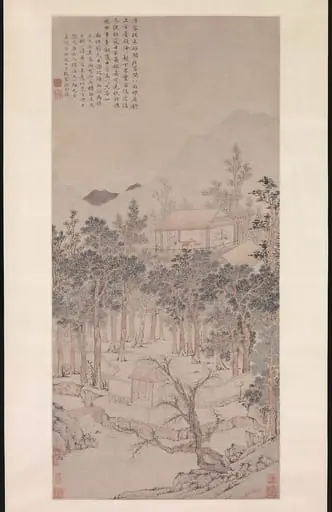
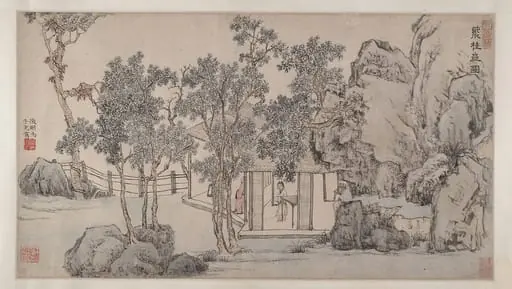
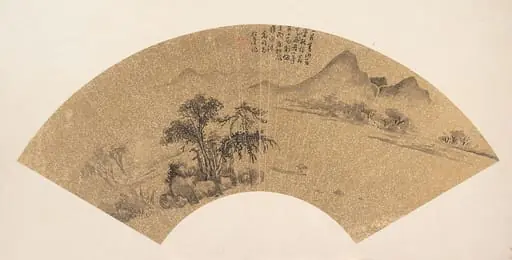


- 明 陳洪綬 山水圖 扇|Landscape
 明 陳季淳 山水人物圖 扇頁|Landscape with figure
 明/清 莊冏生 山水 扇面|River Landscape
 明 鄒之麟 山水圖 扇面|Landscape
 清 倣王時敏 山水 扇面|Landscape
 明/清 祁豸佳 山水 圖|Landscape with fisherman
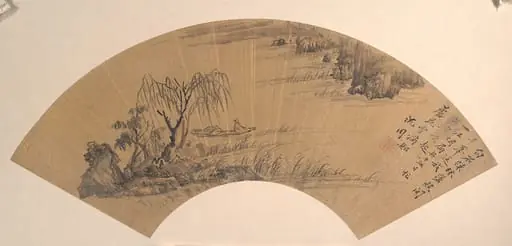 明/清 佚名 倣沈周 山水 扇|Landscape
 明 陳洪綬 山水花鳥人物圖 扇冊|Landscapes and Flowers
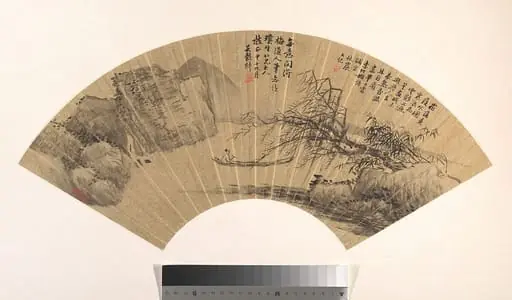 清 吳榖祥 山水 扇面|Landscape
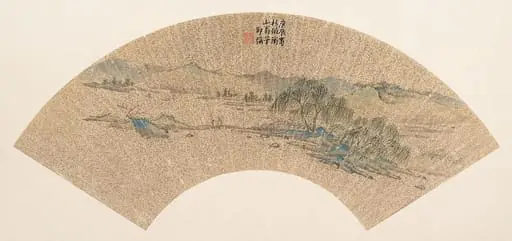 明 佚名 倣邵彌 倣文徵明山水 扇頁|Landscape After Wen Zhengming