Artwork
清 王時敏 倣黃子久筆意山水 扇頁|Landscape after Huang Gongwang
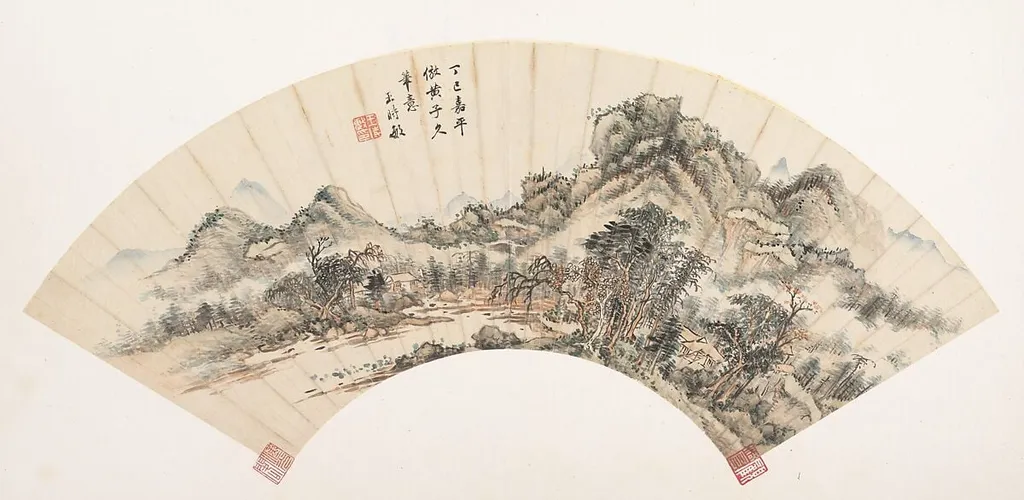
清 王時敏 倣黃子久筆意山水 扇頁|Landscape after Huang Gongwang is an ink painting by the Baroque artist Wang Shimin. It dates from 1677 and is held in the collection of the Metropolitan Museum of Art.
About this work
Subject & Meaning
The title indicates that the composition serves as an artistic homage, specifically imitating the brush style and intent of the earlier master Huang Gongwang.
Created in 1677 by Wang Shimin, this work is a landscape painting executed in ink and color on white paper, originally formatted as a folding fan before being mounted as an album leaf. The title indicates that the composition serves as an artistic homage, specifically imitating the brush style and intent of the earlier master Huang Gongwang. Rather than illustrating a specific narrative event or complex allegorical program, the piece represents a scholarly engagement with art history, where the act of mimicking a revered predecessor's technique constitutes the work's core meaning.
The imagery focuses on the formal qualities of the mountain form as interpreted through Huang Gongwang's aesthetic legacy.
Technique & Style
Created in 1677, this landscape by Wang Shimin is executed in ink and color on white paper. The work was originally a folding fan that has been remounted as an album leaf, a common practice for preserving such formats. Measuring 15.7 cm in height and 49.5 cm in width, the piece depicts mountainous terrain.
Stylistically, the title indicates it is an imitation of the brushwork of the Yuan dynasty master Huang Gongwang, reflecting the artist's engagement with classical precedents. The medium combines monochrome ink lines with applied color to render the landscape features.
History & Provenance
The work was produced in 1677 by the Qing-period painter Wang Shimin, who executed it as a folding fan later mounted as an album leaf in ink and color on paper. It exemplifies a landscape inspired by the Yuan master Huang Gongwang. The piece entered the Metropolitan Museum of Art's collection, establishing the Met as its current owner; earlier ownership is not documented in the available records.
The work was created in China, reflecting Qing artistic practice and the artist's engagement with earlier landscape traditions.
Overview
Created in 1677 by Wang Shimin, Landscape after Huang Gongwang is an ink and color painting on white paper, originally a folding fan that was later mounted as an album leaf. This work from the late Ming and early Qing dynasties presents a serene mountainous vista. The title indicates it is not an original composition but an homage to the style of the earlier master, Huang Gongwang, reflecting a common practice among traditional Chinese painters.
Context
Wang Shimin, active during the transitional late Ming and early Qing periods, came from a distinguished scholarly and artistic lineage in Jiangsu province. His early education included rigorous study of both painting and calligraphy, skills foundational to his later artistic practice. Although he also held a position as a government official, his art consistently engaged with and perpetuated the established artistic traditions of the Ming dynasty, emphasizing a continuity with the past.
Artist & collection

Artist
Wáng Shímǐn (simplified Chinese: 王时敏; traditional Chinese: 王時敏; Wade–Giles: Wang Shih-min; c.

 清 王宸 清溪柳橋圖 摺扇|Landscape
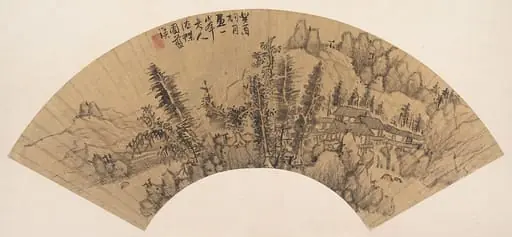 明/清 佚名 倣藍瑛 倣黃公望山水 扇|Landscape in the Style of Huang Gongwang
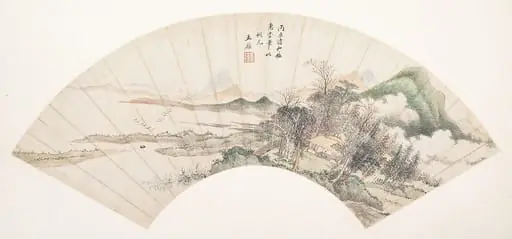 清 佚名 倣王鑑 倣惠崇山水圖 扇|Landscape in the Style of Huichong
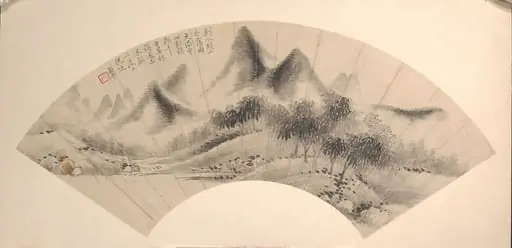 清 佚名 倣惲壽平 倣米家山水圖 扇|Landscape
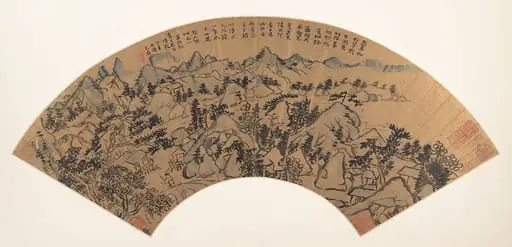 清 石濤 (朱若極) 山水圖 扇頁|Landscape
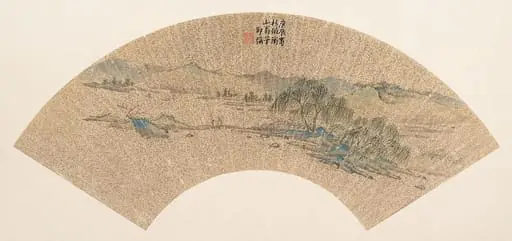 明 佚名 倣邵彌 倣文徵明山水 扇頁|Landscape After Wen Zhengming
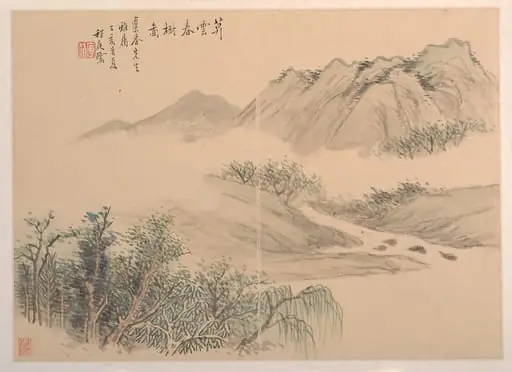 清 程庭鷺 山水 冊頁|Landscape
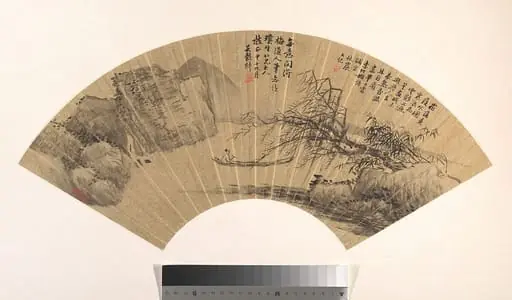 清 吳榖祥 山水 扇面|Landscape
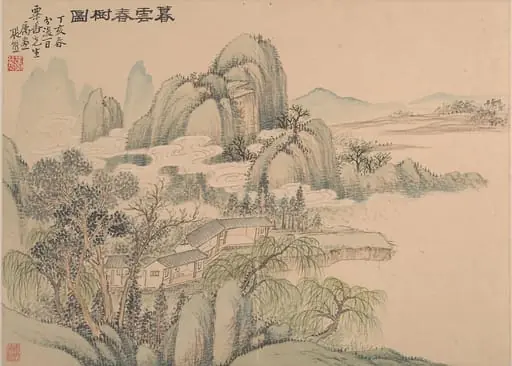 清 張熊 山水 冊頁|Landscape