Artwork
Madonna
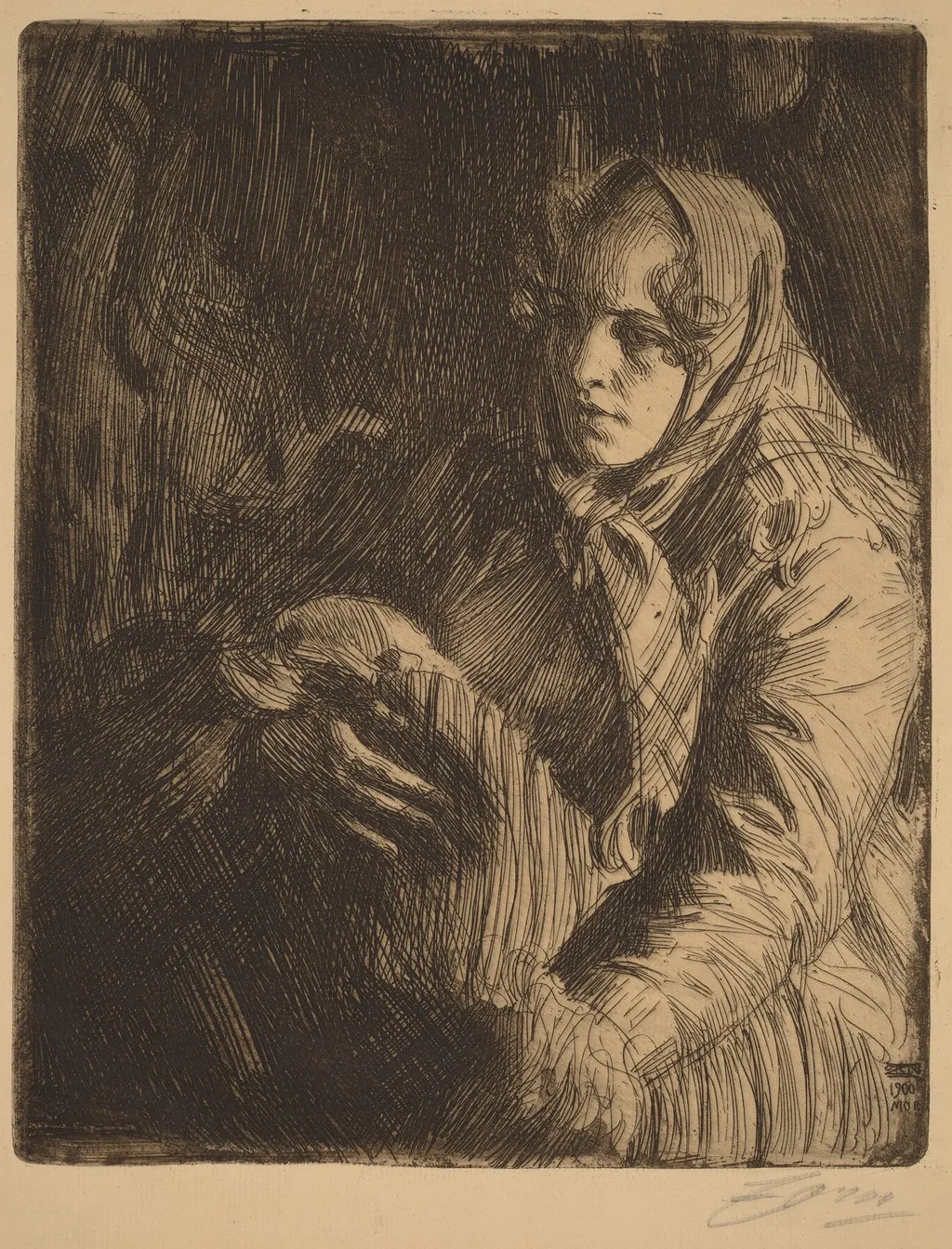
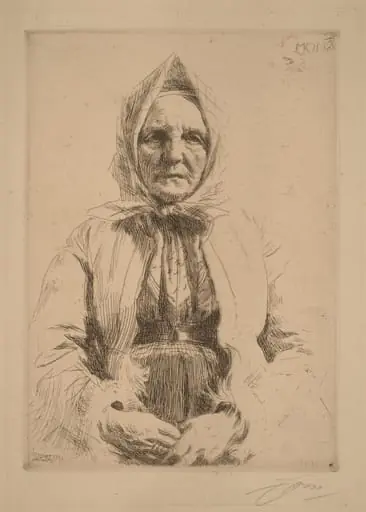
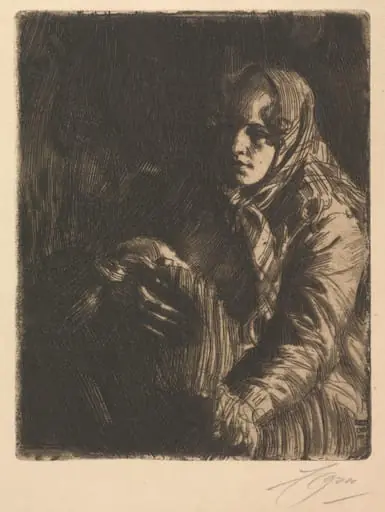
Madonna is an ink print by Anders Zorn. It dates from 1900 and is held in the collection of the National Gallery of Art.
- Inscription
- Inscribed:"Zorn" lower right composition, in plate, artist's hand. "Zorn" lower left margin, graphite, artist's hand. "1900" lower right composition, in plate, artist's hand. "Mora" lower right composition, in plate, artist's hand. "Madonna" lower left margin, graphite, unknown hand. "II.H." lower right margin, graphite, unknown hand. "3762-" lower right margin, graphite, unknown hand. "5121" verso, lower left margin, graphite, unknown hand. "2" verso, lower center margin, graphite, unknown hand. "1-- / 55-05" verso, lower right margin, graphite, unknown hand.
- Markings
- Marked:"LRJ" verso, black stamped ink, (Lugt 1760b). "National Gallery of Art" verso, black stamped ink, (Lugt 1932d). "R.G.ST." [Richard Gutekunst collector's stamp], verso, black stamped ink, (Lugt 2213a).
About this work
Overview
The figure's hair is pulled back simply, and she wears a loose coat, grounding the sacred subject in a domestic, human reality rather than idealized grandeur.
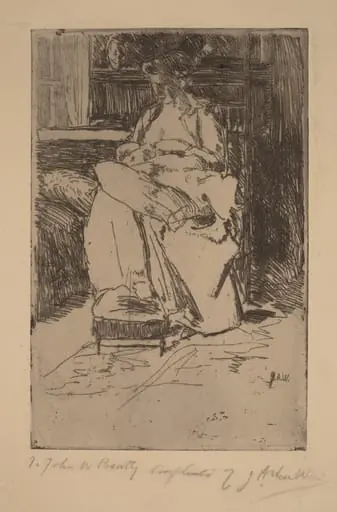
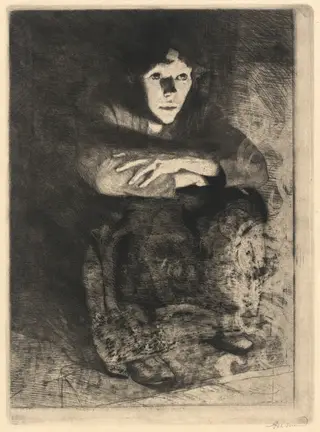
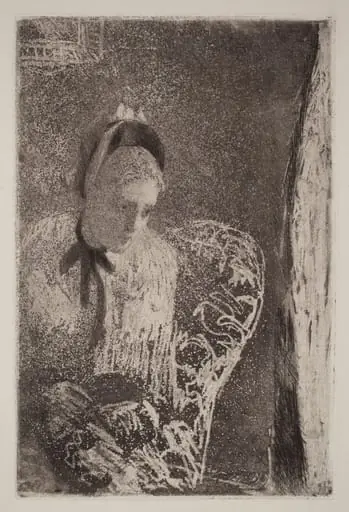
Anders Zorn's 'Madonna' (1900) is a monochromatic etching on laid paper that reinterprets the traditional religious iconography of the Virgin and Child through the lens of Swedish realism. The composition presents a seated woman holding an infant, rendered with the artist's characteristic economy of line and mastery of light and shadow. Zorn employs a technique of deep, rough etched lines to create a textured surface, avoiding the smooth gradations of academic engraving in favor of a more immediate, expressive quality.
The figure's hair is pulled back simply, and she wears a loose coat, grounding the sacred subject in a domestic, human reality rather than idealized grandeur. Created at the turn of the 20th century, this work reflects Zorn's mature period, where he frequently explored themes of motherhood and rural life alongside his renowned portraits. While Zorn is best known for his oil paintings and watercolors, his graphic output, including this etching, demonstrates his ability to translate his painterly sensibility into the linear medium of printmaking.
The piece stands as a significant example of how early modern Scandinavian artists adapted classical religious motifs to contemporary aesthetic sensibilities.
Subject & Meaning
The figure is identified as the Virgin Mary, a traditional religious subject, depicted in a modest, unadorned manner. The mother’s hair is gathered back and she wears a simple, loose coat, suggesting humility and intimacy with the child.
Technique & Style
Zorn employed a deep-etching method, forcing ink into the incised lines of the copper plate to produce thick, rough strokes. The resulting texture gives the image a tactile quality, with scratchy, vigorous lines that convey immediacy.
History & Provenance
Created at the turn of the twentieth century, the print reflects Zorn’s occasional forays into religious themes. It was produced as a limited edition print on laid paper, a common support for fine art etchings of the period.
Context
The work belongs to a broader tradition of devotional prints, where artists used the reproducible nature of etching to disseminate religious imagery. Zorn’s approach combines his skill in portraiture with the stark simplicity of graphic media.
Own this work as a print
Artist & collection
Artist
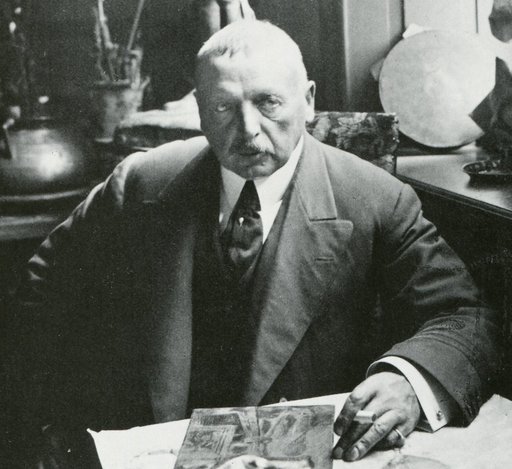
Anders Leonard Zorn was a Swedish artist who attained international success as a painter, sculptor, and etching artist.