Artwork
Palazzo da Mula, Venice
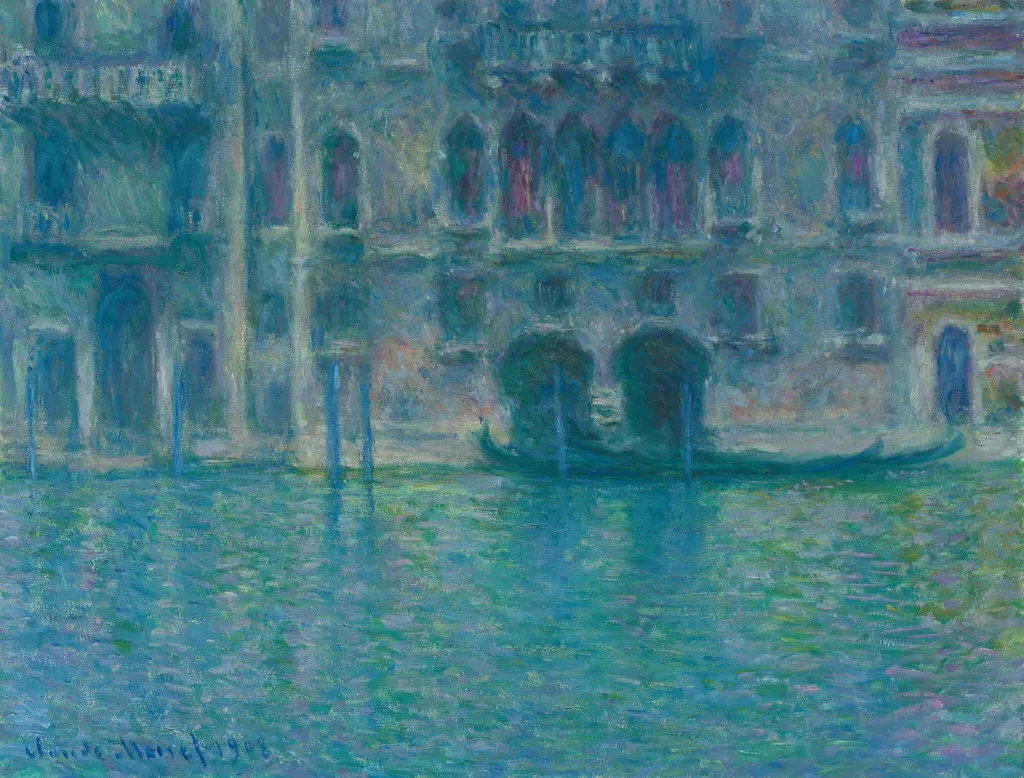
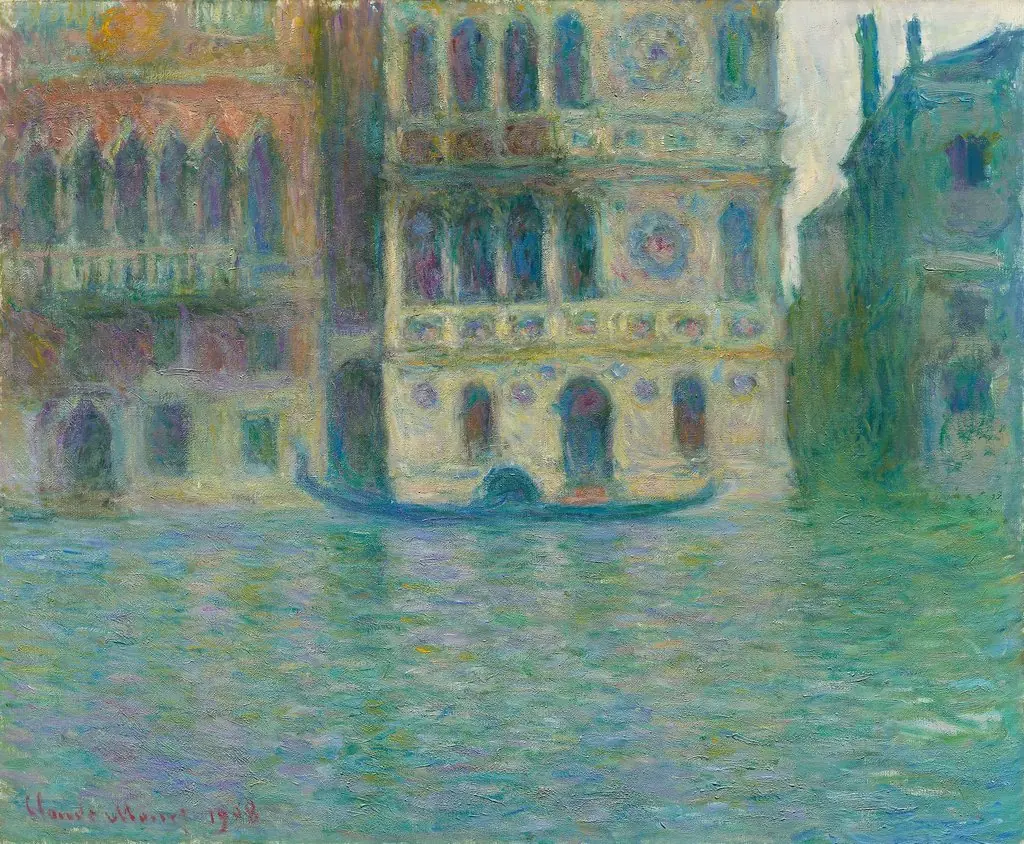
Palazzo da Mula, Venice is an oil painting by the Impressionist artist Claude Monet. It dates from 1908 and is held in the collection of the National Gallery of Art.
- Inscription
- Inscribed:lower left: Claude Monet 1908
About this work
Technique & Style
The composition depicts the Palazzo Da Mula Morosini in Venice, rendered through Claude Monet's characteristic Impressionist approach.
Executed in 1908, this work is an oil painting on canvas measuring 61.4 by 80.5 centimeters. The composition depicts the Palazzo Da Mula Morosini in Venice, rendered through Claude Monet's characteristic Impressionist approach. While specific details regarding the artist's brushwork or the current physical condition of the support are not explicitly detailed in the available records, the piece is classified as a painting within the collection of the National Gallery of Art in Washington, D.C. The use of oil paint on canvas allowed for the fluid application typical of Monet's late Venetian series, capturing the architectural subject with the atmospheric quality for which the artist is known.
History & Provenance
Claude Monet painted Palazzo da Mula, Venice in 1908, capturing the facade of the Palazzo Da Mula Morosini in oil on canvas. The work passed directly from the artist to the Paris dealer Durand-Ruel, through whom it was acquired by the American collector Arthur B. Emmons of New York and Newport. Emmons's collection was dispersed at auction by the American Art Association in New York on 14 January 1920, where the painting appeared as lot 39.
It subsequently entered the holdings of Henry D. Hughes of New York and Philadelphia, who consigned it through the Marie Sterner Galleries in New York. On 8 March 1930, the painting was sold to the New York collector Chester Dale, who retained it for more than three decades. Dale bequeathed the work in 1963 to the National Gallery of Art in Washington, D.C., where it remains in the collection.
Claude Monet's 1908 painting of the Palazzo da Mula is held in the collection of the National Gallery of Art in Washington, D.C. The work entered the museum's holdings in 1963 as a bequest from Chester Dale, who had purchased it in 1930. Prior to Dale's ownership, the canvas passed through several private hands, including Arthur B. Emmons and Henry D. Hughes, following its initial sale from the artist via Durand-Ruel. The painting was notably included in the sale of Emmons' estate at the American Art Association in New York on January 14, 1920.
While its full exhibition record is not detailed in the provided texts, its provenance documents its movement from Paris to New York and Newport before settling in the national collection.
Overview
Claude Monet's "Palazzo da Mula, Venice," painted in 1908, is an oil on canvas work capturing the historic Venetian palace. This painting is part of a series the artist created during his visit to the city, reflecting his ongoing exploration of light and atmosphere. It exemplifies his distinctive approach to landscape and architectural subjects, rendered through a particular visual language.
Subject & Meaning
The artwork focuses on the Palazzo da Mula Morosini, an architectural landmark situated in Venice. Monet rendered the palace bathed in a warm, ambient light, which is further amplified by its reflection on the water's surface. This emphasis on light interacting with both structure and liquid elements creates a specific mood, characteristic of the artist's engagement with transient visual effects.
Own this work as a print
Artist & collection

Artist
Oscar-Claude Monet was a French painter and founder of Impressionism who is seen as a key precursor to modernism, especially in his attempts to paint nature as he perceived it.