
Subject
Filigree
Filigree is a subject in art. The gallery holds 38 works in this subject in art, including works by Georg Wechter I, Jean-Jacques Avril I and Owen Jones.
Filigree (also less commonly spelled filagree, and formerly written filigrann or filigrene) is a form of intricate metalwork used in jewellery and other small forms of metalwork. In jewellery, it is usually of gold and silver, made with tiny beads or twisted threads, or both in combination, soldered together or to the surface of an object of the same metal and arranged in artistic motifs.
Key artists

Overview
Filigree is a technique of intricate metalwork in which fine threads of gold or silver, often twisted or plaited and combined with tiny beads, are soldered together or onto a metal surface to create delicate, lace-like ornamental patterns. The term derives from the Latin filum (thread) and granum (grain or small bead), entering English via Italian filigrana and 17th-century French filigrane. Though most closely associated with jewellery, filigree has been applied to a wide range of objects, from religious reliquaries and book covers to iron balusters and architectural elements. Its appearance in 47 works in the collection underscores its persistence as a decorative language across cultures and centuries.
Iconography & meaning
Filigree carries no fixed iconographic program but rather functions as a visual signifier of refinement, technical virtuosity, and often wealth or sacred status. In jewellery, its lace-like quality suggests delicacy and preciousness, transforming dense metal into something apparently weightless. In religious contexts, such as Byzantine reliquaries and Gospel book covers, filigree scrollwork frames and elevates sacred contents, its complexity implying reverence and the glorification of the divine. In Indian tarakasi work, filigree depicts deities, investing spiritual figures with the same meticulous labour. The technique's use of gold and silver also encodes social hierarchy, while its application to iron balusters and architectural struts demonstrates how filigree patterns could lend elegance to utilitarian or structural forms.
Across movements & periods
Filigree has demonstrated remarkable continuity while adapting to regional and temporal contexts. Archaeological evidence places its use in Mesopotamian jewellery from 3000 BC, with later refinement by Etruscan and Greek goldsmiths between the 6th and 3rd centuries BC, who achieved its highest ancient perfection. The technique persisted in India and Central Asia with minimal design change, where wandering craftsmen continue ancient Greek methods. In medieval Europe, Byzantine goldsmiths from the 6th to 12th centuries employed filigree on reliquaries and book covers, work later imitated in European monasteries. Italian, French, and Portuguese metalwork favoured filigree from 1660 to the late 19th century. Regional specialisations emerged: telkari in Midyat from the 15th century, tarakasi in Cuttack, malileh in Zanjan, and distinctive traditions in Campo Ligure and Cortina d'Ampezzo from the 18th century onward. From the 20th century, filigree wires have been woven into self-supporting openwork without underlying plates, with wire thicknesses reaching 0.01 mm.
Notable depictions
Notable surviving works include Etruscan and Greek filigree earrings and personal ornaments in the Louvre and British Museum, some in the form of geometric flowers bordered by minute volutes of gold wire. The Hermitage Museum holds Scythian jewellery from Crimean tombs, including bracelets and necklaces of twisted wire in up to seven rows of plaiting with animal-head clasps. The British Museum also preserves a Greek priestess's sceptre covered with plaited and netted gold wire, finished with a Corinthian capital and green glass boss. In India, trichinopoly chains of fine wire with minute pendants represent continuing ancient traditions. The Midyat Filigree Museum in Turkey displays historic telkari pieces. In Italy, the Museo civico della filigrana in Campo Ligure, founded in 1984, holds local and international works, while Cortina d'Ampezzo developed a school specialising in Alpine floral fil filigree in the late 19th century.
Legacy
Filigree's legacy persists in both craft preservation and industrial adaptation. Traditional centres such as Midyat, Cuttack, and Campo Ligure maintain active workshops, though some like Cuttack's tarakasi face decline due to lack of patronage and modern design competition. The technique has influenced broader decorative vocabularies, with the term 'filigree' extended metaphorically to any fine, openwork decoration, including in ironwork and even industrial 'filigree' curlers made of wound brass wire. In Italy, regional filigree traditions in Veneto, Liguria, Abruzzo, and Sardinia continue, with Campo Ligure's artisans organised in a consortium. The technique has also been adopted in philately, printing, and currency production as a security feature. Filigree's persistence from ancient Mesopotamia to contemporary craft demonstrates its capacity to signify both cultural specificity and universal refinement.
Works
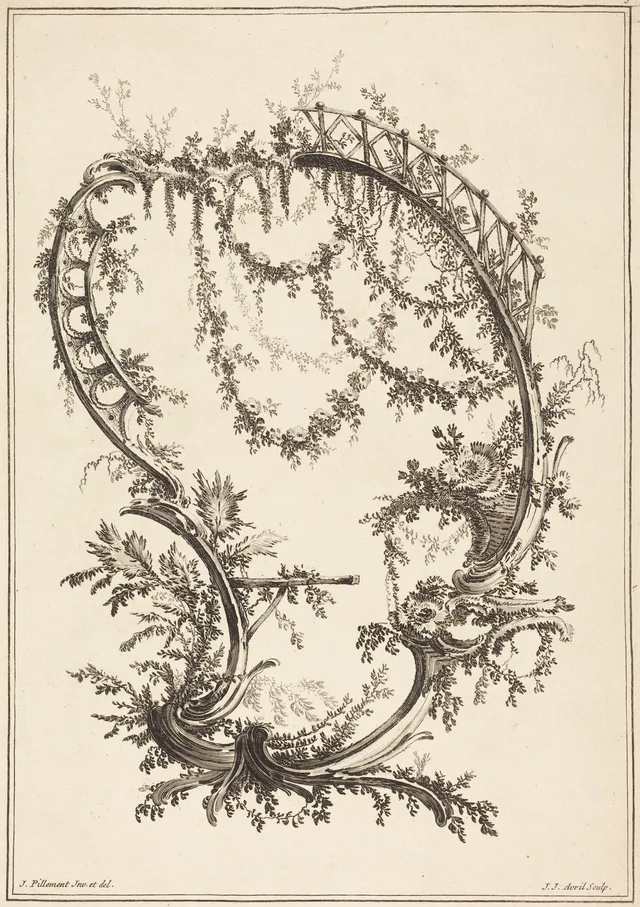
 Ornament with a Strut and a Railing
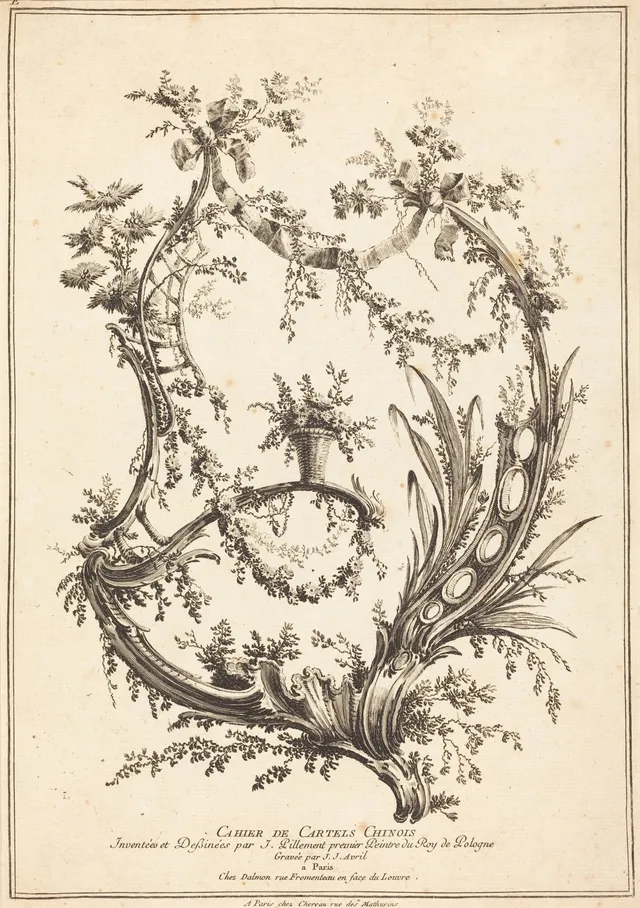
 Title Page
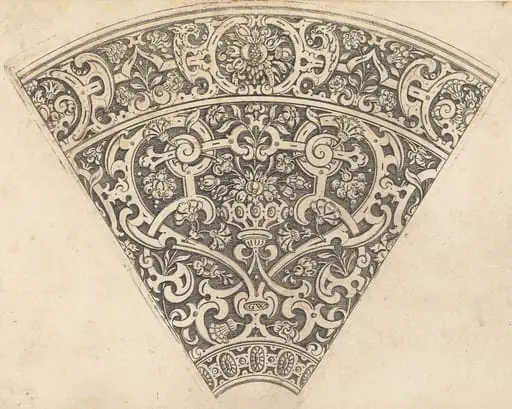 Goblet Design
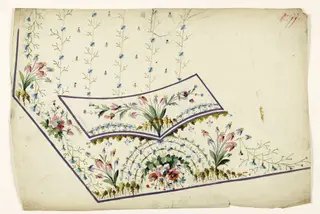 Bouquet suspendu surmonté d'un motif floral rayonnant, bouquets de fleurs et grappes, rayures fleuries, projets de broderies de gilet, XVIIIème siècle
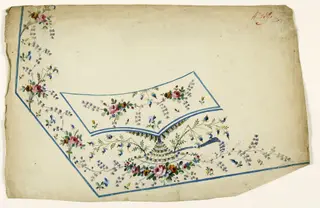 Composition à bouquet de fleurs en éventail et guirlandes de fleurs mauves, projets de broderies de gilet, XVIIIème siècle
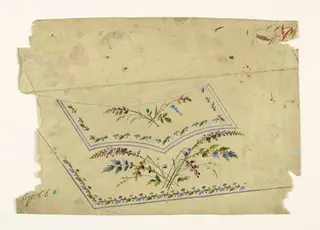 Composition avec brins de fleurs champêtres et guirlandes de feuilles et de fleurs, projets de broderies de gilet, XVIIIème siècle
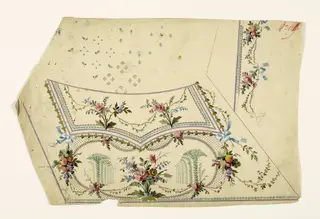 Composition avec bouquet de fleurs, guirlandes stylisées avec rubans bleus et grappes de fruits suspendues, projets de broderies de gilet, XVIIIème siècle
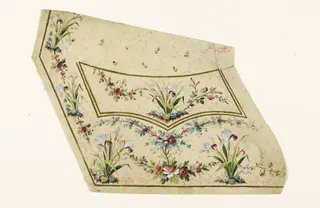 Composition de fleurs en bouquets et guirlandes de baies, projets de broderies de gilet, XVIIIème siècle
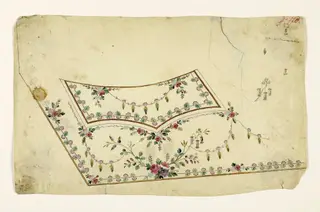 Composition avec bouquet de fleurs, guirlandes et frises de feuilles et de fleurs stylisées, projets de broderies de gilet, XVIIIème siècle
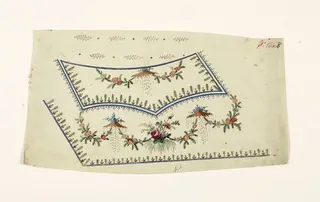 Composition avec bouquet et guirlandes de fleurs, bleuets sur tertres et frises de fleurs stylisées, projets de broderies de gilet, XVIIIème siècle
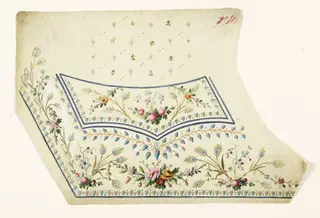 Composition de bouquets de fleurs et de baies et semis de fleurs, projets de broderies de gilet, XVIIIème siècle
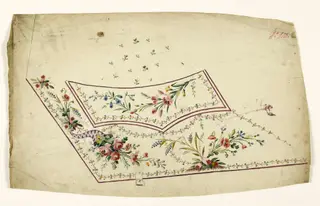 Composition avec corne d'abondance remplie de fleurs, guirlandes et bouquets de fleurs champêtres, projets de broderies de gilet, XVIIIème siècle
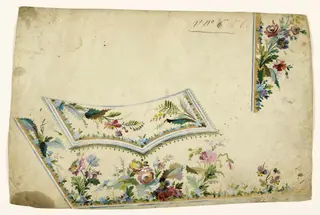 Composition florale aux bleuets, projets de broderies de gilet, XVIIIème siècle
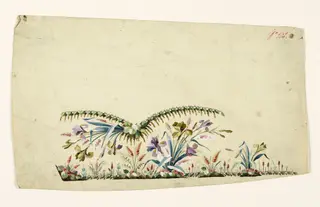 Composition avec bouquet et gerbe d'iris, frise de pampres et feuilles de vigne, projets de broderies de gilet, XVIIIème siècle
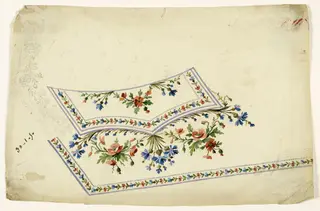 Composition florale de coquelicots et fleurs sauvages bleues, guirlandes de fleurs et frises de perles mauves, projets de broderies de gilet, XVIIIème siècle
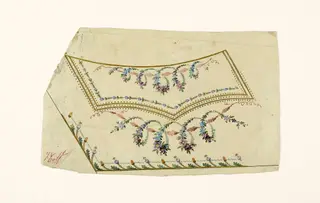 Composition avec guirlandes de fleurs torsadées, frises de fleurs stylisées et de perles vertes, projets de broderies de gilet, XVIIIème siècle
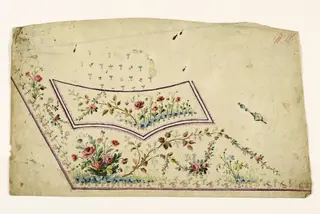 Composition avec bouquet et guirlandes de fleurs et branches de feuilles et de baies bleues, projets de broderies de gilet, XVIIIème siècle
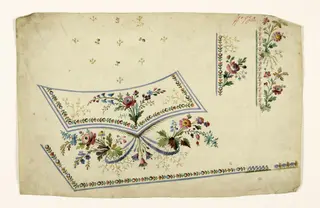 Composition florale avec bouquets et frises de fleurs stylisées, projets de broderies de gilet, XVIIIème siècle
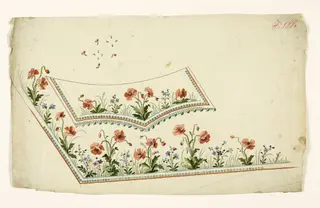 Composition florale aux coquelicots, projets de broderies de gilet, XVIIIème siècle
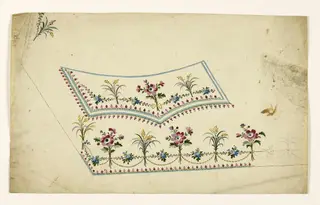 Composition avec bouquets de fleurs liés par des cordons rayés et des guirlandes de fleurs, frises de perles pourpres, projets de broderies de gilet, XVIIIème siècle
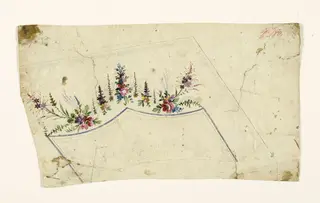 Composition florale en guirlandes et grappes, filet lavande, projets de broderies de gilet, XVIIIème siècle
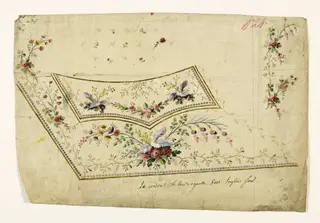 Composition avec bouquets de fleurs et branches fleuries avec grappes, frises de perles couleur glycine, projets de broderies de gilet, XVIIIème siècle
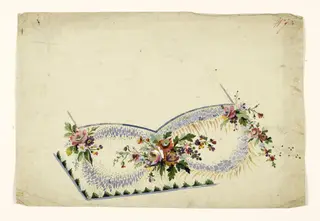 Composition florale de bouquets multicolores et guirlandes mauves, projets de broderies de gilet, XVIIIème siècle
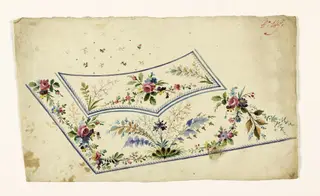 Composition de guirlandes de fleurs et branches de feuilles, projets de broderies de gilet, XVIIIème siècle
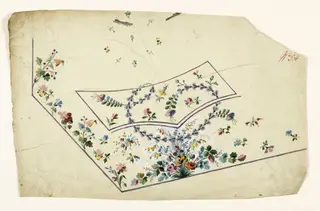 Composition de bouquets de fleurs multicolores et guirlandes de fleurs mauves, projets de broderies de gilet, XVIIIème siècle
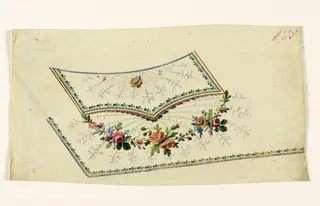 Composition avec guirlandes de fleurs multicolores, motifs rayonnants de branches et frises stylisées, projets de broderies de gilet, XVIIIème siècle
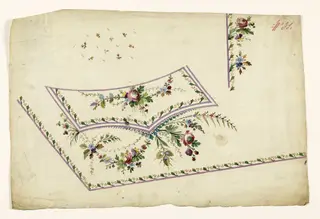 Composition de guirlandes de fleurs, frises de feuilles et de baies rouges, projets de broderies de gilet, XVIIIème siècle
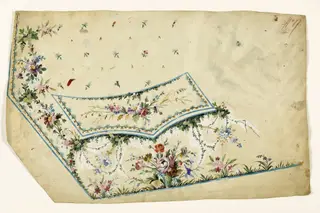 Bouquets de fleurs, guirlandes de feuilles et semis de fleurs, projets de broderies de gilet, XVIIIème siècle
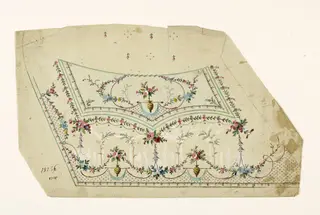 Composition de guirlandes de fleurs, de clochettes et de perles, motifs de culots torsadés et suspendus, projets de broderies de gilet, XVIIIème siècle
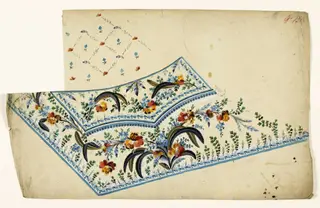 Composition de fleurs et de plumes en bouquets, frises de perles et de fleurs bleues, croisillons de plumes et de fleurs à semis de fleurs, projets de broderies de gilet, XVIIIème siècle
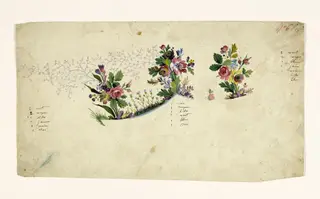 Composition florale en bouquets et bandes de gazon, projets de broderies de gilet, XVIIIème siècle
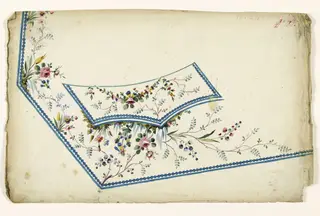 Composition de fleurs en branches et en bouquets, projets de broderies de gilet, XVIIIème siècle
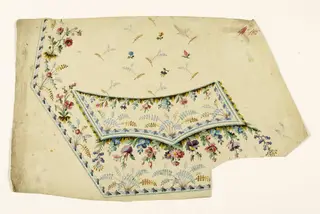 Composition de bouquets de feuilles en grappes et de fleurs multicolores, semis de fleurs et de feuilles, projets de broderies de gilet, XVIIIème siècle
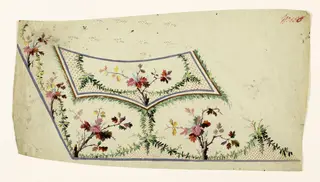 Composition avec branches de feuilles d'automne, guirlandes de feuilles stylisées, projets de broderies de gilet, XVIIIème siècle
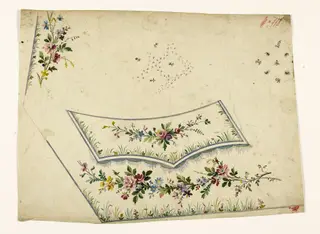 Guirlandes de fleurs et frise de franges perlées mauves, projets de broderies de gilet, XVIIIème siècle
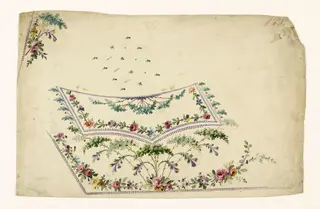 Composition avec guirlandes de fleurs et feuilles en grappes, projets de broderies de gilet, XVIIIème siècle
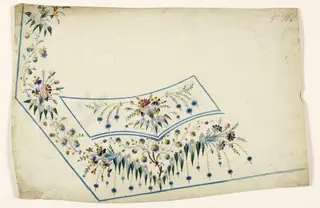 Composition florale en guirlandes, projets de broderies de gilet, XVIIIème siècle
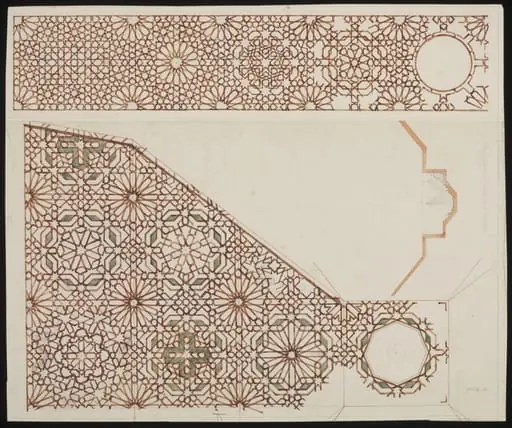 Drawing of the wooden ceiling in the Comares Throne Hall
Frequently asked questions
What is Filigree?
Filigree (also less commonly spelled filagree, and formerly written filigrann or filigrene) is a form of intricate metalwork used in jewellery and other small forms of metalwork.
How many Filigree works does Artifact World Gallery have?
Artifact World Gallery holds 38 public-domain Filigree works, all free to view and download.
Who are the key Filigree artists?
Key Filigree artists in the collection include Georg Wechter I, Jean-Jacques Avril I and Owen Jones.
Where can I see Filigree works?
Filigree works in the collection are held by Palais Galliera - Musée de la Mode de la Ville de Paris, National Gallery of Art and Victoria and Albert Museum.