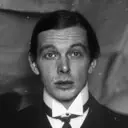
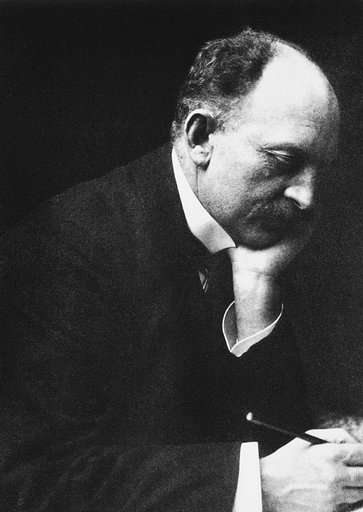
Artist
Christian Rohlfs
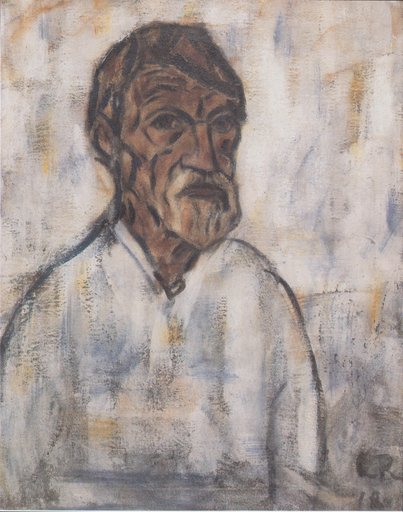
German Reich
Christian Rohlfs is a German Reich Expressionism artist. 31 works are cataloged here, principally at Museum of Modern Art.
Christian Rohlfs was a German painter and printmaker, one of the important representatives of German expressionism.
Overview
Christian Rohlfs (November 22, 1849, January 8, 1938) was a German painter and printmaker, recognized as one of the principal representatives of German Expressionism. Born in Groß Niendorf, Prussia, he overcame significant physical adversity to pursue a career that spanned naturalism, Impressionism, and finally Expressionism, earning him the designation "Nestor of German Modernism." His work encompassed landscapes, city views, architecture, and floral still lifes, characterized by bold color and increasingly abstracted forms. Despite late-career persecution by the Nazi regime, which condemned his work as degenerate art, Rohlfs secured a lasting place in German art history through his distinctive stylistic evolution and prolific output across multiple media.
Biography & dates
Rohlfs's life was marked by early hardship and late recognition. In 1851, his family moved to Fredesdorf. A fall from a tree in 1864 caused a severe leg injury that led to amputation in 1873 due to chronic osteomyelitis. During convalescence, Dr. Ernst Stolle, brother-in-law of writer Theodor Storm, provided drawing materials and recognized his talent. Stolle introduced Rohlfs in 1870 to Berlin painter and art writer Ludwig Pietsch, who recommended him to the Großherzogliche Kunstschule in Weimar. There he studied under Paul Thumann, producing naturalistic works, and resumed studies in 1874 after his amputation. From 1884, Rohlfs worked as an independent artist in Weimar, gradually embracing Impressionism. In 1886, he spent months at the Rittergut Hoof near Kassel, painting portraits and estate views. Supported by conductor Richard Strauss, who purchased five paintings, and by Hermann Bischoff, who financed a Berlin stay in 1895, Rohlfs developed his practice. He created pastels in Gothmund in 1899 and painted the Sternbrücke in Weimar in 1887-1888 and the Chaussee nach Gelmeroda in 1893. In 1901, Karl Ernst Osthaus invited him to Hagen, where he established a studio at what would become the Museum Folkwang, becoming its first artist-in-residence. He taught at the Folkwang School and joined the Sonderbund in 1908. From 1910 to 1912, he lived in Munich and the Tyrol, where he encountered the circle around Franz Marc and Wassily Kandinsky. He married Helene Vogt in 1919, the same year a solo exhibition at the Nationalgalerie in Berlin brought public recognition. In 1924, he was elected to the Prussian Academy of Arts. From 1927 onward, he spent annual extended periods in Ascona, Switzerland, where he met Helmuth Macke and Marianne von Werefkin in 1930-1931. The Nazi regime targeted him systematically: on August 2, 1937, he was pressured to resign from the Prussian Academy; on August 14, he refused, stating he had followed his own path for seventy years. On September 13, 1937, Joseph Goebbels recorded in his diary his rejection of attempts to protect Rohlfs. Rohlfs was expelled on January 7, 1938, and died in Hagen the following day.
Style & movement
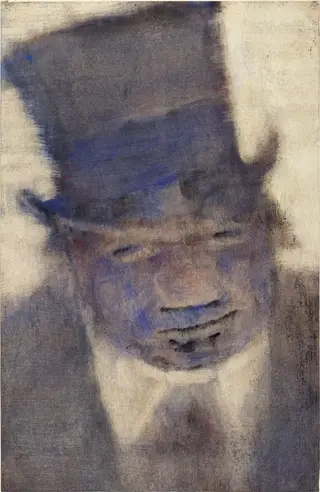
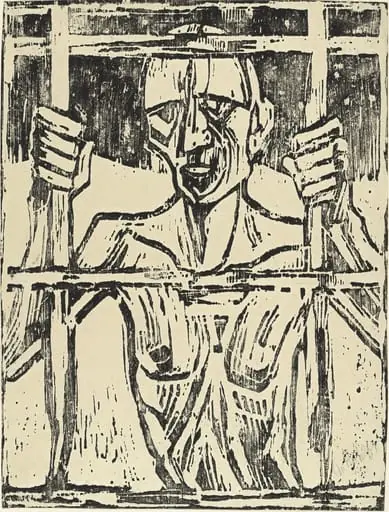
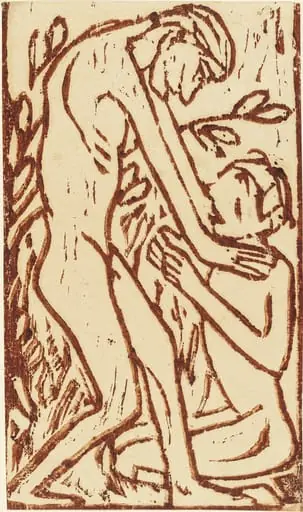
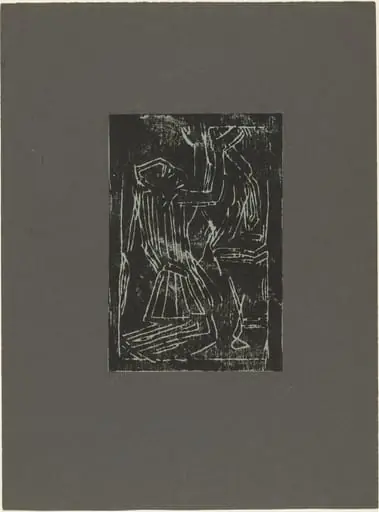
Rohlfs's artistic trajectory traversed multiple major movements of the late nineteenth and early twentieth centuries. He began with naturalistic and academic painting during his Weimar training, then moved through Impressionism from about 1884, producing works that rank among the significant German examples of that style. Around 1902-1903, he experimented briefly with Pointillism, though this remained a minor episode. The decisive turn came after 1901 in Hagen, where encounters with Edvard Munch and Emil Nolde and exposure to Vincent van Gogh's work propelled him toward Expressionism. By 1910, he was firmly associated with the Expressionists, elected to the jury of the Deutscher Künstlerbund in Darmstadt that year. His Expressionist phase featured city views, landscapes, and architecture rendered with intensified color and simplified, abstracted forms. From 1927 in Ascona, plant motifs and floral still lifes became central, with color serving as his primary expressive vehicle. In 1908, at age sixty, Rohlfs began making prints after seeing an exhibition by Die Brücke. He ultimately produced 185 prints, almost exclusively woodcuts and linocuts. He occasionally hand-colored these prints, sometimes years after their creation, as with his 1919 recoloring of Der Gefangene from 1918, pushing them toward the condition of unique paintings.
Major works
Rohlfs's oeuvre spans paintings, pastels, and prints across his stylistic periods. Early naturalistic works gave way to Impressionist paintings including two versions of the Sternbrücke in Weimar (1887-1888) and Chaussee nach Gelmeroda (1893). His Soest period (1904-1906) yielded repeated treatments of medieval churches and buildings, subjects he revisited into the 1920s. During his 1910-1912 stay in Upper Bavaria, he created nudes and abstracted mountain landscapes, as well as views of the monastery at Andechs. His printmaking produced approximately 185 works, with Der Gefangene (1918, recolored 1919) noted for its heavily hand-colored treatment. His late work Letzte Chrysanthemen remained unfinished at his death. Specific current locations of works include: Karl Wibmer's 1887 portrait of Rohlfs (Öl auf Leinwand) at the Landesmuseum für Kunst und Kulturgeschichte in Schleswig; Paul Wilhelm Tübbecke's circa 1890 depiction Christian Rohlfs malend (Öl auf Papier, 22 × 27 cm) at the Angermuseum Erfurt; and Julie Wolfthorn's 1929 portrait Christian Rohlfs in Ascona. The Osthaus Museum Hagen (formerly Christian-Rohlfs-Museum) holds a substantial collection, though approximately 450 works were confiscated from it in 1937. His grave at Friedhof Delstern in Hagen features a cast of Ernst Barlach's 1931 sculpture Der lehrende Christus.
Influences & students
Rohlfs's early development was shaped by several key figures. Dr. Ernst Stolle provided initial encouragement and materials during his convalescence. Ludwig Pietsch facilitated his entry to the Weimar academy. Paul Thumann provided formal training in history and figure painting. Richard Strauss and Hermann Bischoff offered crucial financial and moral support during his Impressionist period.
The pivotal influences on his mature style came through Karl Ernst Osthaus, whose patronage brought him to Hagen and exposed him to progressive currents. Direct encounters with Edvard Munch and Emil Nolde proved decisive for his Expressionist turn, as did his experience of Vincent van Gogh's paintings. In Munich, he connected with the circle around Franz Marc and Wassily Kandinsky. In Ascona, he collaborated closely with Helmuth Macke and Marianne von Werefkin from 1930 to 1931.
Rohlfs taught at the Folkwang School in Hagen, though specific named pupils are not documented in the available sources. He held leadership positions in the Deutscher Künstlerbund and the Künstlervereinigung Hagenring, indicating active engagement with artistic communities rather than a formal teaching studio.
Legacy
Rohlfs received significant recognition during his lifetime. In 1929, the town of Hagen opened the Christian Rohlfs Museum (now integrated into the Osthaus Museum Hagen). He was named honorary citizen of Hagen and received honorary doctorates from the University of Kiel and the University of Aachen.
The Nazi regime's persecution was severe and systematic: seventeen of his paintings appeared in the 1937 Degenerate Art Exhibition in Munich, and approximately 450 works were confiscated from the Hagen museum alone. The regime prohibited sale of his paintings and imposed a painting ban. Posthumous commemorative exhibitions were organized by the Kunstmuseum Basel and the Berner Kunsthalle.
After World War II, his rehabilitation proceeded through major exhibitions: the 1. Landesausstellung Bildender Künstler Thüringens in Erfurt (1947) and documenta 1 in Kassel (1955), which established his place in the canon of twentieth-century German art. His legacy is sustained by institutional memorialization: the Christian-Rohlfs-Gymnasium in Hagen-Haspe, the Christian-Rohlfs-Realschule in Soest, and Christian-Rohlfs-Straße streets in Hagen-Wehringhausen, Bad Segeberg, and Fulda. The Osthaus Museum Hagen maintains a dedicated room for his work.
Works by Christian Rohlfs
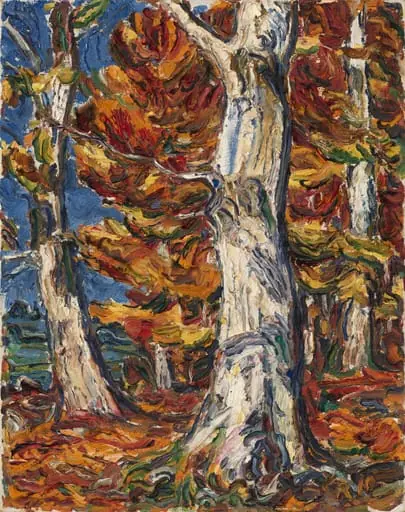 White Beeches in Fall
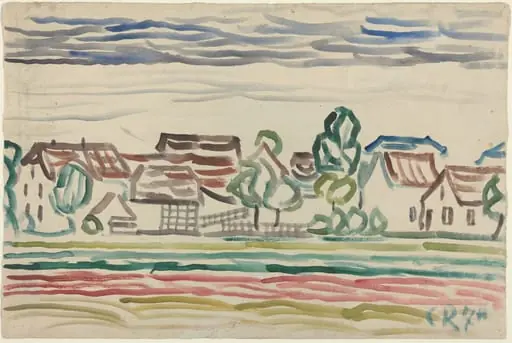 Landscape
![Death as Juggler (Revolution) (Tod als Jongleur [Revolution])](https://artifactworldgallery.com/img/christian-rohlfs--death-as-juggler-revolution-tod-als-jongleur-revolution--b8054bf30fc98c3e-w320.webp) Death as Juggler (Revolution) (Tod als Jongleur [Revolution])
Death as Juggler (Revolution) (Tod als Jongleur [Revolution])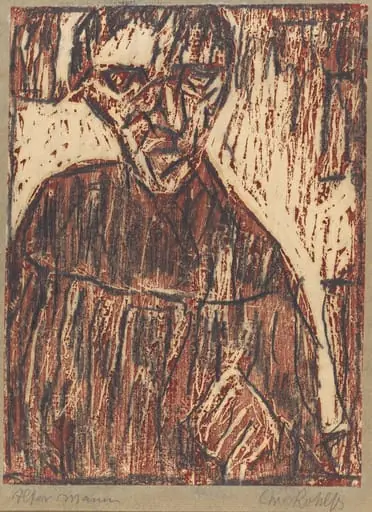 Old Man
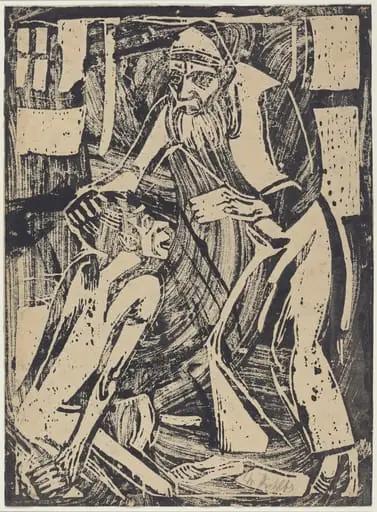 Return of the Prodigal Son
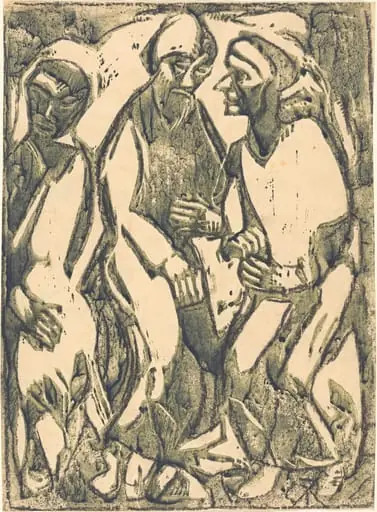 Deliberation (Beratung)
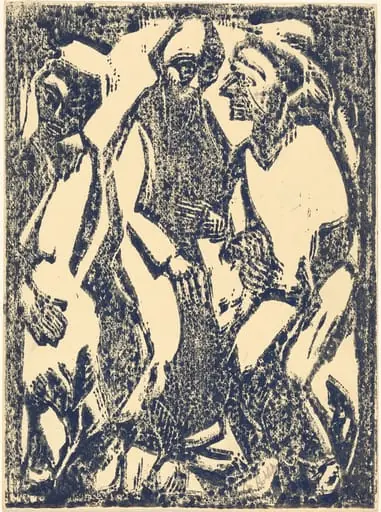 Deliberation (Beratung)
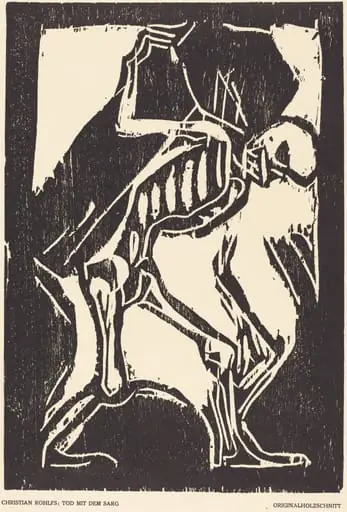 Death with a Coffin
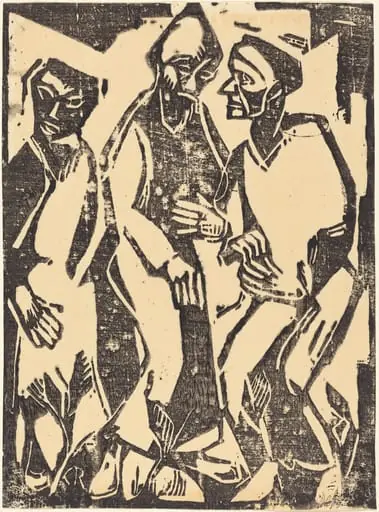 Deliberation (Beratung)
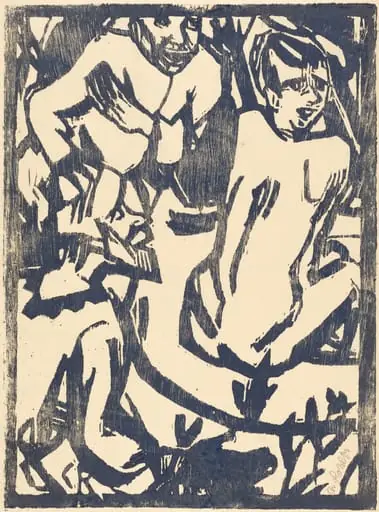 Susanna and the Elders
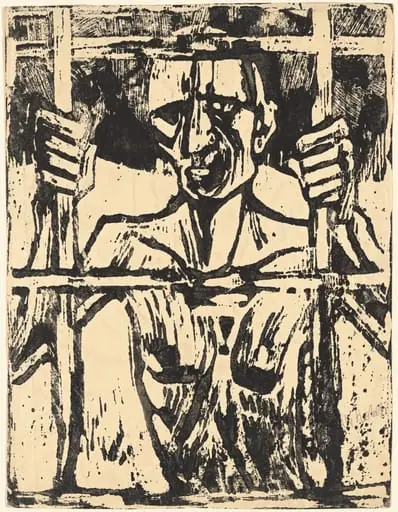 The Prisoner (Der Gefangene)
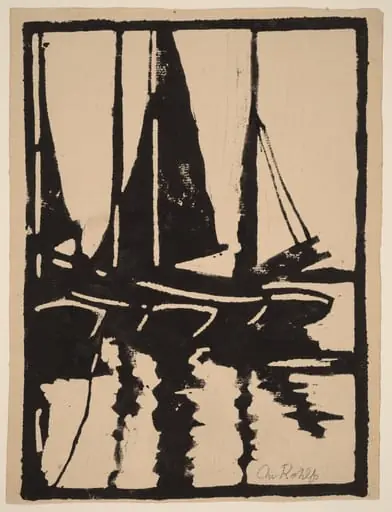 Sailboats in the Harbor
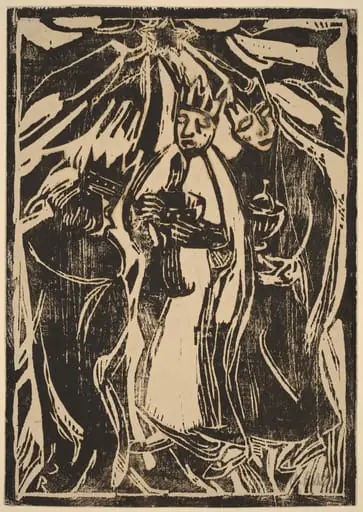 The Magi
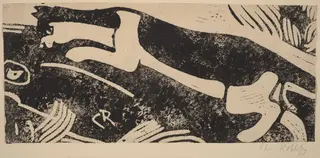 Cat and Mouse
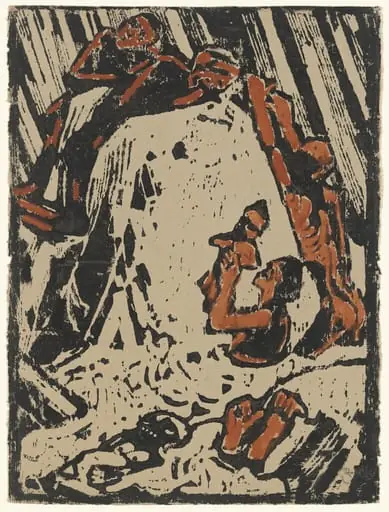 Flood (Sintflut)
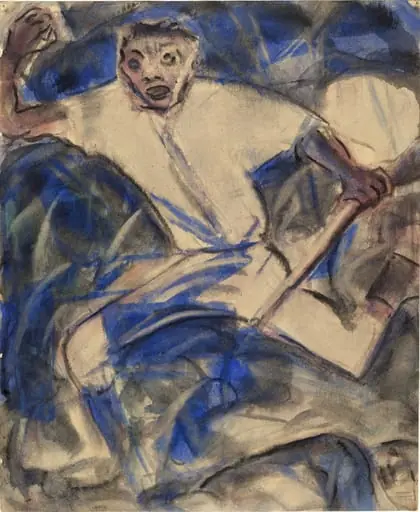 Untitled
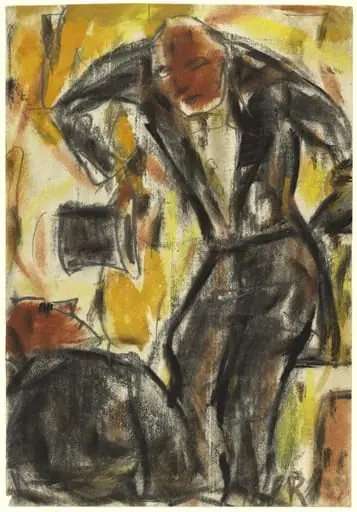 Untitled
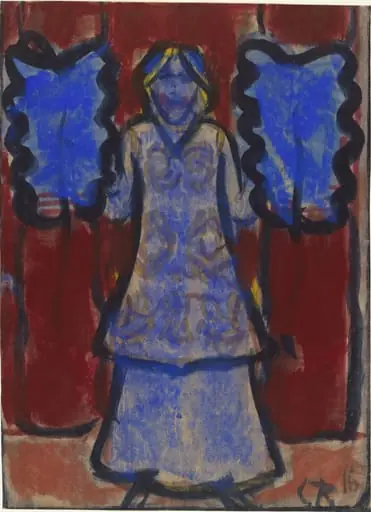 Untitled
 Untitled
 Untitled
 Untitled
 Untitled
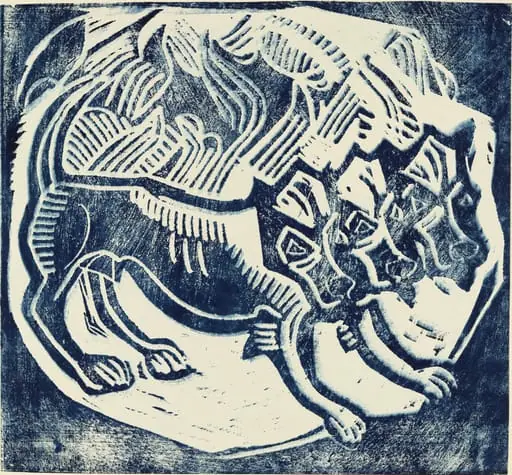 Untitled
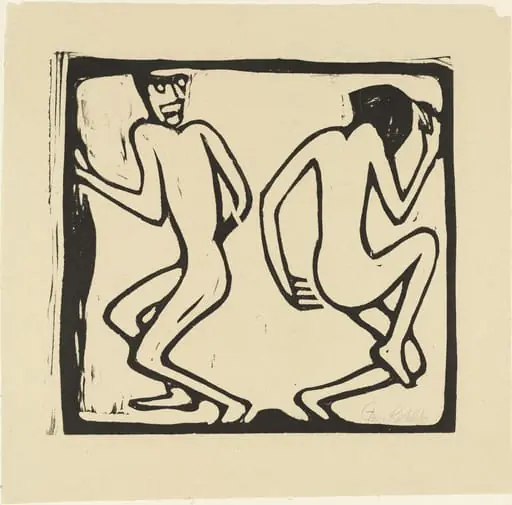 Untitled
31 works in the catalog · 24 shown
Collections represented


Artists in a similar vein