Artwork
Charles McEvers
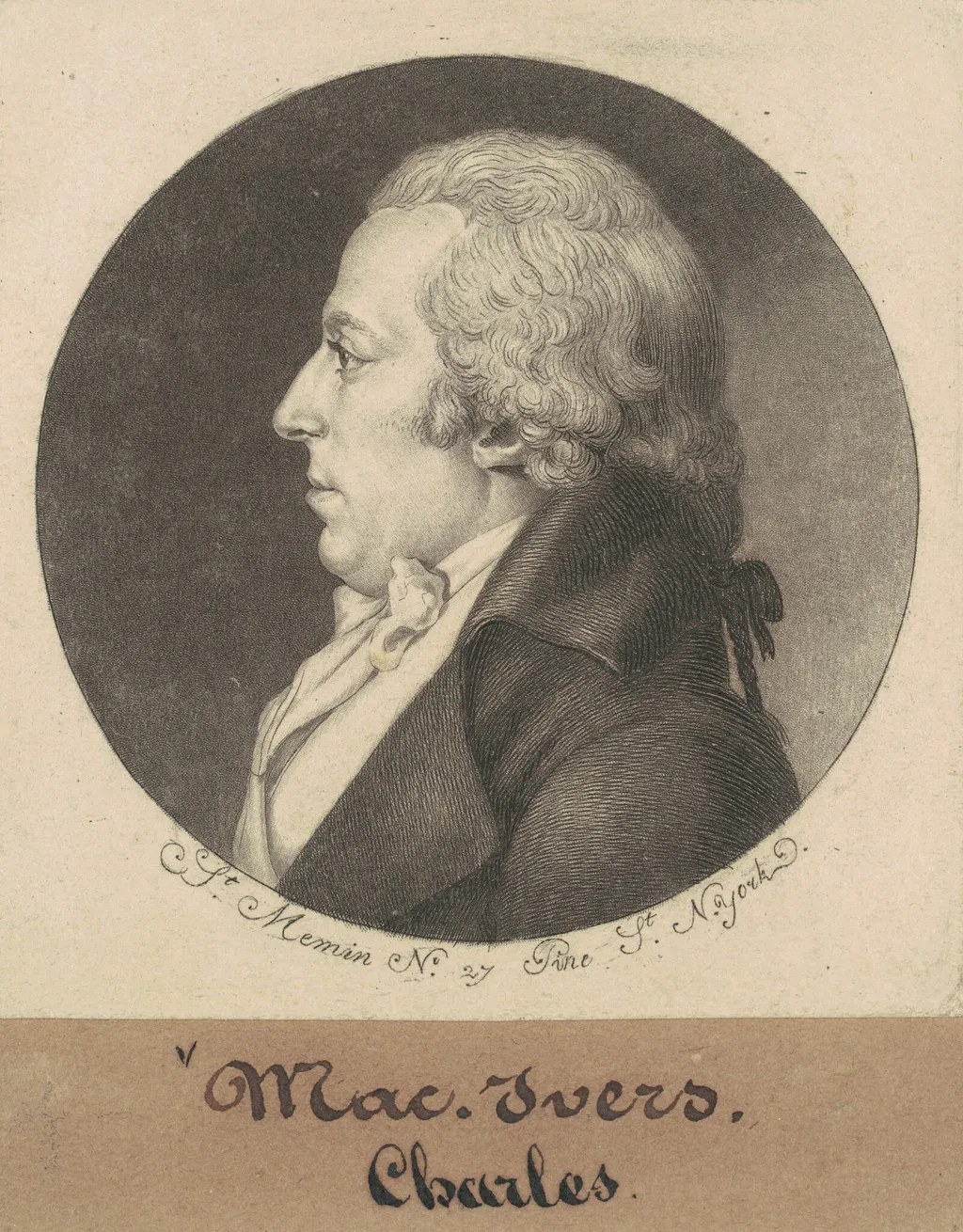
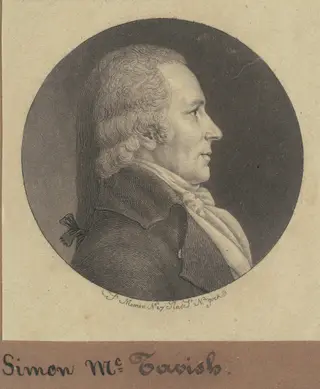
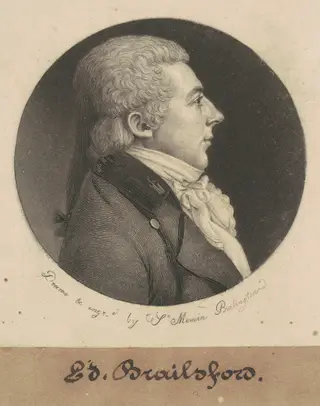
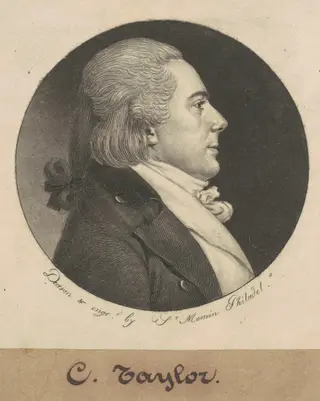
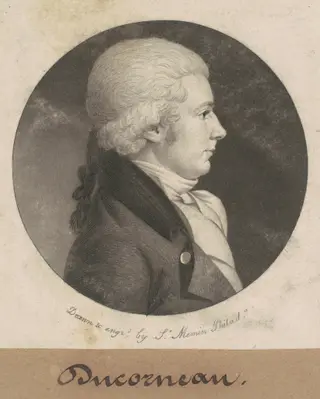
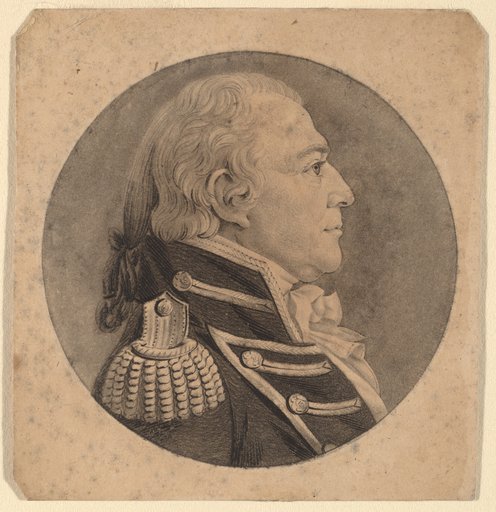
Charles McEvers is an ink print by the Romanticist artist Charles B. J. Févret de Saint-Mémin. It dates from 1798 and is held in the collection of the National Gallery of Art.
- Inscription
- Inscribed:lower center in plate: St. Memin No. 27 Pine St. N. York.; lower center mount in black ink by unknown hand: Mac. Ivers. / Charles
About this work
Overview
Its compact size and precise technique reflect the era’s demand for intimate, portable likenesses of notable individuals.
This small black-and-white print, created in 1798, depicts Charles McEvers in a formal portrait. Executed in mezzotint and engraving on wove paper, it is mounted on a brown wove support. Measuring just over five and a half centimeters square, the work is part of the Corcoran Collection. Its compact size and precise technique reflect the era’s demand for intimate, portable likenesses of notable individuals.
Subject & Meaning
Charles McEvers, a New York merchant and civic figure, is portrayed with direct eye contact, conveying presence and composure. His dark coat and neutral background eliminate distraction, focusing attention on his facial features. The portrait serves as a record of personal identity rather than a statement of status or achievement, typical of the period’s portraiture for non-noble subjects.
Technique & Style
The artist employed mezzotint, a method that begins with a textured copper plate to produce rich tonal gradations. Fine engraving lines define contours and details, such as the collar and hair. The result is a subtle transition from deep shadow to soft highlight, giving the face a lifelike volume. This technique, favored by Saint-Mémin, allowed for nuanced expression in small-scale prints.
History & Provenance
Created in 1798, the print was made during Charles B. J. Févret de Saint-Mémin’s time in the United States, where he produced numerous portraits of prominent Americans. It entered the Corcoran Collection in the 19th century and later became part of the National Gallery of Art’s holdings following the Corcoran’s dissolution. Its preservation reflects its value as a document of early American portraiture.
Context
In late 18th-century America, mezzotint portraits were popular among the urban elite as affordable alternatives to oil paintings. Saint-Mémin, a French émigré, adapted European printmaking techniques to meet local demand. His work contributed to a growing visual culture that documented civic leaders, merchants, and professionals outside aristocratic circles.
Legacy
Saint-Mémin’s mezzotints, including this portrait, remain significant for their technical precision and historical documentation. They offer insight into the visual language of early American identity and the role of print in shaping public perception. Though modest in scale, these works influenced the dissemination of portraiture beyond elite patronage.
Own this work as a print
Artist & collection
Artist
Charles B. J. Févret de Saint-Mémin
Charles Balthazar Julien Févret de Saint-Mémin (French pronunciation: ; 1770–1852) was a French portrait painter and museum director.