Artist
Polidoro da Lanciano
Republic of Venice
Polidoro da Lanciano is a Republic of Venice Mannerism artist. 9 works are cataloged here, principally at Kunsthistorisches Museum.
Polidoro de Rienzo da Lanciano (Lanciano, 1515–1565) was an Italian painter. Relatively little is known of his life. He was born in Lanciano, a town that is a few miles inland from Ortona, a port on the Adriatic Sea. This is in the Abruzzi region of Italy, lying southeast of Pescara. His grandfather, Alessandro Rienzo, was a ceramic painter in Lanciano. Based on Venetian documents Polydoro's birthdate is taken to be 1515. At an early age he apparently showed great artistic talent. and for that reason he moved to Venice, the center of art in that region of Italy, at a young age. There he assumed a Venetian form for his name, Lanzani. His first mention in official Venetian documents is 1536, when he would have been 21 years of age. He probably came to Venice at least five years prior to that in order to begin his artistic training. His name appears as a witness to a document in the years 1536 and 1549. His Last Will and Testament bears his signature, and is dated 20 July 1565. He died the following day, with his age reported as 50. He likely worked as an assistant to Titian (c.1488/90-1576) for many years, especially given the close resemblance of his style with that of the Venetian master. This would have been in the 1530s and possibly early 1540s. It is not known whether he then set up his own studio, but that was common practice. Polidoro was also influenced by Bonifacio Veronese (1487–1557), il Pordenone (1484–1539), and later possibly Paolo Veronese (1528–1588). In the United Kingdom, the following works are documented:
The Fitzwilliam Museum Holy Family with the Infant St John Baptist and Saint Catherine Virgin and Child with St Catherine, Mary Magdalene and St Barbara Glasgow Museums The Mystic Marriage of Saint Catherine c.1540–1550 The Courtauld Gallery Virgin and Child with Saint Catherine (?) and St Jerome in a Landscape Blairs Museum Virgin and Child with St Luke and a Kneeling Donor (Vision of Saint Stanislaus) UK Government Art Collection (Circle of Polidoro) Madonna and Child, St Francis and St Joseph with a Donor Moseley Old Hall (Circle of Polidoro) Madonna and Child with the Infant St John
Overview
Polidoro Lanzani, born Polidoro de Rienzo da Lanciano, was an Italian Renaissance painter active primarily in Venice during the sixteenth century. Born around 1515 in the Abruzzi region and dying in Venice in 1565, he specialized in devotional paintings, particularly sacre conversazioni featuring the Holy Family and saints in informal, outdoor pastoral settings. Although long overshadowed by the Venetian masters he emulated, Lanzani developed a distinct lyrical style that bridged the High Renaissance and the emerging Mannerist decorative trends, producing intimate religious works for private patrons that remain significant for their delicate handling and landscape precision.
Biography & dates
Polidoro was born in Lanciano, a town near the Adriatic port of Ortona in the Abruzzi region, around 1515, the son of Paolo de Renzi and the grandson of Alessandro Rienzo, a ceramic painter. Showing artistic talent early, he relocated to Venice, likely by the mid 1520s, joining an immigrant community from the Abruzzi in the San Pantalon neighborhood. He adopted the Venetian form of his name, Lanzani, and his first appearance in official Venetian documents came in 1536, with his name appearing again as a document witness in 1549. He married a woman named Angelica, who was much older and bore him a son, Giampaolo, before leaving him a widower. He later married the widow Elena Buzzacarini, gaining a stepson, Vittorio, and fathering another son, Giovanni Antonio. Polidoro signed his last will and testament on July 20, 1565, and died the following day at the age of fifty, after a six month illness. He left his family in difficult financial circumstances, prompting their return to Lanciano.
Style & movement
Lanzani specialized in horizontal sacre conversazioni, placing the Virgin, Christ, and saints in close proximity within expansive, verdant landscapes. His early work shows a strong allegiance to the lyricism of Titian, employing similar compositional formats and motifs, such as the Christ Child leaning forward to accept a lamb from the infant Saint John. During the 1540s, his style became receptive to the increasingly ornamental manner of Bonifacio Veronese, and by the 1550s, he incorporated the decorative classicism of Paolo Veronese. This shift brought a new emphasis on elegant costumes, richly patterned surfaces, and prominent classical architecture, lending greater monumentality to his later compositions. While he occasionally executed altarpieces, ceiling paintings, and portraits, he was less successful in these genres compared to his intimate devotional canvases.
Major works
Lanzani's notable works include The Holy Family with the Infant Saint John the Baptist from around 1550, held in the Louvre, which typifies his delicate figure groups and precise foliage. Other key paintings are The Feast of the Gods in the Museo di Capodimonte in Naples, Christ and the Adulteress in the Pinacoteca Tosio-Martinengo in Brescia and the Szepmuveszeti Muzeum in Budapest, and The Descent of the Holy Spirit of 1544 in the Gallerie dell'Accademia in Venice. The Holy Family with Mary Magdalene and a Venetian Patrician, painted around 1560 and located in the Gemaldegalerie in Dresden, demonstrates his later, more ornamental style. In the United Kingdom, his works are widely distributed, including The Mystic Marriage of Saint Catherine in Glasgow Museums, Virgin and Child with Saint Catherine, Mary Magdalene and Saint Barbara in the Fitzwilliam Museum, and Virgin and Child with Saint Catherine and Saint Jerome in a Landscape in the Courtauld Gallery. The Washington County Museum of Fine Arts holds his 1560 Madonna and Child with Saints Roch and Anthony Abbot.
Influences & students
The dominant influence on Lanzani was Titian, whose compositional formats and pastoral themes he closely emulated, though scholarship debates whether he actually worked as an assistant in Titian's studio or simply adopted his models independently. He was also significantly influenced by Bonifacio Veronese and il Pordenone, and later by Paolo Veronese. Regarding his artistic circle and followers, his stepson Vittorio continued in the artistic profession. Many of his paintings were so closely dependent on Titian that they were mistakenly attributed to the older master, and several works in UK collections, such as those at Moseley Old Hall and the UK Government Art Collection, are documented as being by the circle of Polidoro, indicating a workshop or follower production.
Legacy
Lanzani's posthumous reputation has been complex. Giorgio Vasari omitted him from his 1568 Lives, and Carlo Ridolfi later reported that Polidoro was little regarded in his day, noting that one of his best works, The Descent of the Holy Spirit, was initially assigned to Bonifacio Veronese before Ridolfi corrected the attribution in the following century. However, this low estimation is contradicted by Lodovico Dolce, who included Polidoro in a list of the twelve greatest painters in Italy. In modern cultural afterlife, his painting Madonna and Child with Saint Joseph and Saint Catherine of Alexandria, housed in the Accademia Carrara since 1796, was selected by the Italian Post Office for a 2015 Christmas stamp.
Works by Polidoro da Lanciano
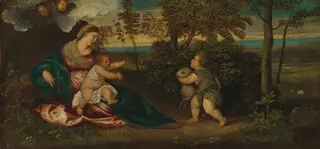
- Madonna and Child and the Infant Saint John in a Landscape
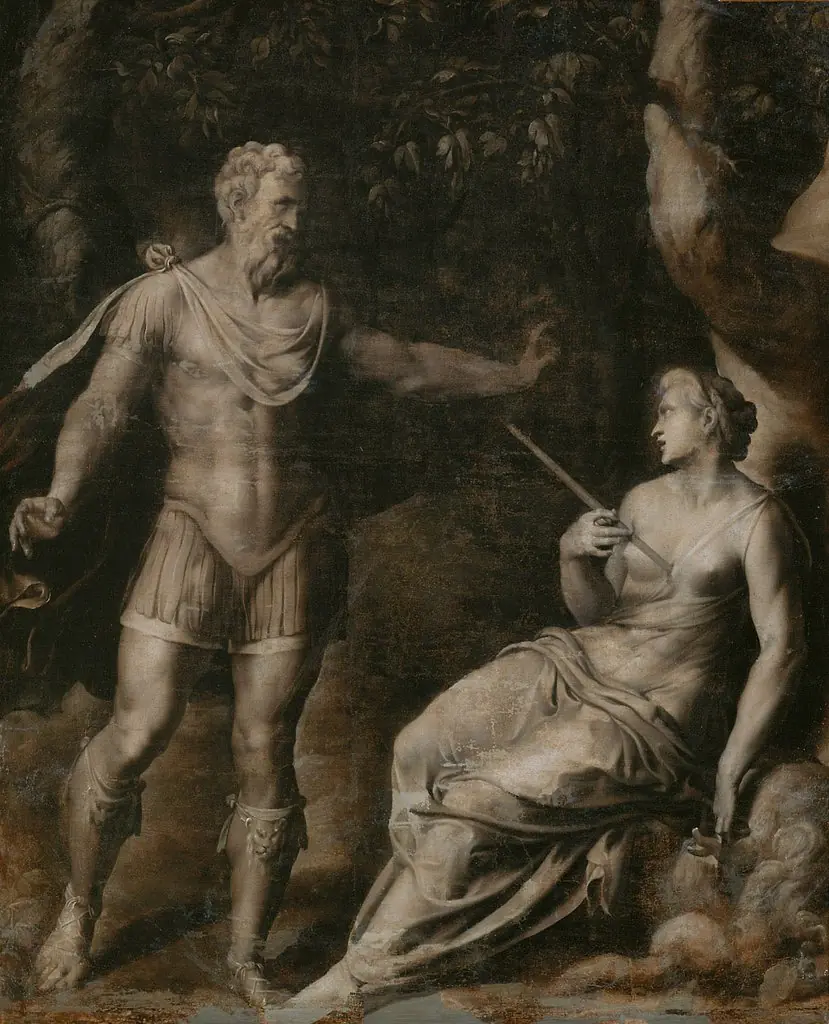
- Cephalus und Procris
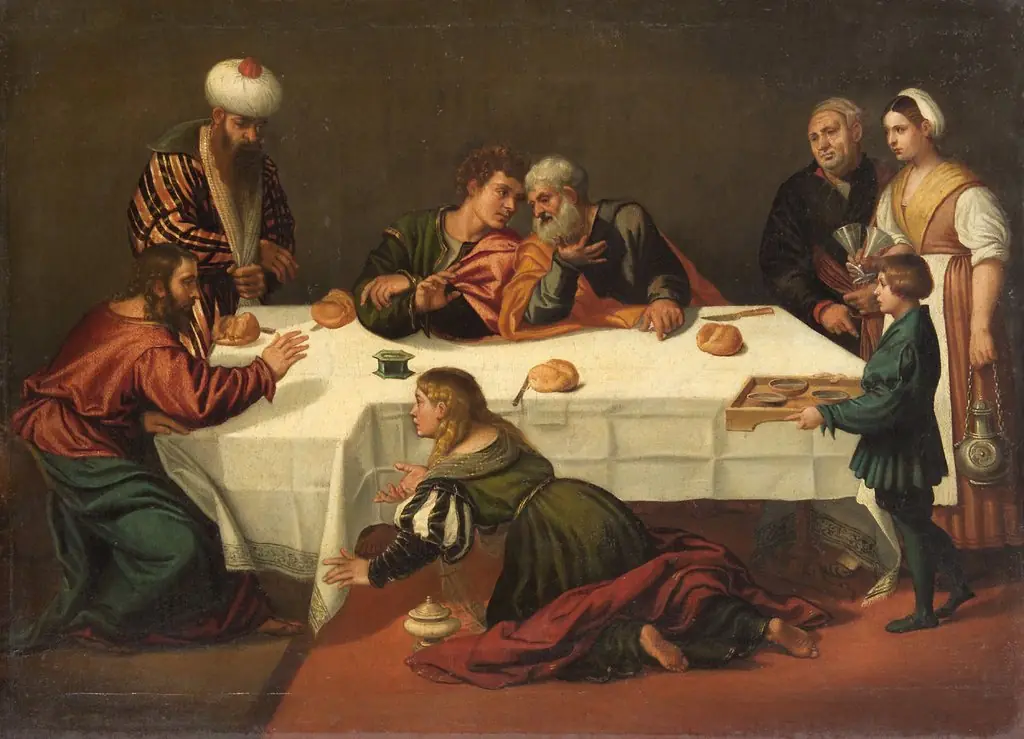
- Anointing of Christ in Bethany
- The Holy Family
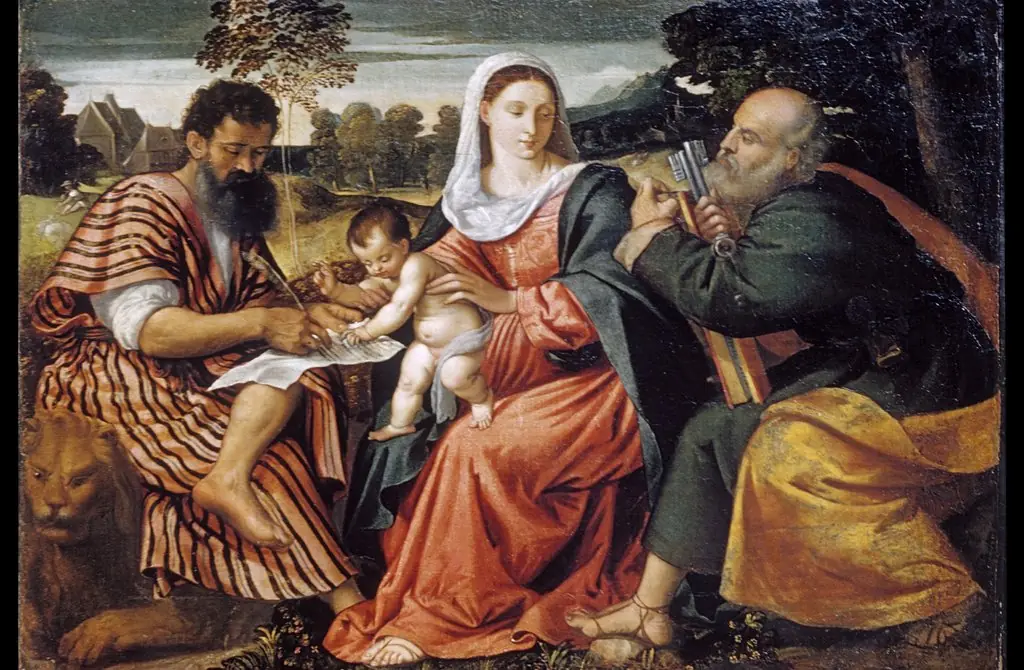 Madonna and Child with Saints Mark and Peter
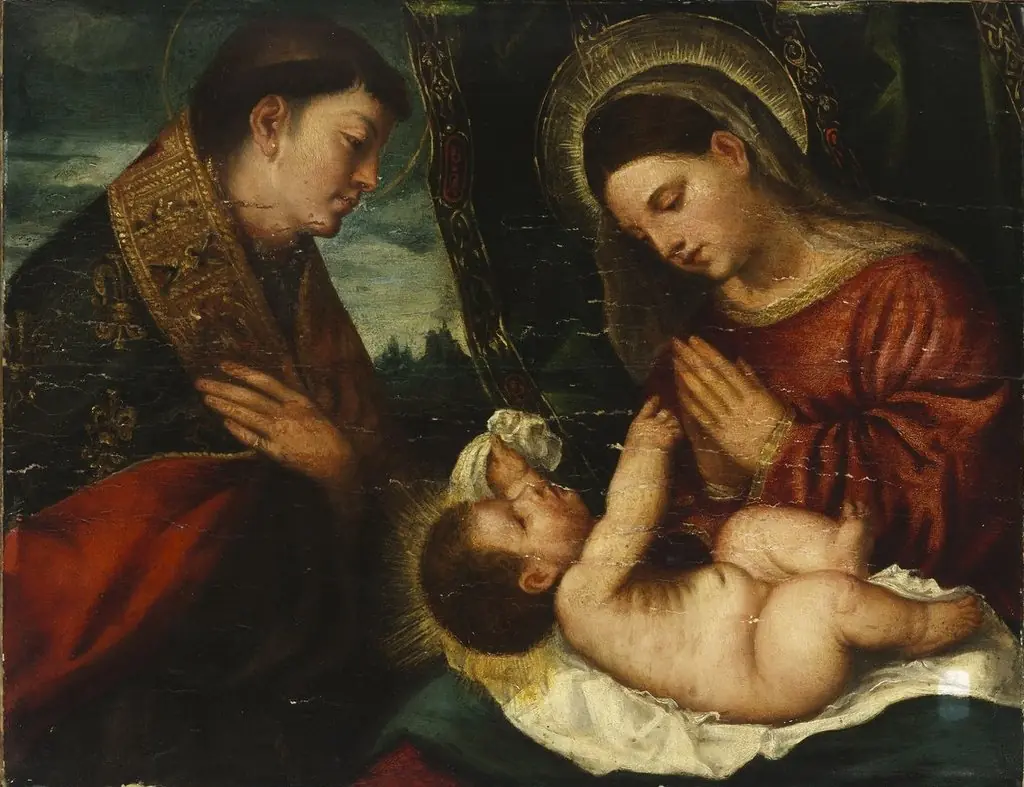 Madonna and Child with Saint Louis of Toulouse
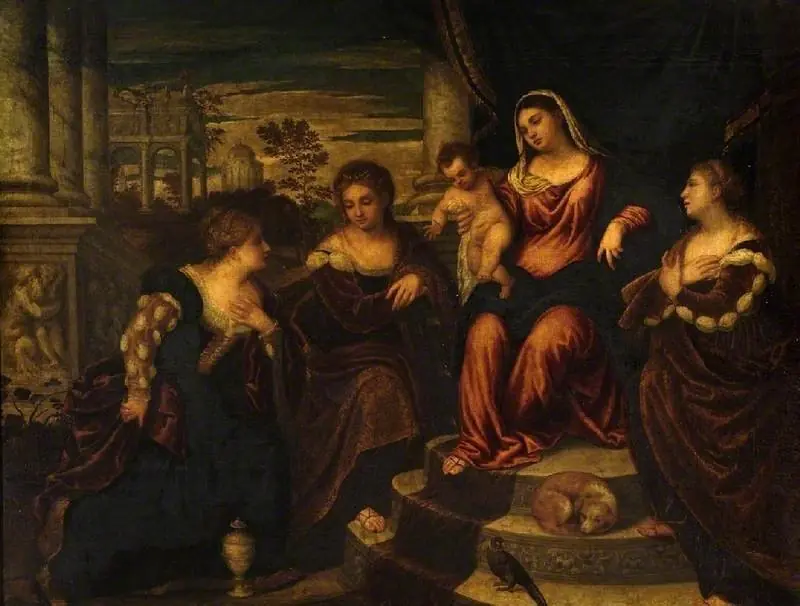 Virgin and Child with SS. Catharine, Mary Magdalene and Barbara
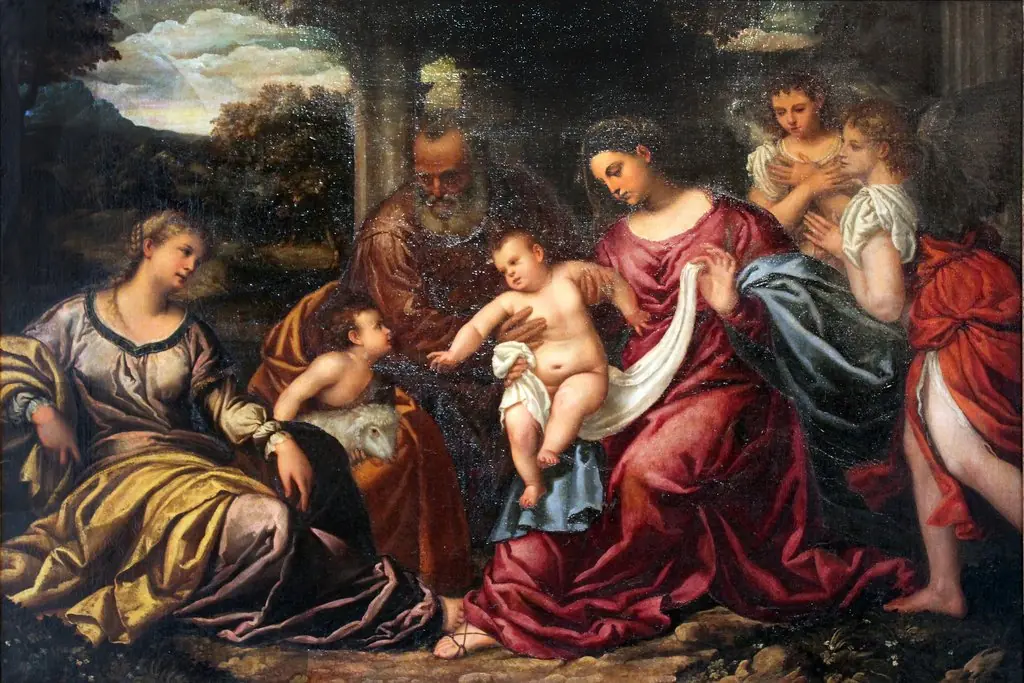
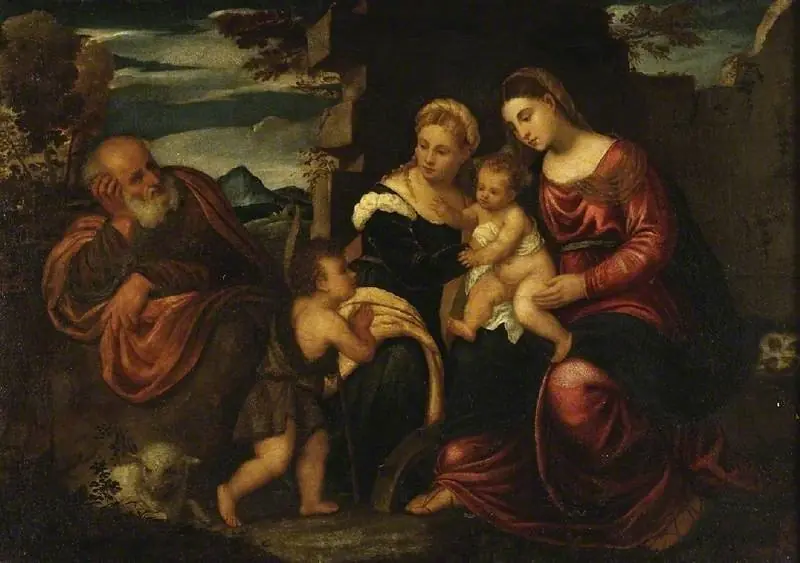 Holy Family with the infant St John Baptist and St Catherine
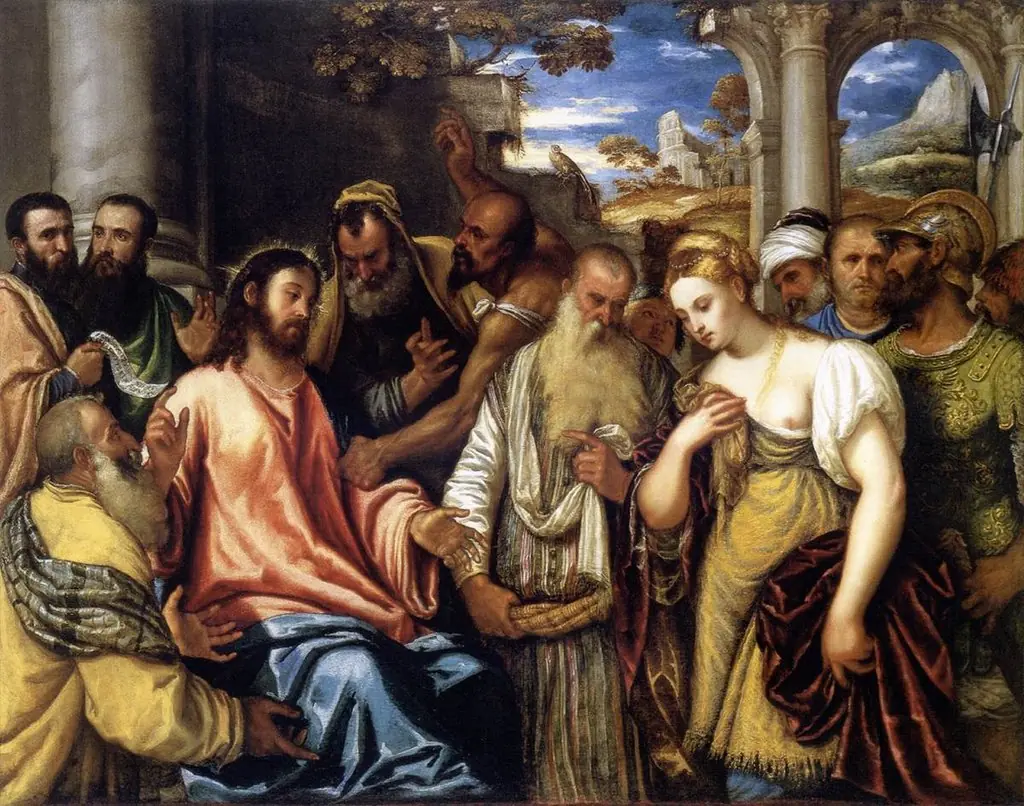 Christ and the Woman in Adultery
Collections represented


Artists in a similar vein