Artist
Pietro della Vecchia

Republic of Venice
Pietro della Vecchia is a Republic of Venice Baroque artist. 15 works are cataloged here, principally at Bavarian State Painting Collections.
Pietro della Vecchia, Pietro della Vècchia or Pietro Vècchia, formerly incorrectly called Pietro Muttoni (1603 – 8 September 1678) was a versatile Venetian artist between late Mannerism and early Baroque, who worked in many genres and created altarpieces, portraits, genre scenes and grotesques. He also created pastiches of the work of leading Italian painters of the 16th century. He designed cartoons for mosaics and worked as an art restorer. Della Vecchia was also sought after as an art expert and did expert valuations of artworks. He worked most of his life in Venice and its environs except for a brief stay in Rome.
Overview
Pietro della Vecchia (1603-8 September 1678) was a versatile Italian painter of the Venetian School whose career bridged late Mannerism and early Baroque. Active primarily in Venice, he produced altarpieces, portraits, genre scenes, grotesques, and pastiches of 16th-century masters, while also working as an art restorer, mosaic cartoon designer, and respected connoisseur. His ability to synthesize Venetian Renaissance tradition with Caravaggesque naturalism made him one of the leading painters of 17th-century Venice, culminating in his appointment as official painter to the Venetian Republic.
Biography & dates
Pietro della Vecchia was born in 1603, probably in Vicenza, though some sources place his birth in Venice. His father, Gasparo della Vecchia, was a painter admitted to the Venetian painters' guild. The artist was erroneously called Pietro Muttoni from the late 18th century until 1984, when Bernard Aikema demonstrated that this resulted from a misunderstanding by Luigi Lanzi in his Storia pittorica della Italia (1796), which confused the artist's name with the Muttoni collection in Rovigo that had owned one of his paintings. In fact, della Vecchia belonged to an established Venetian family. The earliest documents mentioning della Vecchia date from December 1626 to January 1628, recording payment for a banner he painted for the Confraternity of the Carmelites in Pordenone. Between 1629 and 1640 he was a member of the Venetian painters' guild. His first dated painting, a Crucifixion of 1633, survives in the church of San Lio in Venice. In 1649 he married Clorinda Régnier (or Renieri), daughter of the Flemish painter Nicolas Régnier. Earlier scholarship had placed this marriage in 1626, but Annick Lemoine's discovery of the marriage license and Clorinda's testament established the correct date; Clorinda was born around 1629. She was herself a painter, described by Tommaso Temanza in 1738 as a woman of great spirit, stature, and beauty. Her elder sister Lucrezia married the Flemish painter Daniel van den Dyck, and together the two couples painted wall decorations in the Palazzo Pesaro in Preganziol. By the late 1630s della Vecchia had established himself among Venice's leading painters, particularly of religious works. In January 1640 the procurators of San Marco de Supra commissioned two mosaic cartoons from him for Saint Mark's Basilica. These were sufficiently successful that he was appointed pitor ducal (painter to the duke), a position he held until 1674. In this capacity he designed new mosaics and restored old ones in the Basilica. He also restored Giorgione's Castelfranco Madonna altarpiece in 1643-1644. He died in Venice on 8 September 1678 and was buried in the church of San Canzian.
Style & movement
Della Vecchia's style developed through multiple phases and influences. His earliest known works show strong influence from Carlo Saraceni and his pupil Jean Leclerc, suggesting initial training with these artists rather than with Alessandro Varotari (il Padovanino), to whom early sources attribute his apprenticeship. The Caravaggesque elements in his early work, particularly the dramatic chiaroscuro, indicate he spent time in Rome after Leclerc's departure from Venice in 1621 or 1622. The influence of Padovanino, with its roots in early-16th-century Venetian art, only becomes visible in dated works from 1635 onwards, suggesting he worked in Padovanino's studio around 1625-1626 after returning from Rome. Around 1640 the influence of the Genoese painter Bernardo Strozzi became apparent in his work. Throughout his career, della Vecchia maintained a profound interest in 16th-century Venetian painting, particularly Titian and Giorgione. He became renowned for his ability to imitate the style of these masters, earning from his contemporary Marco Boschini the epithet simia di Zorzon (imitator of Giorgione). These pastiches were not mere copies but virtuoso performances designed for sophisticated collectors. His own original work spanned religious compositions, portraits, genre scenes, and grotesques. The latter, along with his depictions of arcane subjects such as philosophers and mathematicians, reflected his connections to the humanistic and libertine circle of the Accademia degli Incogniti, a learned society of freethinking intellectuals that shaped mid-17th-century Venetian culture. His interest in cabala and alchemy paralleled the scientific curiosity of his era.
Major works
Della Vecchia's major works demonstrate his range across genres and his engagement with both contemporary and historical styles. His Crucifixion of 1633 in San Lio, Venice, represents his early synthesis of Caravaggesque elements with Venetian tradition. A later monumental Crucifixion of 1637 (Venice, Fondazione Cini) more explicitly harks back to 16th-century composition while employing figures derived from Caravaggio. The Angel Offering a Skull to Saint Giustina, Who Stands between Saint Joseph and Saint John (1640, Venice, Accademia), painted for the church of San Giustina, shows the influence of Bernardo Strozzi. As pitor ducal from 1640, he designed cartoons for the mosaics of Saint Mark's Basilica until 1673, a commission of extraordinary prestige. Around 1670 he painted Moses and Aaron before Pharaoh, now in the Museo civico Amedeo Lia in La Spezia, which displays Caravaggesque influences. His Saint Anthony with His Basilica, painted for the Basilica of Santa Maria Gloriosa dei Frari and donated in 1674, depicts Saint Anthony of Padua with his basilica and two Franciscan friars, Fathers Maurizio Cavalletti and Maurizio Graziani. Other significant works include the Allegory of Truth (1654) in the Accademia Carrara, Bergamo; Christ and the Adulteress (c. 1650-1655) in the Musée Calvet, Avignon; Roman Charity (1640) in the Musée des Beaux-Arts, Orléans; and Neptune Threatening the Winds (c. 1650) in the Musée des Augustins, Toulouse. His works are also held in major international collections including the Hermitage in Saint Petersburg, the Kunsthistorisches Museum in Vienna, the Art Institute of Chicago, the Prado in Madrid, and the Staatsgalerie in Würzburg.
Influences & students
Della Vecchia's artistic formation involved multiple teachers and influences. While early sources name Alessandro Varotari (il Padovanino) as his master, stylistic evidence suggests his initial training came from Carlo Saraceni and Jean Leclerc, whose influence is visible in his earliest works. The Caravaggesque qualities in his painting point to a Roman sojourn in the early 1620s. Padovanino's influence, absorbed after circa 1625-1626, instilled in him a lasting devotion to 16th-century Venetian art, particularly the work of Titian and Giorgione. Around 1640, Bernardo Strozzi also shaped his development. Della Vecchia maintained significant professional and familial connections with the Flemish painter Nicolas Régnier, his father-in-law, with whom he collaborated in art dealing and connoisseurship. Both men conducted business with Paolo del Sera, the art agent in Venice for Cardinal Leopoldo de' Medici. Marco Boschini, the engraver, art dealer, and author, was a great admirer who frequently accompanied della Vecchia on valuation assignments after 1670. At the height of his career, della Vecchia ran a large workshop with many assistants and opened an academy in his house where live drawing classes were held. Gregorio Lazzarini, who later became the teacher of Giovanni Battista Tiepolo, was among his pupils, probably shortly after 1667. Della Vecchia also taught classes on the theory of art. His only son, Gasparo Prospero, born 8 May 1653, became a mathematician, musician, and painter.
Legacy
Della Vecchia's posthumous reputation was long obscured by the erroneous name Pietro Muttoni, which persisted from Luigi Lanzi's 1796 publication well into the 20th century. The correction of this error by Bernard Aikema in 1984 restored his proper identity as a member of the Venetian della Vecchia family. During his lifetime, however, he enjoyed considerable prestige as a painter, connoisseur, and expert valuer, consulted by collectors and merchants particularly in his later years.
His legacy lies partly in his role as a bridge between the Venetian Renaissance and Baroque, preserving and transmitting knowledge of 16th-century masters through his pastiches, restorations, and teaching. His academy and his instruction of Gregorio Lazzarini established a pedagogical line that extended to Giovanni Battista Tiepolo, though the precise nature of this influence remains a matter of art historical interest rather than proven direct transmission. His work is now distributed across major European and American museums, with significant holdings in Venice itself, reflecting the enduring value placed on his versatile output.
Works by Pietro della Vecchia
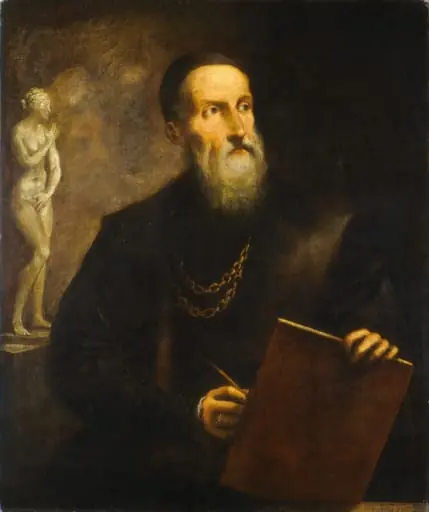 Imaginary Self-Portrait of Titian
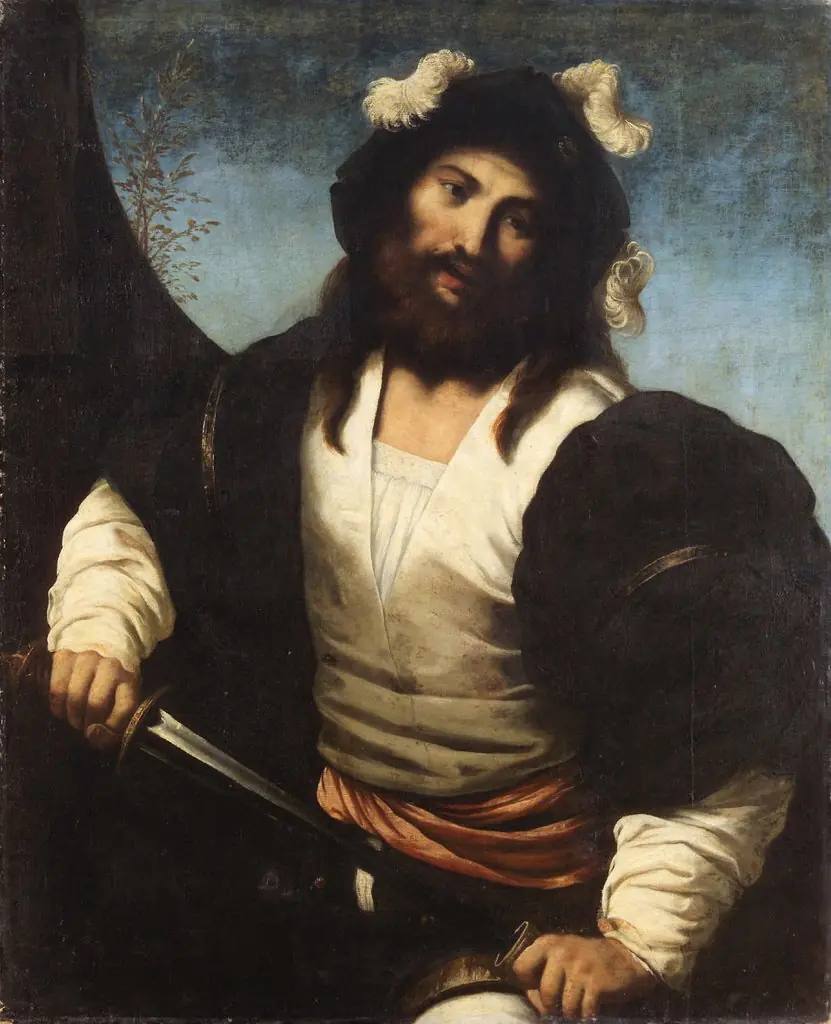 Warrior
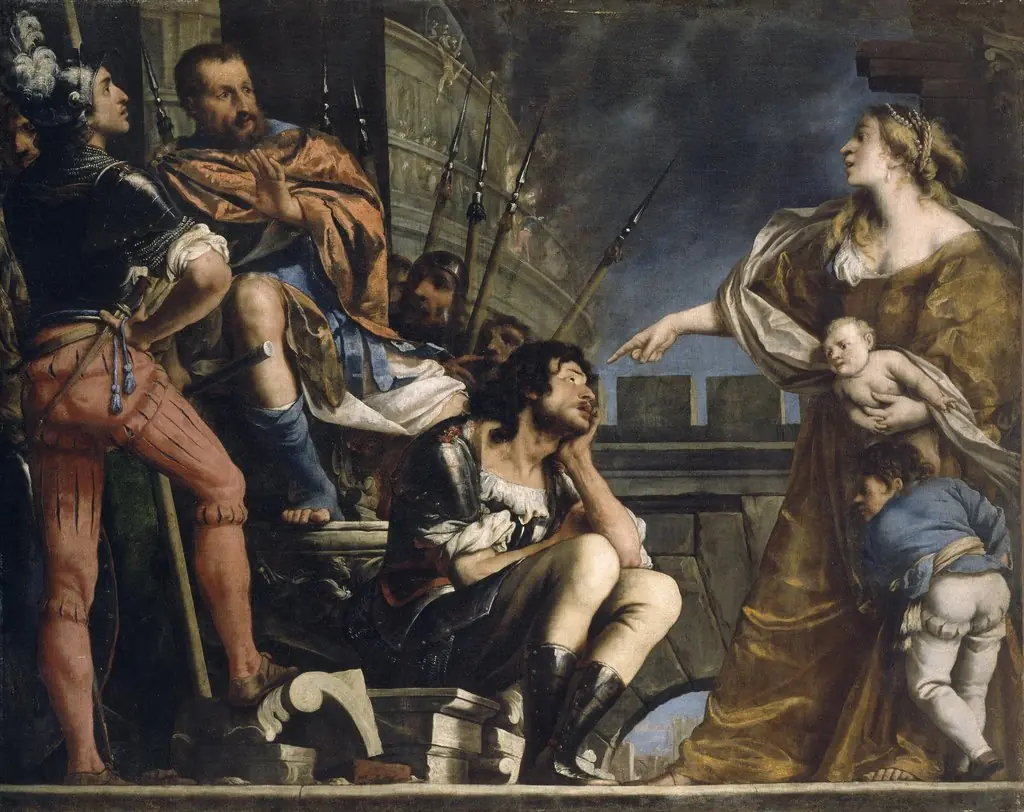 Haasdrubal's Wife Denouncing her Husband before Scipio Africanus
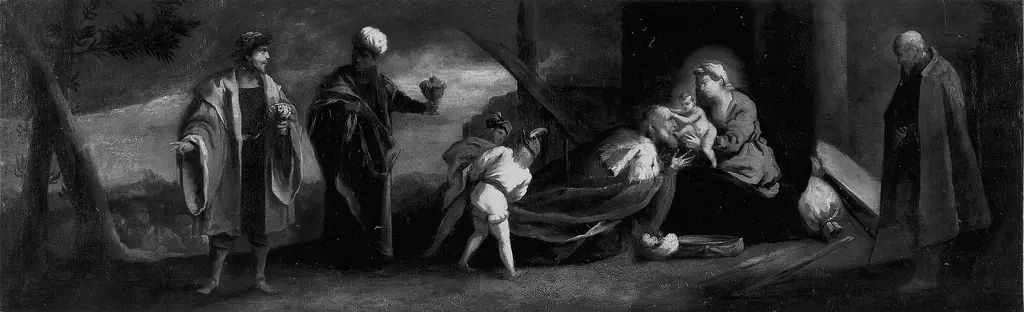 The Adoration of the Magi
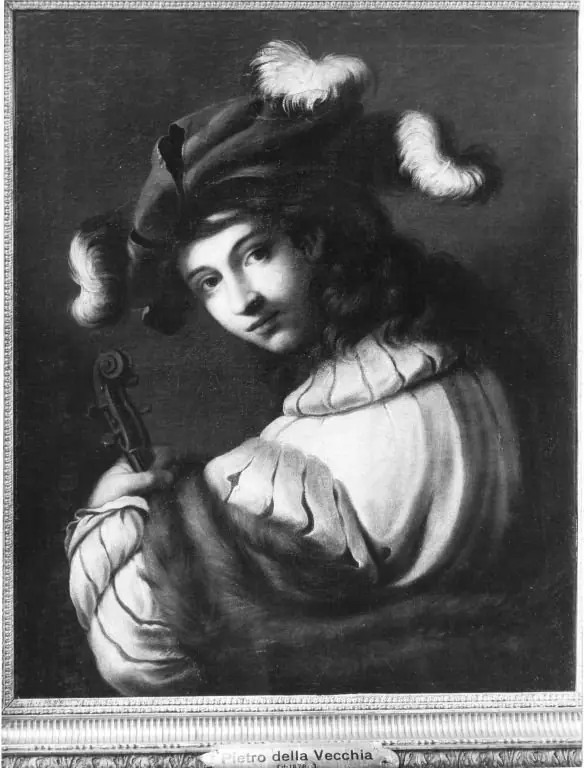 Der Geiger (Kopie nach)
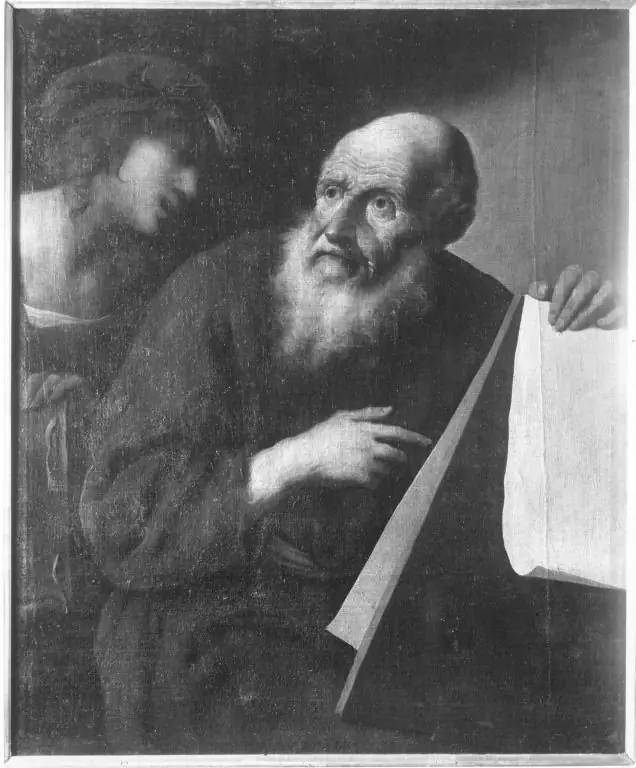 Greiser Gelehrter
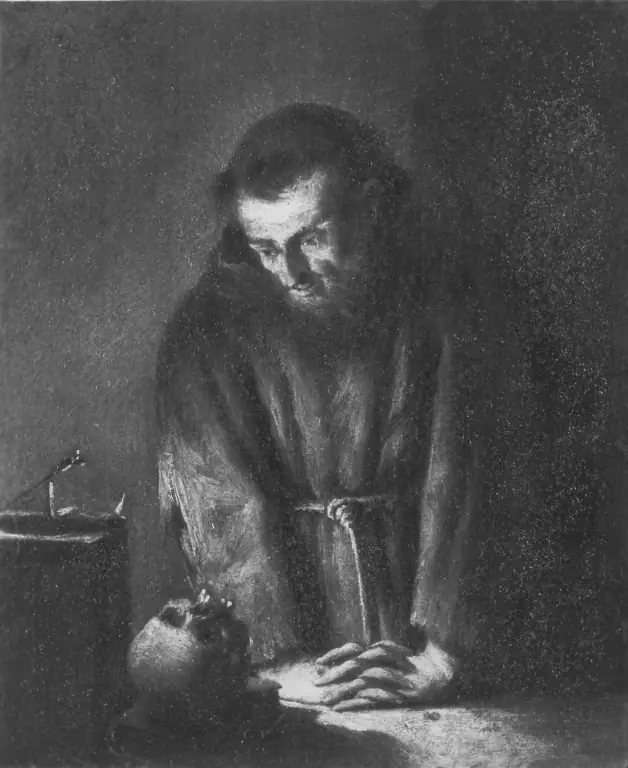 Hl. Frankiskus von Assisi (Werkstatt)
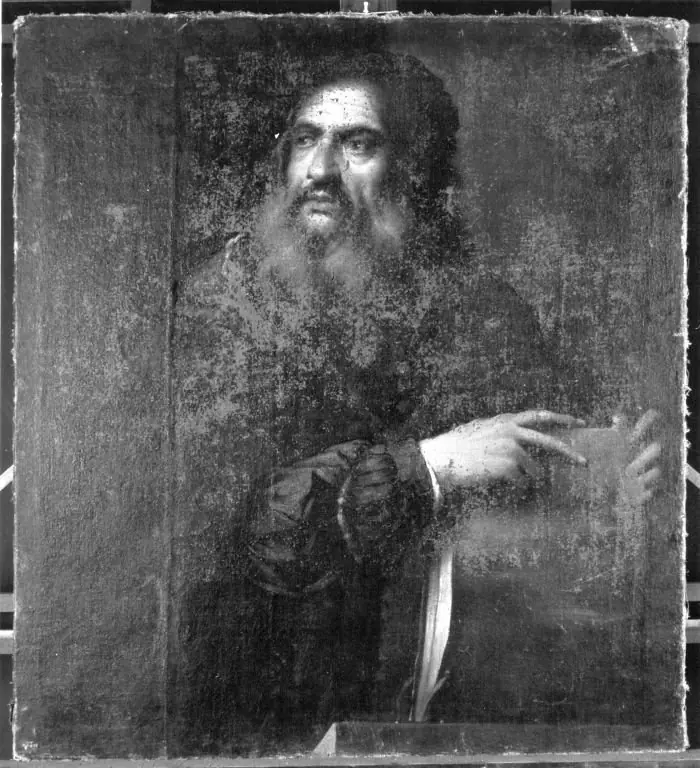 Bildnis eines alten Mannes (Philosophen) (Werkstatt)
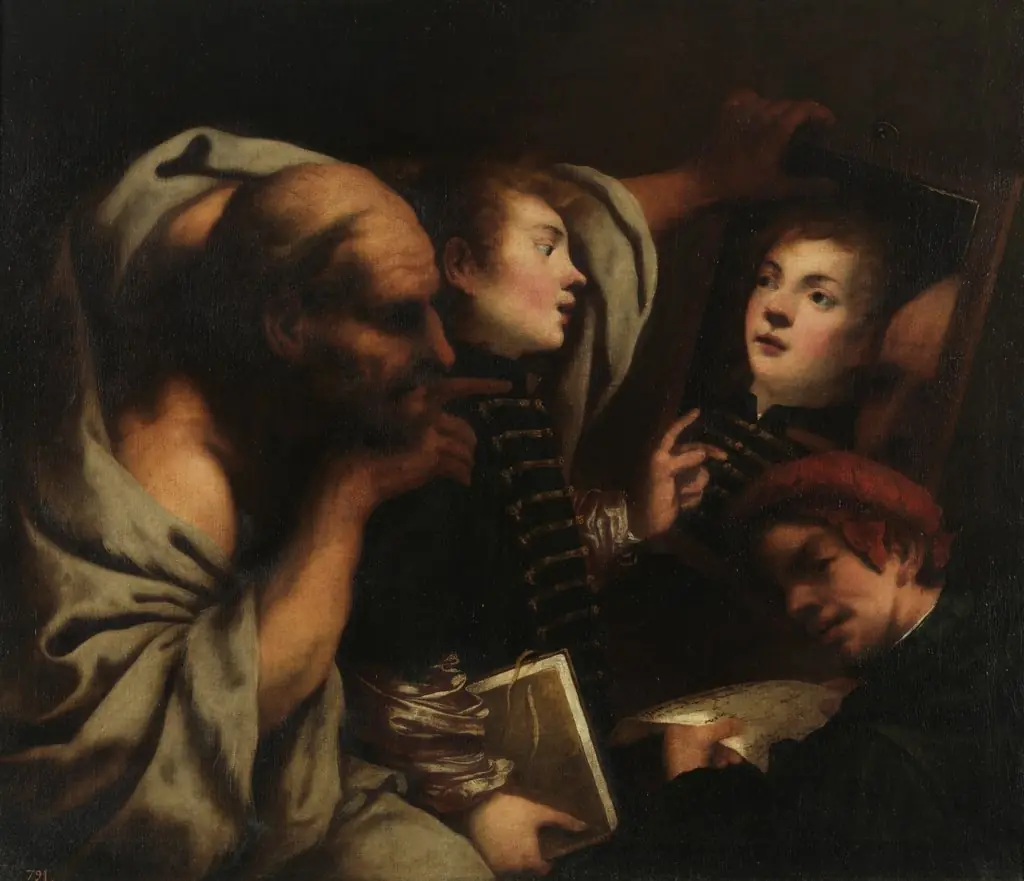 Socrates and two students
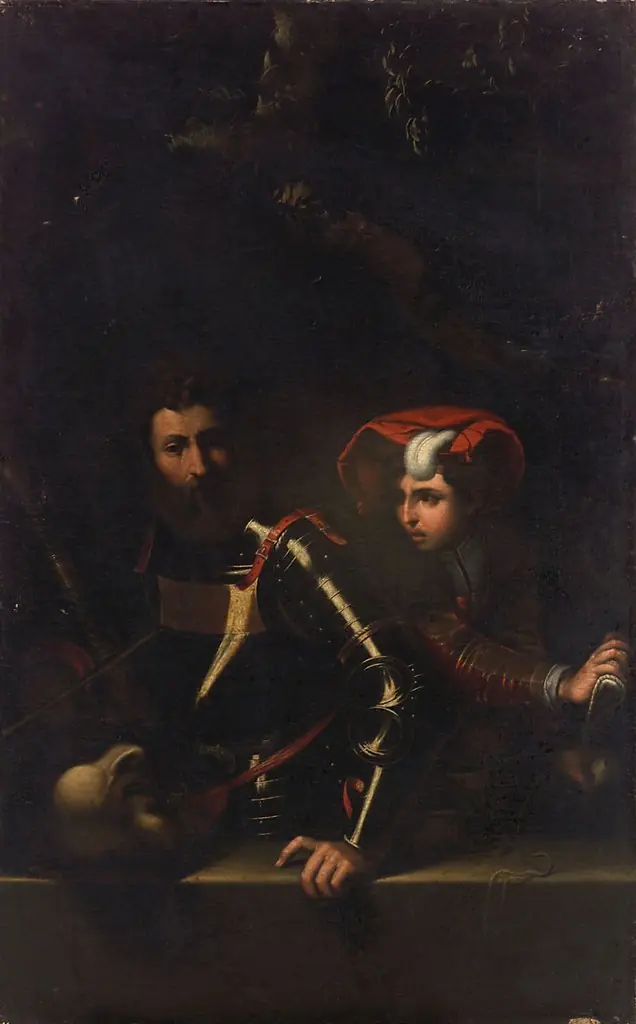 Saul und David mit dem Haupt des Goliath
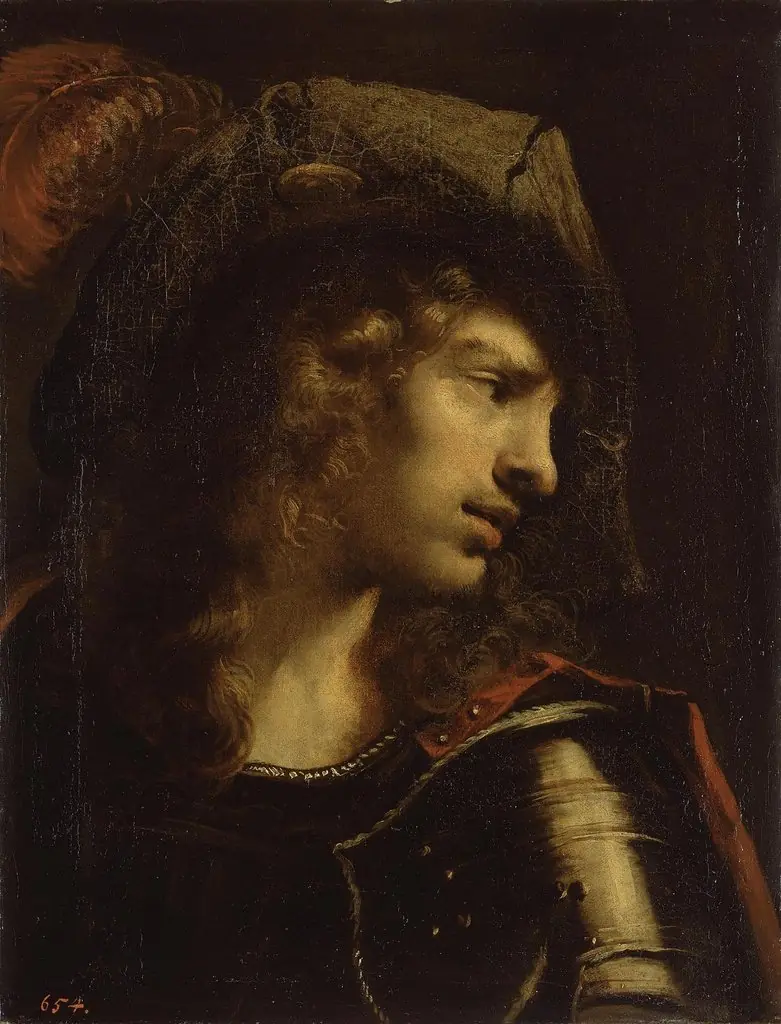 Head of a Young Warrior
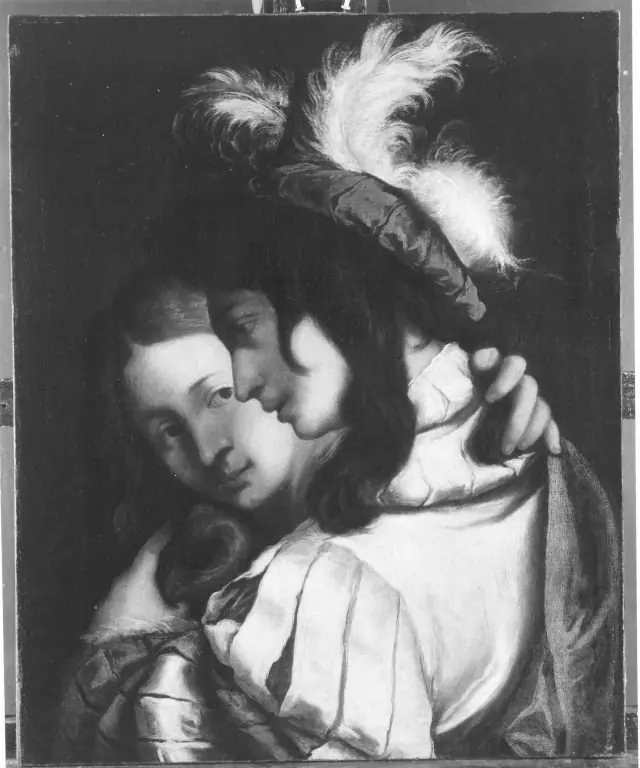 Das Liebespaar (Werkstatt)
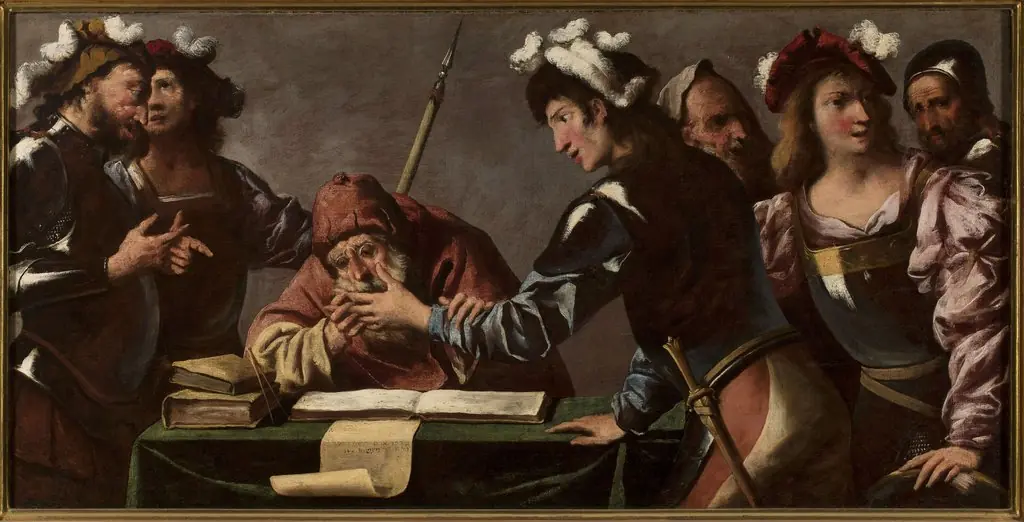 Chiromancer
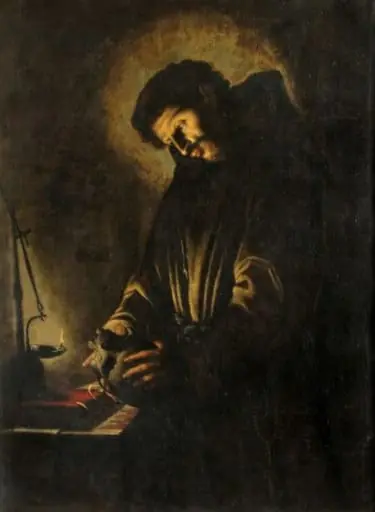 Sf. Francisc
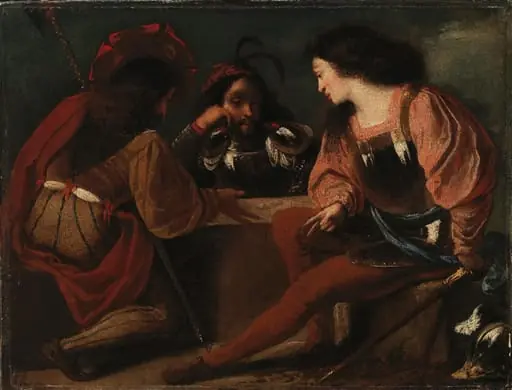 Nopanpelaajat
Collections represented


Artists in a similar vein