Artwork
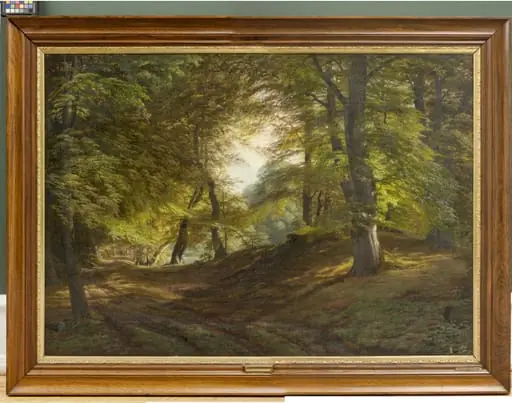
A Beech Wood in May near Iselingen Manor, Zealand
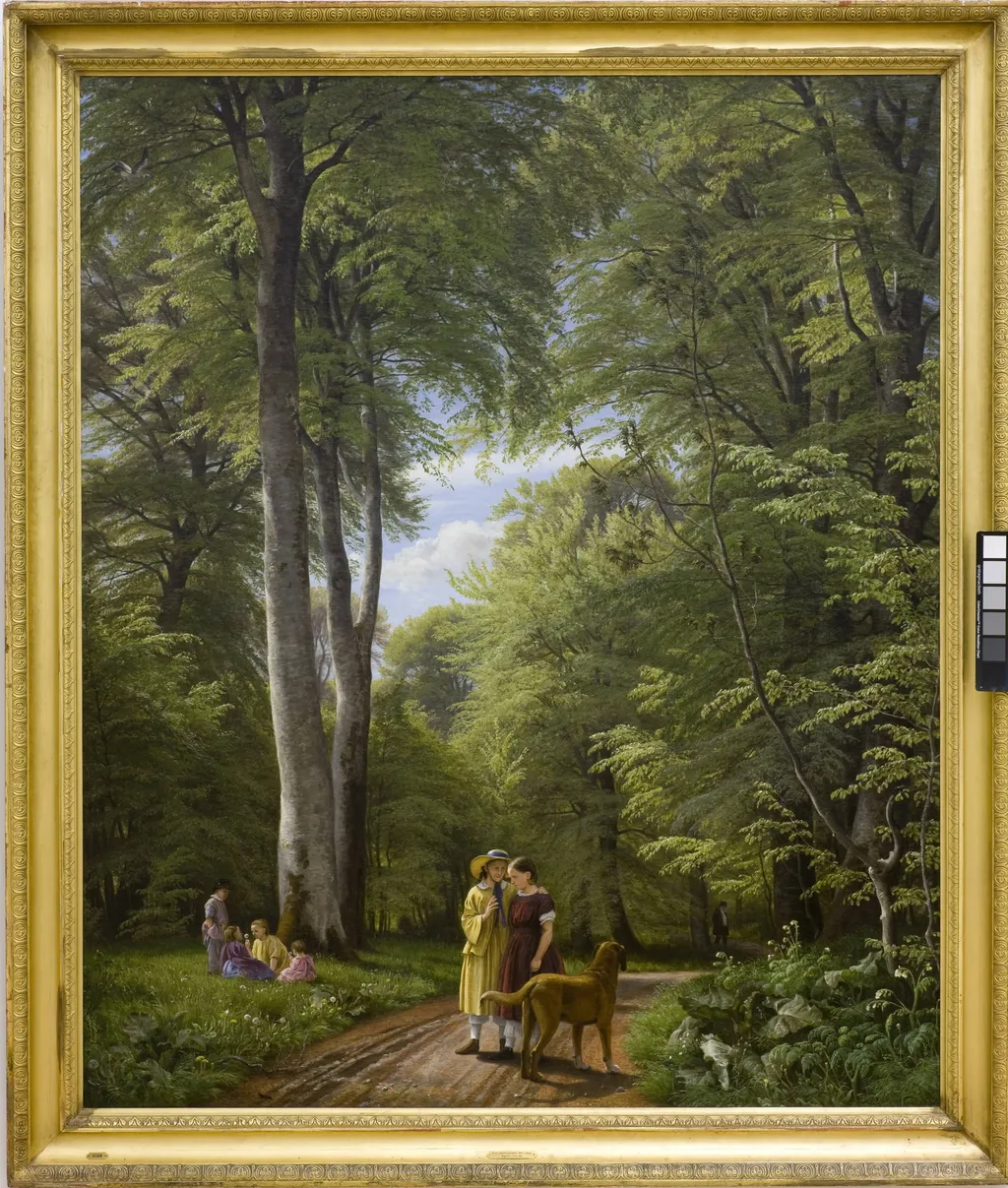
A Beech Wood in May near Iselingen Manor, Zealand is a photography by the Impressionist artist Unknown. It dates from 1857 and is held in the collection of the Statens Museum for Kunst.
About this work
The focus on natural light and everyday life fits the style of early photography, which often aimed to capture real moments.
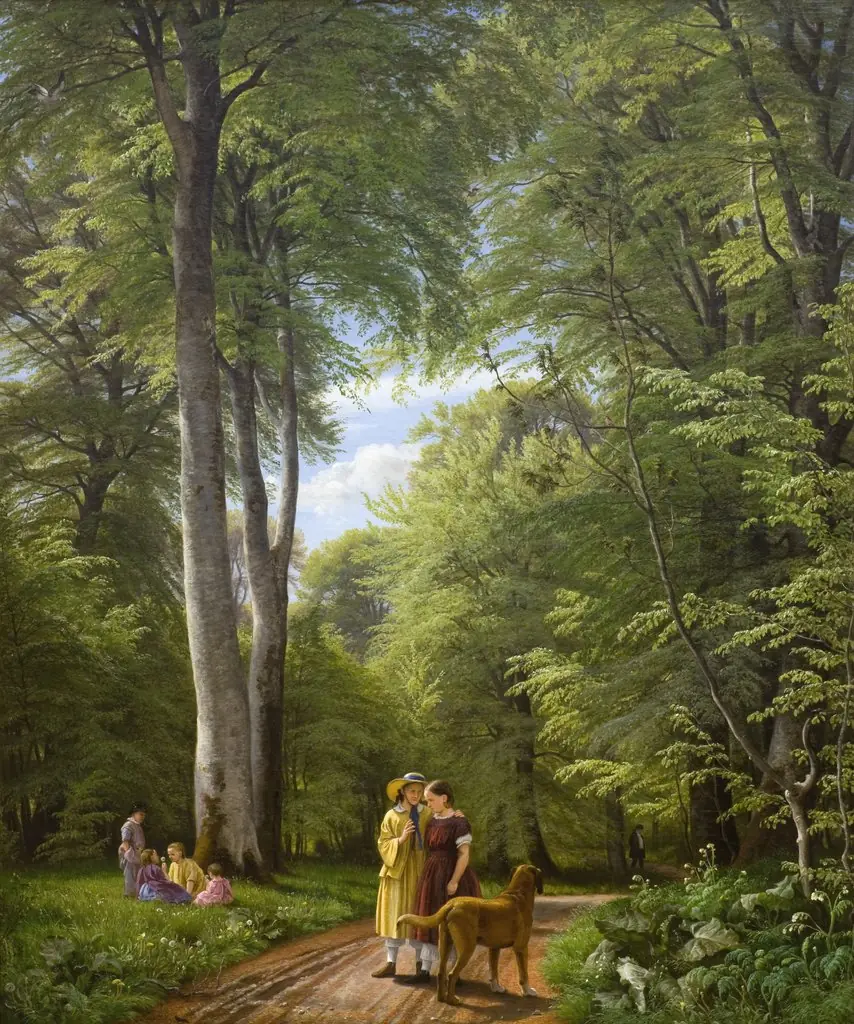
This photo shows a bright forest path in spring. Tall trees line both sides, their leaves a mix of green shades. On the path, a woman in a yellow dress and hat walks a light-colored dog.
Nearby, a man in a dark coat leans toward her. A few kids sit on the grass to the left, watching them. The light filters through the leaves, making dappled shadows on the ground.
The photo was taken in 1857, making it one of the earliest examples of landscape photography. The focus on natural light and everyday life fits the style of early photography, which often aimed to capture real moments.
Check out the technique: chiaroscuro to see how light and shadow create depth in photos.
Overview
The image titled A Beech Wood in May near Iselingen Manor, Zealand was produced in 1857 by the photographer recorded as 1008_person. It is part of the collection of the Museum of Ethnography. The picture captures a sunlit forest path in early spring, framed by tall beech trees whose foliage displays a range of green tones.
Subject & Meaning
Along the woodland trail a woman dressed in a yellow gown and hat walks beside a light‑coloured dog, while a man in a dark coat leans toward her. To the left, several children sit on the grass, observing the scene. The composition presents a quiet, everyday moment within a natural setting, emphasizing the interaction between people and the landscape.
Technique & Style
The photograph employs a pronounced chiaroscuro effect: dappled sunlight filters through the canopy, creating strong contrasts of light and shadow that give the image a sense of depth. As an early example of landscape photography, it reflects the period’s interest in documenting real‑world light conditions and candid activity.
History & Provenance
Created in 1857, the work belongs to the initial wave of photographic practice that sought to record natural environments with fidelity. It entered the Museum of Ethnography’s holdings at an unspecified date, where it remains a reference point for the development of photographic documentation of rural scenery.
Artist & collection