Artwork
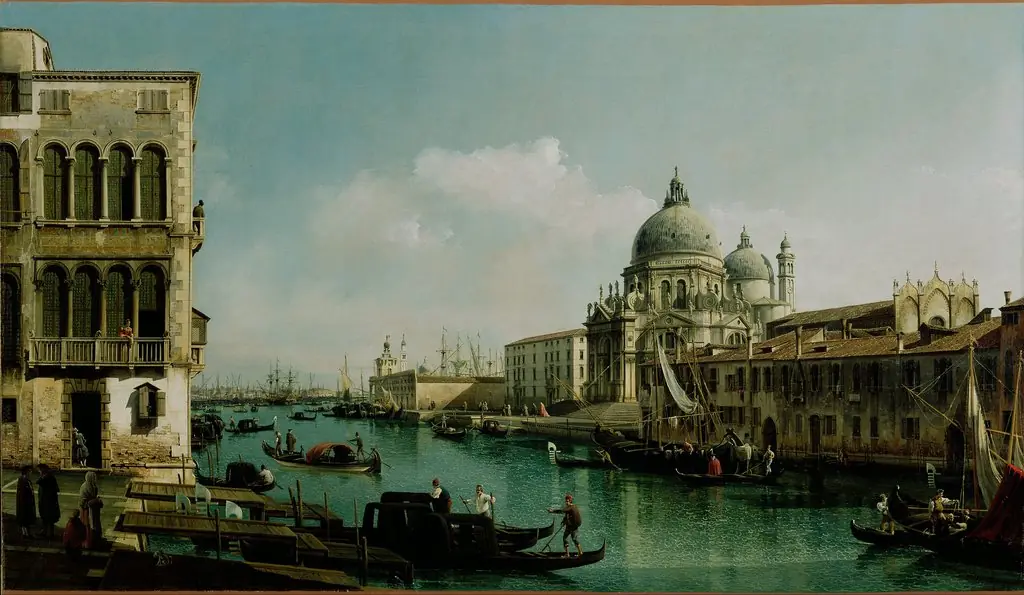
View of the Grand Canal, Venice. In the Background S. Maria della Salute
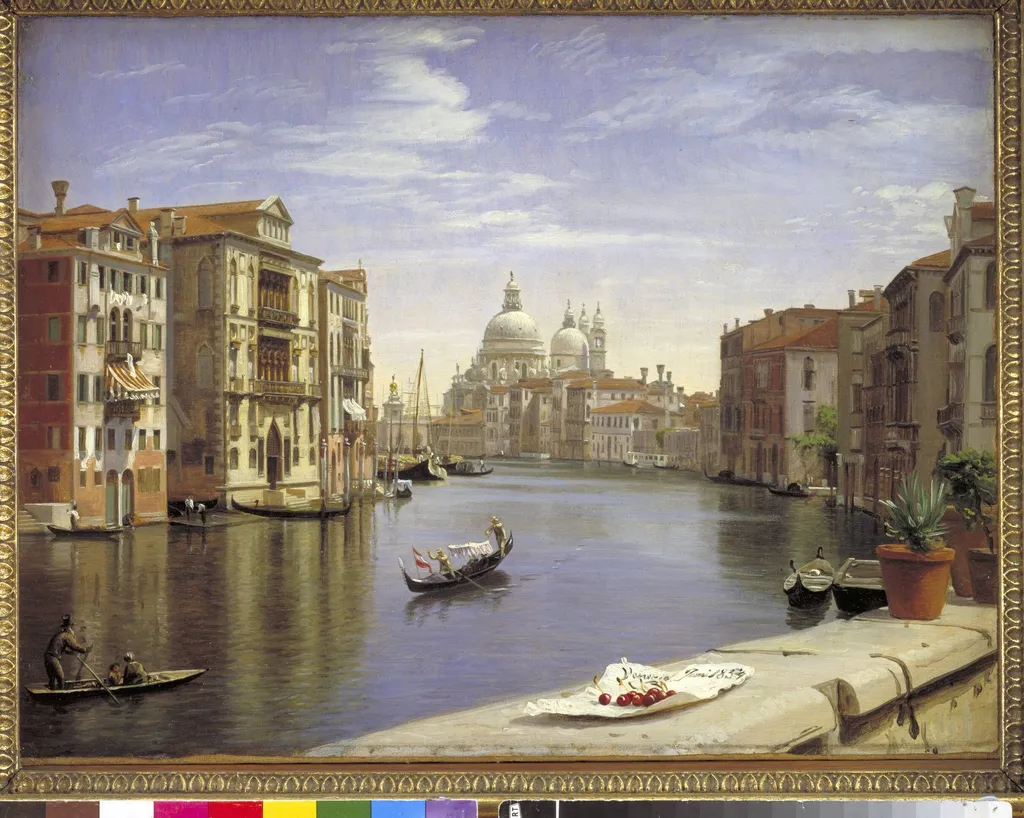
View of the Grand Canal, Venice. In the Background S. Maria della Salute is a photography by the Impressionist artist Unknown. It dates from 1854 and is held in the collection of the Statens Museum for Kunst.
About this work
Overview
The scene balances architectural precision with atmospheric observation, emphasizing the interplay of light and structure along the waterway.
Painted in 1854, this cityscape captures a quiet stretch of Venice’s Grand Canal, framed by closely packed facades and dominated in the distance by the dome of Santa Maria della Salute. The work is held in the Museum of Ethnography, though its subject is distinctly Venetian. The scene balances architectural precision with atmospheric observation, emphasizing the interplay of light and structure along the waterway.
Subject & Meaning
The painting presents an ordinary moment in Venetian life: a gondola glides down the canal’s center while another nears the shore. A small table on the right bank, bearing fruit and papers, suggests a private, domestic pause amid the urban flow. The church, monumental yet distant, anchors the composition without dominating it. The scene conveys neither grandeur nor narrative, but a quiet, observed rhythm of daily existence.
Technique & Style
Soft, fluid brushwork renders the water’s surface and the sky’s haze, suggesting movement without detail. The artist employs subtle chiaroscuro to model the buildings’ facades, enhancing depth through gradations of light. Warm tones in the architecture contrast with cooler reflections on the canal, creating a sense of spatial recession. The brushwork avoids sharp definition, favoring atmospheric cohesion over architectural exactitude.
History & Provenance
The painting was completed in 1854 and entered the collection of the Museum of Ethnography, where it remains. Its presence in an institution focused on cultural artifacts rather than fine art suggests its value was initially tied to its documentation of Venetian urban life. No record of prior ownership or exhibition history is widely documented.
Context
Created during a period of increasing foreign interest in Venice’s urban landscape, the work aligns with 19th-century European trends in topographical painting. Unlike romanticized views of the city, this scene avoids spectacle, focusing instead on the quiet interplay of architecture, water, and human presence. It reflects a shift toward observational realism over idealized grandeur.
Legacy
Though not widely reproduced or studied, the painting contributes to a quieter strand of 19th-century Venetian topography, works that prioritize atmosphere over monumentality. Its placement in an ethnographic museum underscores its role as a record of lived environment, offering insight into how everyday spaces were visually recorded during a time of cultural transition.
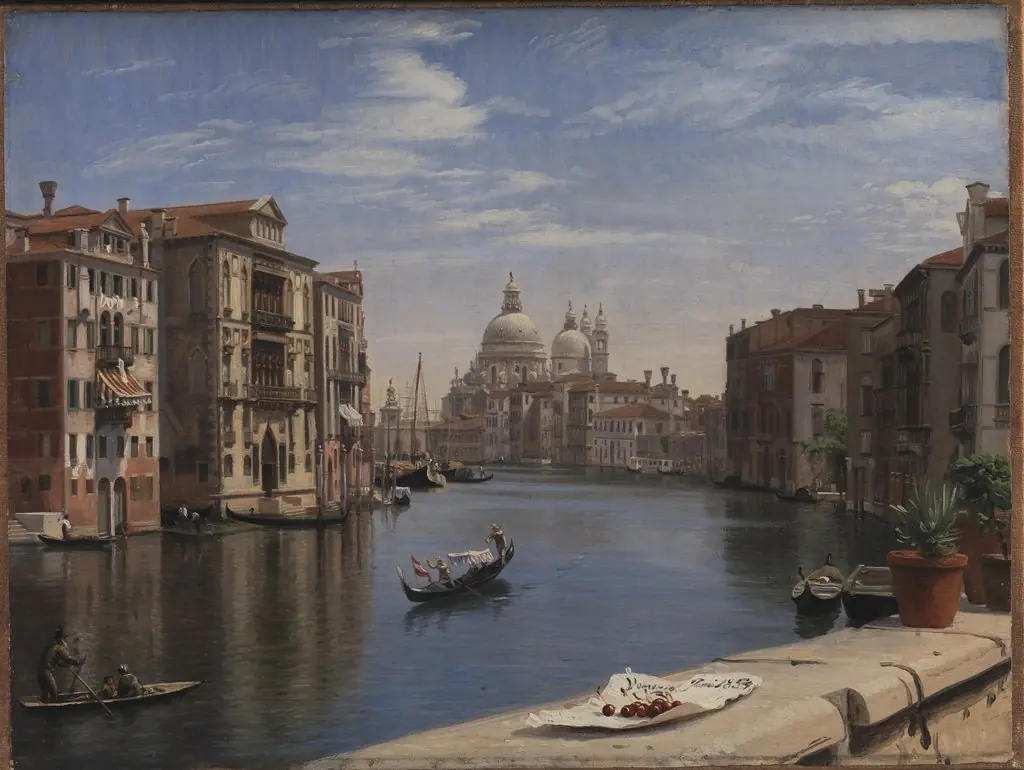
Artist & collection









- View of the Grand Canal, Venice. In the Background S. Maria della Salute
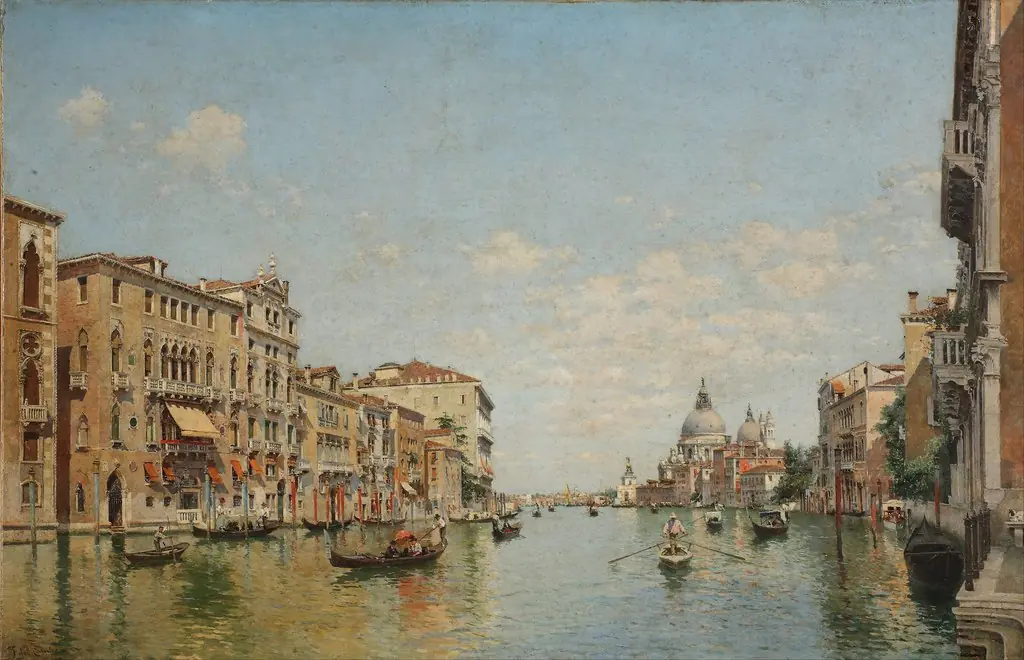 View of the Grand Canal of Venice
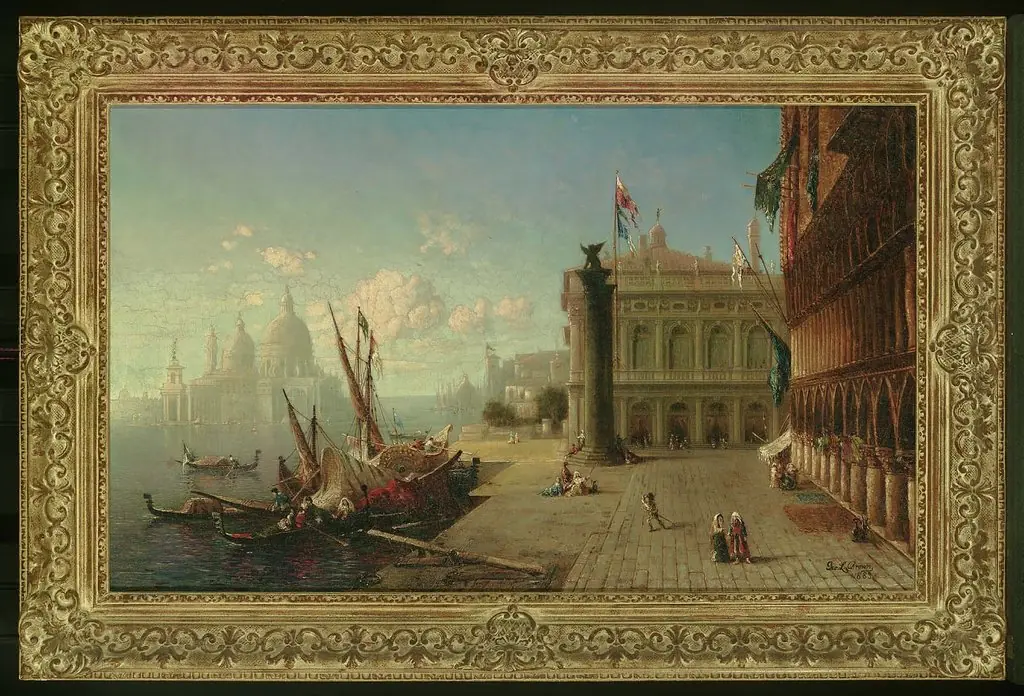 View of the Ducal Palace and Grand Canal and Church of Sta Maria della Salute, Venice
 View of the Grand Canal: Santa Maria della Salute and the Dogana from Campo Santa Maria Zobenigo
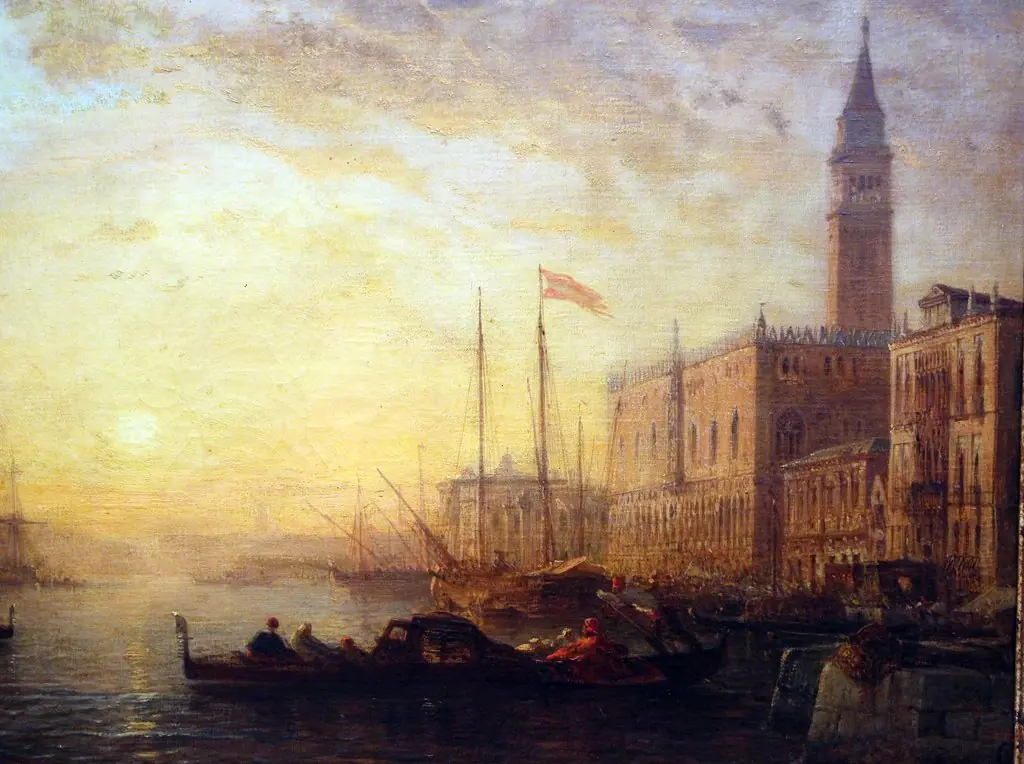 Grand Canal in Venice.
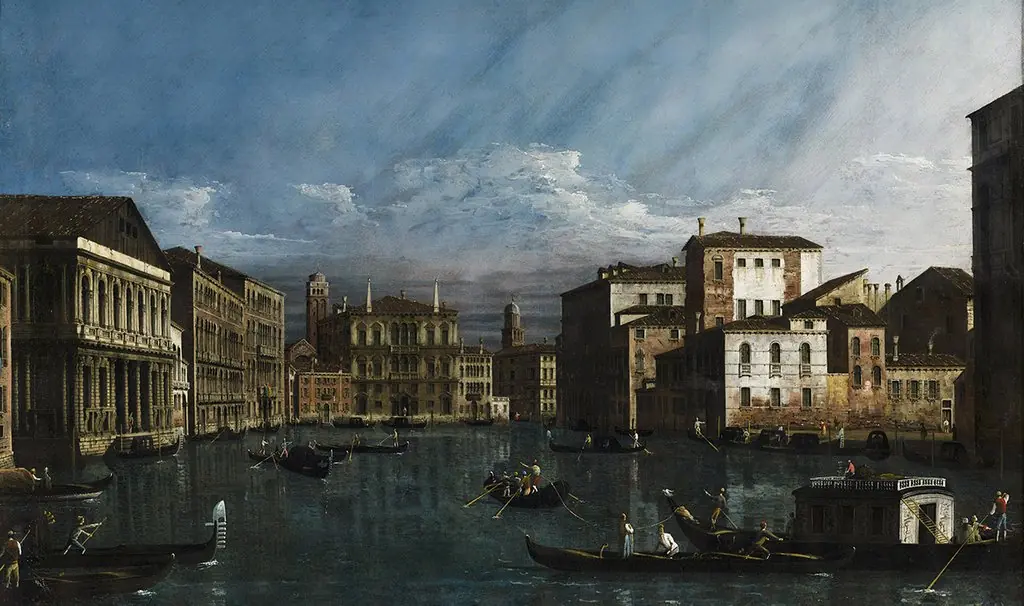 The Grand Canal in Venice
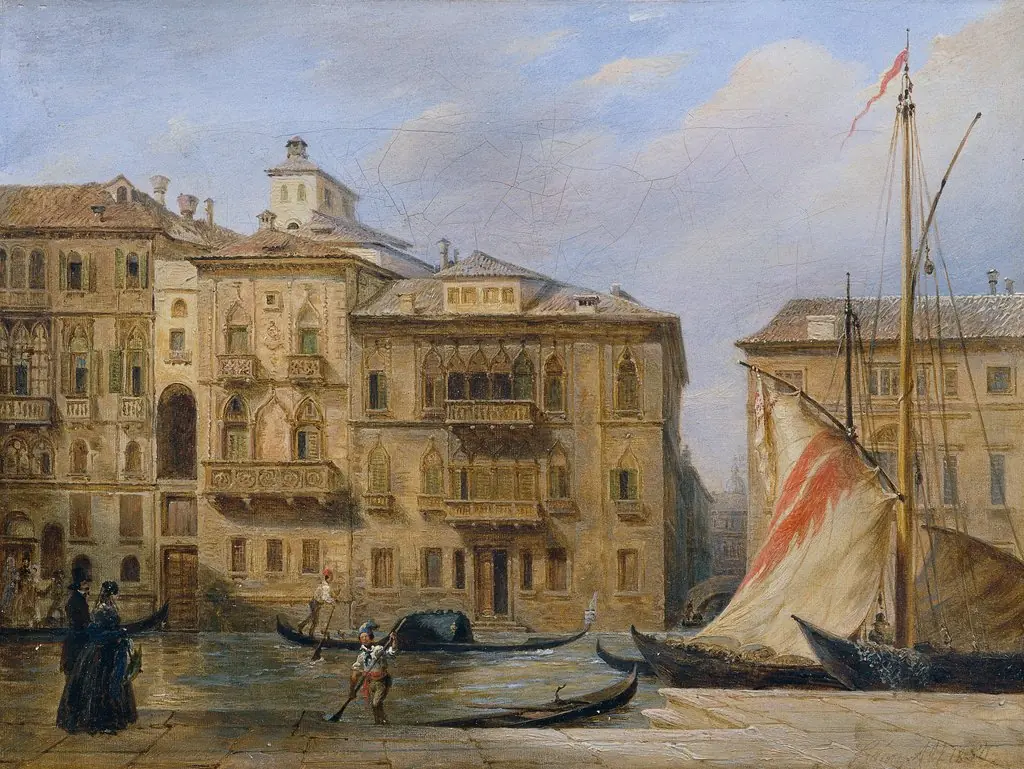 The Grand Canal in Venice
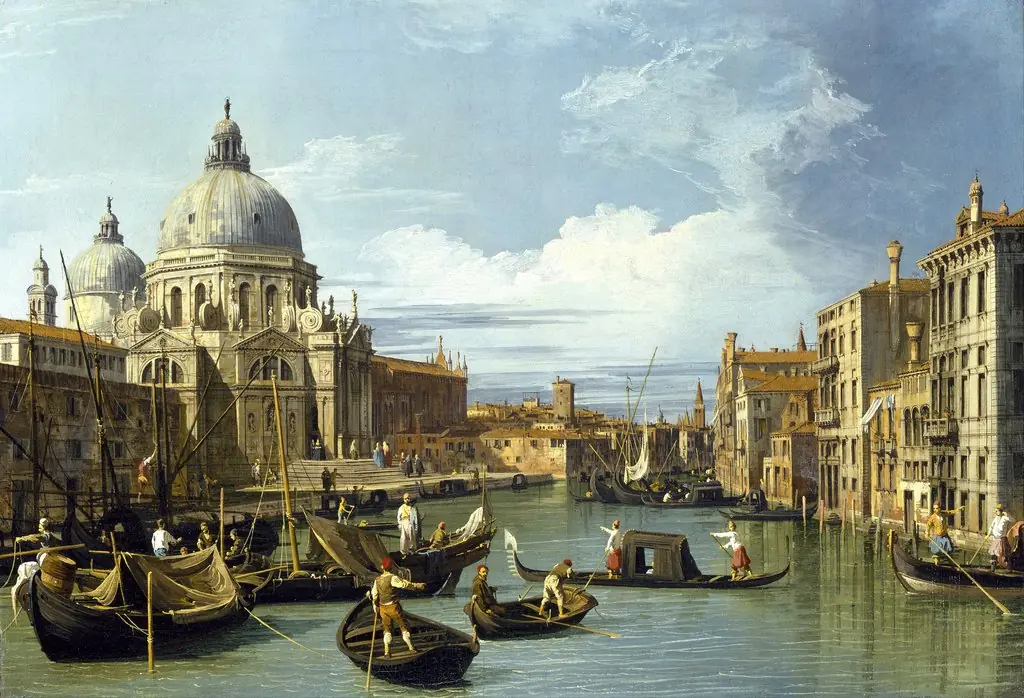 The Entrance to the Grand Canal, Venice
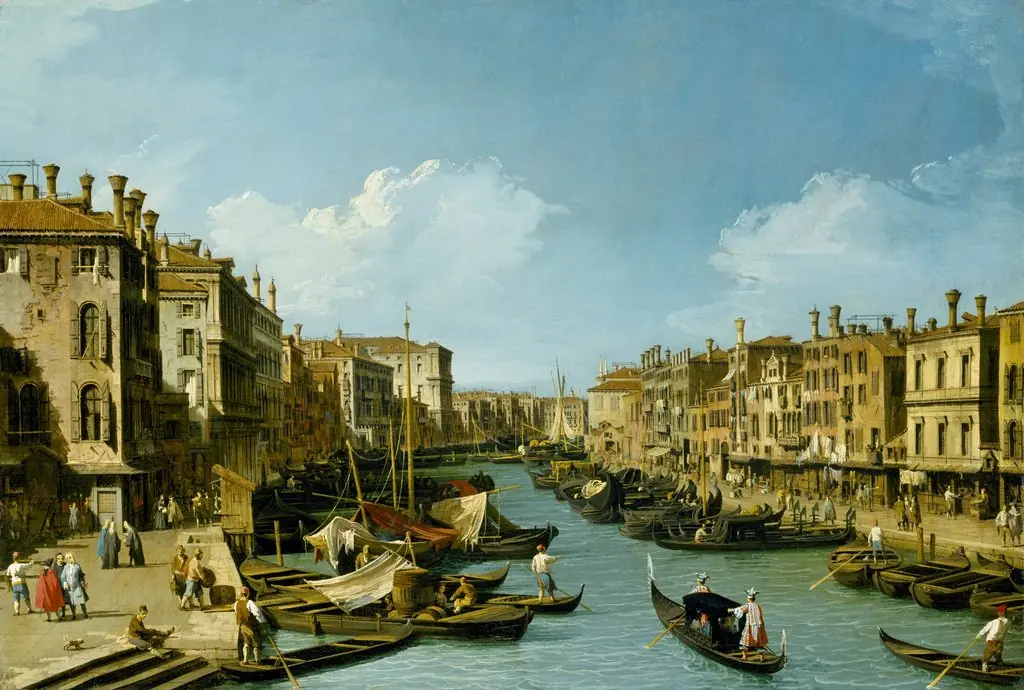 The Grand Canal near the Rialto Bridge, Venice
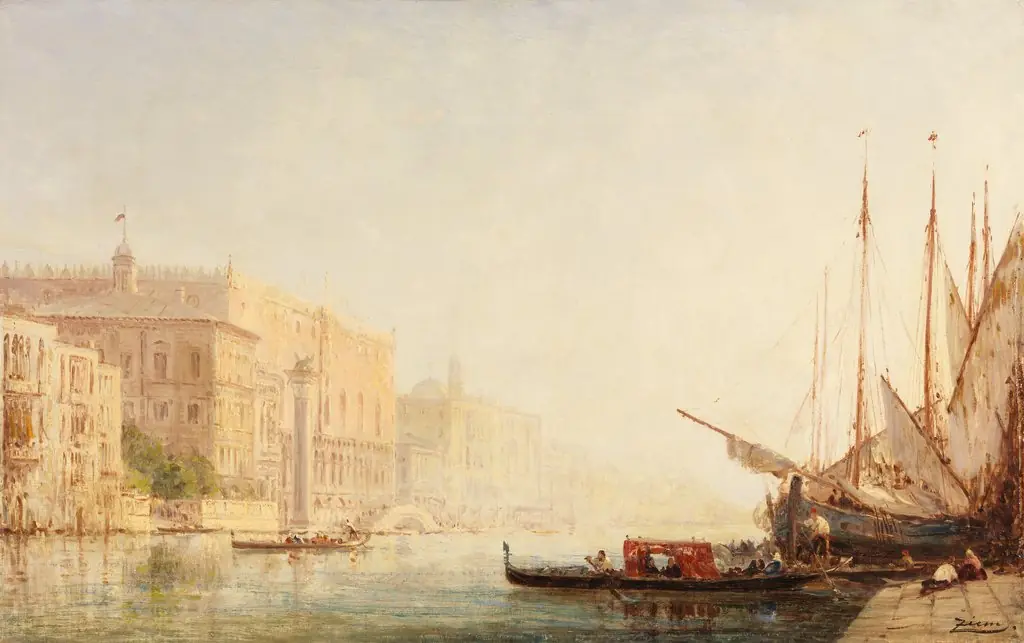 Venice: a Canal Scene