Artwork
The Road at Mogenstrup, Zealand. Autumn
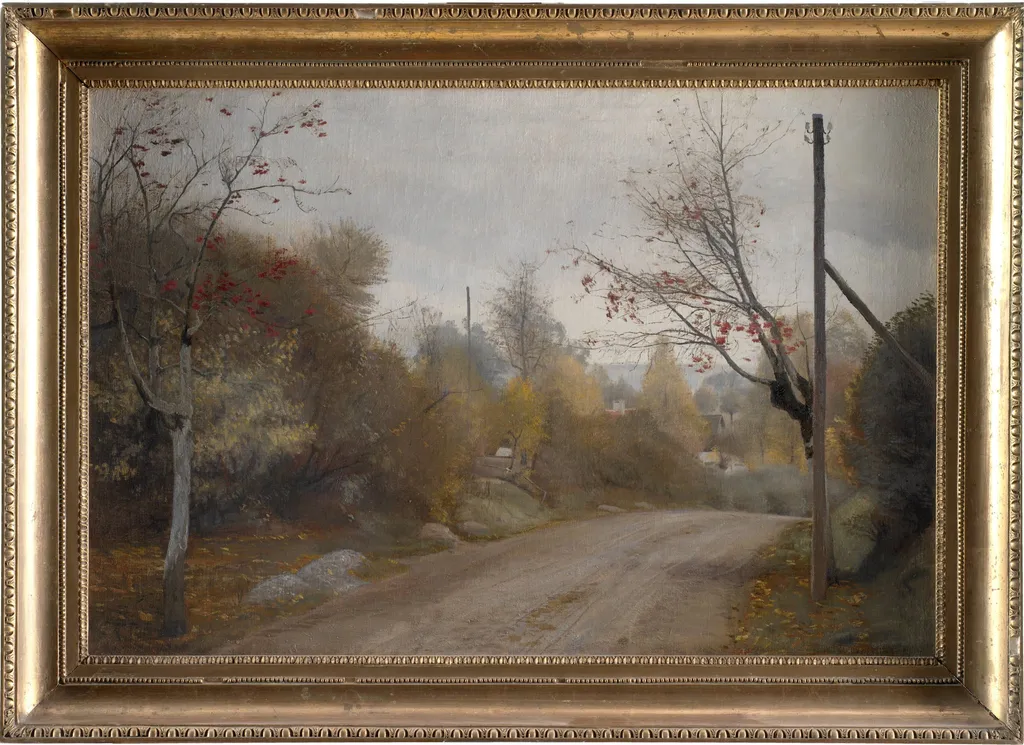
The Road at Mogenstrup, Zealand. Autumn is a photography by the Impressionist artist Unknown. It dates from 1888 and is held in the collection of the Statens Museum for Kunst. Painted in 1888, The Road at Mogenstrup, Zealand.
About this work
Overview
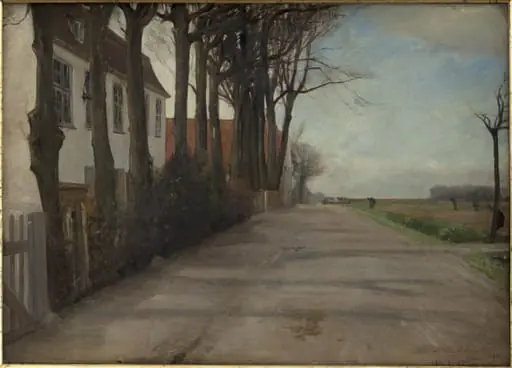
The scene captures a modest stretch of unpaved road flanked by deciduous trees in varying stages of leaf loss.
Painted in 1888, The Road at Mogenstrup, Zealand. Autumn depicts a quiet rural lane in Denmark during the fall season. The scene captures a modest stretch of unpaved road flanked by deciduous trees in varying stages of leaf loss.
Gray, overcast skies dominate the upper portion of the composition, reinforcing the season’s muted atmosphere. The work is part of the collection at the Museum of Ethnography.
Subject & Meaning
The painting presents a humble, unidealized view of the Danish countryside, emphasizing the quiet transition of autumn. Bare branches, scattered leaves, and distant buildings suggest a landscape in repose, neither bustling nor abandoned. The presence of telephone poles hints at the slow encroachment of modern infrastructure into rural life, subtly grounding the scene in its historical moment.
Technique & Style
The artist employs a restrained palette of ochres, russets, and grays to convey the season’s subdued tones. Brushwork is deliberate but not overly detailed, favoring atmospheric effect over precision. The road recedes gently into the distance, guiding the viewer’s eye through a composition that prioritizes mood over narrative. Light is diffused, consistent with overcast conditions, enhancing the painting’s quiet realism.
History & Provenance
Created in 1888, the painting entered the collection of the Museum of Ethnography shortly after its completion. Its acquisition reflects early institutional interest in documenting everyday Danish life, rather than grand historical or mythological themes. The work has remained in the museum’s holdings since, with no documented public exhibitions beyond its initial display.
Context
In late 19th-century Denmark, artists increasingly turned to local landscapes and ordinary scenes as subjects, moving away from romanticized or academic traditions. This painting aligns with that shift, capturing a moment of seasonal change in a region undergoing gradual modernization. The inclusion of telephone poles signals the quiet integration of new technology into rural environments.
Legacy
Though not widely reproduced or studied, the painting stands as a quiet example of Danish naturalism from the period. It contributes to a broader body of work that records the subtle transformations of the countryside during industrialization. Its preservation in the Museum of Ethnography underscores its role as a document of place and time rather than a celebrated artistic achievement.
Artist & collection









 Landscape with a road
 The Forest of Fontainebleau - Autumn Evening
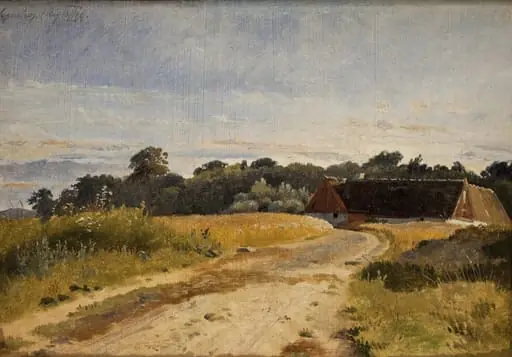 A Croft at Lodskov near Vognserup Manor. Study
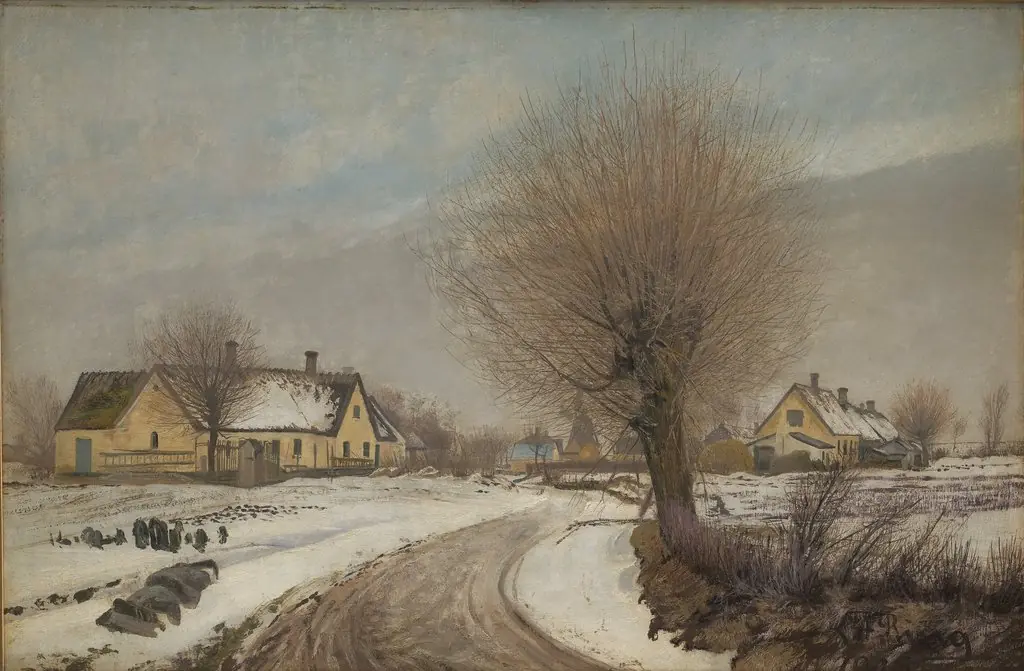 A Sealand Village. Winter
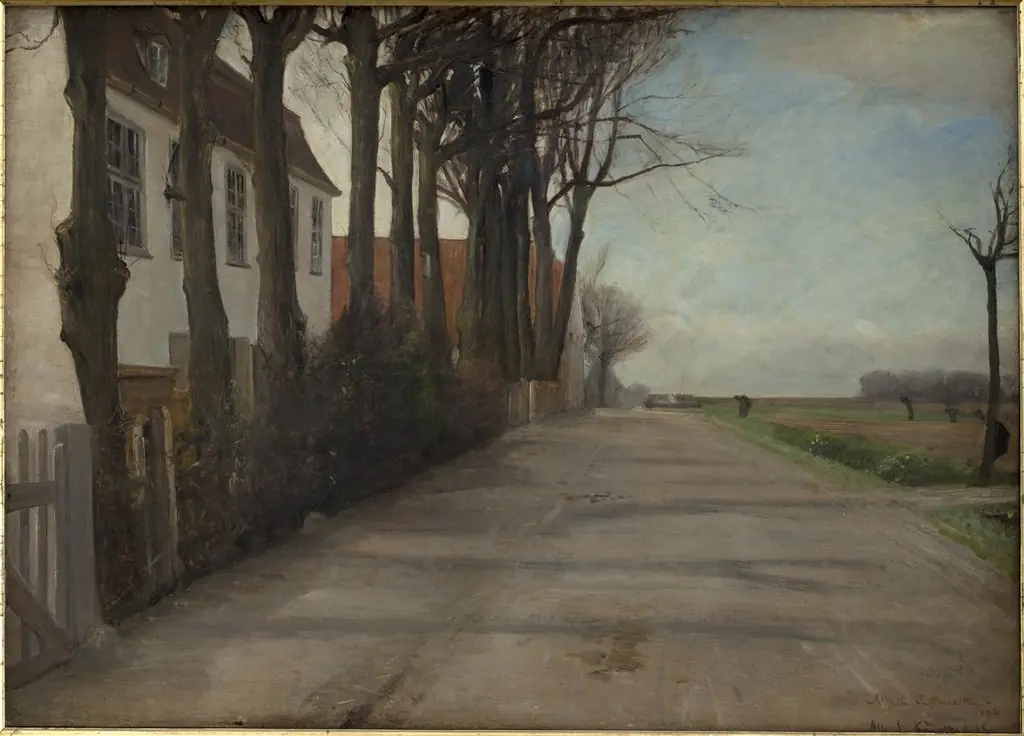 The Road Leading past "Store Godthaab", a Country House near Copenhagen
 A Sealand Village. Winter
 The Road Leading past "Store Godthaab", a Country House near Copenhagen
 Landscape at Kongens Møller, Sealand. Afternoon Light
 Vejby with the Church seen from the North. Evening Light. Zealand