Artwork
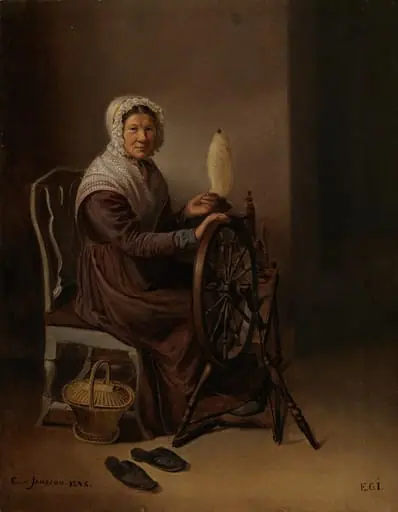
Kunstnerens moder ved spinderokken
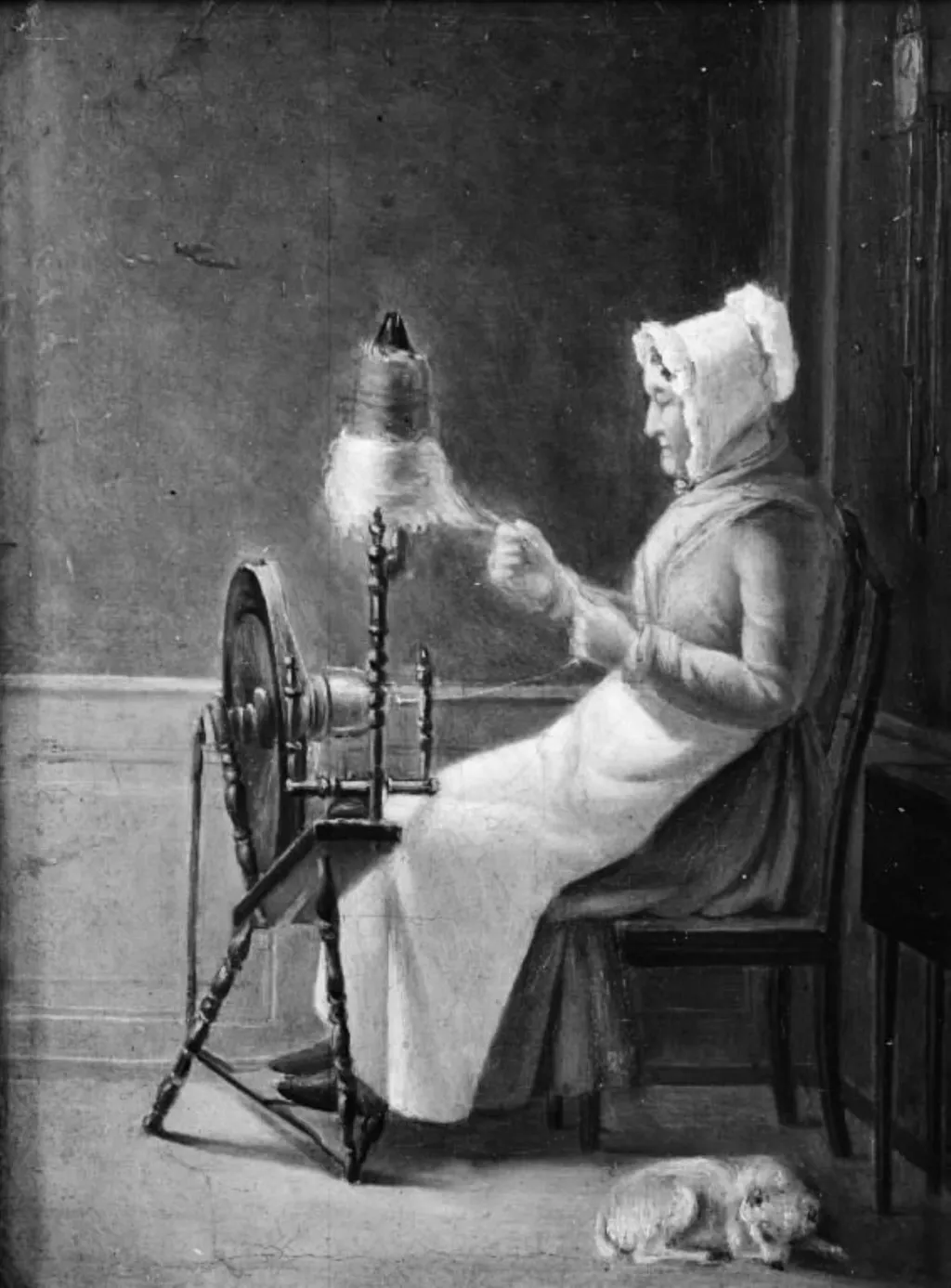
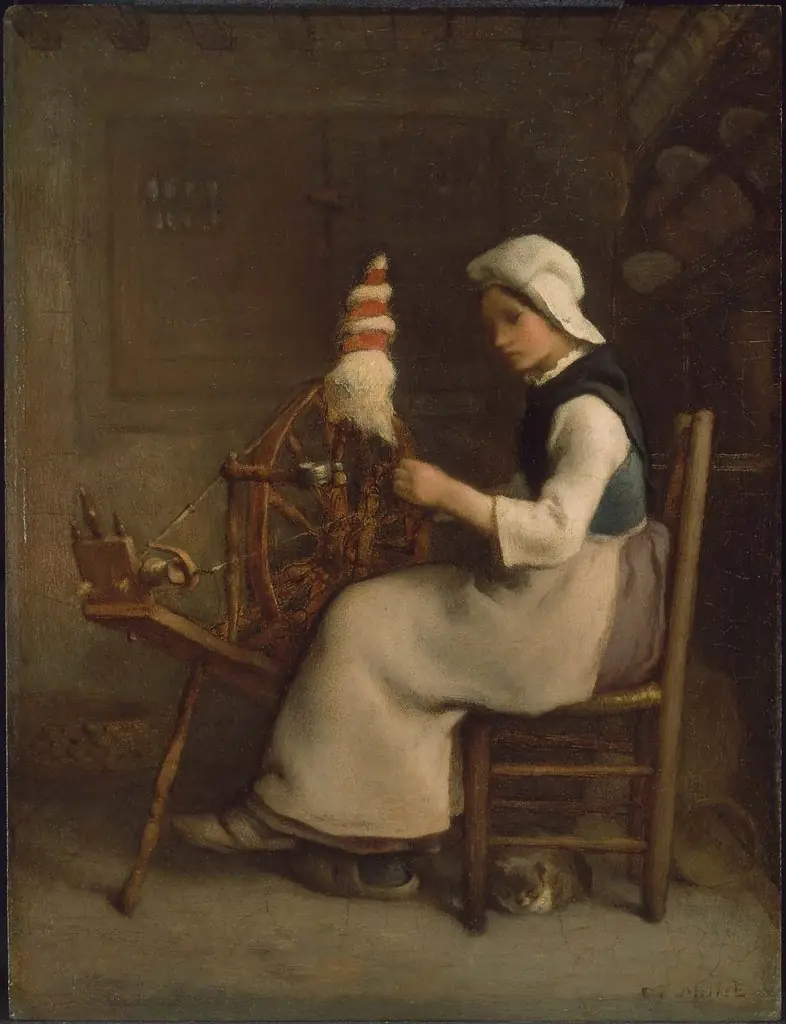
Kunstnerens moder ved spinderokken is a photography by Unknown. It dates from 1850 and is held in the collection of the Statens Museum for Kunst. Painted around 1850, this work portrays the artist’s mother engaged in the daily task of spinning yarn.
About this work
Overview
Painted around 1850, this work portrays the artist’s mother engaged in the daily task of spinning yarn. Executed in oil, the composition captures a quiet domestic moment with restrained detail. The painting is part of the collection at the Museum of Ethnography, where it is preserved as an example of 19th-century Nordic domestic life rather than as a formal portrait.
Subject & Meaning
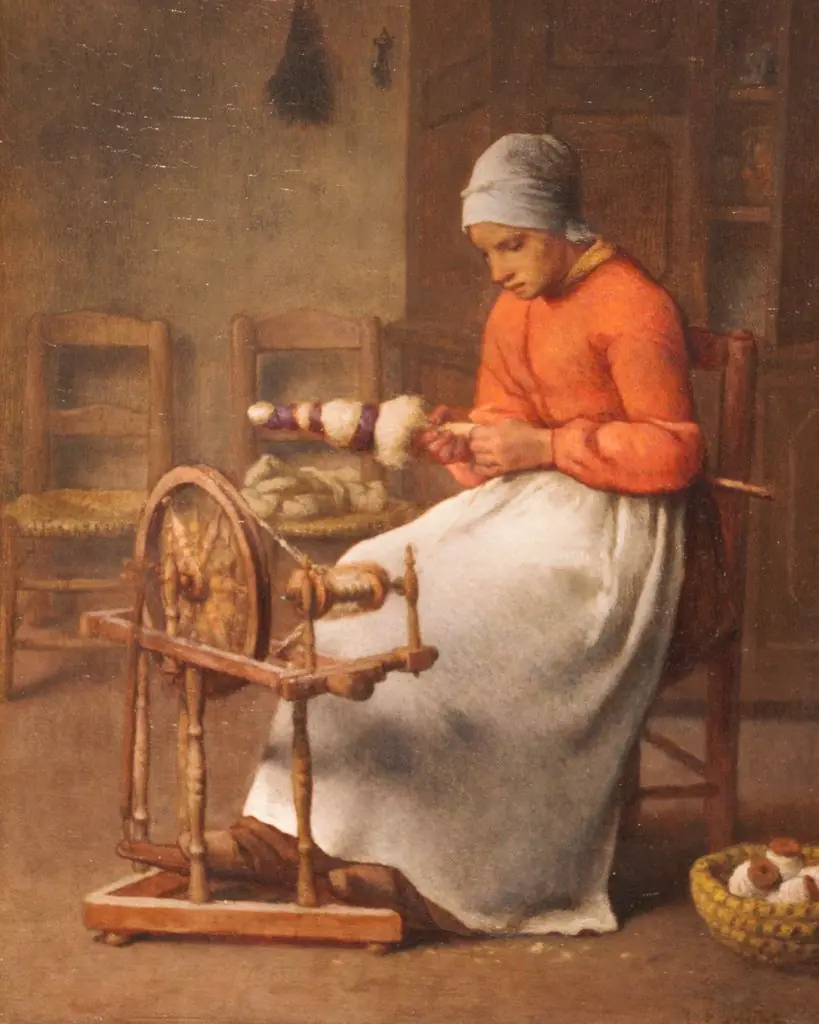
The central figure, the artist’s mother, is shown in focused concentration as she operates a spinning wheel. Her plain white attire and head covering suggest modesty and routine labor, while the presence of a small dog at her feet introduces a subtle note of companionship. The scene avoids theatricality, emphasizing dignity in ordinary work and the quiet rhythm of household tasks.
Technique & Style
The artist employs muted tones and soft chiaroscuro to model the figure against a dark background, drawing attention to the woman’s form and the motion of the spinning wheel. Brushwork is deliberate but unobtrusive, favoring texture over detail. Light falls gently on the fabric and the dog, creating a sense of intimacy without dramatic contrast, reinforcing the painting’s contemplative mood.
History & Provenance
The painting was likely created in the artist’s family home during the mid-19th century. It remained in private hands until acquired by the Museum of Ethnography, where it was cataloged as a record of domestic practices rather than as a significant artistic achievement. Its preservation reflects an interest in ethnographic documentation over aesthetic canon.
Context
In mid-1800s Scandinavia, spinning was a common domestic activity, often performed by women in the home. While urbanization and industrialization were beginning to replace hand-spinning, such scenes retained cultural resonance as symbols of tradition. This painting aligns with a broader trend of recording rural and household life before it faded from daily practice.
Legacy
Though not widely exhibited outside ethnographic circles, the painting contributes to historical understanding of gendered labor and domestic space in 19th-century Nordic households. Its quiet realism offers a counterpoint to more idealized portrayals of rural life, preserving an unembellished glimpse into the rhythms of everyday existence.
Artist & collection