Artwork
Acanthus hungaricus (ungarsk akantus)
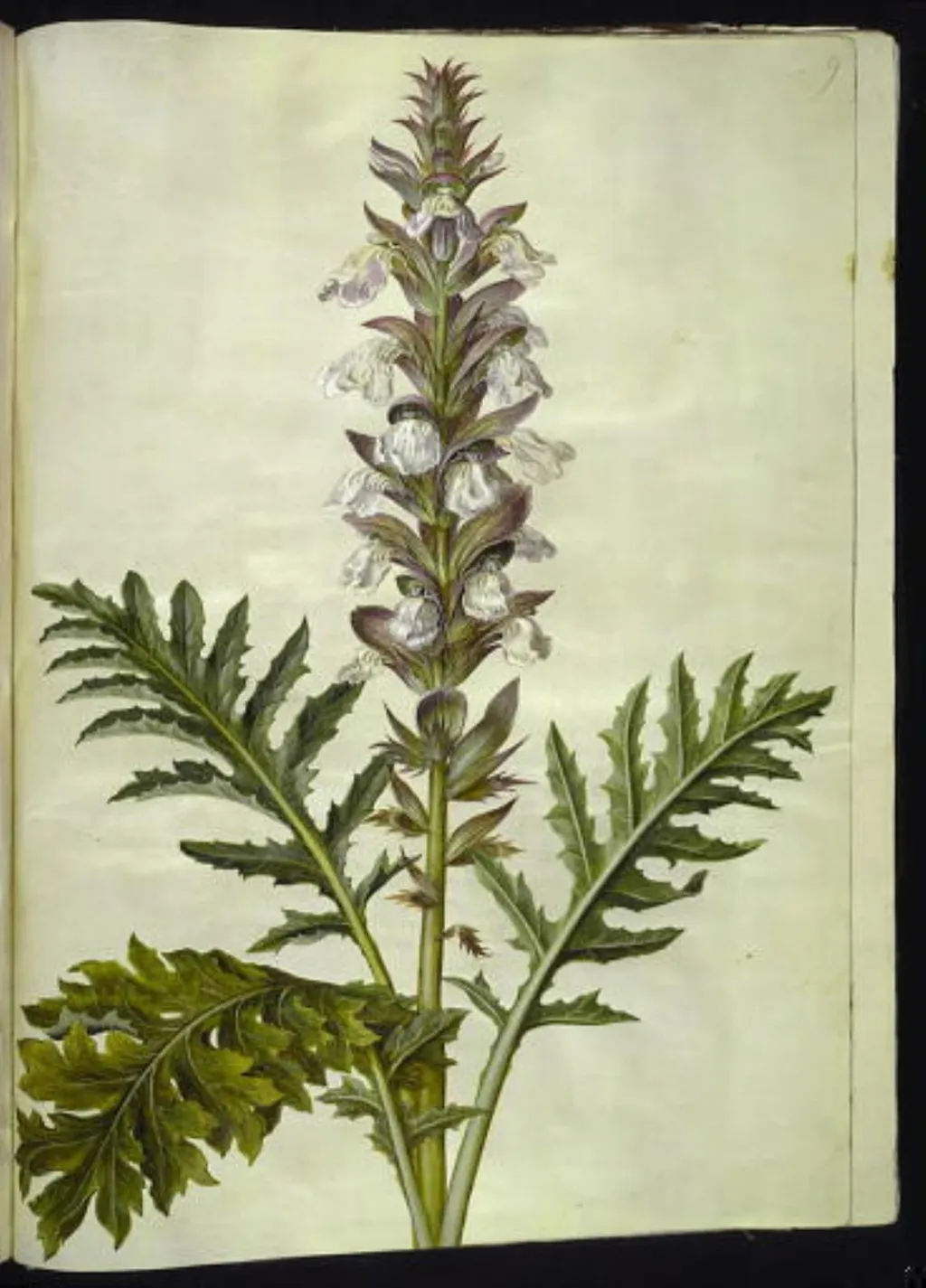
Acanthus hungaricus (ungarsk akantus) is an unspecified work on paper by Unknown. It dates from 1654 and is held in the collection of the Statens Museum for Kunst.
About this work
Overview
It resides in the collection of the Museum of Ethnography, where it serves as a record of natural forms observed during the 17th century.
Created around 1654, Acanthus hungaricus (ungarsk akantus) is a botanical illustration executed in watercolor. The work depicts a single specimen of the Hungarian acanthus plant, rendered with precision and minimal distraction. It resides in the collection of the Museum of Ethnography, where it serves as a record of natural forms observed during the 17th century. The composition isolates the plant against a pale, unadorned background to emphasize its structural details.
Subject & Meaning
The painting portrays Acanthus hungaricus, a flowering plant native to parts of Eastern Europe. Its spiky, serrated leaves and delicate purple inflorescence are rendered not for ornamental effect but as a scientific document. The focus on botanical accuracy suggests an intent to classify or study the species, reflecting the period’s growing interest in natural history and systematic observation of flora.
Technique & Style
Watercolor was applied in thin, layered washes to capture subtle variations in leaf tone and floral hue. The artist used fine brushwork to define the jagged edges of the foliage and the soft clustering of flowers, achieving a lifelike texture without heavy shading. The absence of shadow or perspective reinforces the flat, descriptive style typical of scientific illustration, prioritizing clarity over artistic expression.
History & Provenance
The work entered the Museum of Ethnography’s collection as part of a broader archive of natural studies from the 17th century. Its origin is tied to a specific observer or collector interested in regional botany, though the artist’s full identity remains unconfirmed. The painting’s survival suggests it was valued for its utility in documentation rather than as a decorative object.
Context
In mid-17th century Europe, detailed plant illustrations were increasingly produced for scholarly use, often accompanying herbals or botanical catalogs. This work aligns with that tradition, emerging during a time when naturalists sought to catalog regional species with visual precision. The Hungarian acanthus, though not widely known, was likely studied for its local significance or unusual form.
Legacy
Though not widely exhibited, the painting contributes to a historical record of European botanical observation. Its careful rendering offers insight into pre-modern methods of visual documentation, where accuracy was paramount. Today, it remains a quiet testament to the intersection of science and observation in early modern natural history.
Artist & collection









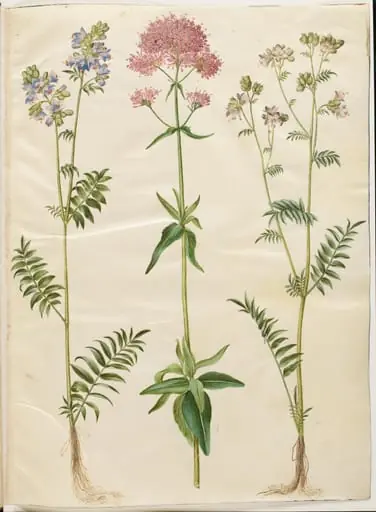
- Polemonium caeruleum (almindelig jakobsstige); Centranthus ruber (rød sporebaldrian)
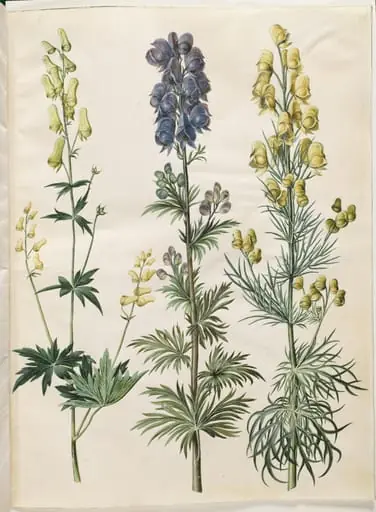 Aconitum lycoctonum (nordisk stormhat); Aconitum napellus (ægte stormhat); Aconitum anthora (finbladet stormhat)
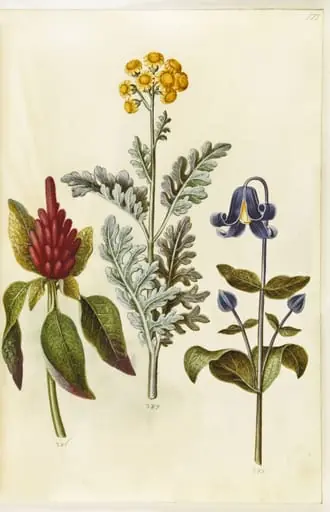 Amaranthus cruentus (rød amarant); Jacobaea maritima (gråblad); Clematis integrifolia (blå staudeklematis)
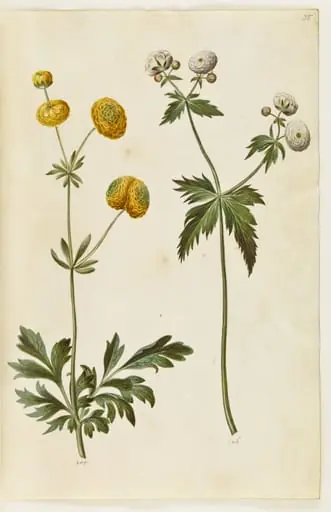 Ranunculus acris (guldknap-ranunkel); Ranunculus aconitifolius (sølvknap-ranunkel)
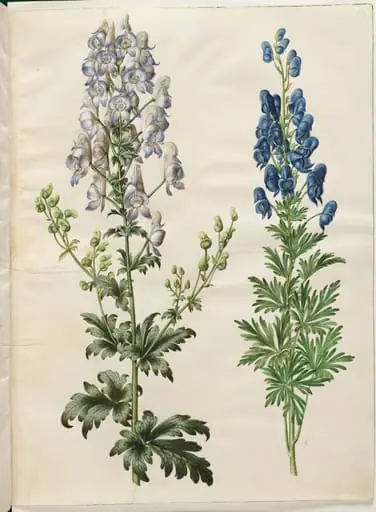 Aconitum variegatum (broget stormhat); Aconitum napellus (ægte stormhat)
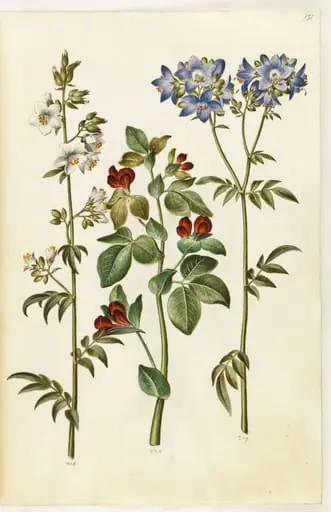 Polemonium caeruleum (almindelig jakobsstige); Lotus tetragonolobus (aspargesært)
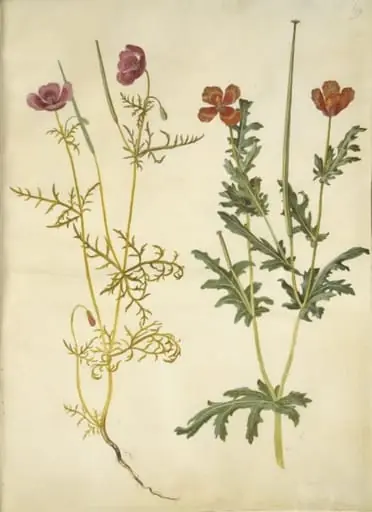 Roemeria hybrida (violet hornvalmue); Glaucium corniculatum (rød hornskulpe)
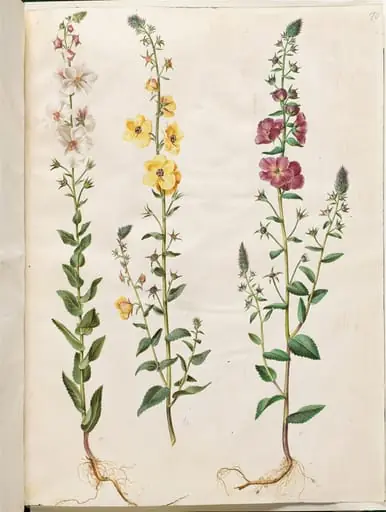 Verbascum blattaria (klase-kongelys); Verbascum phoeniceum (purpur-kongelys)