Artwork
Gottorfer Codex, bd. 4
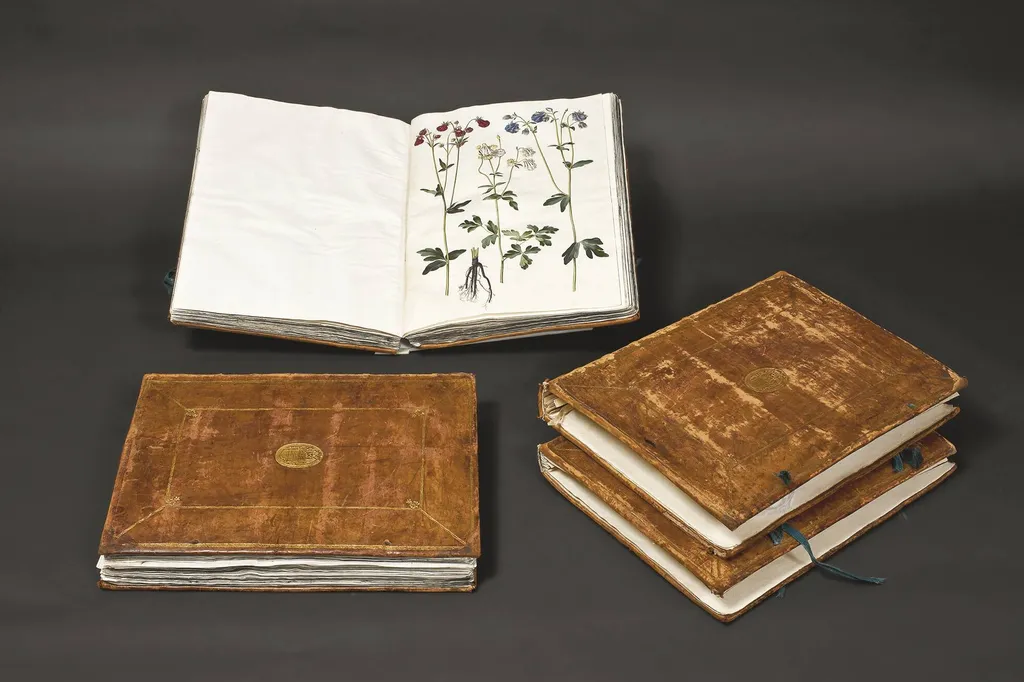
Gottorfer Codex, bd. 4 is an unspecified work on paper by Unknown. It dates from 1654 and is held in the collection of the Statens Museum for Kunst. The Gottorfer Codex, volume 4, is a bound manuscript compiled around 1654, containing a series of botanical watercolors.
About this work
Overview
It is part of a larger collection assembled for the Ducal Court of Gottorf and is now preserved at the Museum of Ethnography.
The Gottorfer Codex, volume 4, is a bound manuscript compiled around 1654, containing a series of botanical watercolors. It is part of a larger collection assembled for the Ducal Court of Gottorf and is now preserved at the Museum of Ethnography. The volume presents a sequence of hand-painted floral studies, arranged within a set of aged, leather-bound volumes that reflect the scholarly and aesthetic interests of mid-17th-century Northern European naturalists.
Subject & Meaning
The watercolor illustrations depict individual flower stems in precise detail, featuring hues of purple, pink, and white. These images were not merely decorative but served as systematic records of plant species, likely intended for botanical study or courtly curiosity. The inclusion of such studies in a codex suggests an effort to classify and preserve natural forms, aligning with broader European trends in scientific observation during the early modern period.
Technique & Style
The floral paintings are executed in watercolor with visible brushwork, emphasizing texture and subtle gradations of color. The artist employed fine lines to outline petals and stamens, capturing botanical accuracy while retaining a delicate, handcrafted quality. The medium’s transparency allows underlying paper fibers to subtly influence the tonality, enhancing the naturalistic effect without overt stylization.
History & Provenance
The codex originated in the courtly circles of Schleswig-Holstein, commissioned under the patronage of the Dukes of Gottorf. It remained within the ducal collection until the 19th century, when it was transferred to institutional custody. The Museum of Ethnography acquired it as part of a broader transfer of historical scientific materials, preserving its integrity as a cultural artifact of early natural history documentation.
Context
Created during a period when European courts funded systematic studies of nature, the Gottorfer Codex reflects the intersection of art and science. Similar botanical manuscripts were produced across Germany and the Low Countries, often by artists trained in both illustration and natural philosophy. This volume aligns with the tradition of herbaria and florilegia, where visual accuracy supported emerging taxonomic efforts before the standardization of Linnaean classification.
Legacy
Though the artist’s identity remains unconfirmed, the codex endures as a tangible record of pre-modern botanical observation. Its preservation highlights the value placed on visual documentation in an era before photography. Today, it contributes to scholarly understanding of how natural knowledge was visually constructed and curated in early modern Europe, offering insight into the material culture of science.
Artist & collection









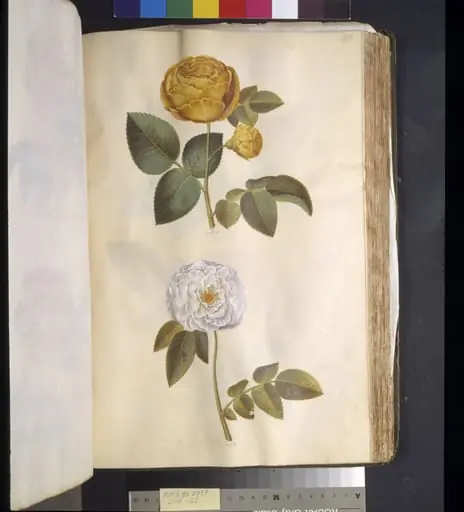 Rosa hemisphaerica (svovlgul rose); Rosa ×alba (hvid rose)
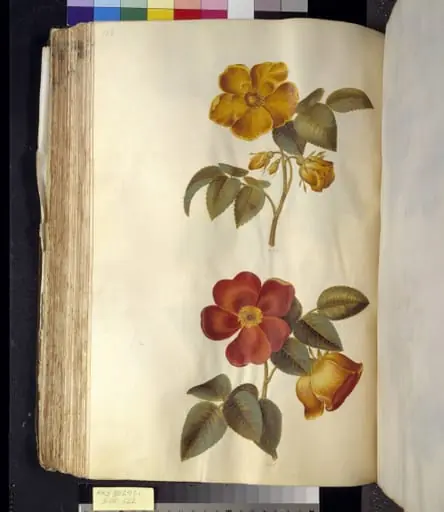 Rosa foetida (gul rose); Rosa foetida (tyrkisk rose)
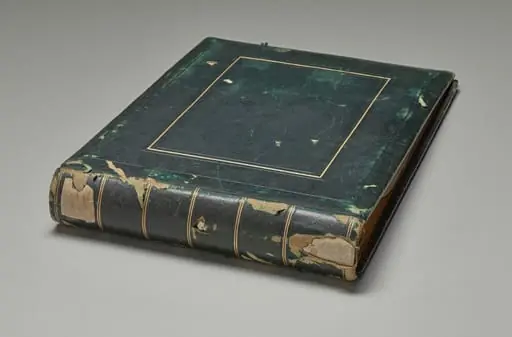 Album of 37 photographs
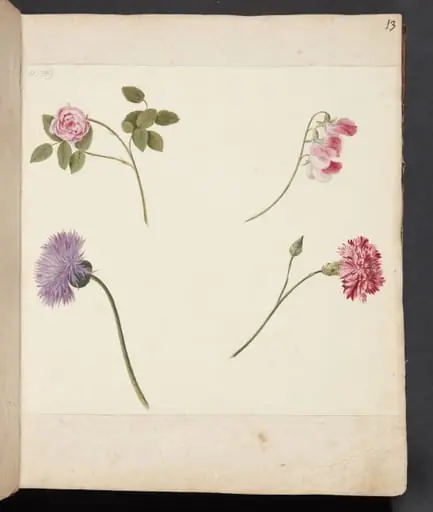 Studie af blomster
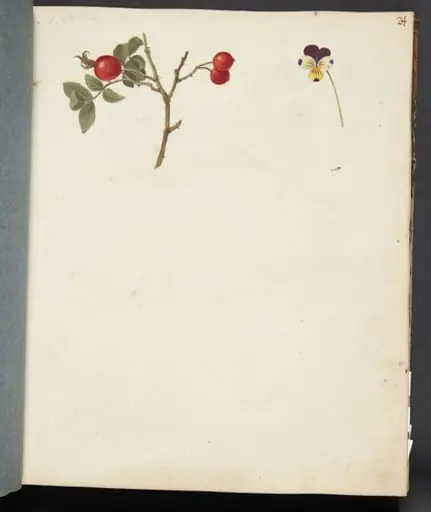 Studie af hyben og stedmoderblomst
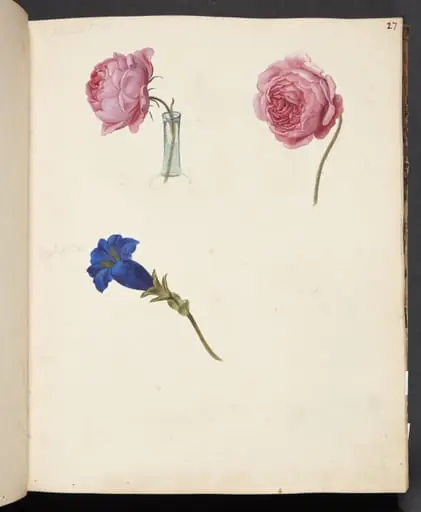 Studie af lyserød rose og blå blomst
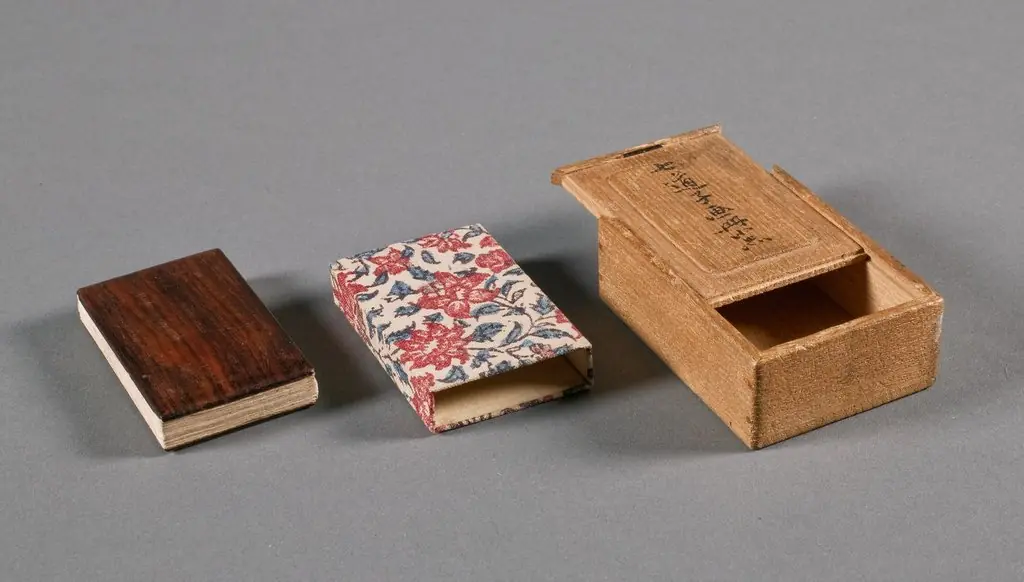 Miniature Album with Figures and Landscape
 Miniature Album with Figures and Landscape
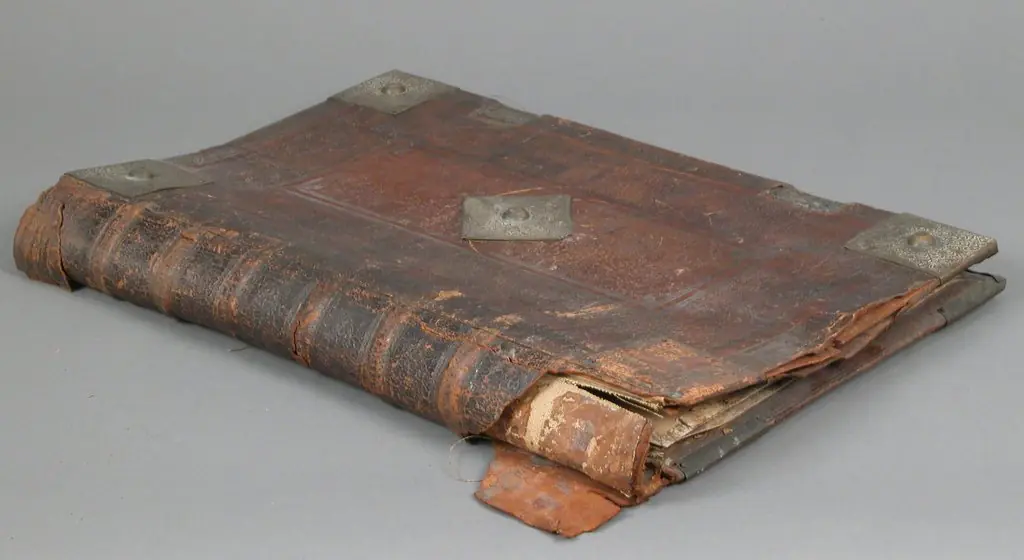 Portfolio