Artwork
A Cowshed
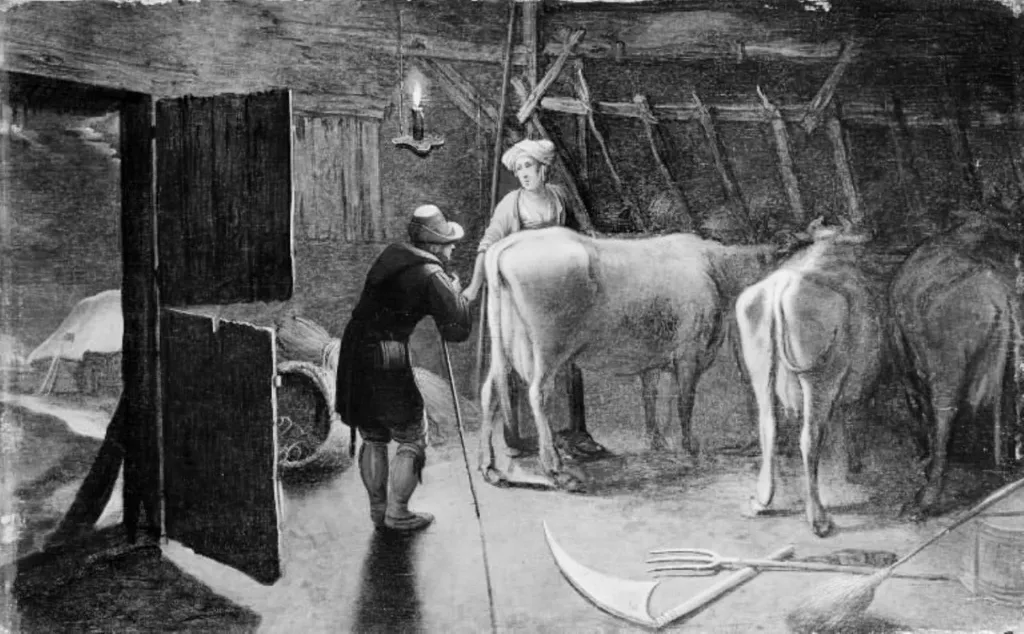
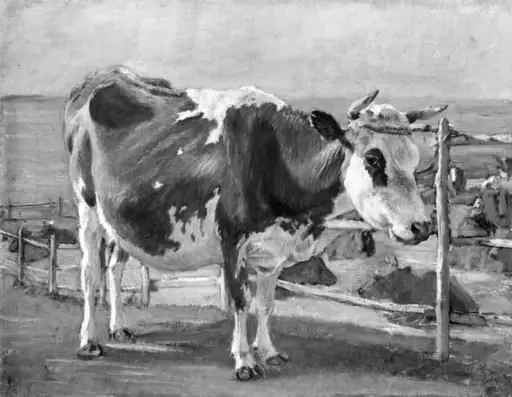
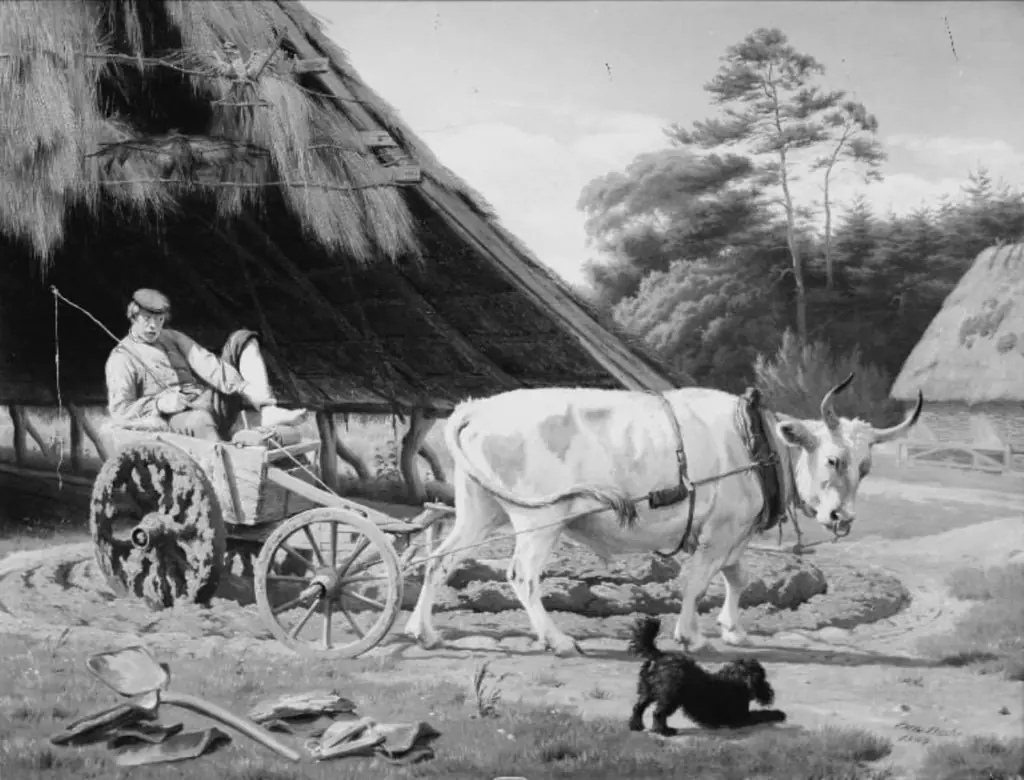
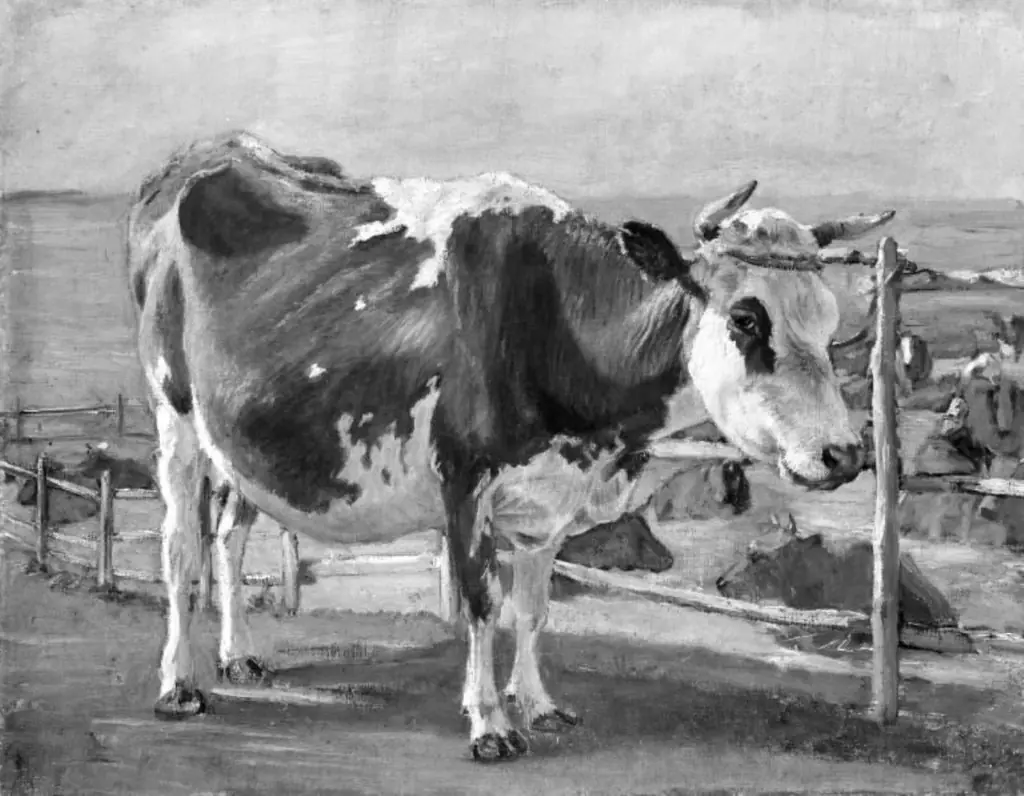
A Cowshed is a photography by Unknown. It dates from 1550 and is held in the collection of the Statens Museum for Kunst. Created around 1550, this black-and-white photograph depicts an interior scene of a rural cowshed.
About this work
Overview
The composition suggests an early attempt to document vernacular environments with artistic intent, though the medium and exact origin remain undocumented.
Created around 1550, this black-and-white photograph depicts an interior scene of a rural cowshed. The image is part of the collection at the Museum of Ethnography. It captures a quiet moment of daily agricultural life, rendered with careful attention to light and texture.
The composition suggests an early attempt to document vernacular environments with artistic intent, though the medium and exact origin remain undocumented.
Subject & Meaning
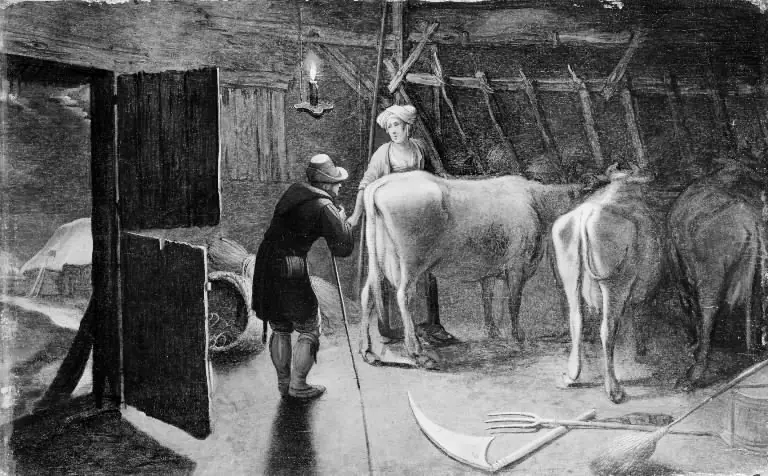
The scene centers on a woman gently holding the head of a large cow, while a man observes nearby, leaning on a staff. A second cow and farming tools, including a pitchfork, complete the setting. The figures appear engaged in routine labor, their postures conveying quiet diligence.
The image avoids idealization, instead presenting farm life as grounded and unembellished, reflecting the rhythms of pre-industrial rural existence.
Technique & Style
The photograph employs strong contrasts between light and shadow, creating a sense of depth and atmosphere. The dim interior is pierced by a narrow source of daylight, casting sharp outlines on wooden walls and figures. This use of chiaroscuro enhances the tactile quality of the scene, rough timber, coarse fabric, and animal hide are rendered with subtle tonal gradations, suggesting an early sensitivity to naturalistic lighting.
History & Provenance
The photograph’s creator is unknown, and its original purpose remains unclear. It entered the Museum of Ethnography’s collection in the late 19th or early 20th century, likely acquired as an ethnographic record. No documentation accompanies its arrival, and its date of creation is estimated based on clothing, architecture, and photographic style. Its survival suggests it was valued as a representation of traditional rural life.
Context
In mid-16th century Europe, most agricultural labor was performed manually, with families living in close proximity to livestock. This image reflects a world before mechanization, where human and animal roles were interdependent. Similar scenes appear in folk art and early documentary photography, but few survive with such clear emphasis on interior lighting and quiet domesticity.
Legacy
Though not widely exhibited, the photograph contributes to the historical record of rural European life. Its emphasis on ordinary moments and natural lighting anticipates later documentary traditions. It remains a quiet testament to the dignity of labor and the visual language of pre-modern agrarian communities, studied more for its evidentiary value than its artistic fame.
Artist & collection