Artwork
Flowers and Fruit
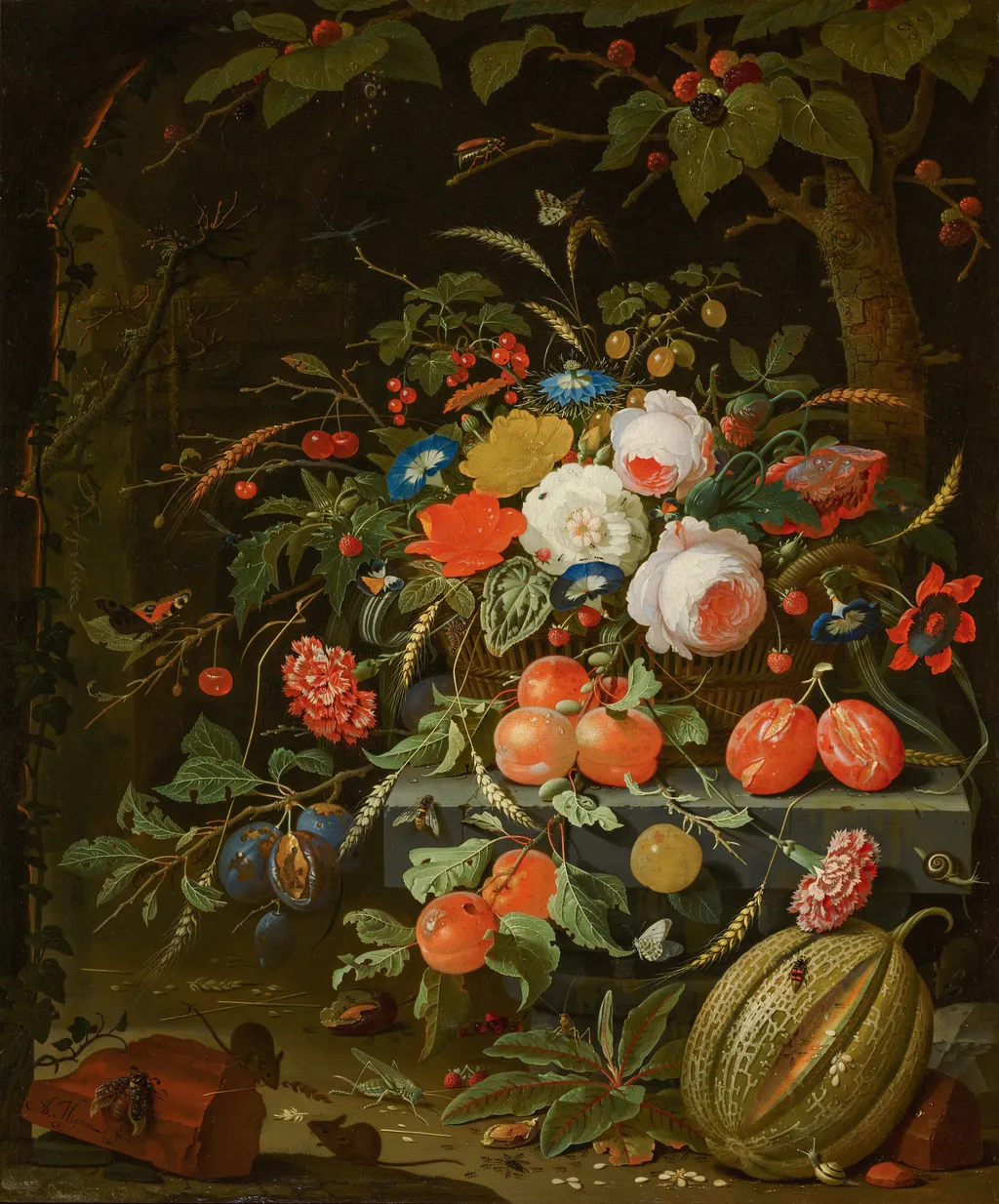
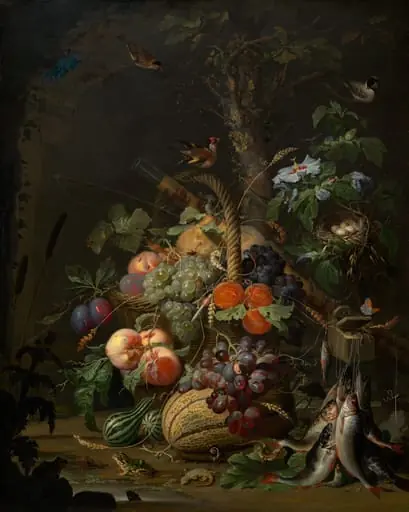
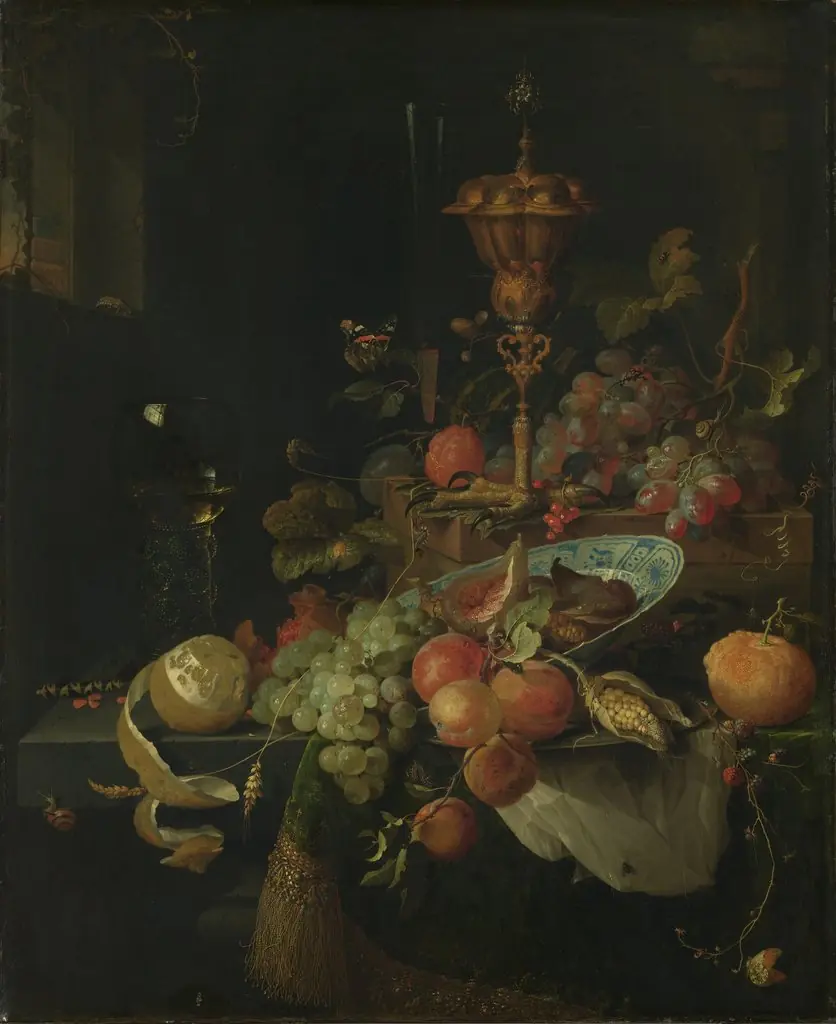
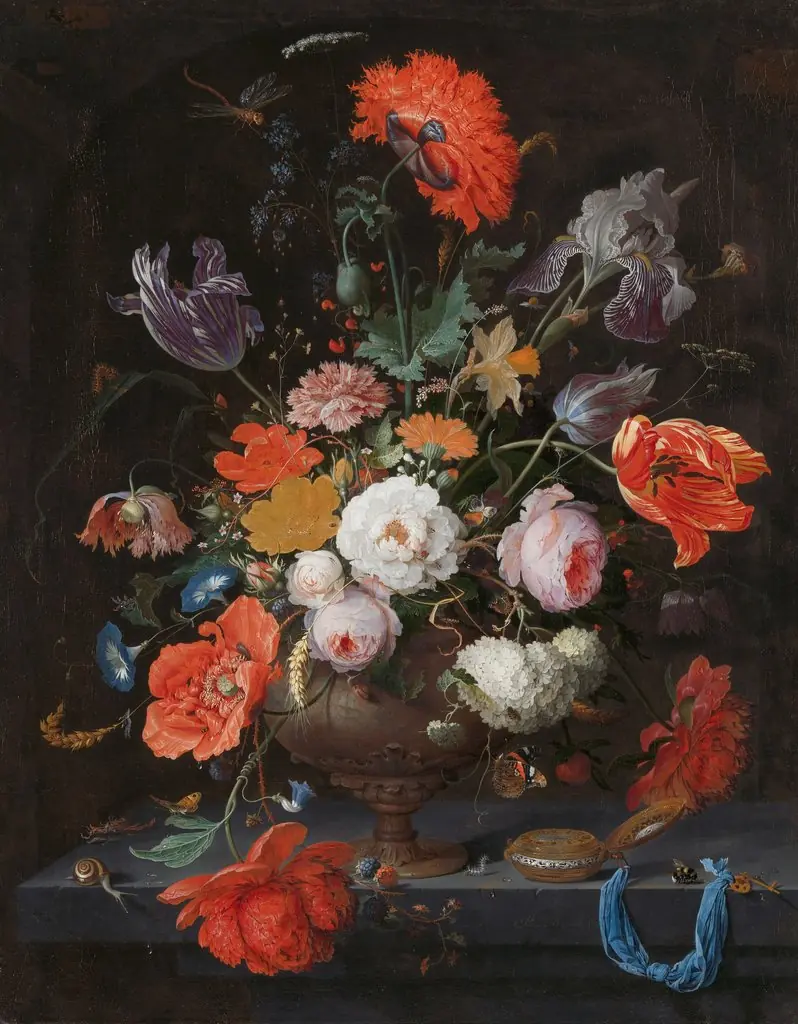
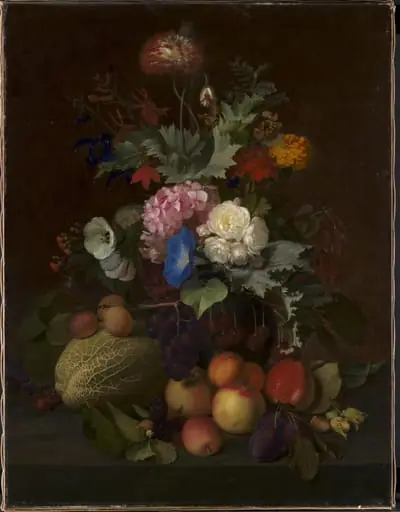
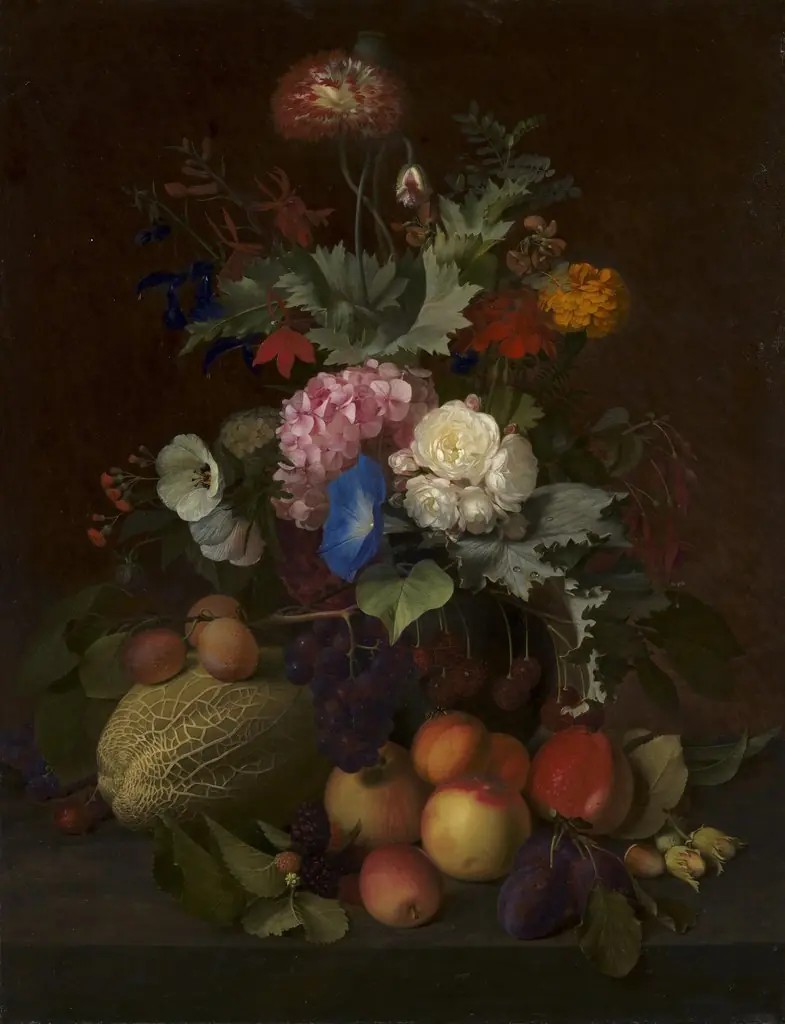
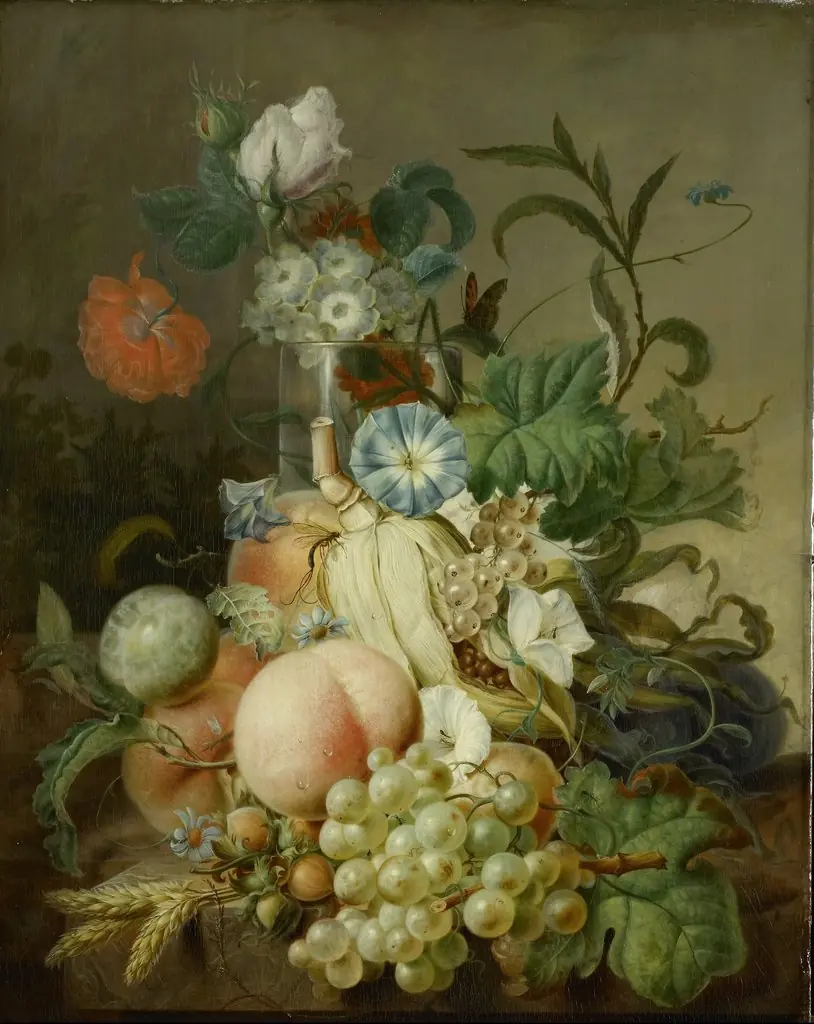
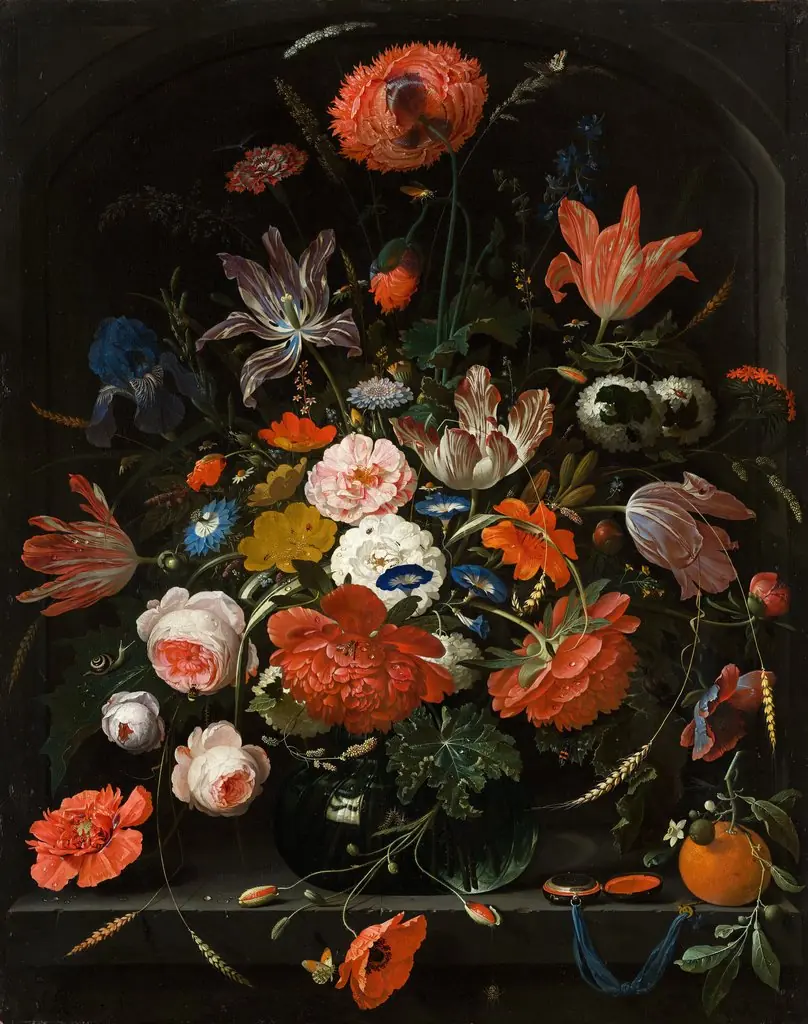
Flowers and Fruit is an oil painting by the Dutch Golden Age artist Abraham Mignon. It dates from 1674 and is held in the collection of the Mauritshuis.
About this work
Overview
Mignon, active in Utrecht during the Dutch Golden Age, specialized in intricate arrangements of flora and fauna.
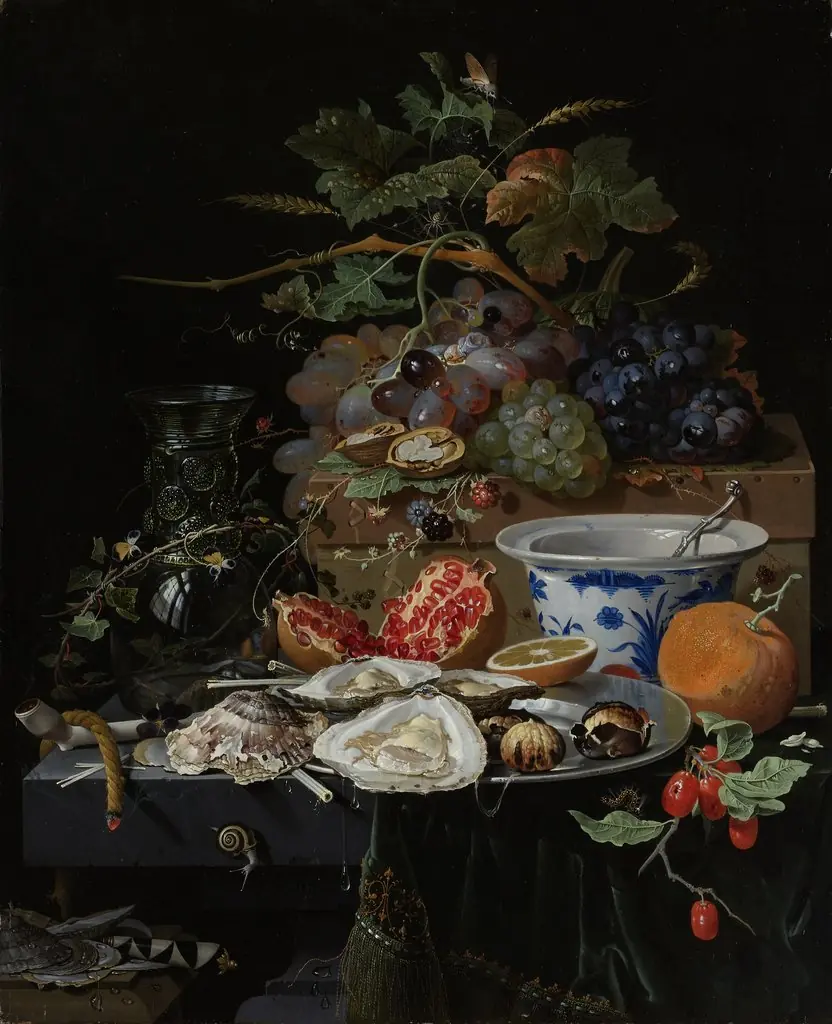
Painted in 1674 by Abraham Mignon, Flowers and Fruit is a still life executed in oil on panel. Mignon, active in Utrecht during the Dutch Golden Age, specialized in intricate arrangements of flora and fauna. The work combines blossoms, ripe fruit, and small insects within a tightly composed scene, set against a dark, neutral background that heightens the luminosity of its subjects. It is currently held in the Mauritshuis collection in The Hague.
Subject & Meaning
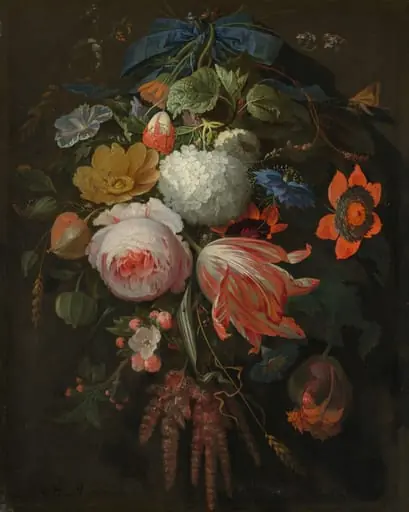
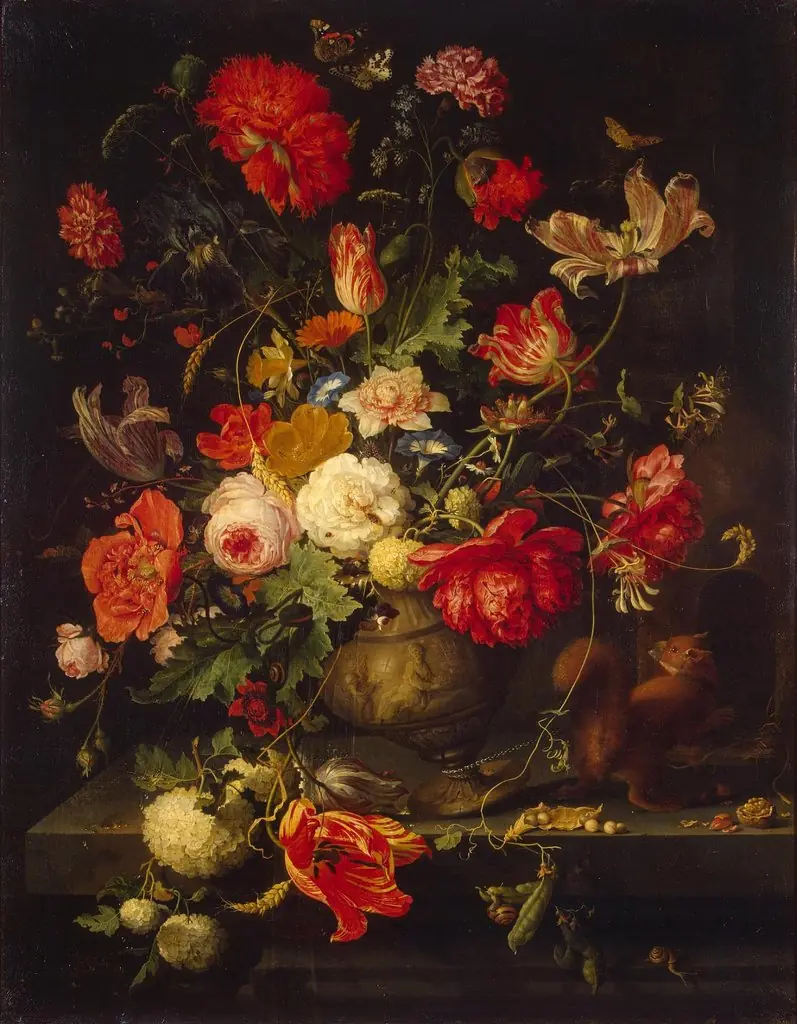
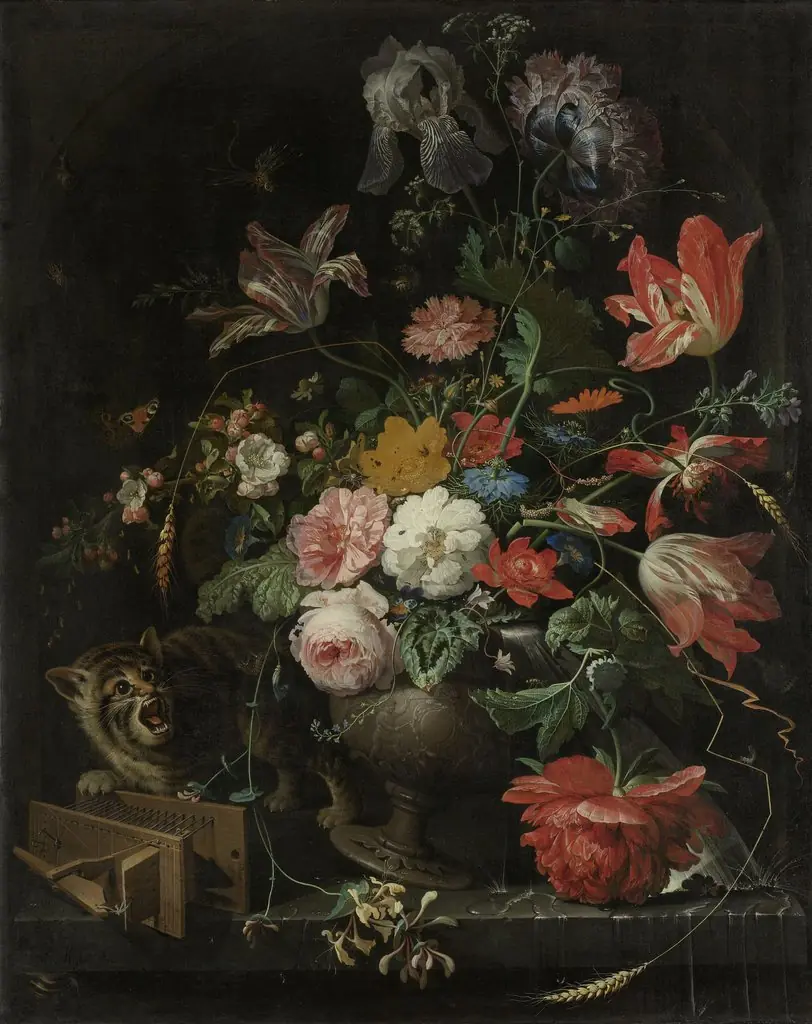
The painting presents a lush assemblage of roses, apricots, and other fruits, interspersed with butterflies and beetles. These elements reflect the period’s fascination with nature’s transience and abundance. The inclusion of insects suggests the fleeting quality of life, a common theme in Dutch still lifes.
Rather than conveying moralizing allegory, the work emphasizes observation and the quiet beauty of organic forms in their moment of peak ripeness.
Technique & Style
Mignon employed fine brushwork and layered oil glazes to achieve remarkable textural precision. Petals, fruit skins, and insect wings are rendered with microscopic clarity, capturing subtle shifts in light and surface. The use of chiaroscuro, contrasting deep shadows with bright highlights, directs focus to the central bouquet.
His technique owes much to the refined methods of Jan Davidszoon de Heem and Jacob Marrel, whose influence is evident in the balanced, almost theatrical arrangement.
History & Provenance
Created in the final years of Mignon’s life, the painting entered the Mauritshuis collection in the 19th century, likely through acquisition from a Dutch private collection. Its documented history is limited, but its stylistic consistency with Mignon’s other signed works supports its attribution. The painting has remained in public ownership since its acquisition, avoiding major dispersals or restorations that might have altered its original appearance.
Context
In mid-17th-century Utrecht, still life painting flourished as a genre prized for its technical rigor and symbolic nuance. Mignon’s work emerged amid a market that valued detailed depictions of nature, often commissioned by wealthy patrons interested in science, botany, and the aesthetics of order. His paintings responded to both artistic traditions and growing public curiosity about the natural world, aligning with broader European trends in natural history illustration.
Legacy
Mignon’s Flowers and Fruit exemplifies the peak of Dutch still life painting’s attention to natural detail. While not widely known outside specialist circles, his work influenced later generations of still life artists through its precision and compositional discipline. Today, it remains a key example of how Dutch painters transformed everyday subjects into meditations on observation, materiality, and the passage of time.
Own this work as a print
Artist & collection
Artist
Abraham Mignon or Minjon (21 June 1640 – 27 March 1679) was a Dutch still life painter.