Artwork
Nieuwmarkt in Amsterdam
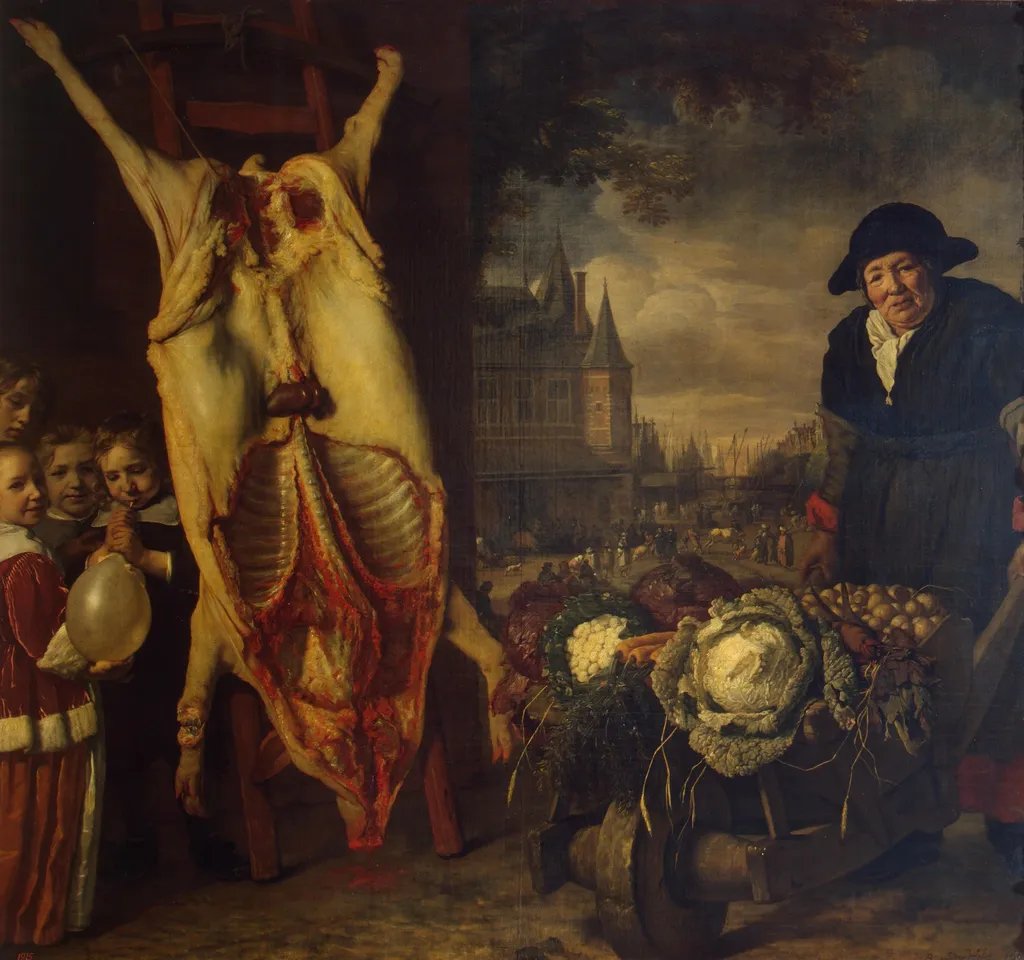
Nieuwmarkt in Amsterdam is an oil painting by the Dutch Golden Age artist Bartholomeus van der Helst. It dates from 1666 and is held in the collection of the Hermitage Museum.
About this work
Subject & Meaning
The presence of meat being traded at the foot of the Waag ties the commercial life of the city directly to one of its most recognizable architectural landmarks.
The painting depicts a scene at the Nieuwmarkt, the square in Amsterdam dominated by the Waag, the city's medieval weigh house and former city gate. Van der Helst populates this urban setting with everyday figures, women and children, gathered around the sale of pork, a staple commodity of the seventeenth-century Amsterdam market. The presence of meat being traded at the foot of the Waag ties the commercial life of the city directly to one of its most recognizable architectural landmarks.
As a genre scene, the work represents the bustling everyday commerce of Amsterdam rather than a religious, mythological, or allegorical subject. The combination of identifiable architecture, market activity, and ordinary citizens gives the painting a documentary quality, presenting the Nieuwmarkt as a living hub of trade and daily life in the Dutch Golden Age.
Technique & Style
Nieuwmarkt in Amsterdam is an oil painting executed on canvas by Bartholomeus van der Helst in 1666. The work is classified as a genre scene, depicting everyday life around the Nieuwmarkt and the Waag in Amsterdam, with figures including a woman and a child alongside cuts of pork.
The canvas measures 201 cm in height and 220 cm in width, giving it a substantial, nearly square format suited to a multi-figure market scene. The painting is held in the collection of the Hermitage Museum and was included in the exhibition "Dutch masters from the Hermitage."
History & Provenance
The painting Nieuwmarkt in Amsterdam by Bartholomeus van der Helst is dated 1666, as recorded in both the artist’s corpus and the Hermitage Museum’s records.
It entered the collection of the Hermitage Museum, where it remains housed today. The work depicts a scene at the Nieuwmarkt in Amsterdam, including recognizable landmarks such as the Waag, indicating it was created in situ or closely tied to the location.
No documented commission or preparatory materials have been identified in the sources, and the painting’s early provenance prior to its acquisition by the Hermitage is not specified.
The painting is held in the collection of the Hermitage Museum in Saint Petersburg.
It is recorded with an inventory number associated with Dutch masters in the Hermitage’s holdings.
It was included in the exhibition Dutch Masters from the Hermitage, which presented works from the museum’s Dutch collection.
Legacy
The painting's reputation has been shaped by its inclusion in major exhibitions of Dutch Golden Age art, particularly those highlighting Hermitage Museum holdings. Its influence is noted in scholarly discussions of 17th-century Amsterdam genre scenes, where it is frequently cited as a representative example of van der Helst's mastery of group portraiture and civic celebration. The work's enduring presence in museum collections and academic discourse underscores its significance within the narrative of Dutch painting's development.
Overview
Bartholomeus van der Helst painted Nieuwmarkt in Amsterdam in 1666, using oil on canvas. The work captures a lively market scene on the historic Nieuwmarkt square, foregrounding a butcher displaying a slab of pork while surrounding figures handle vegetables, cheese, and other wares. The composition is anchored by the prominent Waag building, a former weigh house, which dominates the background.
Context
The Waag, originally a municipal weigh house, functioned as a focal point for trade in Amsterdam’s central market district. By situating the scene at Nieuwmarkt, van der Helst documents a key urban space where merchants, artisans, and citizens intersected, offering insight into the economic and social fabric of the city at its commercial peak.
Own this work as a print
Artist & collection
Artist
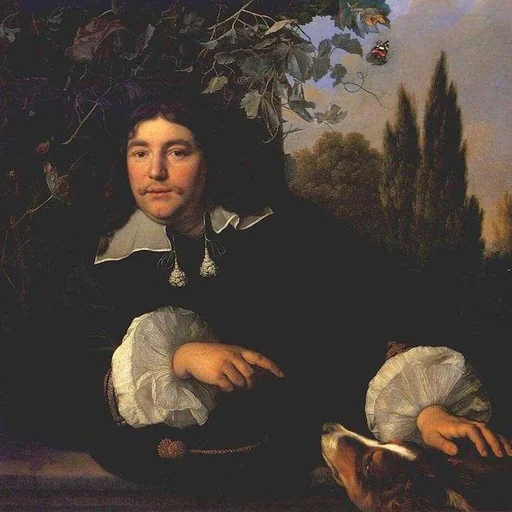
Bartholomeus van der Helst (1613 – buried 16 December 1670) was a Dutch painter. Considered to be one of the leading portrait painters of the Dutch Golden Age, his elegant portraits gained him the patronage of…

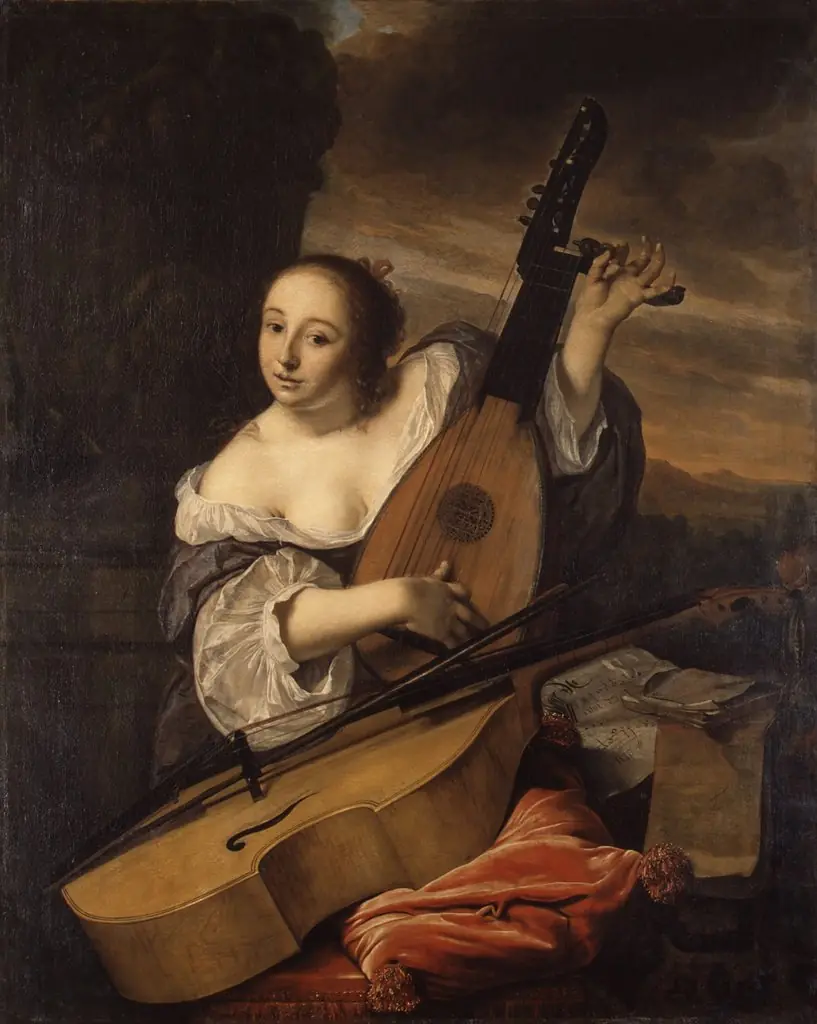 The Musician
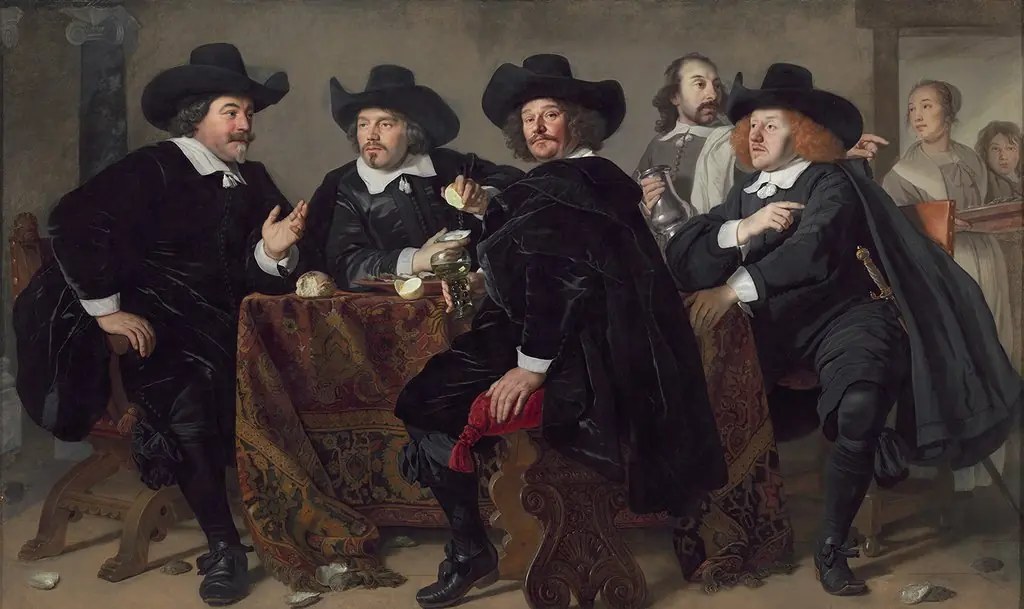 Four directors of the arquebusier's guild, Amsterdam, 1655
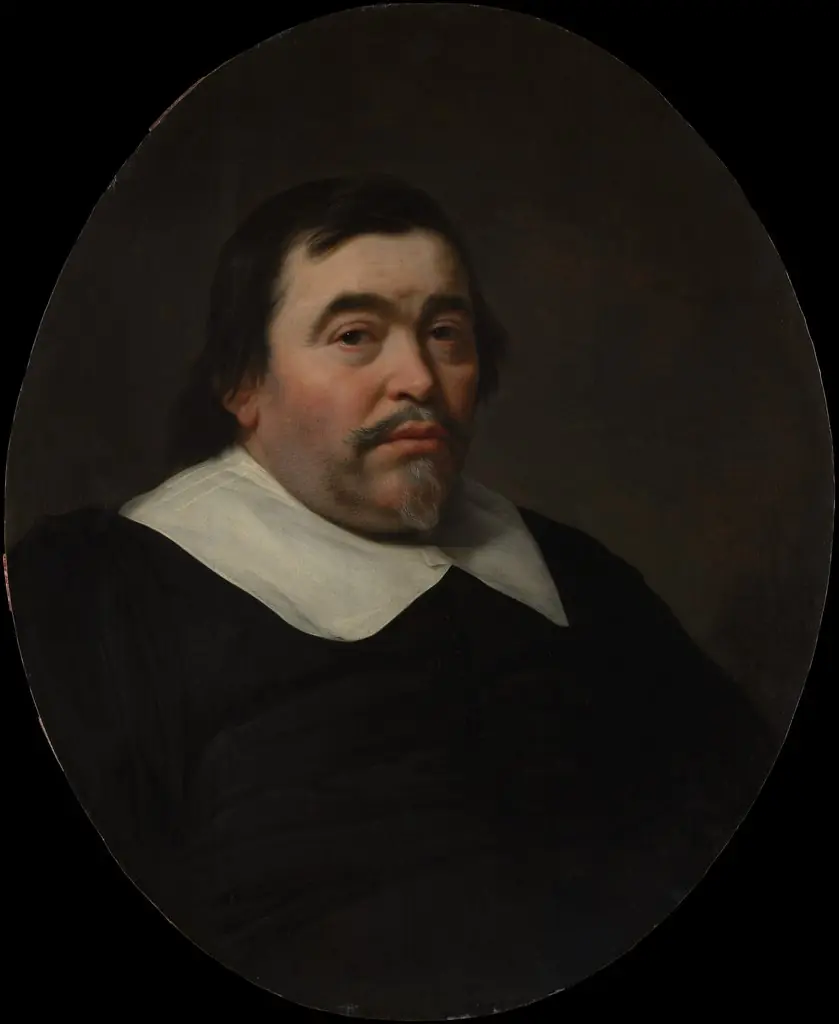 Portrait of a Man
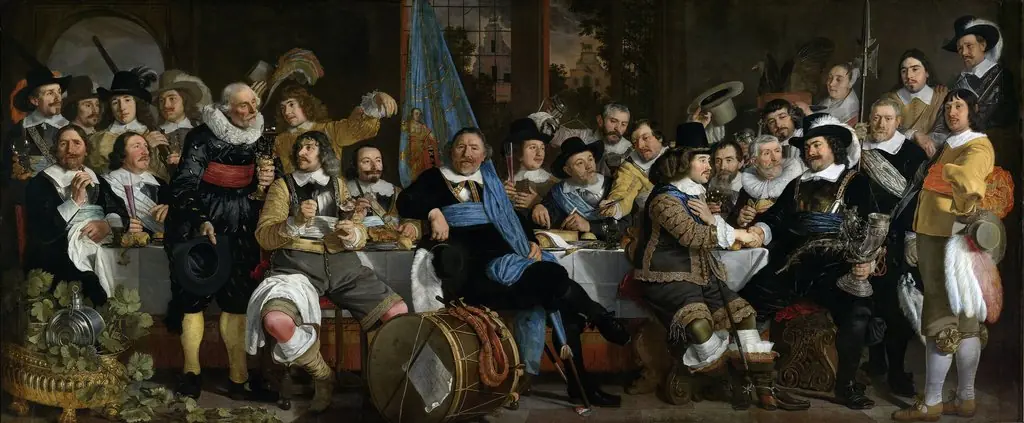 Banquet at the Crossbowmen’s Guild in Celebration of the Treaty of Münster
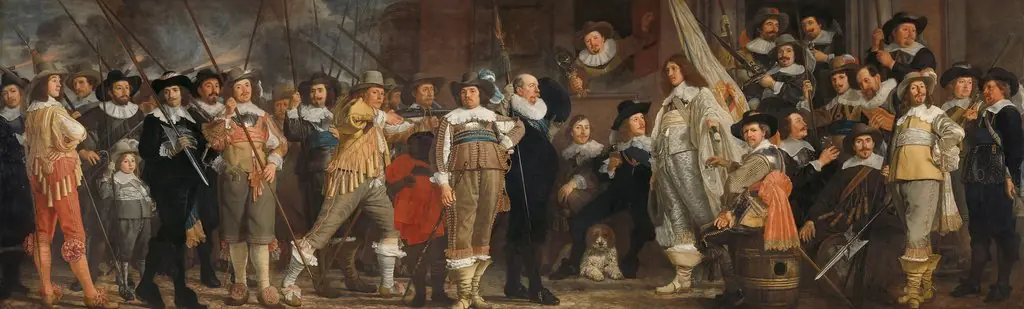 Militia Company of District VIII under the Command of Captain Roelof Bicker
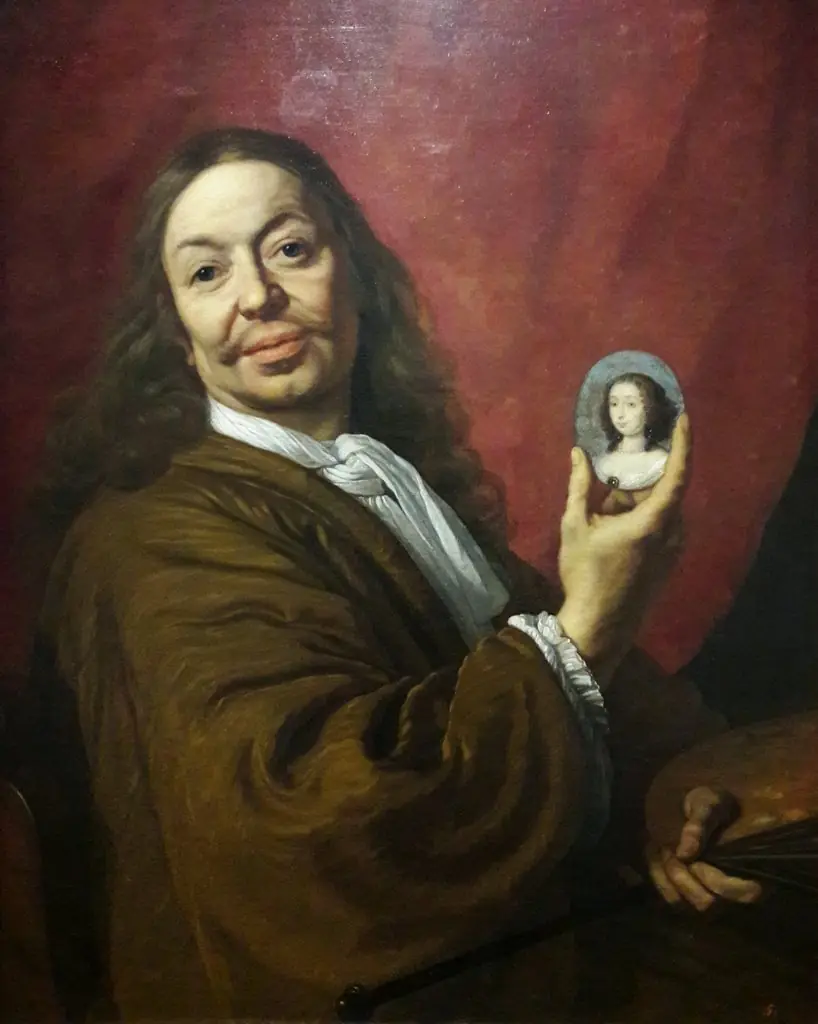 Self-portrait
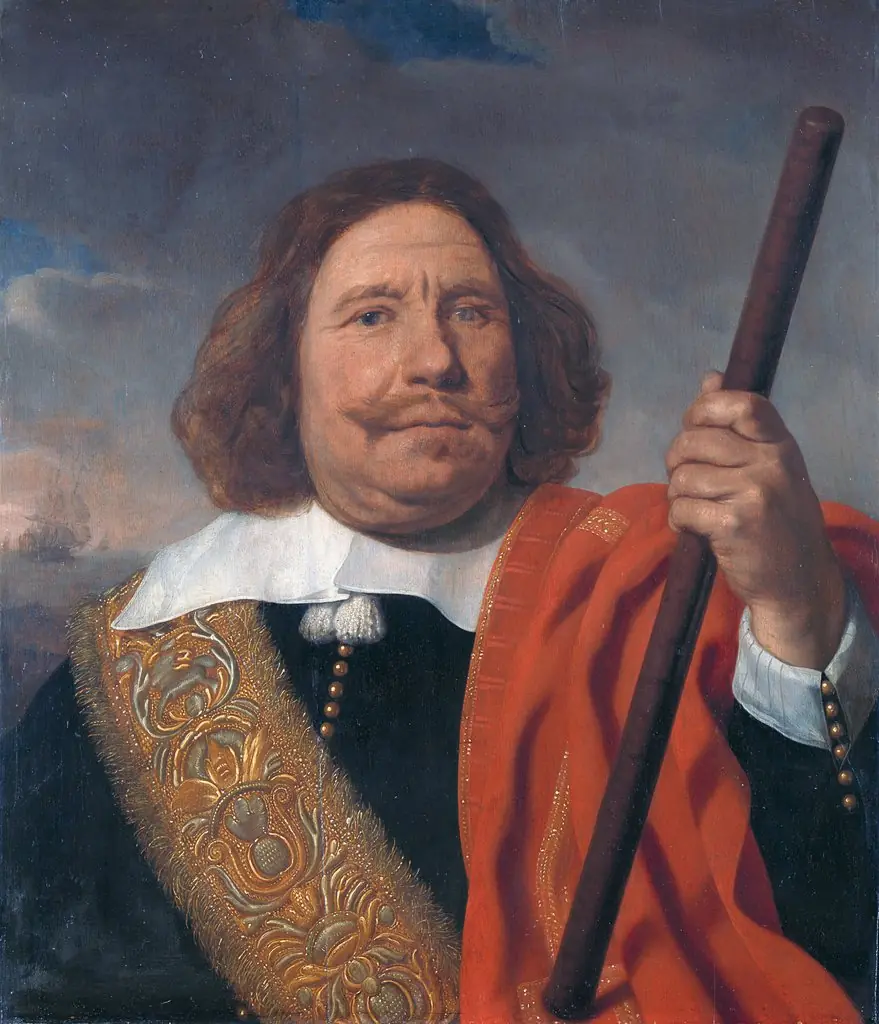 Egbert Meeuwsz Cortenaer (1605-65). Vice admiral, admiralty of the Maas, Rotterdam
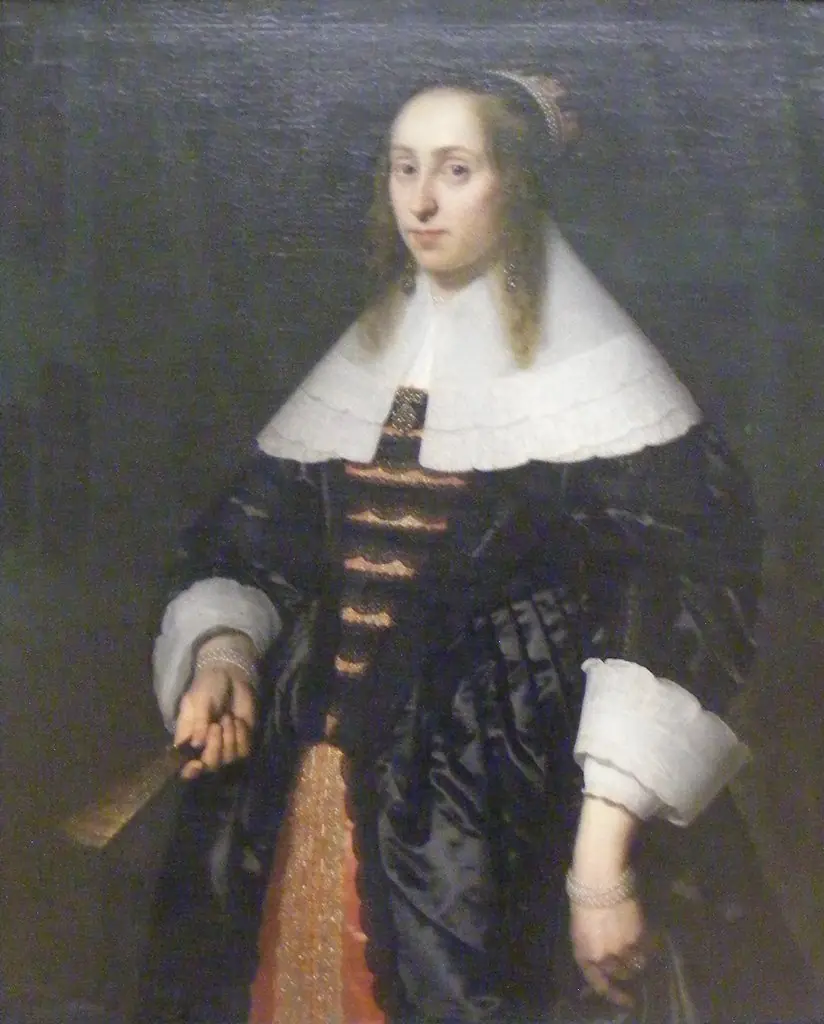 Portrait of a Lady
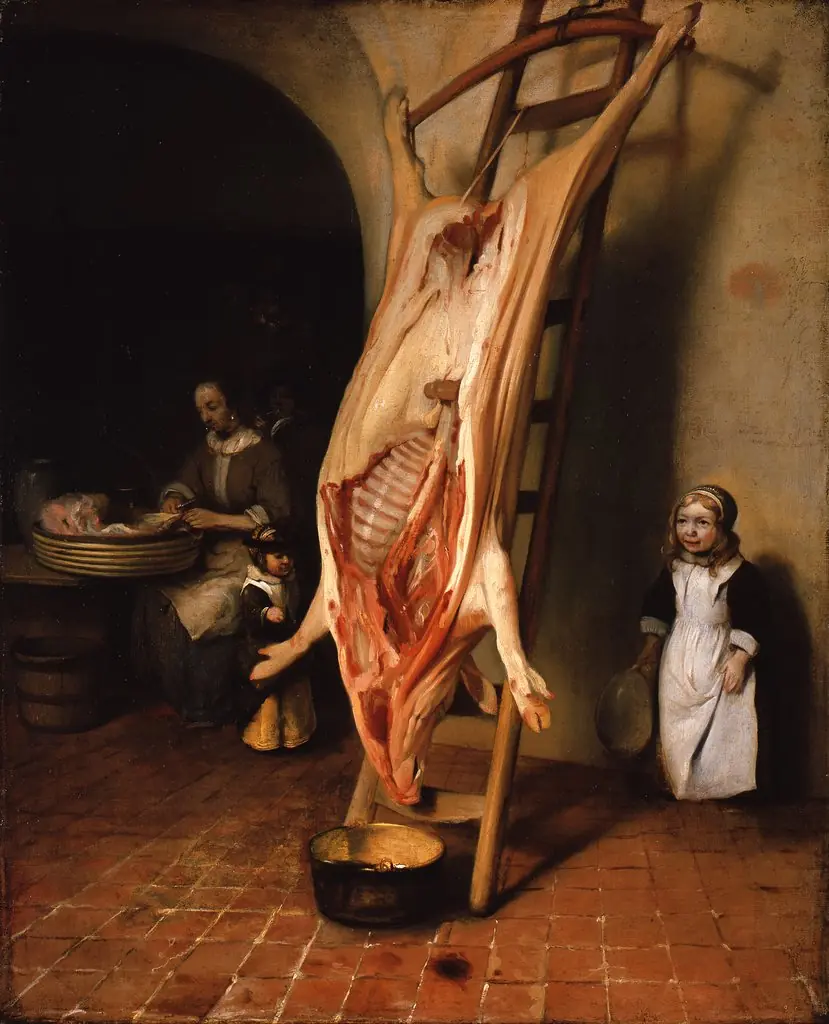
- The butchered pig
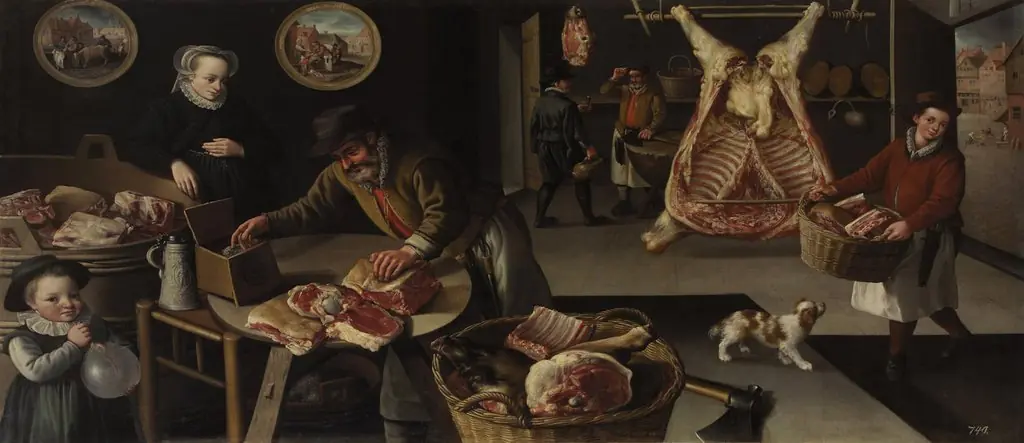 Fleischmarkt (November-Dezember)
 Eviscerated Ox
 Kitchen Scene with the Parable of the Rich Man and Poor Lazarus
 The slaughtered ox
 Slaughtered Ox
 Kitchen Interior
 Kitchen interior with a servant girl holding a plate with poultry and a table with an abundance of game, fish, fruit and vegetables
 A kitchen
 Still Life with Pig's Head, Trotters and Sausage
 The Sausage Maker
 Larder Still life