Artwork
Landscape with Shepherd
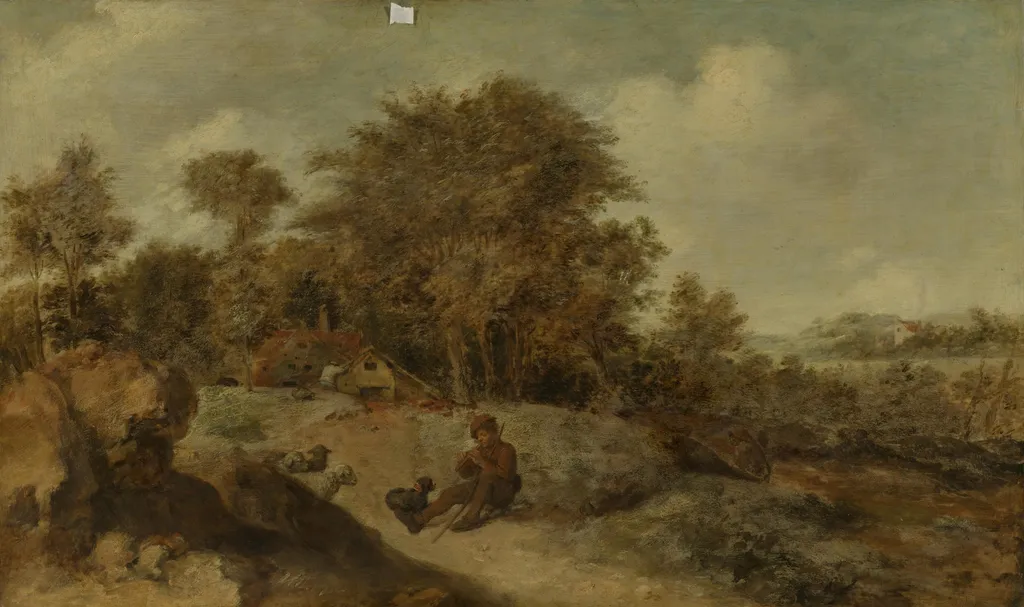
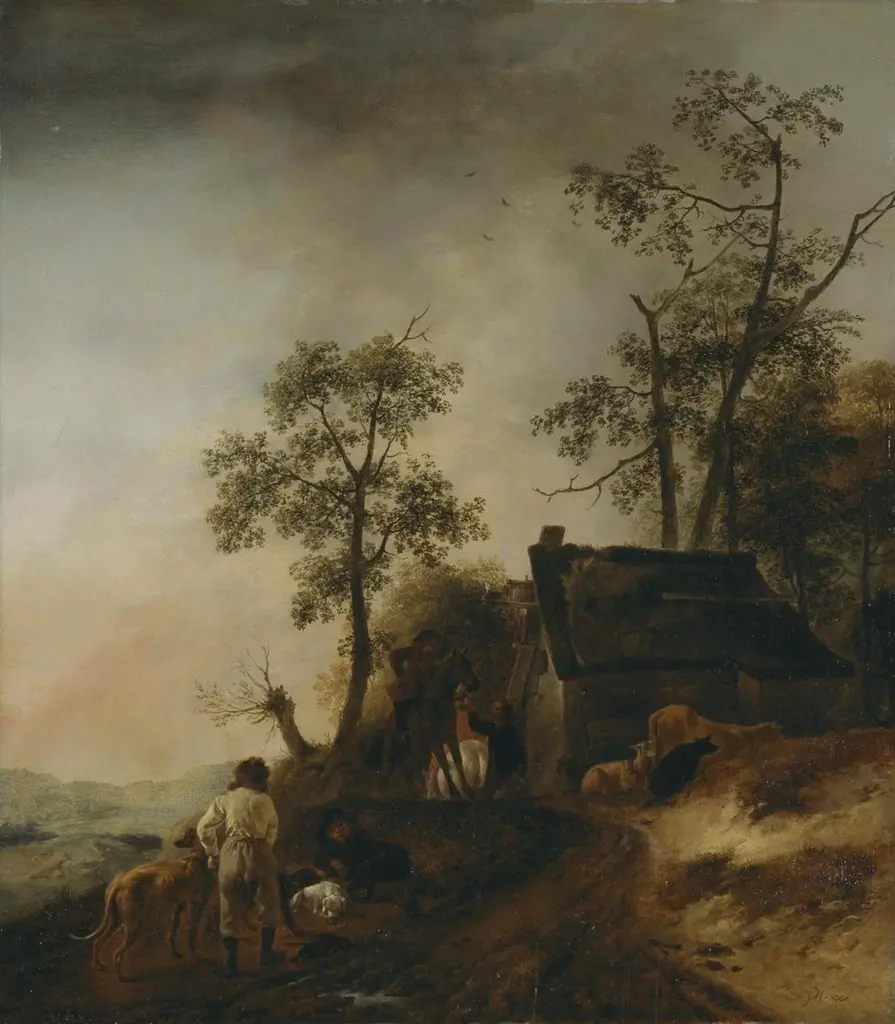
Landscape with Shepherd is an oil painting by the Dutch Golden Age artist Adriaen Brouwer. It dates from 1635 and is held in the collection of the Gemäldegalerie Berlin.
About this work
Overview
Landscape with Shepherd is an oil painting on oak panel by the Flemish Baroque artist Adriaen B carrier, dated 1635 and measuring 49 by 82 centimeters.
Landscape with Shepherd is an oil painting on oak panel by the Flemish Baroque artist Adriaen B carrier, dated 1635 and measuring 49 by 82 centimeters. The work is held in the collection of the Gemäldegalerie Berlin. It represents a significant departure from Brouwer's celebrated genre scenes of tavern life, belonging instead to the small group of landscapes he produced in his final years. While Brouwer is primarily known for his vivid depictions of peasants and low-life subjects, this painting demonstrates his engagement with landscape as a genre and offers insight into the breadth of his artistic practice during the last phase of his short career.
Subject & Meaning
The painting depicts a shepherd within a landscape setting, a subject that connects to broader pastoral traditions in European art while also carrying potential religious resonance. The Wikidata classification of the genre as religious art suggests the possibility of biblical or allegorical connotations, perhaps evoking the shepherds of the Nativity or the pastoral imagery associated with the Adoration of the Shepherds, a subject Brouwer explored in his drawn studies. The shepherd figure would have been recognized by contemporary viewers as a rustic, lower-class type consistent with Brouwer's characteristic interest in unidealized common people. In the context of Brouwer's oeuvre, where he typically portrayed peasants and soldiers in tavern interiors, the outdoor setting with a shepherd represents a notable shift in subject matter while maintaining his focus on figures from the lower strata of society. The landscape itself serves as more than mere backdrop, as the work belongs to the small number of landscapes Brouwer produced in his final year, described by scholars as possessing a tragic intensity.
Technique & Style
The painting is executed in oil on oak panel, a support typical of Flemish practice and consistent with Brouwer's known preference for panel painting. The dimensions of 49 by 82 centimeters indicate a relatively modest scale, comparable to the small-format works that characterize much of Brouwer's production. In terms of handling, the work would reflect Brouwer's mature style, which contemporary sources and modern scholars have noted for its unusual mastery of tonal values and delicate brushwork. This refinement of technique contrasts markedly with the coarseness of his typical subject matter, a paradox that distinguished his work from that of his contemporaries. The landscape format of this painting allowed Brouwer to deploy his tonal skills in the service of atmospheric effects and spatial depth, qualities that would have distinguished his late landscapes within his broader body of work. The tragic intensity attributed to his final landscapes suggests a somber palette and perhaps more restrained handling than the vigorous brushwork associated with his tavern scenes.
History & Provenance
The painting is dated to 1635, placing it in the final years of Brouwer's life. He died in January 1638 at approximately 32 or 33 years of age. The work is currently located in the Gemäldegalerie Berlin, though the specific circumstances of its acquisition by that institution are not detailed in the available sources. No exhibition history or earlier provenance records are provided in the sources. The painting's place in Brouwer's chronology is significant, as 1635 was also the year he took on Jan-Baptist Dandoy as his only officially registered pupil, and the year before he painted The Smokers, now in the Metropolitan Museum of Art. The concentration of dated activity in these final years suggests a period of particular productivity despite the artist's reportedly dissolute lifestyle.
Legacy
Landscape with Shepherd occupies a modest but meaningful place in Brouwer's legacy, representing the rare landscape genre to which he turned in his final years. While his reputation rests predominantly on his genre scenes and tronies, this painting and the small group of late landscapes demonstrate that his artistic range was not limited to tavern interiors. The work's preservation in the Gemäldegalerie Berlin ensures its accessibility to scholars and the public, contributing to ongoing understanding of Brouwer's oeuvre. The broader legacy of Brouwer himself remains substantial despite his small output of approximately sixty works. His influence on Dutch Golden Age painting, particularly in the realm of genre depiction and the study of facial expression, was profound. The fact that his work was collected by Rubens and Rembrandt established his canonical status early, and he continues to be recognized as a pivotal figure in the development of Flemish and Dutch Baroque painting. Landscape with Shepherd, while not among his most widely reproduced works, contributes to this legacy by documenting his engagement with landscape as a genre and the tragic intensity that characterized his final artistic phase.
Own this work as a print
Artist & collection
Artist
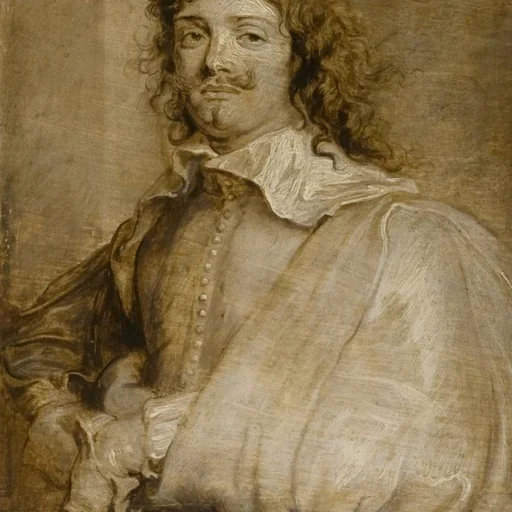
Adriaen Brouwer (c. 1605 – January 1638) was a Flemish painter active in Flanders and the Dutch Republic in the first half of the 17th century. Brouwer was an important innovator of genre painting through his vivid…

 In front of the inn (Country scene with a hunting party)
 Swedish Landscape with a Water Mill
 In the farmyard
 Landscape with Peasants and Cattle
 Gebirgslandschaft
 Landscape with Anglers and a Distant Town
 Dunelandscape
 Untitled
 The country road
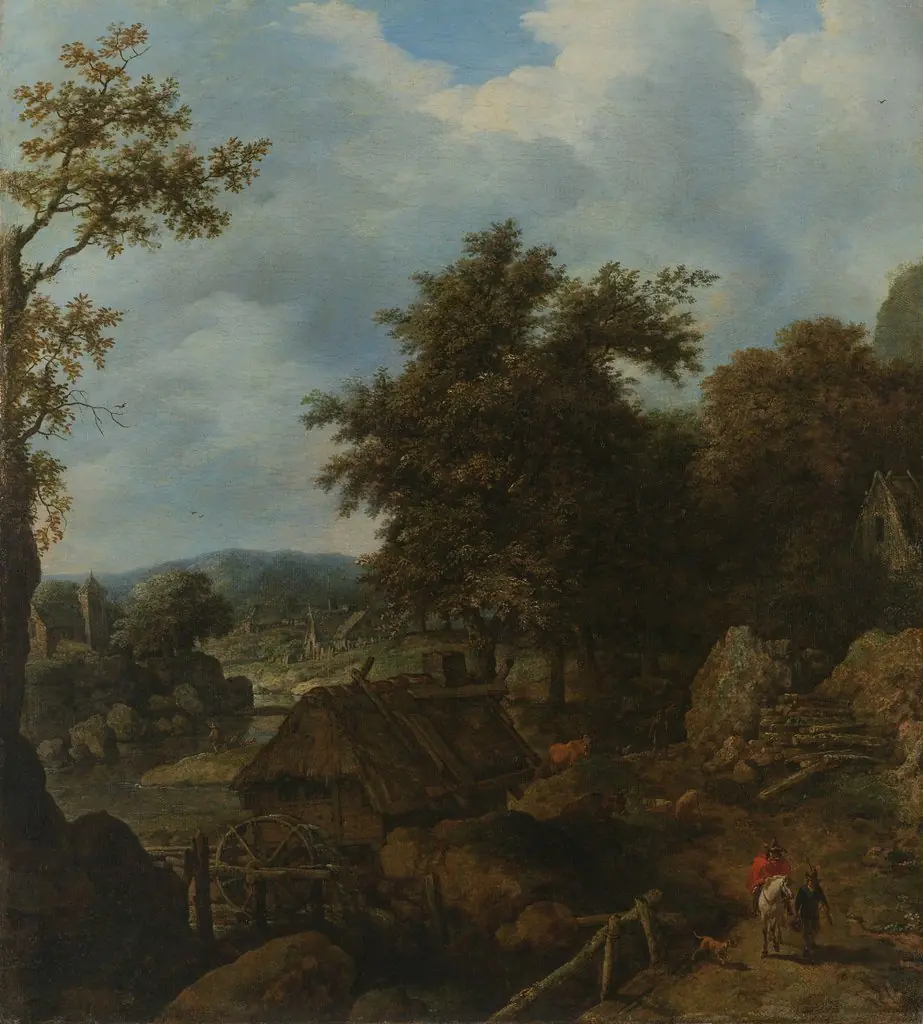 Swedish landscape with a watermill
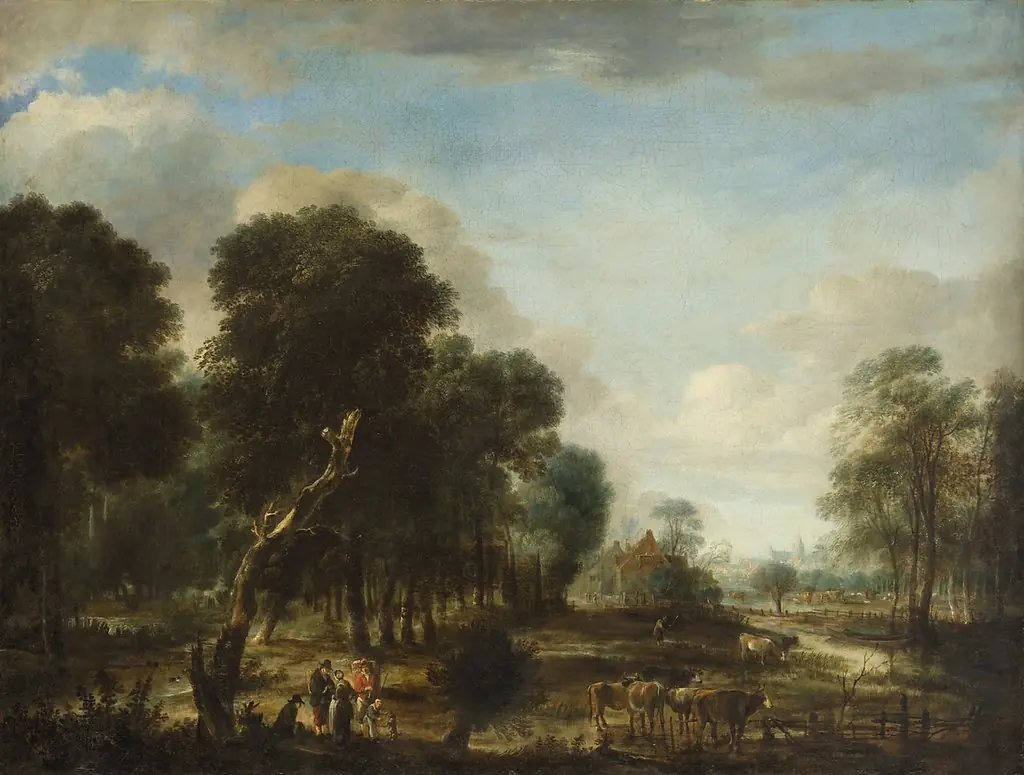 Road through a wet forest
- Landscape with Animals and a Shepherd