Artwork
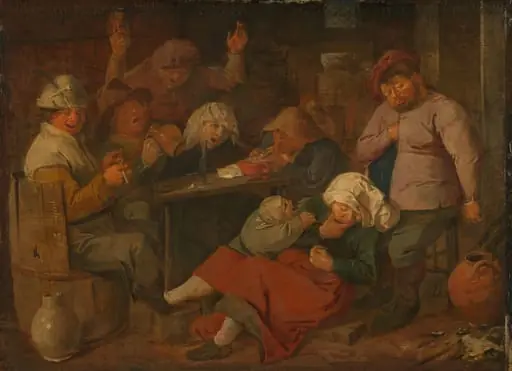
Peasants Carousing in a Tavern
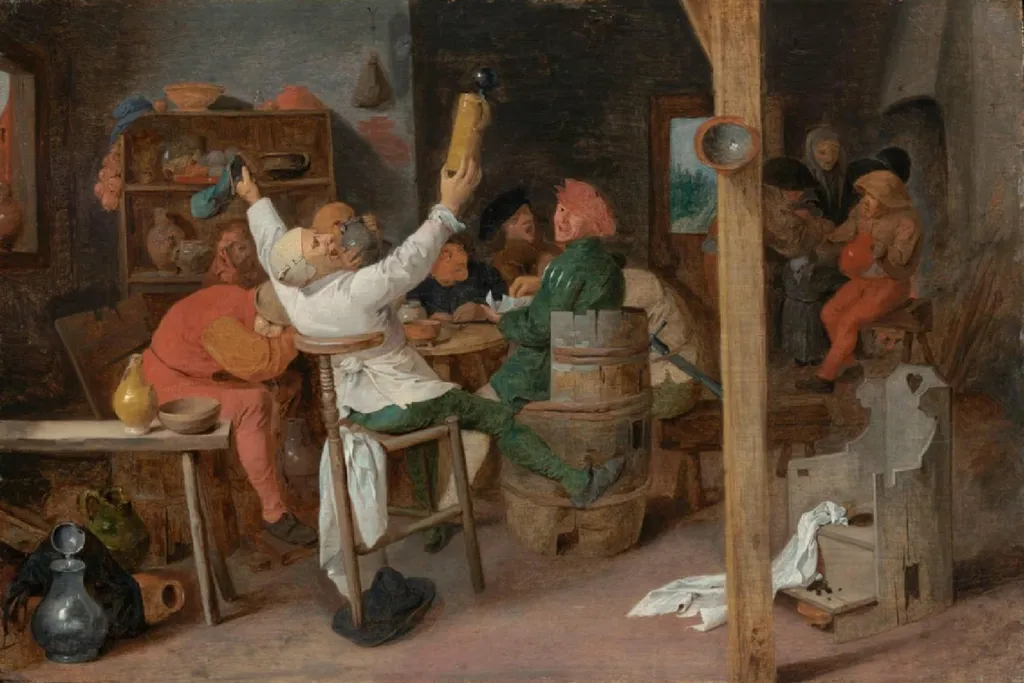
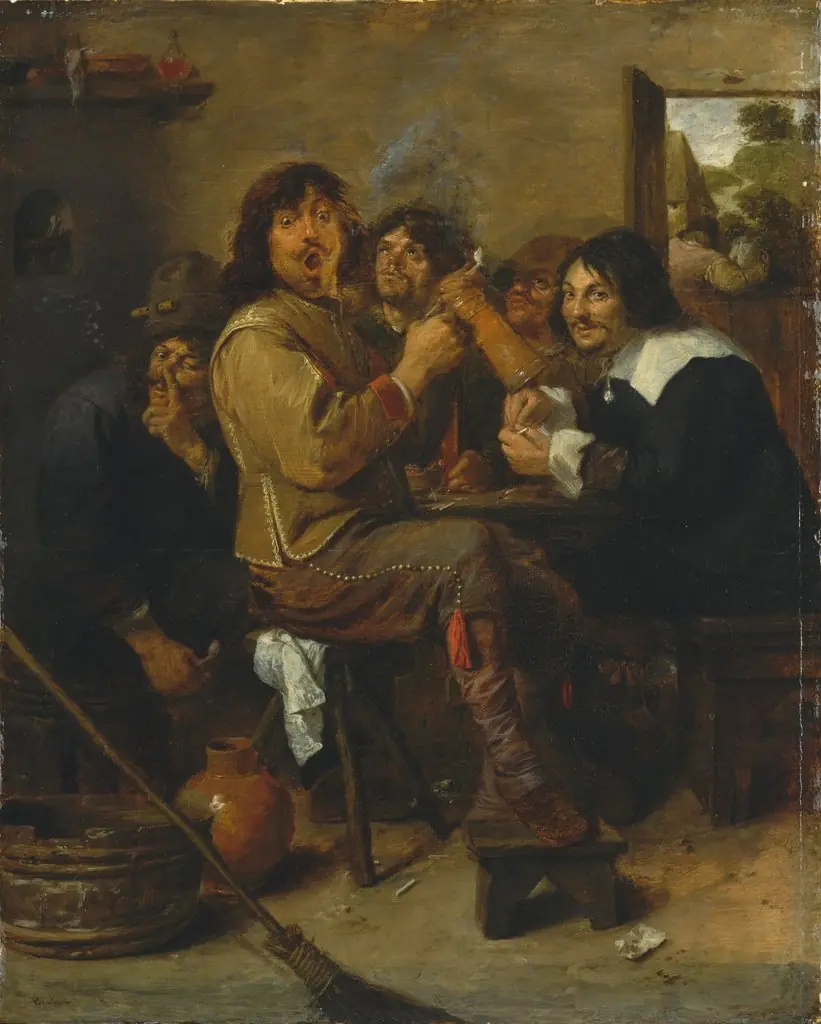
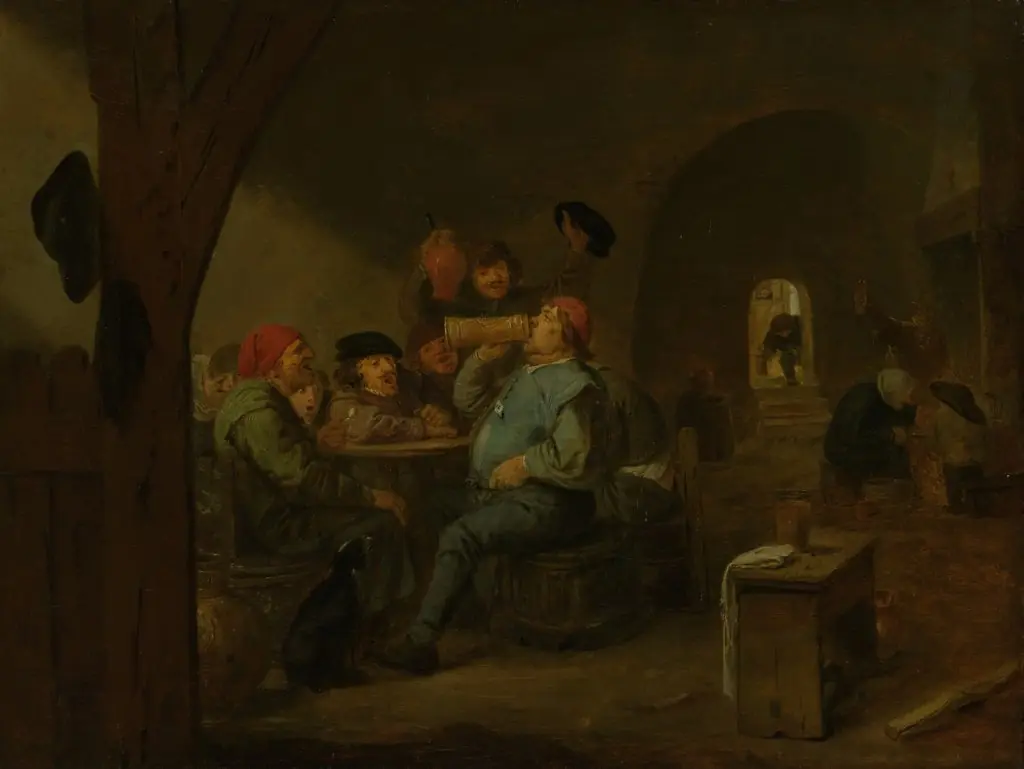
Peasants Carousing in a Tavern is an oil painting by the Dutch Golden Age artist Adriaen Brouwer. It dates from 1630 and is held in the collection of the Museum of Fine Arts Boston.
About this work
Subject & Meaning
The work’s symbolism draws from contemporary moralizing traditions, using rustic disorder to comment on human vice and the fleeting nature of pleasure.
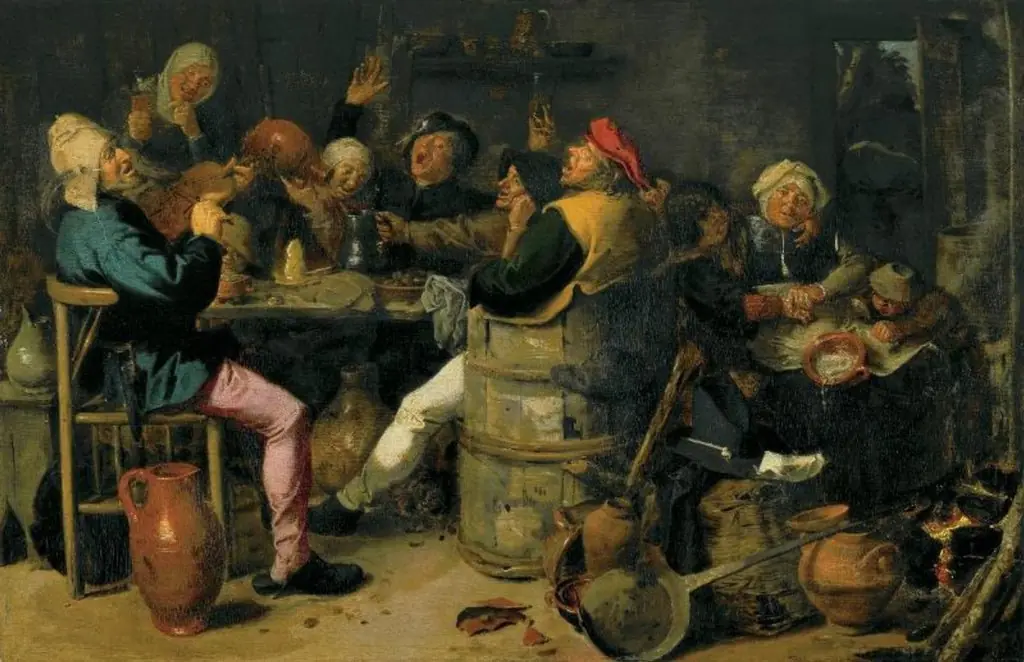
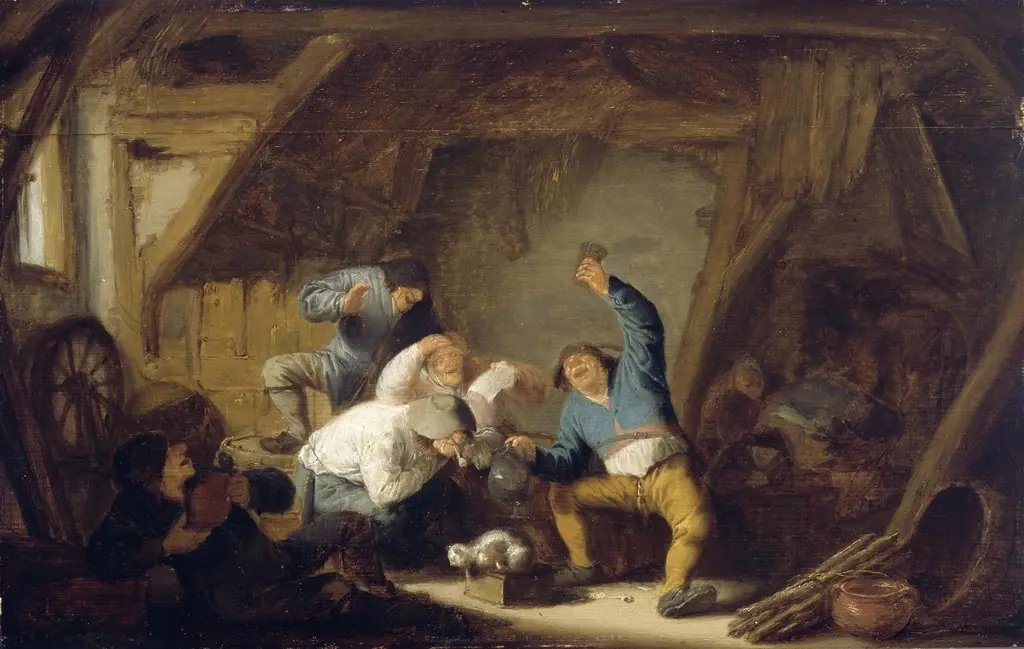
The scene portrays a lively tavern interior filled with peasants and travelers engaged in merrymaking, reflecting the everyday revelry captured in genre painting. Brouwer’s composition emphasizes convivial excess, with figures drinking, smoking, and gesturing amid a cluttered space that underscores themes of folly and transience. The work’s symbolism draws from contemporary moralizing traditions, using rustic disorder to comment on human vice and the fleeting nature of pleasure.
The tavern setting, with its dim lighting and scattered belongings, invites viewers to contemplate the tension between communal joy and societal critique, a hallmark of Dutch Golden Age genre scenes. This interpretation aligns with scholarly analyses of Brouwer’s role in advancing realistic depictions of peasant life, where intimate gatherings serve as allegories for broader human conditions.
The painting’s provenance, held by the Museum of Fine Arts Boston and previously associated with Duits Gallery Ltd., reinforces its significance within institutional collections that preserve such nuanced narratives of 17th-century social commentary.
History & Provenance
The painting was created in 1630 by Adriaen Brouwer as an oil on panel genre scene depicting a tavern interior with figures engaged in revelry. It entered the collection of Duits Gallery Ltd. before being acquired by the Museum of Fine Arts Boston, where it remains on public view. The work measures 49.2 cm in width and 33.3 cm in height, reflecting its original dimensions as recorded in the museum’s cataloging data.
Peasants Carousing in a Tavern is held by the Museum of Fine Arts Boston, which lists the painting in its collection. According to Wikidata records, the work is associated with both the Museum of Fine Arts Boston and Duits Gallery Ltd. as owners, suggesting the gallery may have been involved in its provenance prior to or alongside the museum's holdings. The painting, executed in oil on panel in 1630, measures 33.3 by 49.2 centimeters.
No exhibition history is documented in the available sources.
Overview
Adriaen Brouwer’s oil painting Peasants Carousing in a Tavern (1630) captures a bustling interior where a group of men share drink and conversation. The central figure, a man in a white shirt and green trousers, raises a bottle and cup while surrounded by companions in vivid attire. The composition is filled with everyday objects, jugs, pots, and scattered crockery, contributing to a sense of immediacy and domesticity.
Technique & Style
Brouwer employs a warm palette of reds, ochres, and earth tones, rendering textures in clothing, wood, and ceramic with meticulous brushwork. The chiaroscuro lighting highlights the faces and the central bottle, while the loose handling of background details creates depth. His emphasis on facial expression anticipates the later development of tronies, studies of expressive heads.
Context
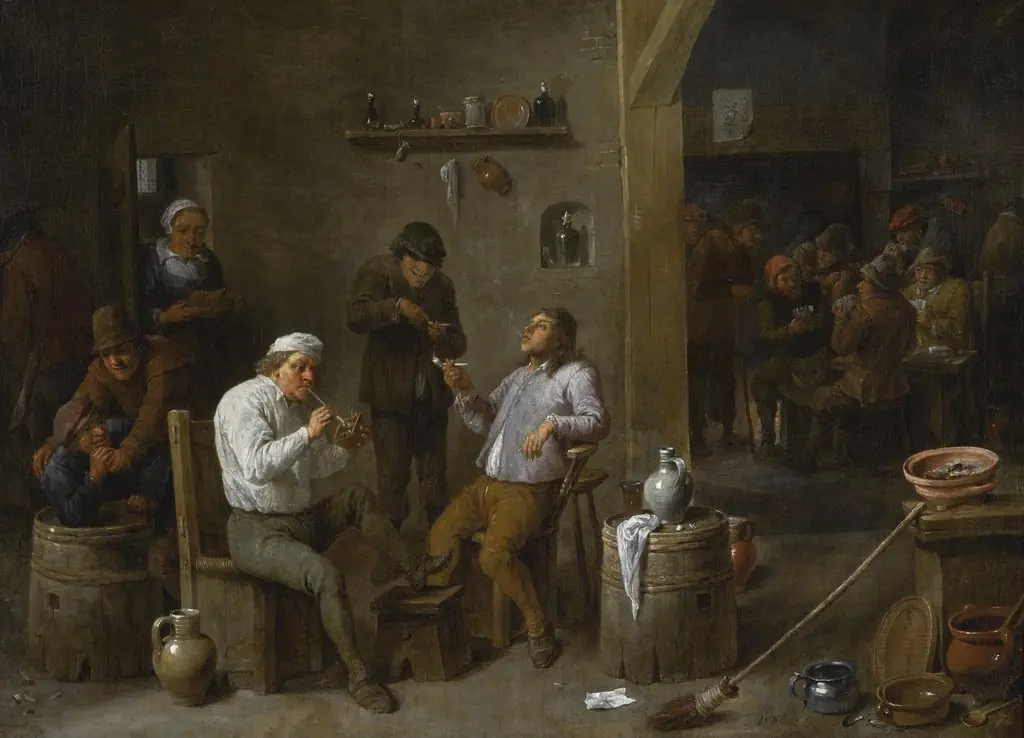
Brouwer’s tavern scenes belong to a broader Flemish interest in genre painting that portrayed everyday life with moral undertones. Contemporary artists such as David Teniers the Younger and Jan Steen explored similar subjects, positioning Peasants Carousing in a Tavern within a network of works that documented social customs of the period.
Own this work as a print
Artist & collection
Artist
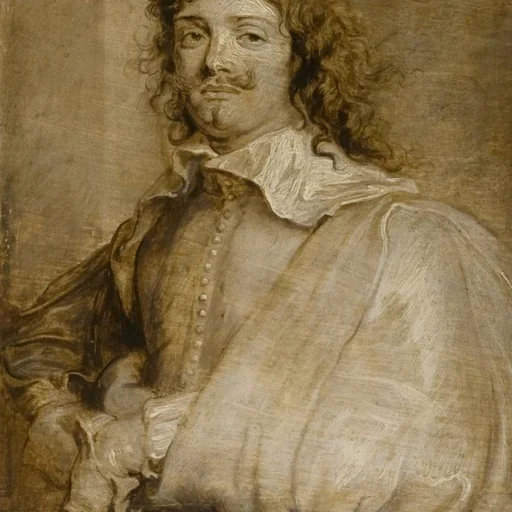
Adriaen Brouwer (c. 1605 – January 1638) was a Flemish painter active in Flanders and the Dutch Republic in the first half of the 17th century. Brouwer was an important innovator of genre painting through his vivid…