Artwork
A public house
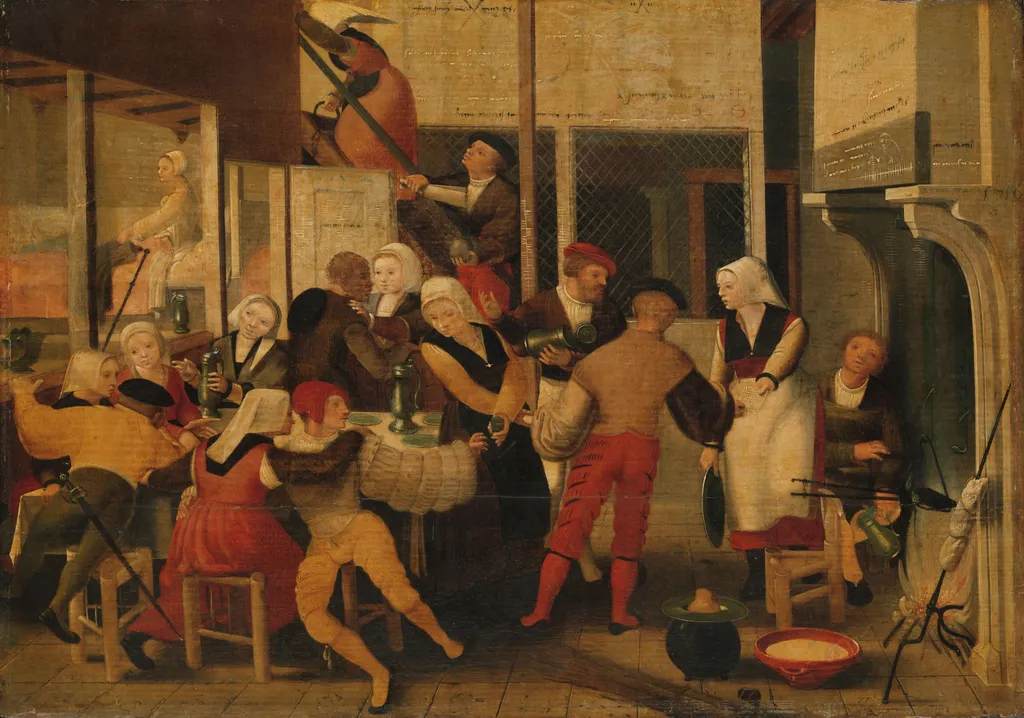
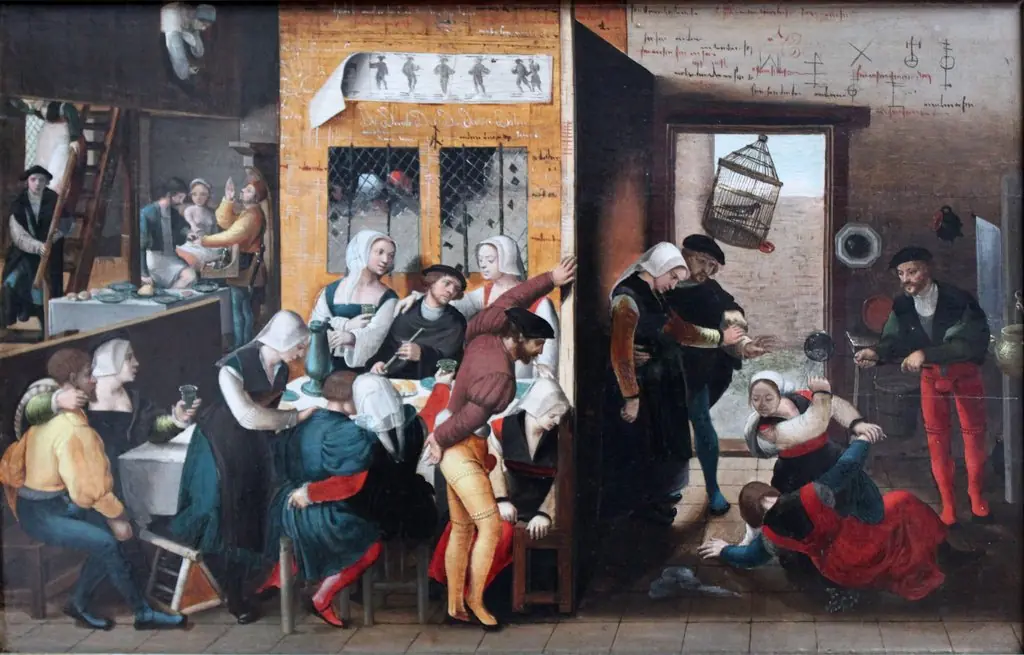
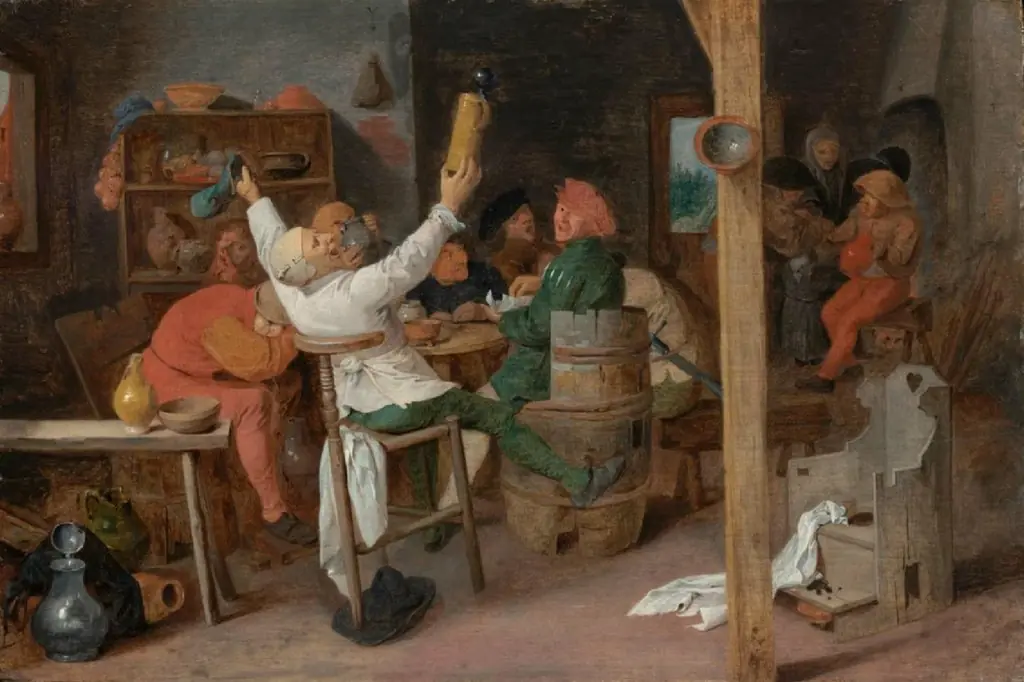
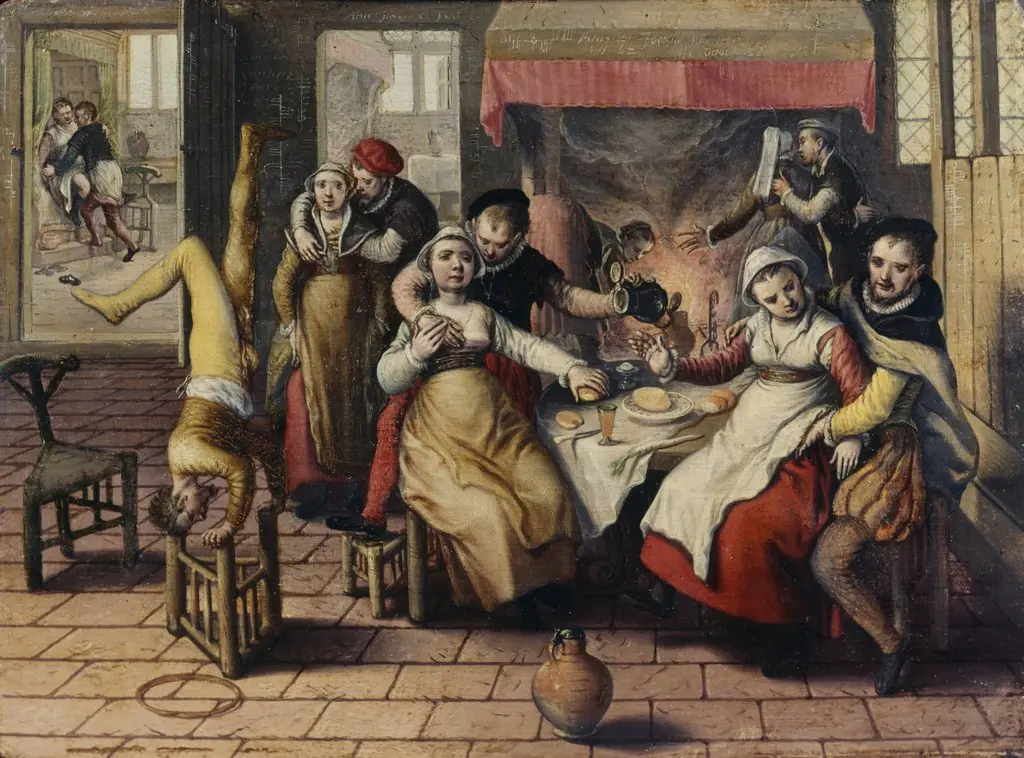
A public house is an oil painting by the Northern Renaissance artist Brunswick Monogrammist. It dates from 1540 and is held in the collection of the Rijksmuseum.
About this work
Technique & Style
The painting’s condition is stable, with the original panel support preserved and minimal intervention noted in conservation records.
A public house (1540) is an oil painting executed on panel. The work measures 32.2 cm in height by 46.4 cm in width and was created by the Brunswick Monogrammist. It depicts a genre scene of a tavern interior, rendered in oil paint with the characteristic handling and stylistic economy associated with early Netherlandish genre painting.
The painting’s condition is stable, with the original panel support preserved and minimal intervention noted in conservation records. Its formal qualities include a restrained palette, precise detail in architectural elements, and a composition that balances interior spatial depth with the immediacy of everyday activity.
History & Provenance
A public house was painted by the Brunswick Monogrammist in 1540, executed in oil paint on panel. The work is held in the collection of the Rijksmuseum, where it remains located. No further details regarding commission, intermediate ownership, or acquisition history are documented in the available sources.
The painting measures 32.2 cm in height by 46.4 cm in width and is classified as a genre scene depicting a public house. The sources do not provide information on the circumstances of its creation, any patron involvement, or the chain of custody prior to its entry into the Rijksmuseum collection.
Legacy
The painting's genre scene format established a model for domestic interiors in Dutch Golden Age art, influencing later painters who adopted its meticulous domestic detail and muted palette. Its inclusion in the Rijksmuseum collection cemented its status as a representative example of early Dutch genre painting, frequently cited in scholarly discussions of 16th-century visual culture. The work's technical precision in rendering interior spaces informed compositional approaches in subsequent still life and genre works across Northern Europe.
Overview
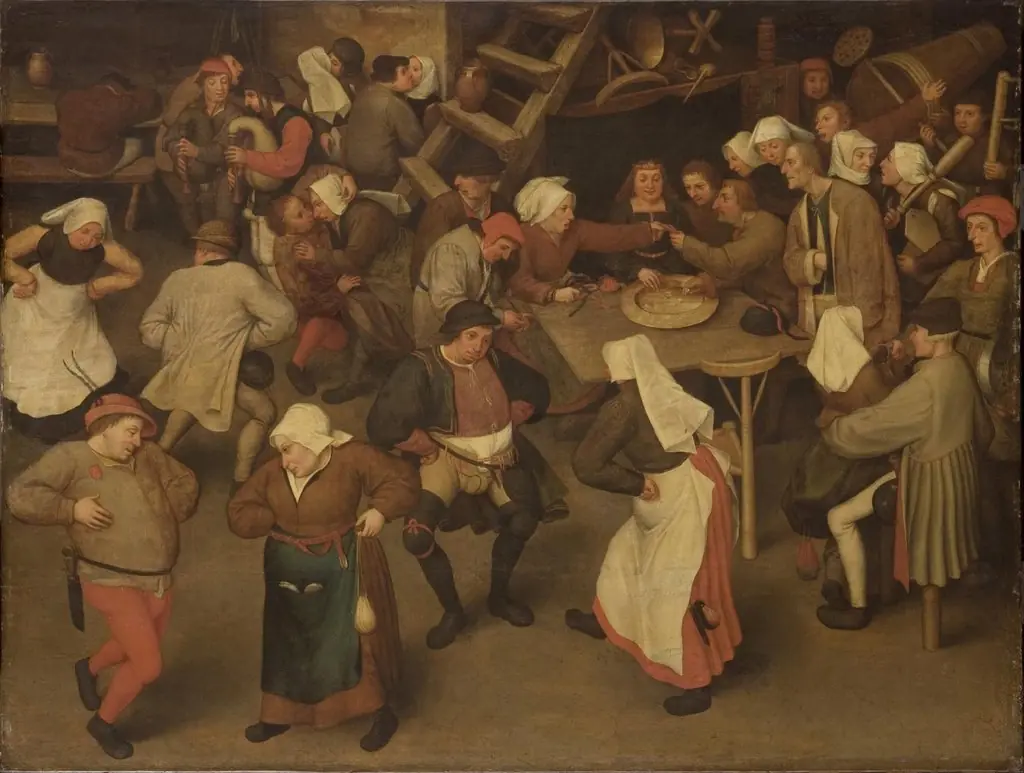
Created around 1540, A Public House is an oil on panel work attributed to the anonymous Netherlandish painter known as the Brunswick Monogrammist. The composition captures a bustling tavern interior, populated by drinkers, musicians, and assorted figures engaged in convivial activity. The painting is part of the Rijksmuseum’s collection and exemplifies the genre scenes that marked the Northern Renaissance.
Subject & Meaning
The scene presents a lively public house where patrons converse, eat, and enjoy music. Central to the action is a partially unclothed server balancing a tray of drinks, a detail that underscores the informal, sometimes raucous atmosphere of such establishments. The varied gestures and expressions suggest a snapshot of everyday social interaction in a 16th‑century Dutch town.
Context
During the mid‑16th century, Dutch painters increasingly turned to scenes of daily life, moving beyond strictly devotional subjects. This painting aligns with that trend, offering insight into contemporary social spaces and the cultural role of public houses as hubs of interaction, entertainment, and commerce.
Own this work as a print
Artist & collection
Artist
The Brunswick Monogrammist or Master of the Brunswick Monogram was an anonymous Netherlandish Renaissance painter, active in the mid-to-late 16th century.