Artwork
The Surrender of Brea
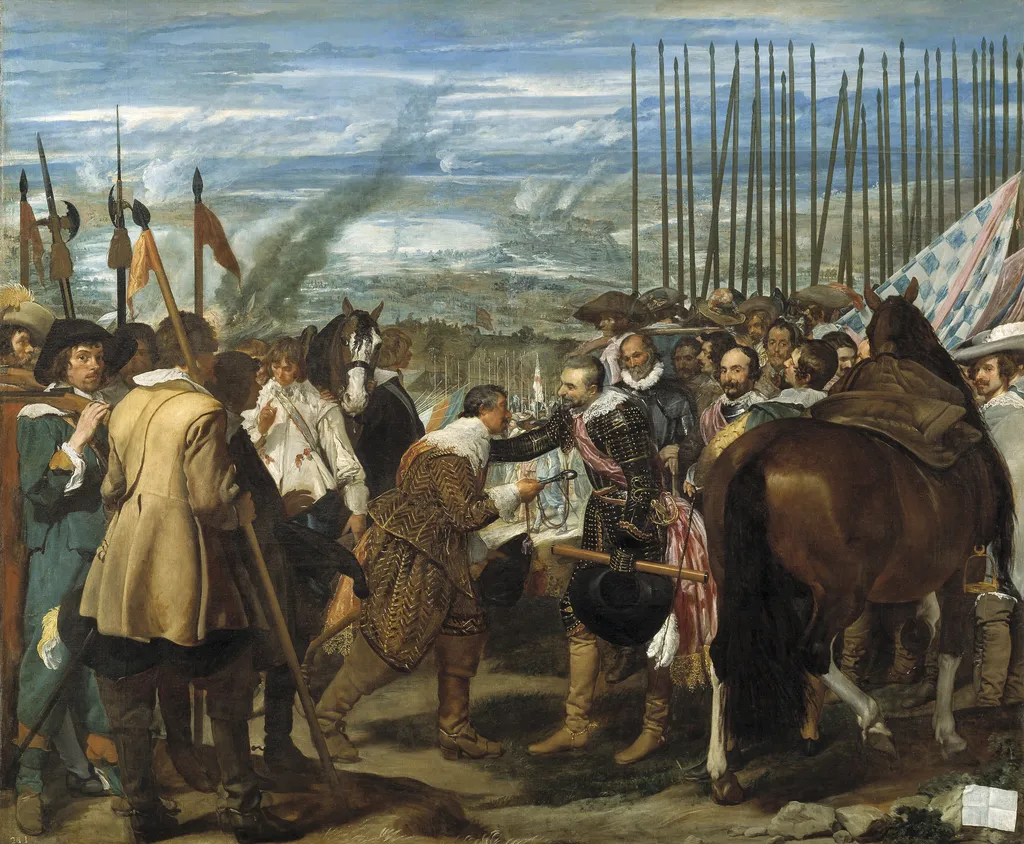
The Surrender of Brea is an oil painting by the Baroque artist Diego Velázquez. It dates from 1634 and is held in the collection of the Museo del Prado.
About this work
Subject & Meaning
This arrangement, often called Las Lanzas, symbolizes the strength of the Spanish tercios while highlighting the discipline of Spinola, who forbade plundering.
The work depicts the 1625 surrender of Breda during the Eighty Years' War, specifically the moment Dutch commander Justinus van Nassau hands the city keys to Spanish general Ambrogio Spinola. Iconographically, the painting emphasizes political magnanimity rather than triumphalism; Spinola prevents Nassau from kneeling by placing a hand on his shoulder, a gesture derived from classical depictions of imperial clemency. The composition is divided between the defeated Dutch, whose weapons lie discarded, and the victorious Spanish, whose upright lances form a dense wall in the background.
This arrangement, often called Las Lanzas, symbolizes the strength of the Spanish tercios while highlighting the discipline of Spinola, who forbade plundering. The scene presents an idealized vision of chivalrous conduct and military honor, transforming a historical victory into a statement of Spanish nobility and benevolent authority.
Technique & Style
Diego Velázquez executed The Surrender of Breda in oil on canvas between 1634 and 1635. The large-scale support measures 307 by 367 centimeters. A 1989 technical analysis conducted at the Museo del Prado revealed that Velázquez employed pigments common to his broader oeuvre, specifically lead white with calcite, azurite mixed with charcoal black, ochres, and vermilion.
Stylistically, the work exemplifies the Spanish Baroque. Its relatively light tonality and bright colors reflect the influence of Venetian painting, which the artist studied during his travels in Italy, favoring calm browns and dark foreground shadows over violent reds or bright blues. The composition is divided into two halves, with the surrender in the foreground and a smoky sky in the background.
Upright lances filling the right side provide structural stability and an impression of calm, while Velázquez's aerial perspective enhances the spatial depth and realism of the scene.
History & Provenance
The Surrender of Breda was commissioned by Philip IV of Spain for the Hall of Realms (Salón de Reinos) of the Buen Retiro palace in Madrid, whose decoration was directed by the minister Gaspar de Guzmán, Count-Duke of Olivares. Velázquez painted the canvas during 1634 and 1635, partly inspired by his 1629 journey to Italy and by the Genoese-born Spanish general Ambrogio Spinola, who had captured Breda in 1625. The work was displayed in the Hall of Realms as one of twelve battle paintings celebrating Spanish military victories.
It has been housed at the Museo del Prado in Madrid since 1819, having been among the properties formerly owned by the Spanish crown. The canvas measures 307 by 367 cm and is executed in oil on canvas.
Context
Commissioned by Philip IV for the Hall of Realms at the Buen Retiro Palace, The Surrender of Breda served as the centerpiece of a series glorifying Spanish military victories during a period of economic decline. Art historians regard the work as one of Velázquez's finest achievements and a definitive example of Spanish Baroque, with Jan Morris describing it as "one of the most Spanish of all pictures." The painting distinguishes itself from traditional battle scenes by emphasizing chivalry over humiliation; Spinola prevents the defeated Nassau from kneeling, a gesture of magnanimity that the poet Calderón de la Barca also celebrated.
Scholars note the composition's break from hieratic conventions, treating anonymous soldiers with individual realism. The vertical lances dominating the upper right have been analyzed by José Ortega y Gasset as the structural "backbone" that imparts calm to the scene. Art historians also suggest Velázquez drew inspiration for this political generosity from Roman reliefs observed during his travels in Italy.
Legacy
The Surrender of Breda has come to symbolize the diplomatic dignity of victory and has shaped the visual language of military surrender in Western art. Contemporary critics, including Jan Morris, have called it "the most Spanish of all pictures," emphasizing its embodiment of Spanish imperial self-presentation. The work's portrayal of courteous surrender informed literary celebrations of Spinola, notably in Calderón de la Barca's play, and contributed to the narrative of magnanimous conquest that persisted through the 17th century.
Today the painting is regarded as a cornerstone of the Spanish Golden Age and a reference point for studies of Baroque political imagery.
Overview
Diego Velázquez, a prominent painter of the Spanish Golden Age, created The Surrender of Breda, also known as Las Lanzas, between 1634 and 1635. This oil painting captures a pivotal moment from the Eighty Years' War: the formal transfer of the city of Breda from Dutch to Spanish control. It is recognized as a significant work within the artist's oeuvre, depicting a historical event with notable figures from both sides of the conflict.
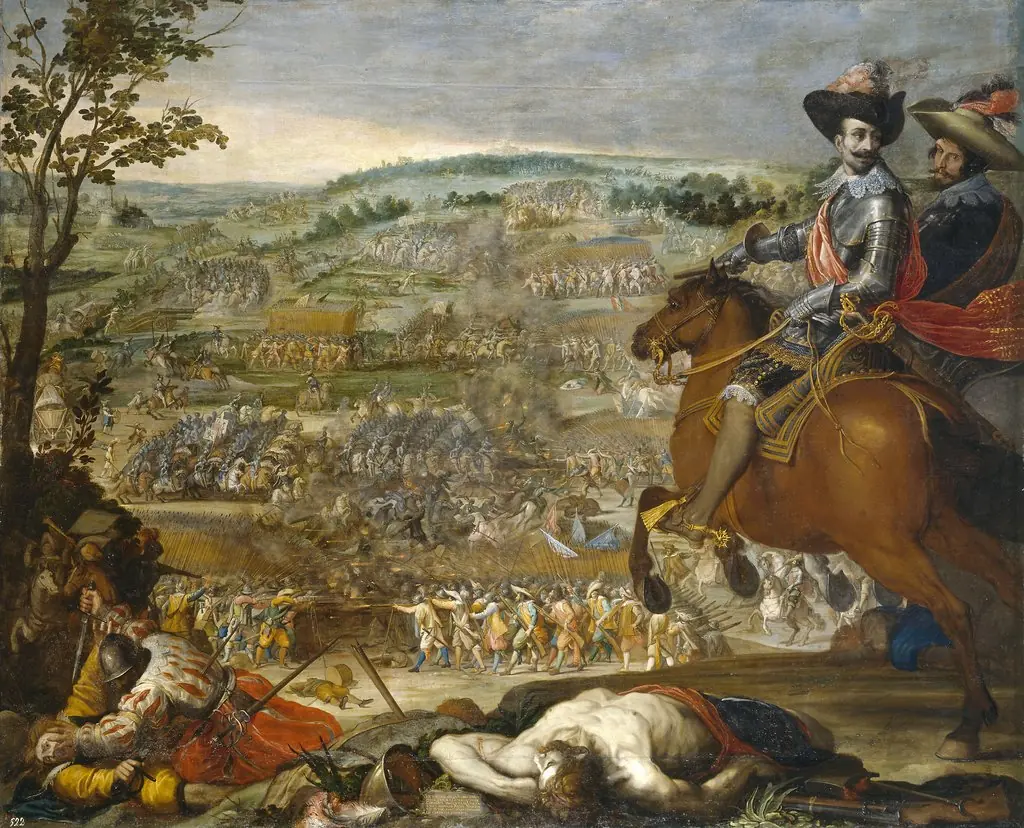
Own this work as a print
Artist & collection
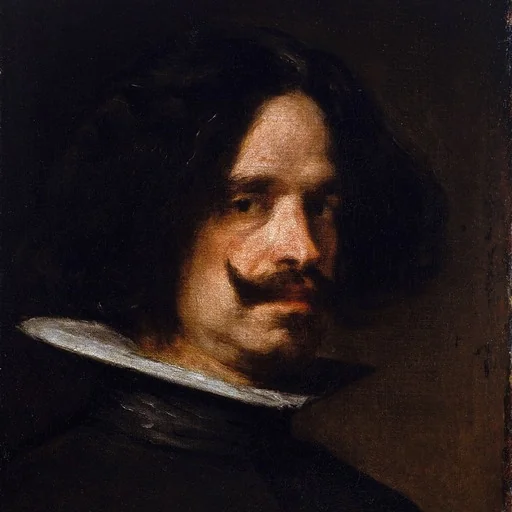
Artist
Diego Rodríguez de Silva y Velázquez was a Spanish Baroque painter, the leading artist in the court of King Philip IV of Spain and Portugal, and of the Spanish Golden Age.

 Cavalry troop
 The Relief of Constance
 Officers and other Civic Guardsmen of the V District in Amsterdam under the command of Captain Cornelis de Graeff and Lieutenant Hendrick Lauwrensz
 The Storming of Rheinfelden
 Frederik II Builds Kronborg Castle at Elsinore
 Militia Company of District XI under the Command of Captain Reynier Reael
 Equestrian Portrait of the Count-Duke of Olivares
 Władysław IV after the Battle of Smoleńsk
 Cavalry engagement