Artwork
The Relief of Constance
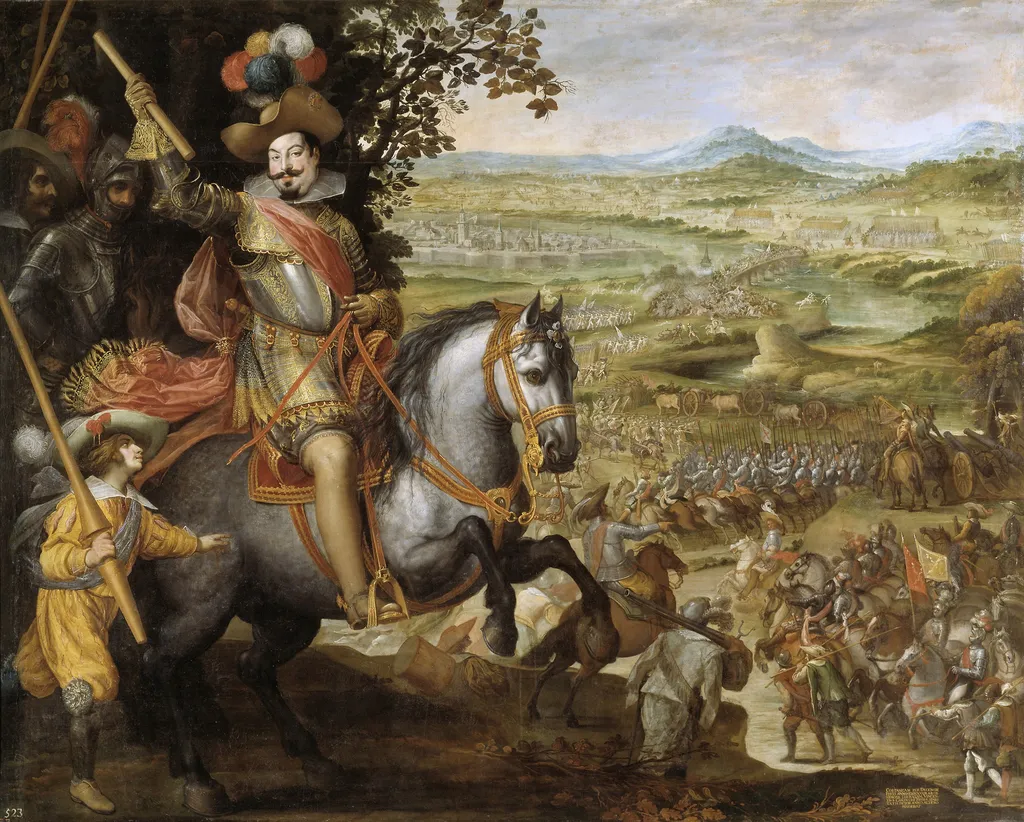
The Relief of Constance is an oil painting by the Baroque artist Vincenzo Carducci. It dates from 1634 and is held in the collection of the Museo del Prado.
About this work
Subject & Meaning
The work depicts the relief of the besieged city of Constance by the Spanish forces led by Gómez IV Suárez de Figueroa y Córdoba, the third Duke of Feria, in 1633. Carducci’s composition elevates the duke as the central heroic figure, shown on horseback in the foreground, commanding attention with armor, a general’s sash, and baton of office, while directing his gaze toward the viewer.
In the background, the city of Constance and Lake Constance frame the siege, while the middle ground presents a meticulously organized military engagement featuring pikemen, musketeers, and artillery units. The inclusion of period-appropriate arms, armor, firearms, spears, and trumpets, serves to underscore the disciplined and strategic nature of the Spanish intervention, reinforcing the political and military narrative of Habsburg power during the Thirty Years’ War.
Technique & Style
Behind him, a pike-bearing page and armored knights occupy mid-ground, while the besieged city of Constance and Lake Constance appear in the background.
Executed in 1634, the work is an oil painting on canvas measuring 297 × 374 cm, currently held in the Museo del Prado, Madrid (cat. P000636).
Carducci’s handling emphasizes a broad, stage-like composition, with the Duke of Feria placed on horseback in the left foreground, dominating the pictorial field. Behind him, a pike-bearing page and armored knights occupy mid-ground, while the besieged city of Constance and Lake Constance appear in the background. The scene is rendered in a restrained Baroque palette, with careful attention to the ordered ranks of pikemen, musketeers, and arquebusiers arrayed around supply wagons and banners.
The artist’s firm, linear drawing underpins the heroic narrative, while the subdued lighting and atmospheric recession lend spatial coherence.
History & Provenance
Vincenzo Carducci executed The Relief of Constance in 1634 as part of a twelve-painting series commissioned for the Salón de Reinos at the Palace of Buen Retiro. Carducci was the only artist entrusted with three canvases for this decorative program, which aimed to celebrate military successes of 1633. The work depicts the Duke of Feria lifting the Swedish siege of Constance and bears a signed cartela identifying the artist, date, and subject.
The painting remained within the Royal Collection, recorded in the palace inventories of 1701 and 1794. Between 1814 and 1818, it was listed among works removed from the Royal Palace before eventually entering the collection of the Museo del Prado. Historical records indicate it was previously owned by Ferdinand VII of Spain.
The Relief of Constance is housed in the Museo del Prado, Madrid. Its official catalogue reference is P000636, and it was previously listed as No. 252 in the 1701 inventory of the Salón de Reinos. The painting originated in the royal decorative scheme of the Salón de Reinos, where it was exhibited at the Palacio del Buen Retiro, and later appeared in the Royal Palace’s display of descolgadas between 1814 and 1818 before entering the museum’s collection.
Context
Vincenzo Carducci’s The Relief of Constance (1634) belongs to the twelve-panel Battle Series commissioned for the Salón de Reinos in Madrid, a program celebrating Spanish military victories under Philip IV. As one of three works assigned to Carducci, the painting underscores his prominence in the king’s decorative scheme and his role in shaping seventeenth-century Spanish Baroque historiography.
The work’s critical reception aligns with its propagandistic function within the broader decorative program of the Buen Retiro palace. Scholars note its alignment with Counter-Reformation aesthetics, emphasizing the heroic portrayal of the Duke of Feria and the disciplined order of the Spanish forces. Carducci’s composition, structured around the duke’s commanding presence, meticulous troop formations, and the besieged city backdrop, reflects the era’s conflation of military triumph with divine favor, a trope recurrent in Spanish battle imagery of the period.
Overview
Vincenzo Carducci, an Italian painter active in Spain, completed The Relief of Constance in 1634. This oil painting exemplifies the early Baroque Italian style, presenting a historical narrative. The work centers on the figure of the Duke of Feria, portrayed amidst a military engagement. It is currently housed within the collection of the Museo del Prado.
Own this work as a print
Artist & collection
Artist
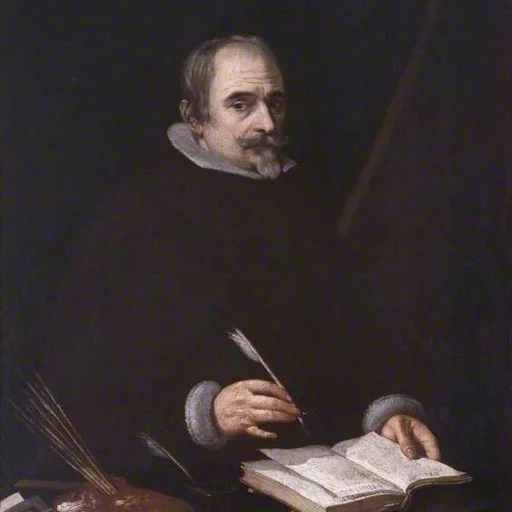
Vincenzio Carduccio (in Spanish, sometimes Vicencio or Vicente Carducho; 1576 or 1578–1638) was an Italian painter who spent his career in Spain.

- The Storming of Rheinfelden
 The Victory of Fleurus
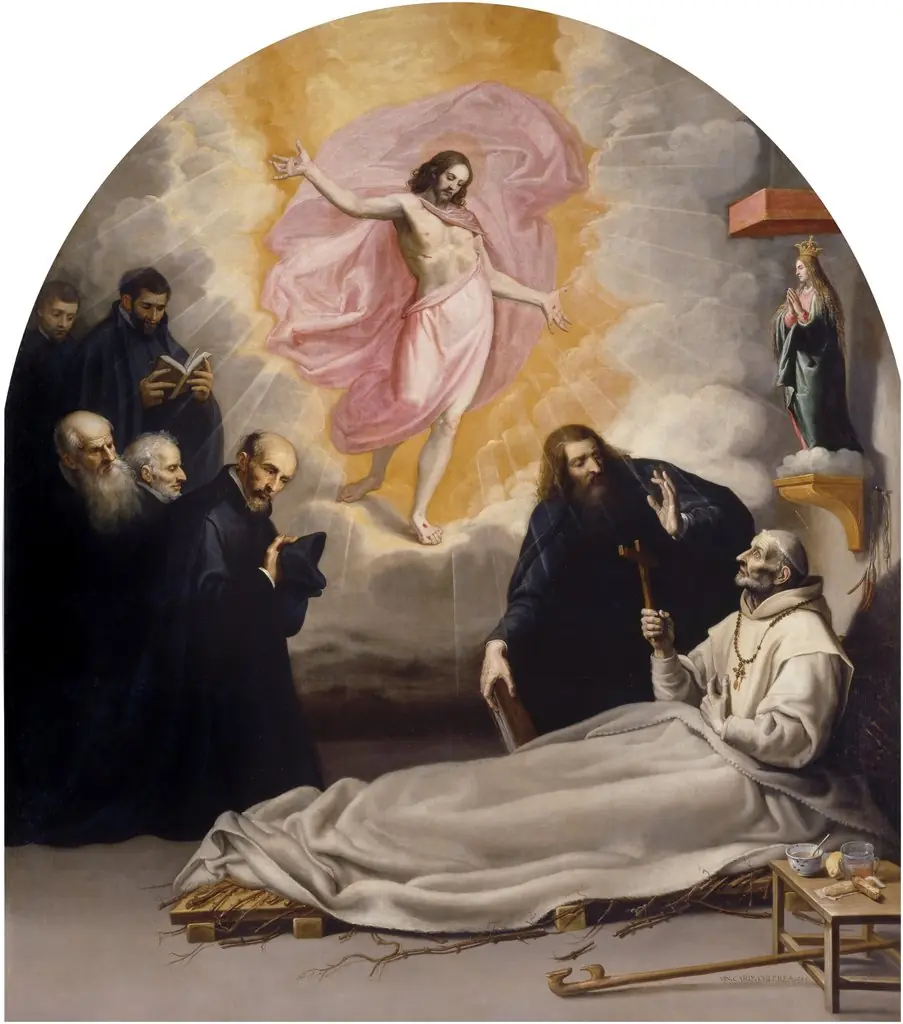 The Death of the Venerable Odón de Novara
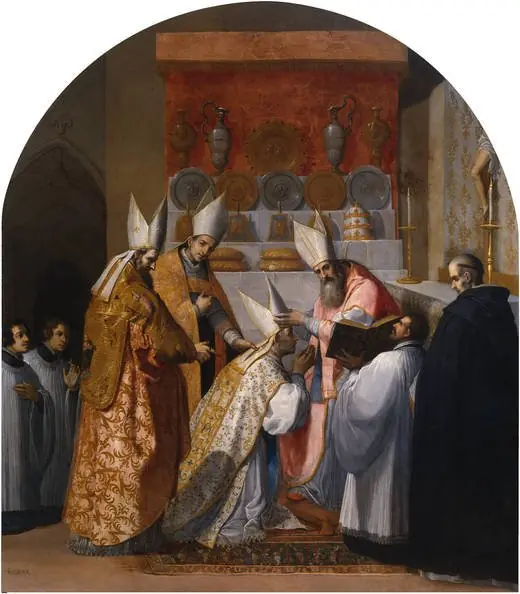 Pope Alexander III Consecrates Anthelm of Chignin as Bishop of Belley
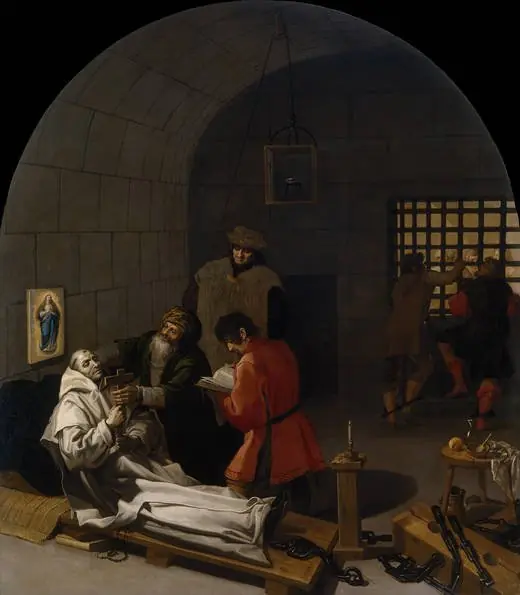 Landuino Dies in Jail
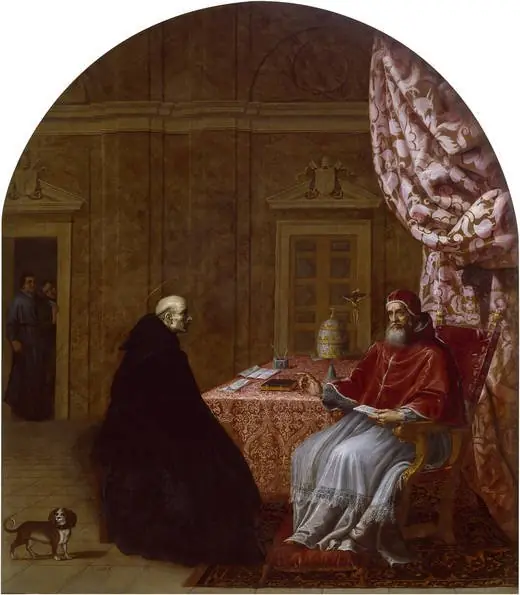 Urban II Deliberates with Saint Bruno
 Musician Angels Appear to Saint Hugo of Lincoln
 The Vision of Dionisio Rickel The Carthusian
 Cavalry troop
 The Surrender of Brea
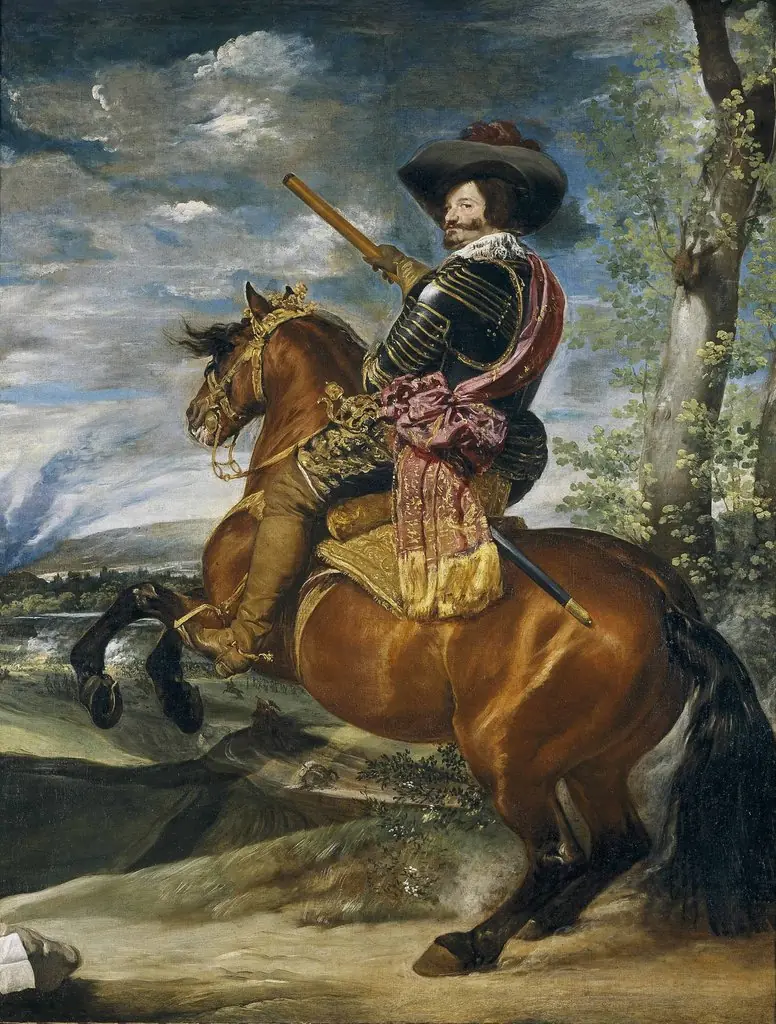 Equestrian Portrait of the Count-Duke of Olivares
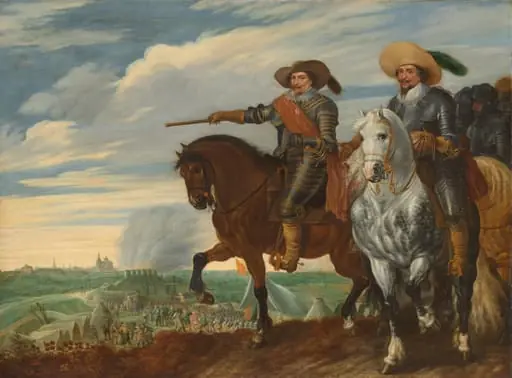 Frederick Henry and Ernst Casimir of Nassau-Dietz at the Siege of ’s Hertogenbosch
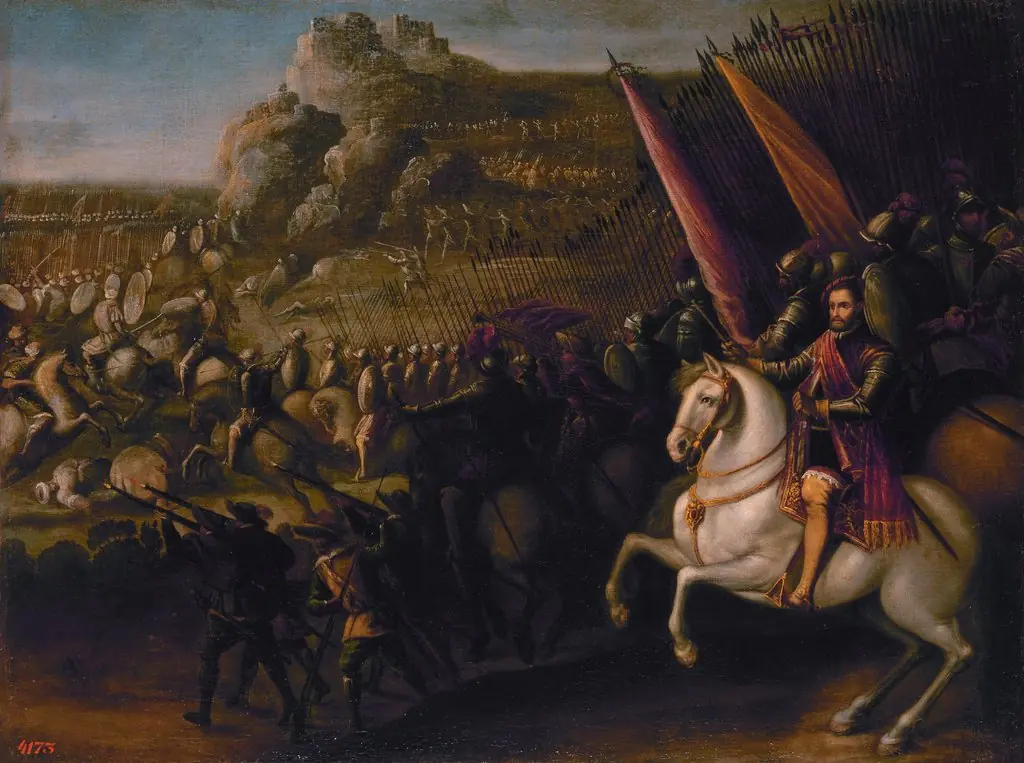 Battle
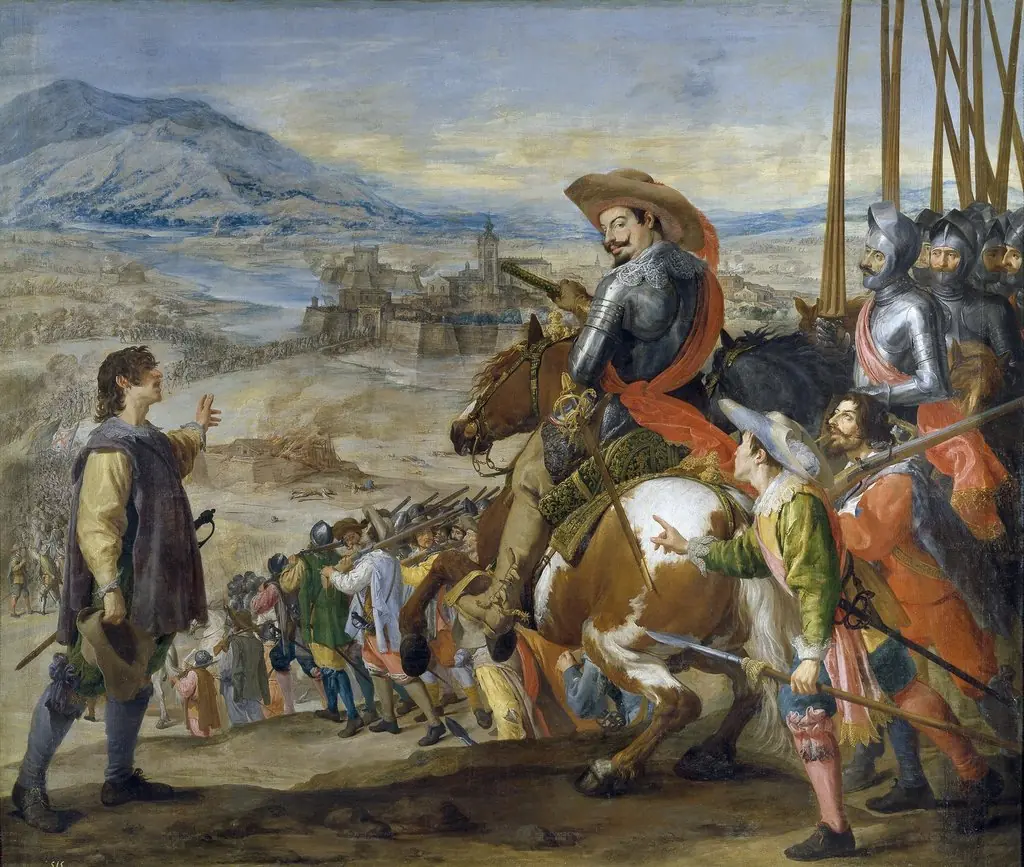 The Liberation of Brisach
 Rendição de uma cidade
 King John III Sobieski meets emperor Leopold at Vienna, replica
 The battle between Bréauté and Leckerbeetje on the heath outside Vught, 5 Februari 1600
 Philip II on Horseback