Artwork
Equestrian Portrait of the Count-Duke of Olivares
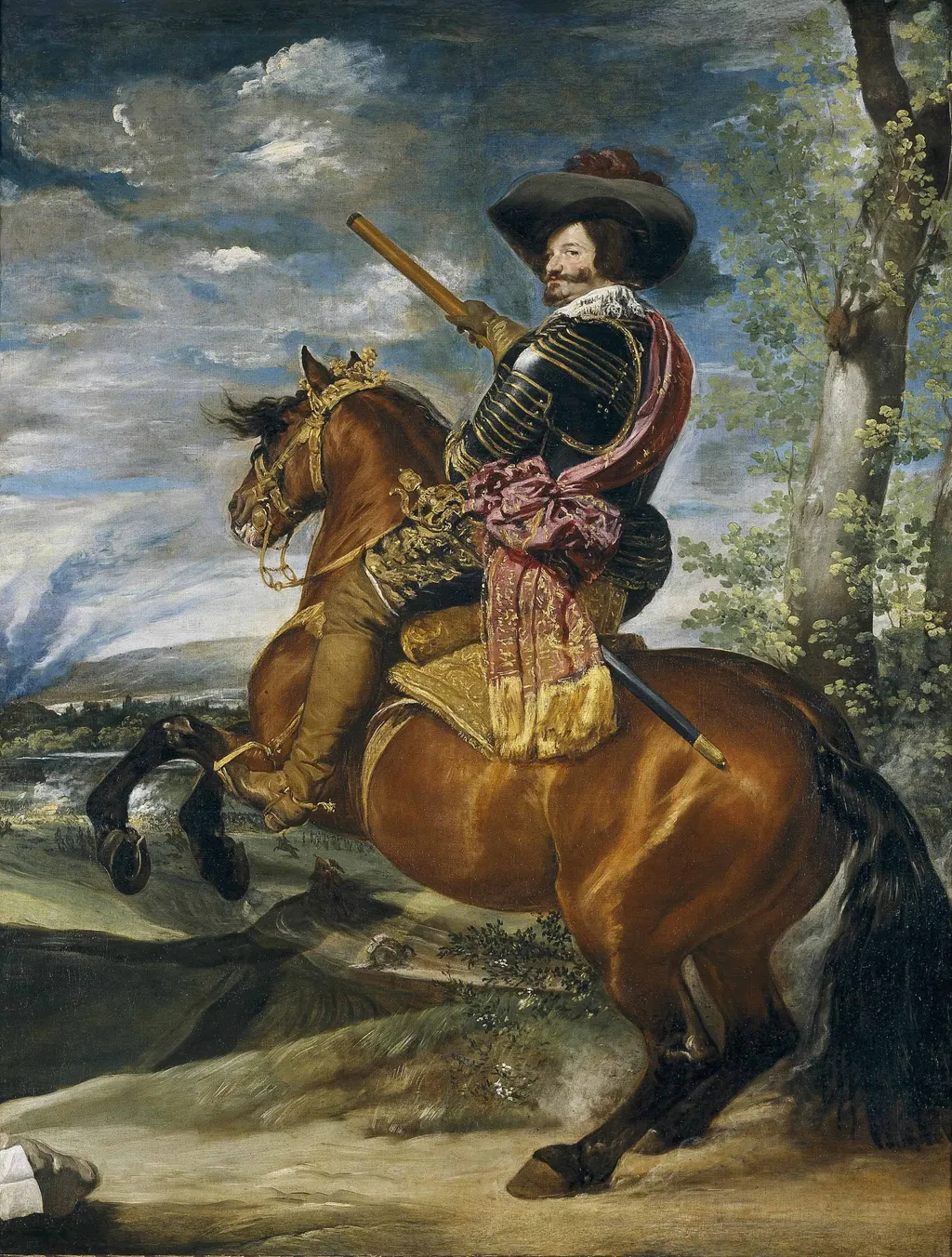
Equestrian Portrait of the Count-Duke of Olivares is an oil painting by the Early Baroque Italian artist Diego Velázquez. It dates from 1636 and is held in the collection of the Museo del Prado.
About this work
Subject & Meaning
The painting depicts Gaspar de Guzmán, Count-Duke of Olivares, the chief minister to Philip IV of Spain, mounted on a rearing horse performing a levade.
The painting depicts Gaspar de Guzmán, Count-Duke of Olivares, the chief minister to Philip IV of Spain, mounted on a rearing horse performing a levade. This equestrian pose was an honor traditionally reserved for monarchs, serving as a visual validation of the immense political power Olivares held as the king's valido. The composition includes symbolic elements such as a marshal's baton in the subject's hand to indicate battlefield command, a wide-brimmed feathered hat, and the band of the State.
Velázquez employed a low viewpoint and turned the subject's torso backward to create a slimmer silhouette, countering Olivares' known massive physique. The dynamic energy of the work, reminiscent of Rubens, along with the distant, schematic battle scene, likely alludes to the military success at Fuenterrabía, a victory attributed to the minister despite his lack of personal involvement. Unlike the artist's usual somber style, this portrait utilizes vigorous colors and lighting to project vitality and authority.
Technique & Style
Executed in oil on canvas, the painting measures 313 by 239 cm and displays a vigorous, pompous style that departs from Velázquez's typically somber portraits. The composition utilizes a low viewpoint to depict the subject's torso turned backward, creating a slender silhouette that contrasts with the figure's known massive build. Dynamic energy is achieved through the horse's raised front legs in a levade and a diagonal arrangement of the landscape, a treatment reminiscent of Rubens.
The background features a schematic landscape with hills fading into green and blue tones to establish sharp aerial perspective, while the distant battle is rendered in small spots of color. This rich chromaticism and specific handling of light impart great vitality to the scene, distinguishing it from royal equestrian series.
History & Provenance
The Equestrian Portrait of the Count-Duke of Olivares is held by the Museo del Prado in Madrid. It originally belonged to the Spanish royal collection, being owned by Ferdinand VII before the museum's foundation. The painting has been part of the Prado's holdings since the museum opened to the public in 1819 and is displayed in a dedicated gallery space.
Its presence in the museum's collection marks a continuous exhibition history from the early 19th century to the present.
Context
Velázquez's Equestrian Portrait of the Count-Duke of Olivares is widely regarded as an exceptional work within the artist's oeuvre for its unusually vigorous and ostentatious handling compared to his more subdued court portraits. Critics note its dynamic composition and rich chromaticism, which animate the scene and align it stylistically with the dynamism found in Rubens's equestrian imagery rather than Velázquez's usual restraint. The portrait's function as a vehicle for political legitimation is central to its reception: the sitter's elevation to a monarch's prerogative, portrayed on horseback with marshal's baton, signals the power wielded by Gaspar de Guzmán as Philip IV's valido.
Scholars emphasize that this commission originated with Olivares himself, distinguishing it from the artist's royal equestrian series for the Hall of Realms and underscoring the political stakes of the image. The painting's subsequent canonization is evident in its inclusion in the Prado's inaugural holdings and its later reproduction by Goya, which further anchors its place in the canon of Spanish equestrian portraiture.
Legacy
The Equestrian Portrait of the Count-Duke of Olivares has exerted a lasting influence on Spanish portraiture and print culture. Francisco de Goya included a copy after Velázquez's composition in his 1778 etching series, Don Gaspar de Guzman, conde d'Olivares, duc de San Lucar, thereby extending the image's visual afterlife into the late eighteenth century and linking Velázquez's Baroque grandeur to later graphic traditions.
Its reception emphasizes its departure from Velázquez's usual sobriety: the work's vigorous design and pompous coloration have been repeatedly noted as exceptional within his oeuvre, reinforcing its status as a paradigm of courtly self-fashioning rather than a typical aristocratic commission.
Overview
Diego Velázquez's "Equestrian Portrait of the Count-Duke of Olivares," an oil on canvas created around 1636, depicts Gaspar de Guzmán, a prominent Spanish statesman. This painting, now a part of the Museo del Prado's collection, was intended to project the authority and power of Philip IV's chief minister. It is notable for its dynamic composition and vibrant palette, which distinguish it from many of Velázquez's more subdued works.
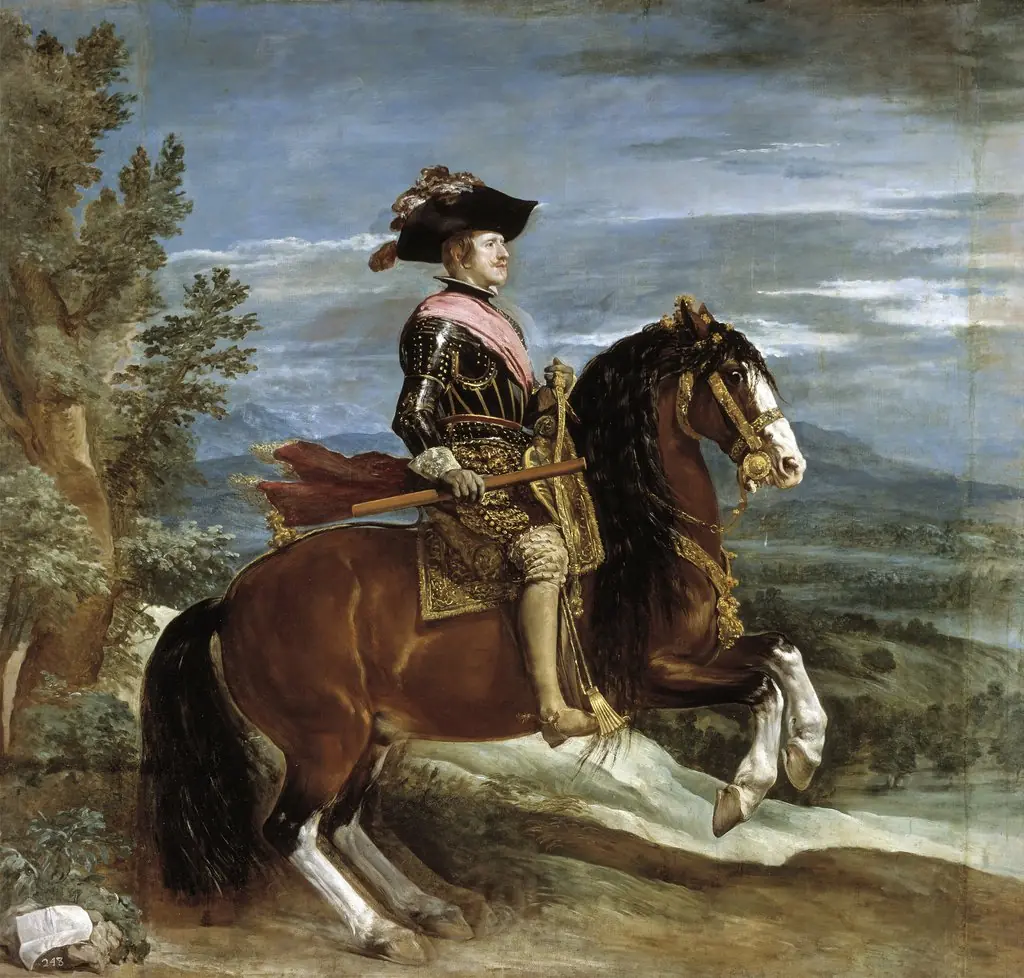
Own this work as a print
Artist & collection
Artist
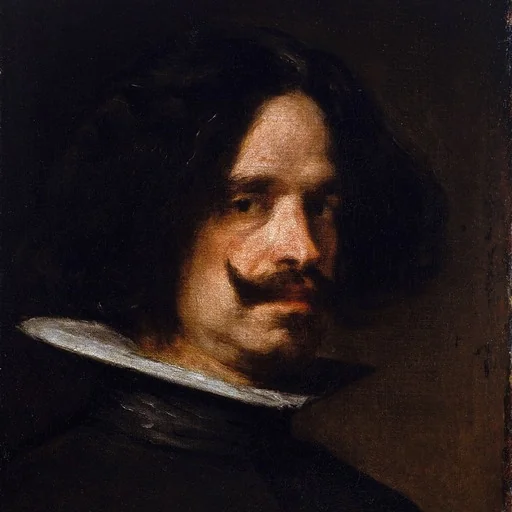
Diego Rodríguez de Silva y Velázquez was a Spanish Baroque painter, the leading artist in the court of King Philip IV of Spain and Portugal, and of the Spanish Golden Age.

- Equestrian Portrait of Philip IV
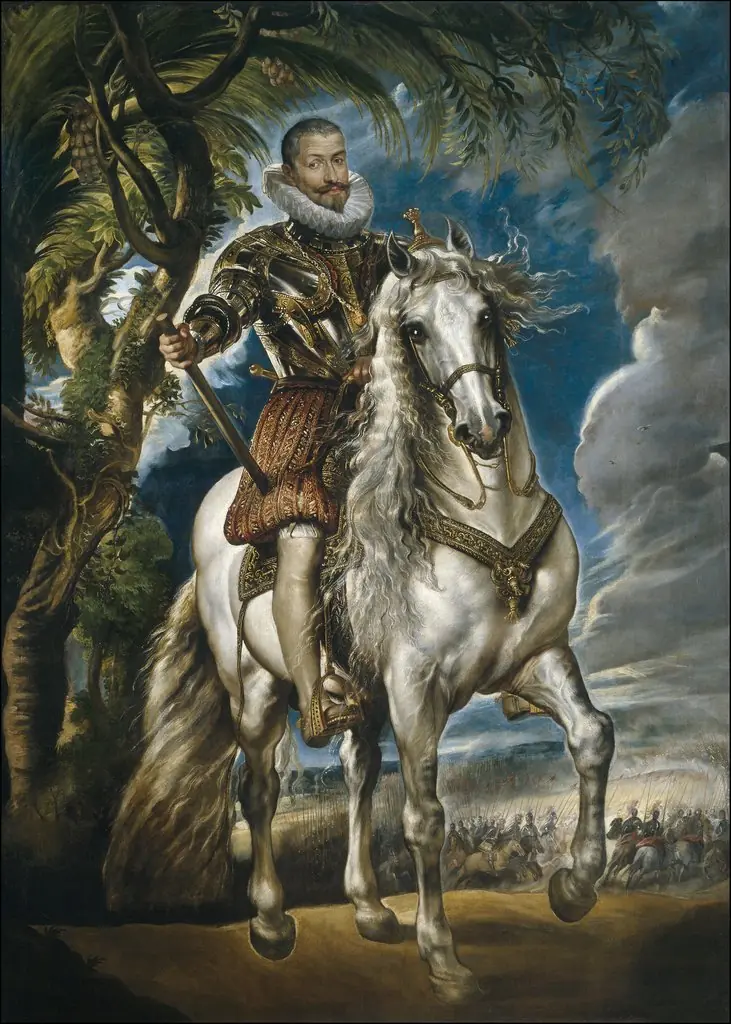 Equestrian Portrait of the Duke of Lerma
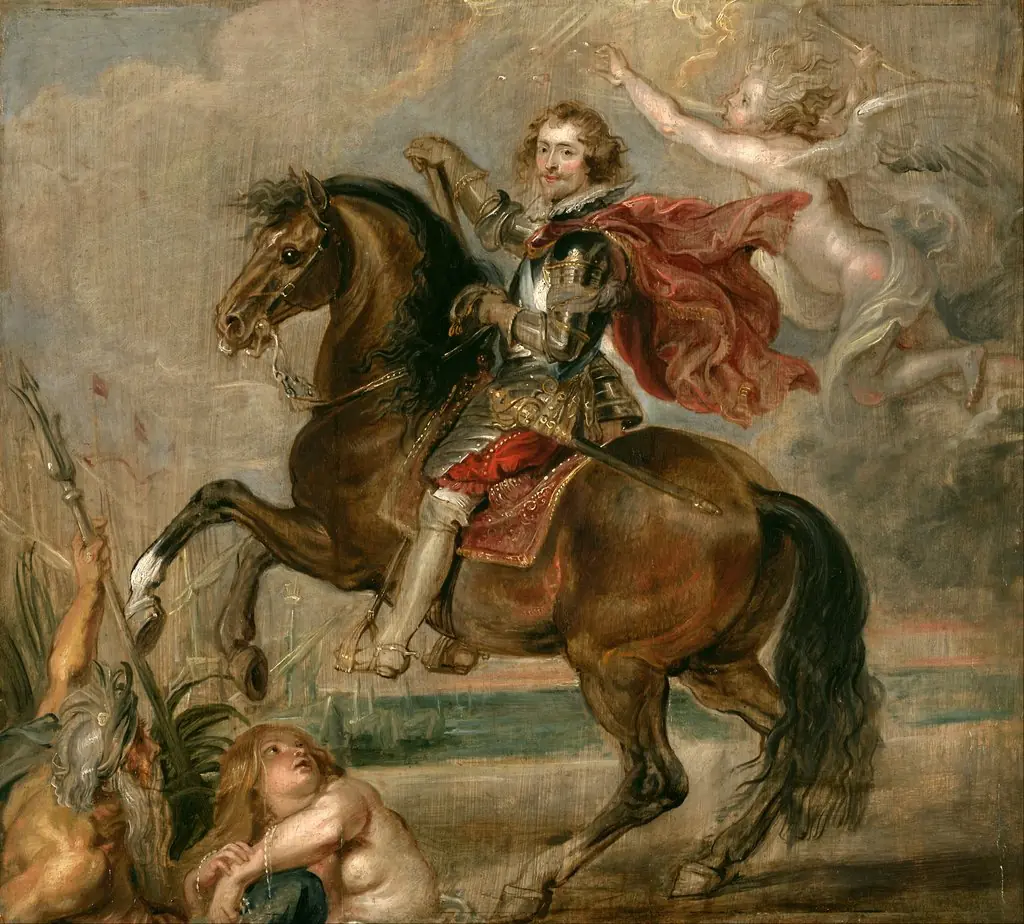 Equestrian Portrait of the Duke of Buckingham
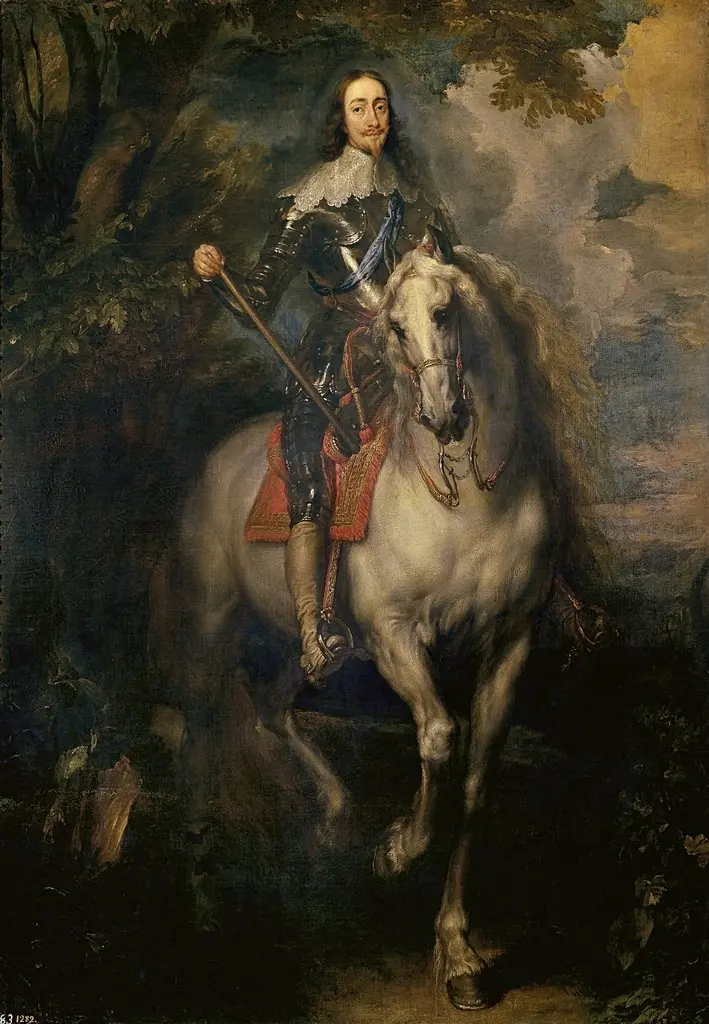 Equestrian portrait of Charles I of England
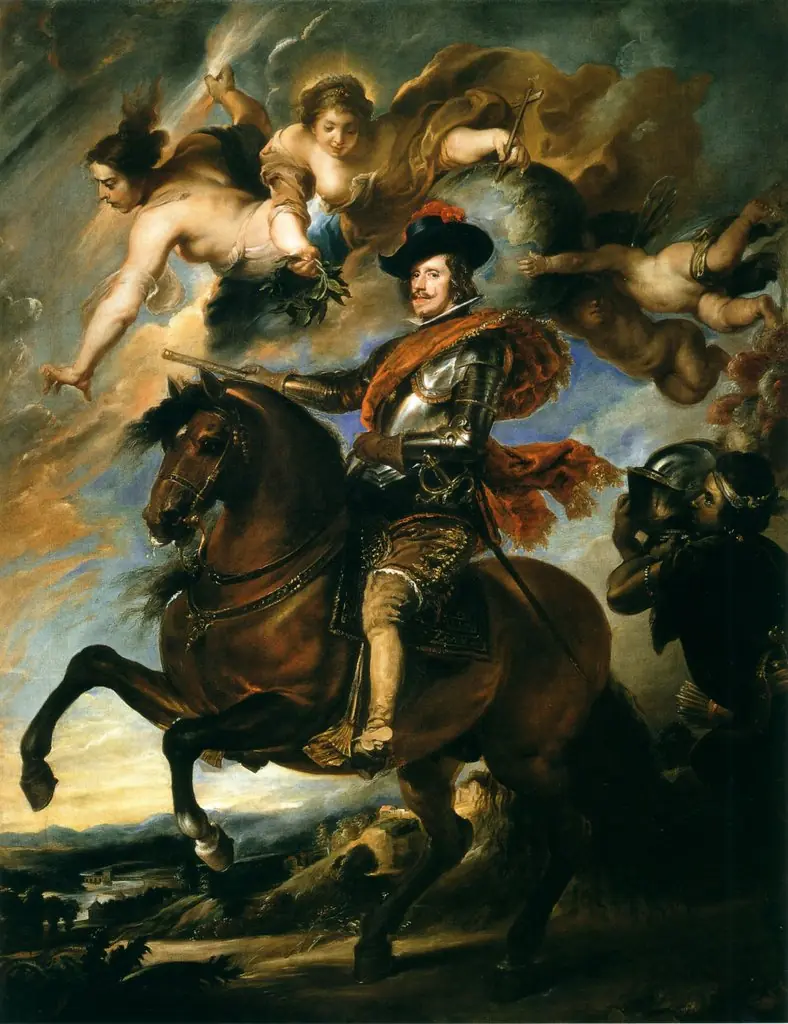 Portrait of Philip IV of Spain on horseback
 Equestrian portrait of Cardinal-Infante Ferdinand of Austria
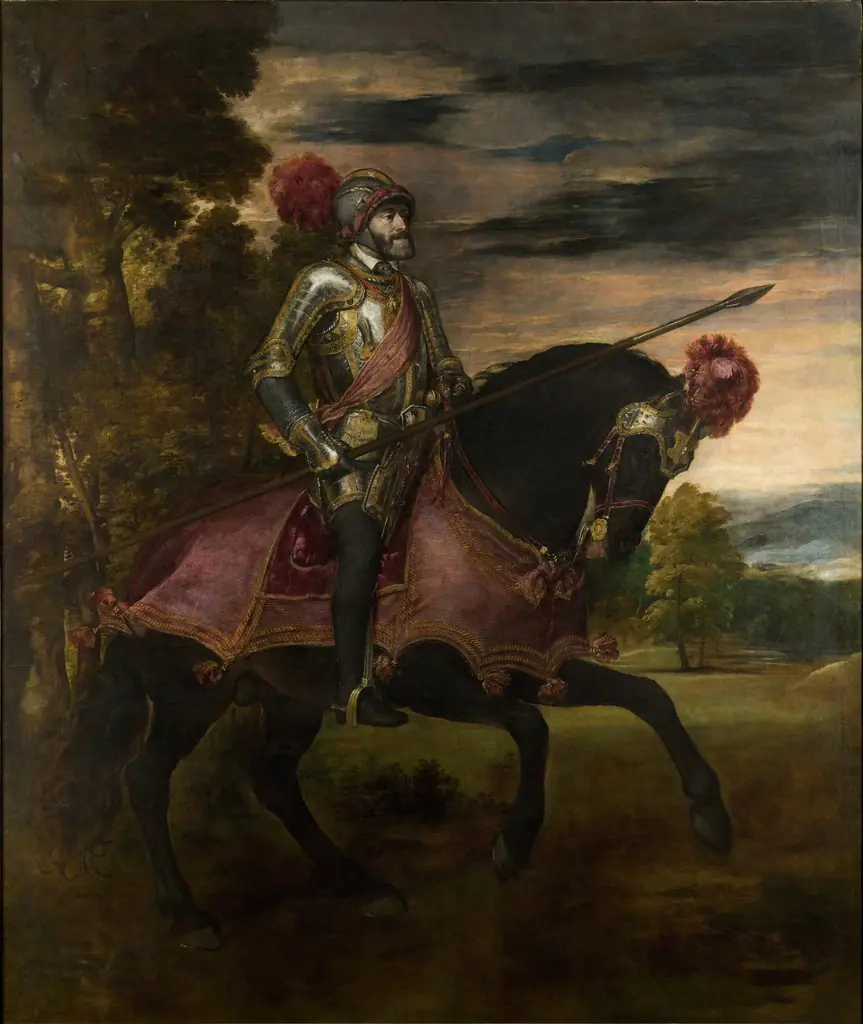 Equestrian Portrait of Charles V
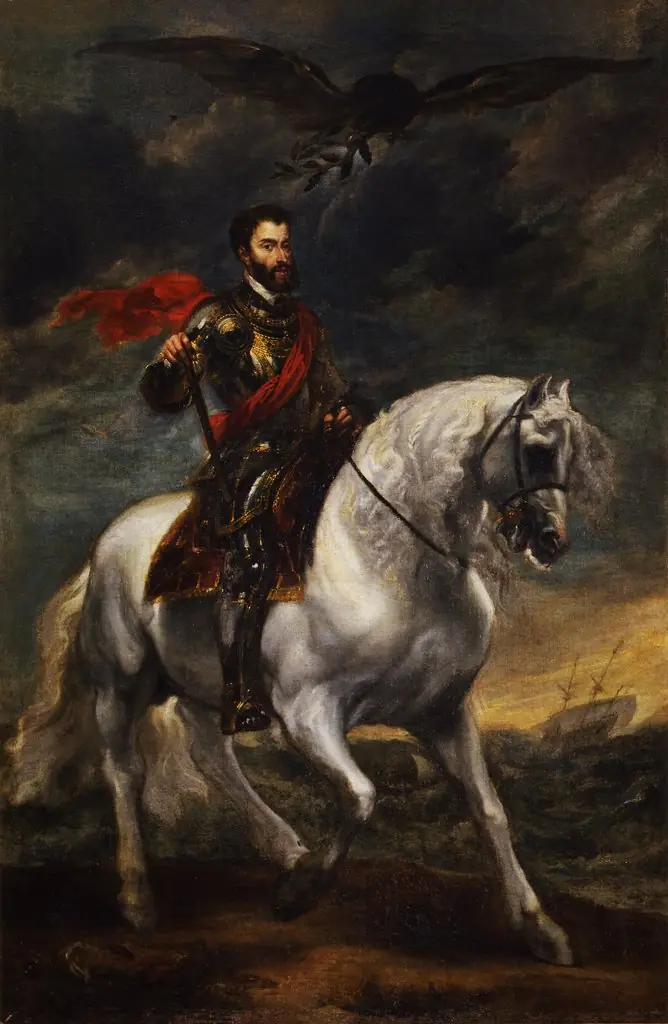 Equestrian portrait of the Emperor Charles V