Artwork
Frederick Henry and Ernst Casimir of Nassau-Dietz at the Siege of ’s Hertogenbosch
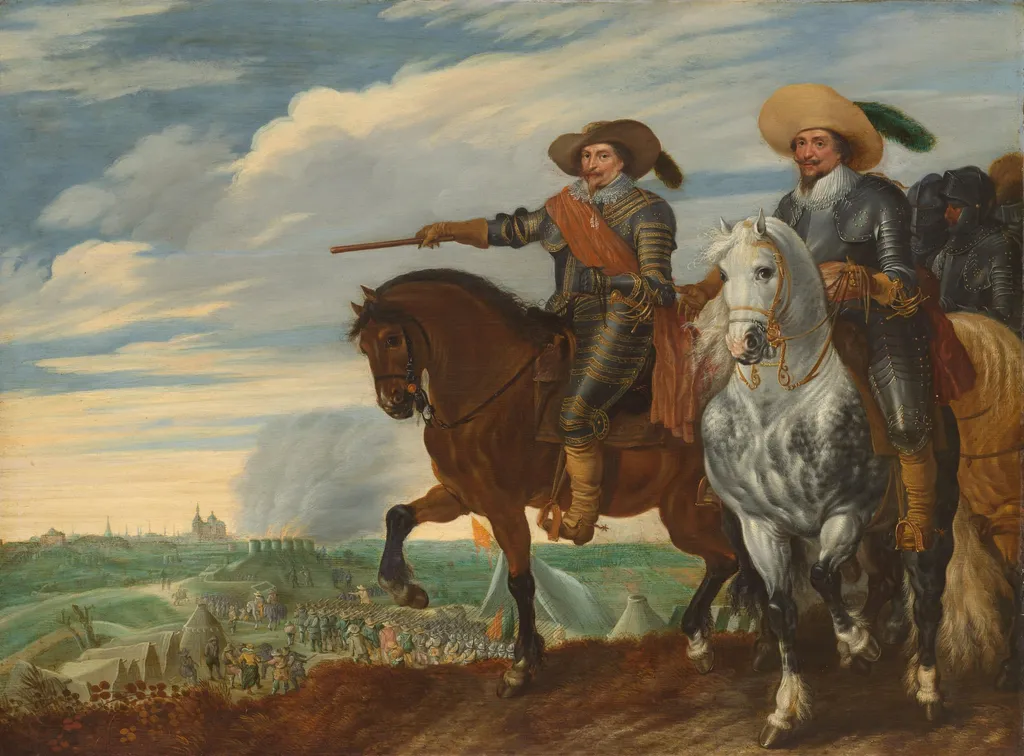
Frederick Henry and Ernst Casimir of Nassau-Dietz at the Siege of ’s Hertogenbosch is an unspecified painting by the Baroque artist Paulus van Hillegaert. It dates from 1629 and is held in the collection of the Rijksmuseum.
About this work
This is Prince Frederick Henry and his cousin after they took the city of ’s-Hertogenbosch from Spanish rule in 1629.
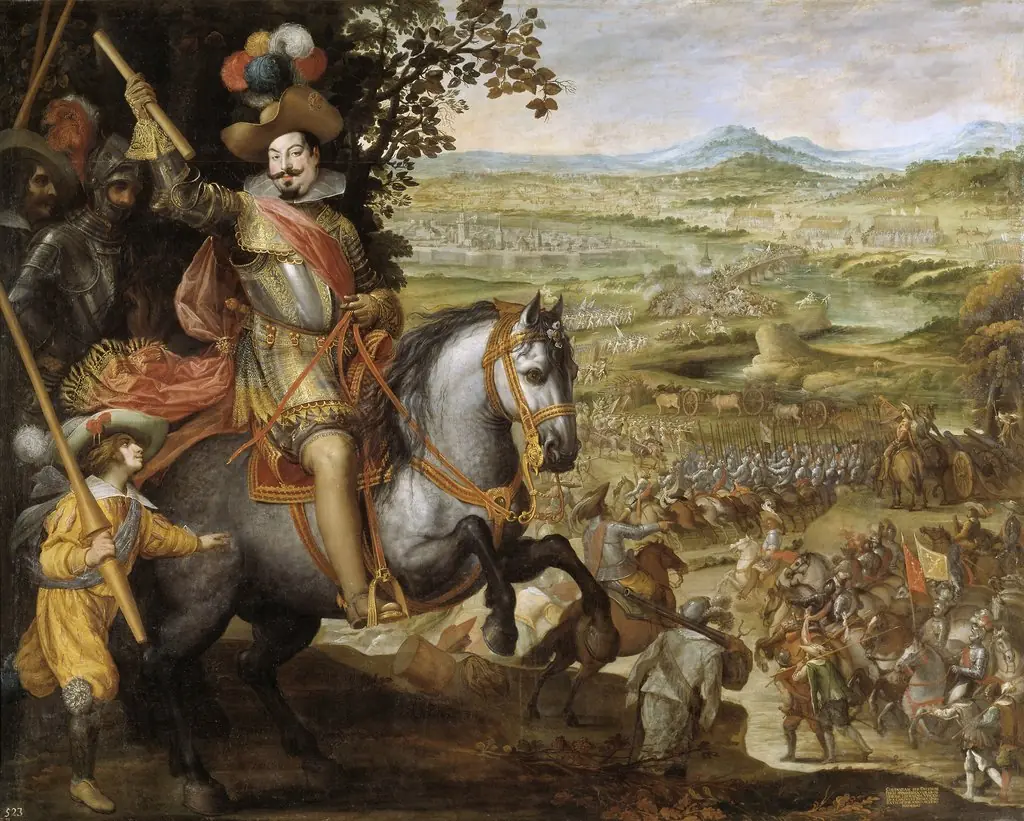
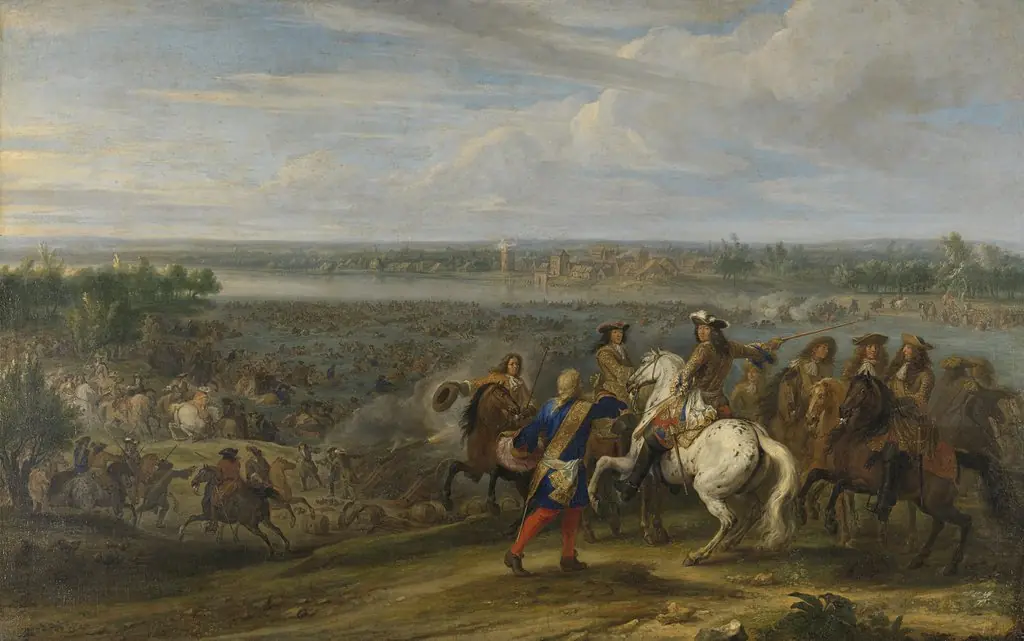
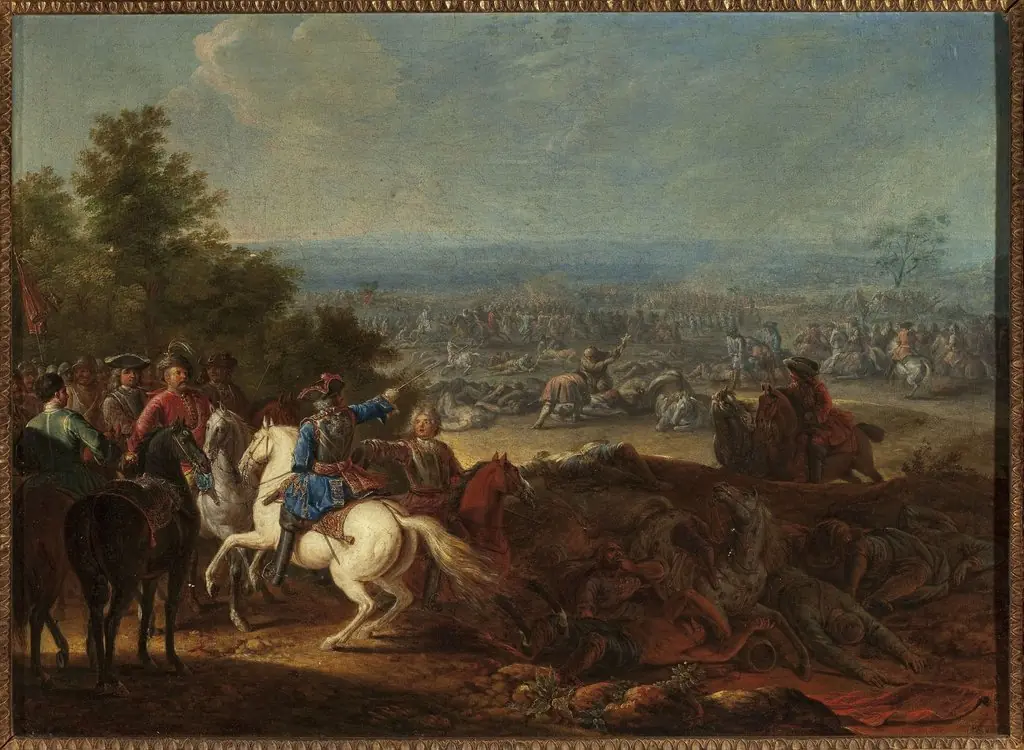
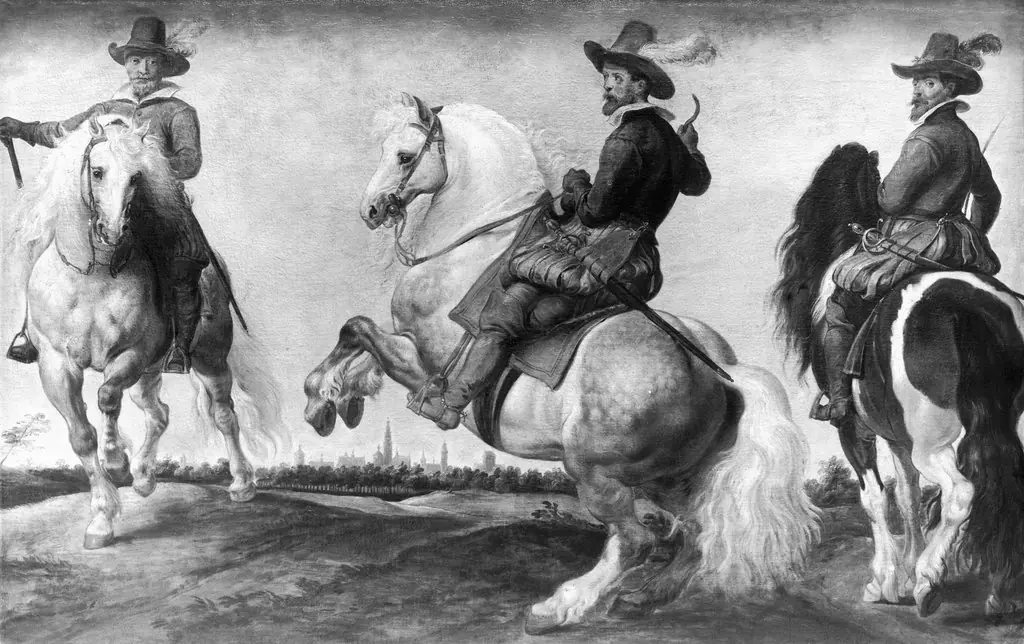
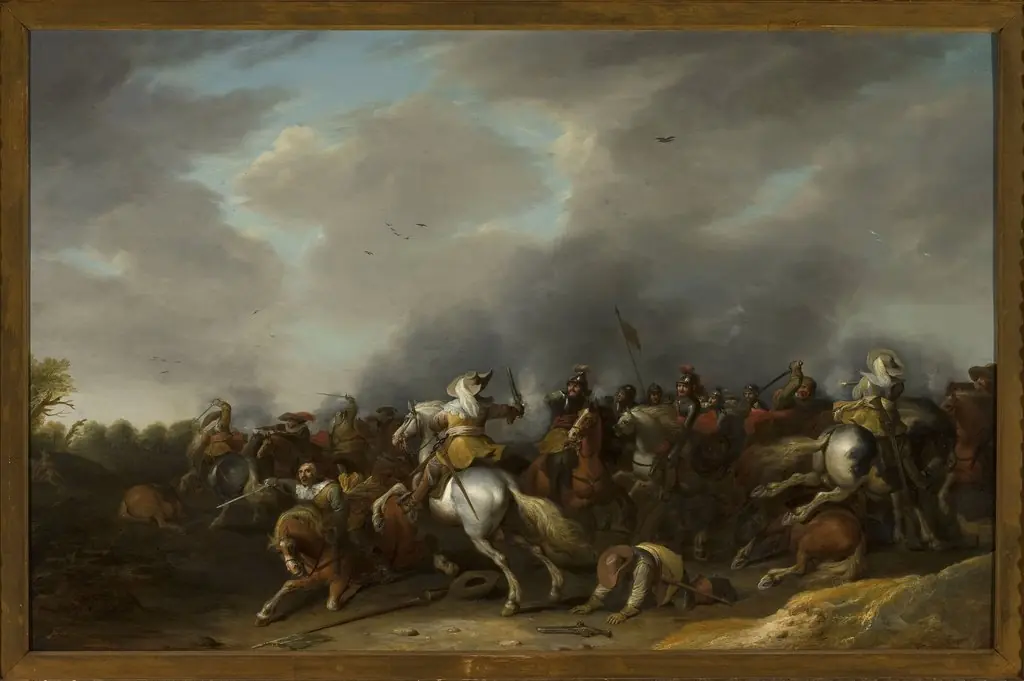
Two men on horseback stand in front of a burning city. One points a long staff toward the smoke. Soldiers march in the distance.
This is Prince Frederick Henry and his cousin after they took the city of ’s-Hertogenbosch from Spanish rule in 1629. The artist never signed the work, so we don’t know who painted it. The scene was meant to celebrate the prince’s victory, he was called “the conqueror of cities” for a reason.
If you like battle scenes with bold light and shadow, look up the Baroque movement.
Subject & Meaning
The painting depicts Frederick Henry, Prince of Orange, and his cousin Ernst Casimir of Nassau-Dietz observing the Siege of ’s Hertogenbosch in 1629, a pivotal event during the Eighty Years’ War when Dutch forces captured the strategically important city from Spanish Habsburg control.
Van Hillegaert’s composition frames the princes as witnesses to the siege, emphasizing their leadership and the military triumph. The presence of troops, fortifications, and the besieged city underscores the strategic and political significance of the victory for the Dutch Republic. The work aligns with van Hillegaert’s documented focus on contemporary military campaigns led by the Princes of Orange, reinforcing its commemorative function.
Technique & Style
The painting employs oil on canvas, a medium typical of Dutch Baroque military scenes. Its handling emphasizes clear, descriptive detail in armor, banners, and landscape, aligning with contemporary expectations for narrative clarity in history painting. The composition arranges the Nassau-Dietz princes and their retinue in a shallow spatial zone, framed by the besieged city’s fortifications and encampment tents, to foreground the event’s protagonists and strategic setting.
Stylistically, the work combines naturalistic delineation with restrained color, using a subdued palette to articulate figures and terrain without dramatic chiaroscuro, consistent with van Hillegaert’s documented approach to siege imagery.
History & Provenance
The painting of Frederick Henry and Ernst Casimir of Nassau-Dietz at the Siege of ’s Hertogenbosch is dated to circa 1629–1635, aligning with the historic event of the 1629 siege led by Prince Frederick Henry of Orange.
The work is attributed to Pauwels van Hillegaert, a Dutch painter active in Amsterdam during the early 1600s. Van Hillegaert is documented as painting several versions of the Siege of ’s-Hertogenbosch, indicating production for the open market rather than a single commission by a patron. Multiple known versions of this siege scene exist, suggesting the artist adapted the composition to meet demand rather than creating it under direct commission for a specific owner or institution.
Context
Pauwels van Hillegaert created this history painting to document the Siege of 's-Hertogenbosch, a pivotal victory for Prince Frederick Henry during the Eighty Years' War. As a Dutch Baroque artist active in the early Golden Age, Hillegaert specialized in military scenes and equestrian portraits, often producing multiple versions of key battles to satisfy the open market rather than relying solely on official commissions. His depiction of the 1629 siege aligns with his broader oeuvre, which includes portrayals of Maurice of Orange's earlier successes at Nieuwpoort and Utrecht.
The work's composition reflects stylistic affinities with contemporaries such as Henri Ambrosius Pacx and the Flemish painter Pieter Snayers. By focusing on the Princes of Orange and their military leadership, the painting serves as both a historical record and a piece of political propaganda celebrating the House of Nassau-Dietz.
Overview
This painting depicts Prince Frederick Henry and his cousin Count Ernst Casimir on horseback, positioned triumphantly before the besieged city of ’s-Hertogenbosch, capturing the moment of its recapture from Spanish rule in 1629.
Legacy
While the artist is unknown, the work illustrates the artistic commemoration of military victories during the Dutch Golden Age, reflecting the era’s political and artistic climate.
Own this work as a print
Artist & collection
Artist
Paulus van Hillegaert (I) or Pauwels van Hillegaert (I) (1596–1640) was a Dutch painter and draughtsman, known mainly for his landscapes, military scenes and equestrian portraits.

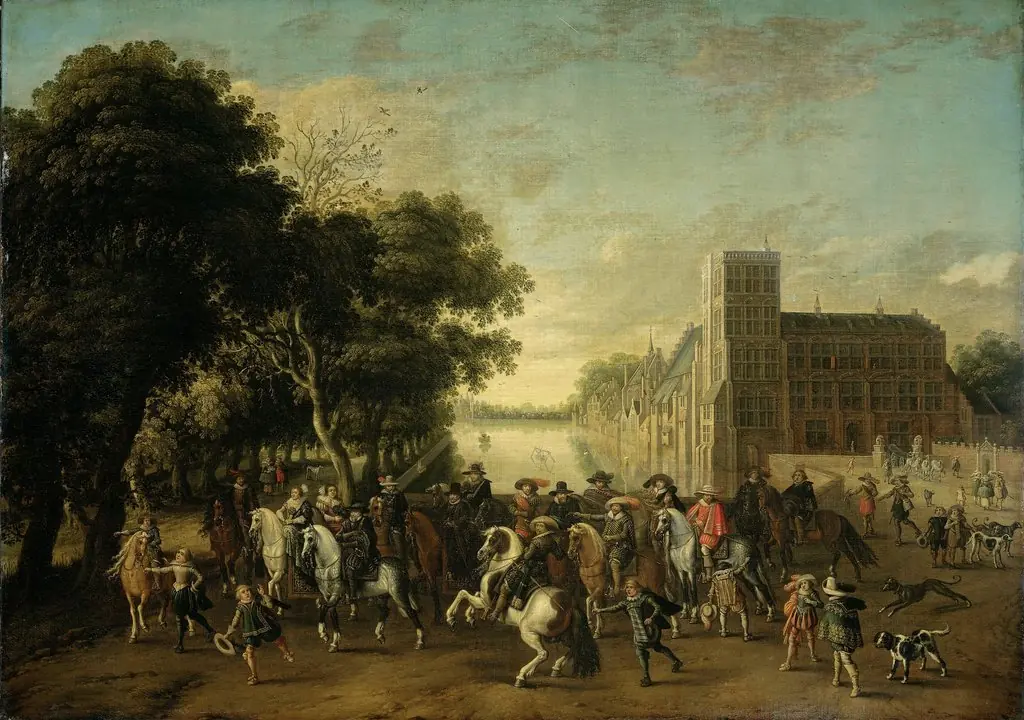 Prince Maurits, accompanied by Prince Frederik Hendrik, Frederick V of Bohemia and his wife Elizabeth Stuart, and others, on the Buitenhof, The Hague
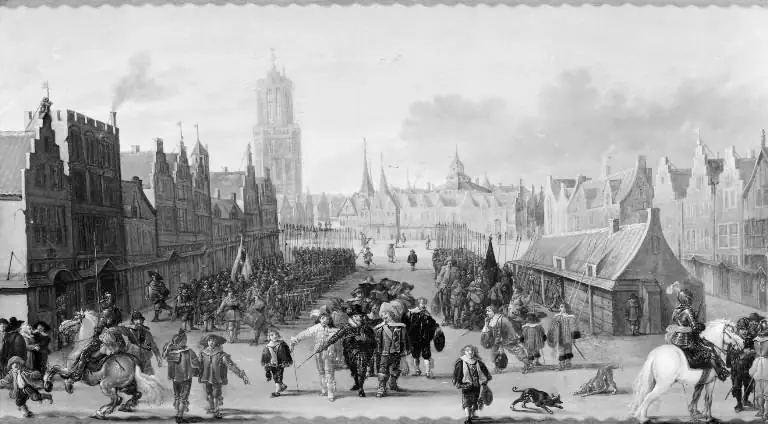 Disbanding of the Mercenary Troops on the Neude, Utrecht, July 31st, 1618
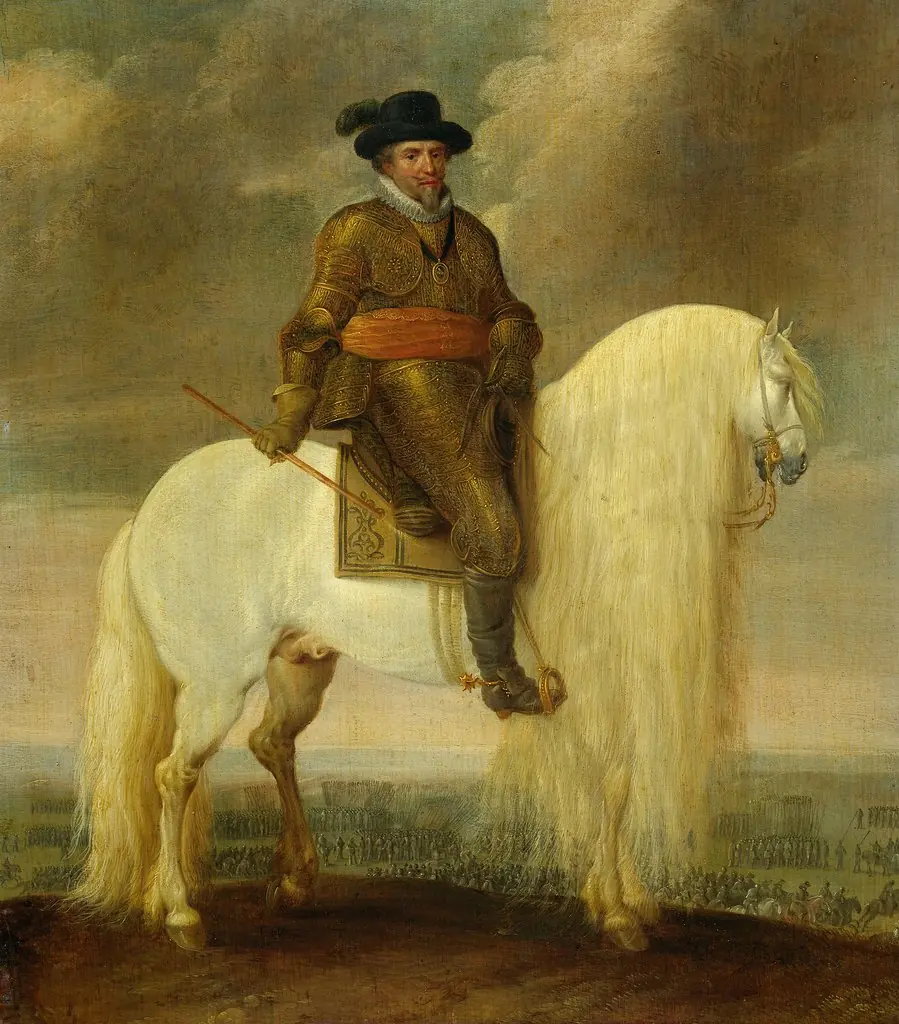 Prince Maurits astride the white warhorse presented to him after his victory at Nieuwpoort
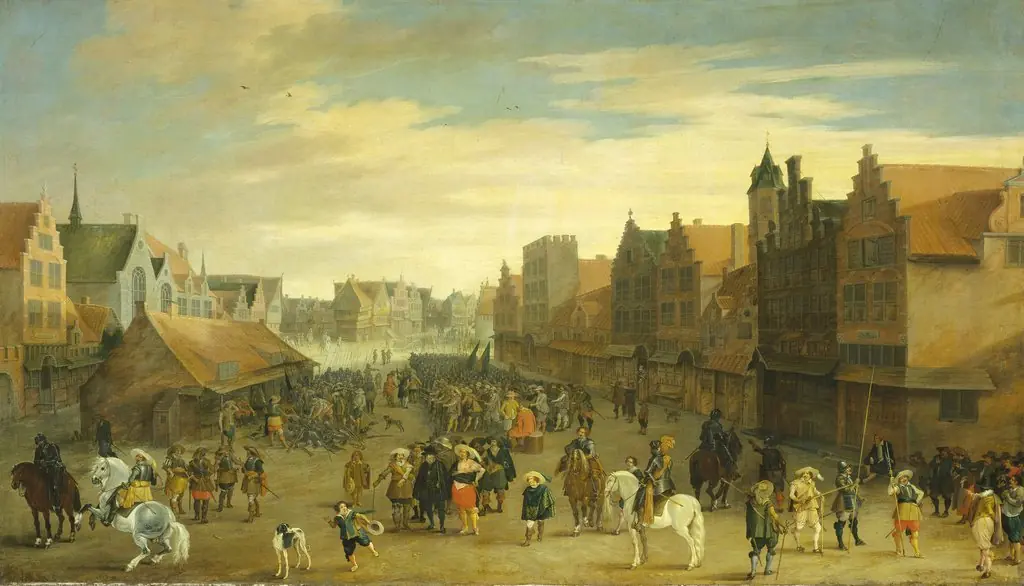 The disbanding of the 'waardgelders' (mercenaries in the pay of the town government) by Prince Maurits on the Neude, Utrecht, 31 July 1618
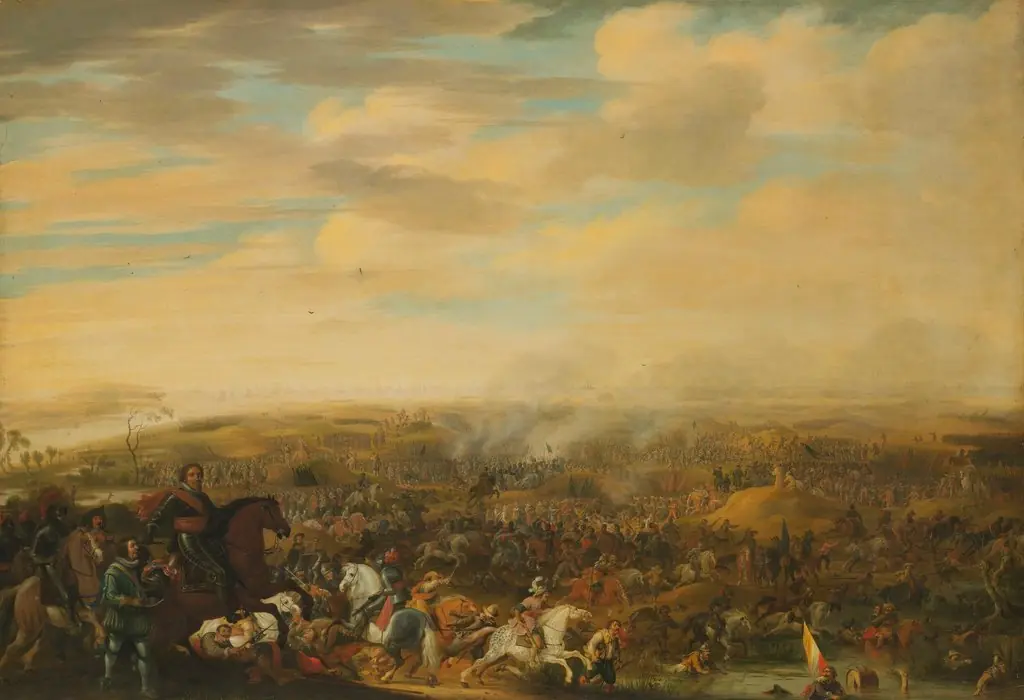 Prince Maurits at the Battle of Nieuwpoort, 2 July 1600
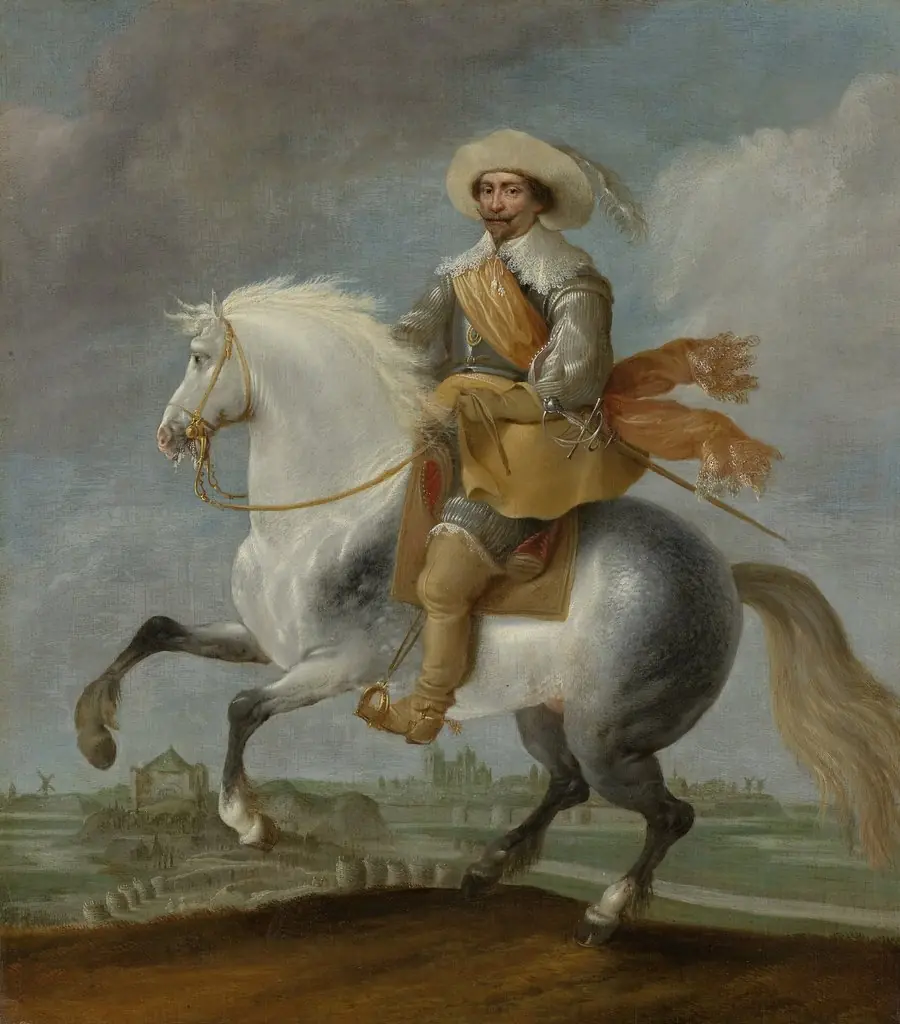
- Prince Frederik Hendrik on horseback outside the fortifications of 's-Hertogenbosch, 1629
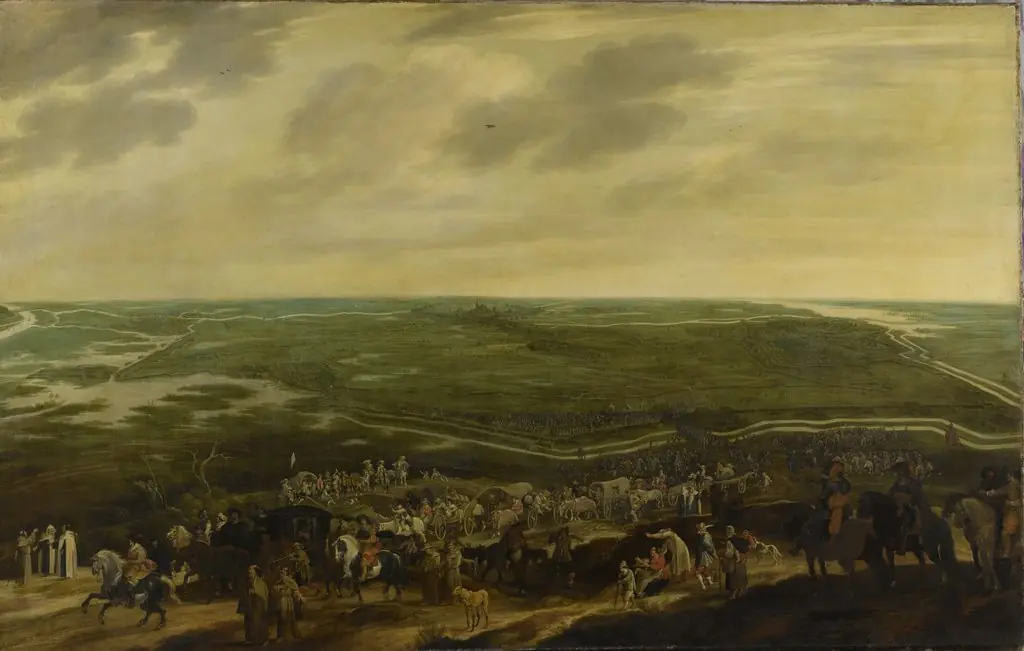 The defeated Spanish garrison leaving 's-Hertogenbosch, 17 September 1629
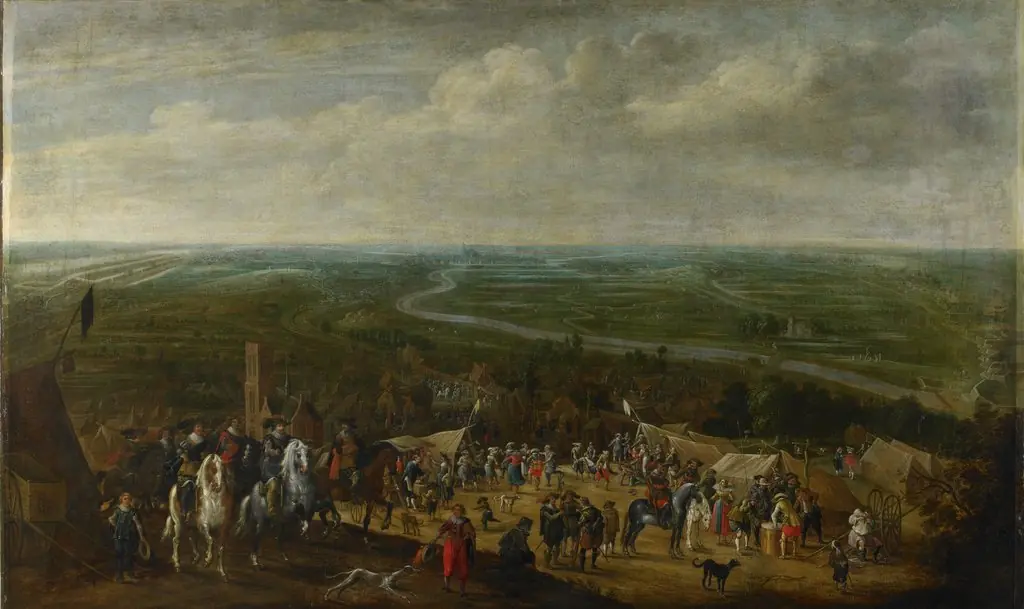 Prince Frederik Hendrik at the siege of 's-Hertogenbosch, 1629