Artwork
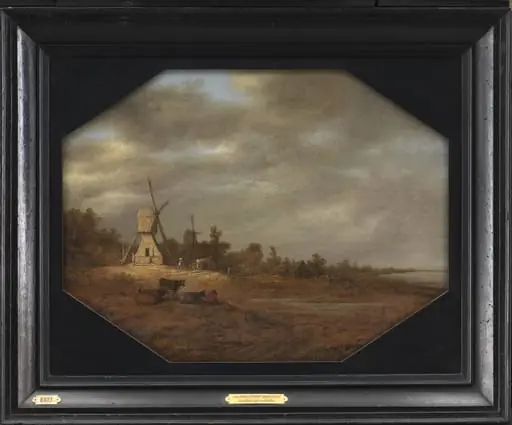
Landscape with Windmills
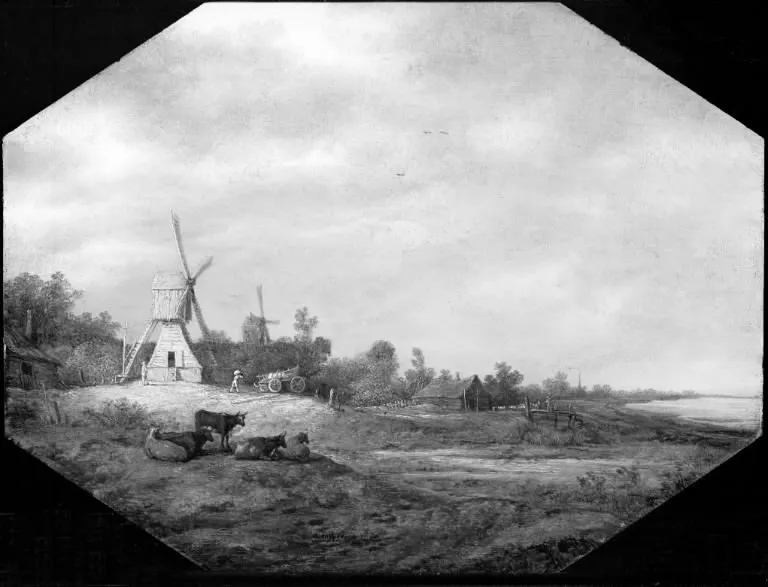
Landscape with Windmills is an unspecified painting by the Dutch Golden Age artist Aelbert Cuyp. It dates from 1640 and is held in the collection of the Statens Museum for Kunst.
About this work
Subject & Meaning
The work thus serves as a visual record of 17th-century Dutch land use and the symbolic importance of windmills as markers of productivity and prosperity.
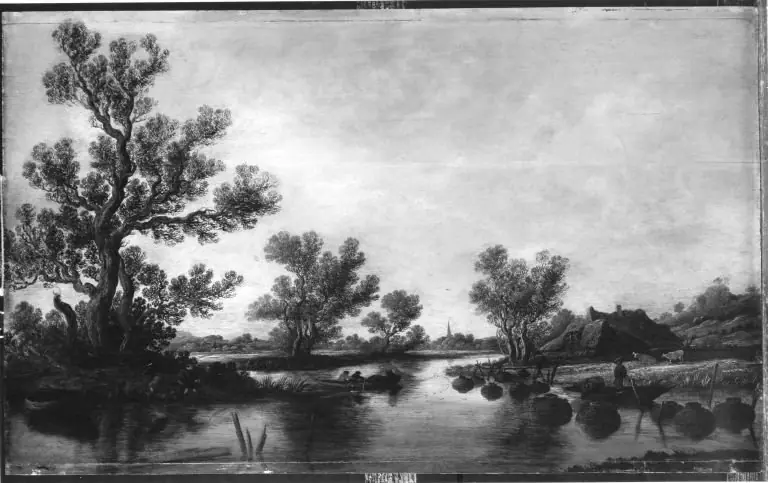
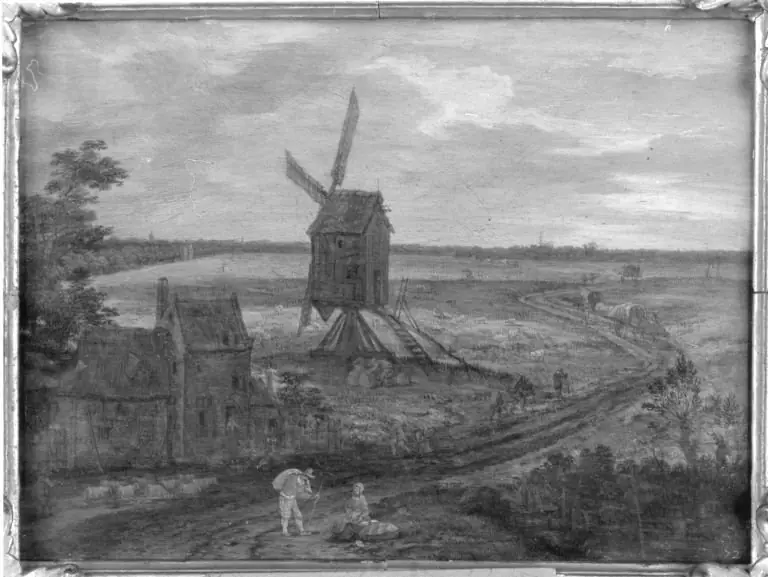
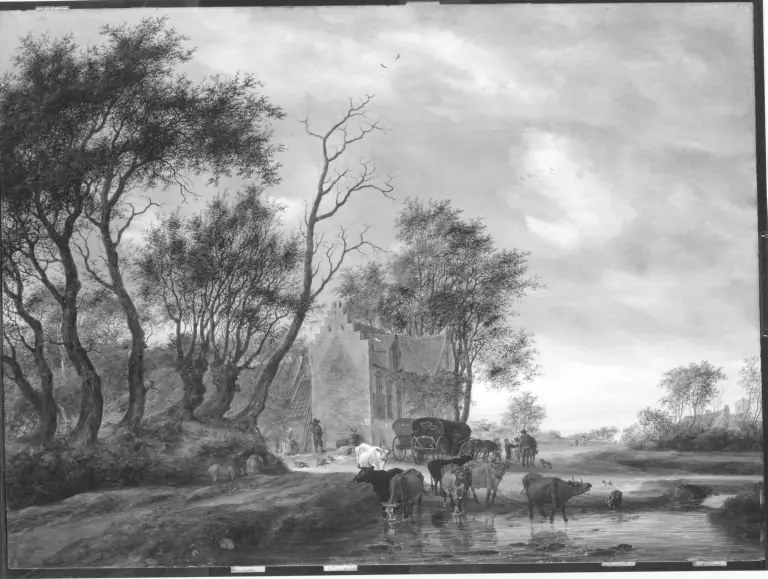
Landscape with Windmills portrays a sunlit Dutch countryside in which a windmill stands beside a horse-drawn wagon carrying a man, while cattle and sheep graze in the foreground. The composition emphasizes the everyday rural activity of the mid-1600s, using the windmill, a distinctive feature of the Netherlands, to anchor the scene in a recognizable local setting. By including livestock and a working farmer, Cuyp conveys the vitality of agrarian life and the harmony between human labor and the natural environment.
The work thus serves as a visual record of 17th-century Dutch land use and the symbolic importance of windmills as markers of productivity and prosperity.
History & Provenance
The painting Landscape with Windmills is attributed to the Dutch artist Aelbert Cuyp and dated to 1640. Classified as a landscape, it depicts windmills, a man with a horse-drawn wagon, and grazing cattle and sheep. The work is held in the collection of the Statens Museum for Kunst (National Gallery of Denmark).
No specific accession number is recorded in the available sources, and no details of its commission, original ownership, or exhibition history are documented.
Context
Landscape with Windmills (1640) resides in the Statens Museum for Kunst, where it is catalogued as a Dutch Golden Age landscape. The work reflects Cuyp's combination of compositional balance with close observation of everyday rural activity. Its depiction of a windmill alongside a horse-drawn wagon, cattle, and sheep is characteristic of the agrarian subject matter favored in mid-17th-century Dutch landscape painting and of contemporary interest in the economic rhythms of the Netherlands.
Overview
Aelbert Cuyp's Landscape with Windmills, painted in 1640, exemplifies the serene rural scenes characteristic of the Dutch Golden Age. This oil painting captures a tranquil moment in the countryside, featuring common elements of the Dutch landscape. Cuyp, a prominent artist from Dordrecht, developed a distinctive approach to depicting light, which became a hallmark of his extensive body of work, often focusing on riverside vistas and pastoral settings.
Technique & Style
Cuyp's artistic approach is evident in the painting's atmospheric quality and his careful rendering of light. While known for golden light, this work demonstrates his ability to create depth and focus through the interplay of illumination and shadow, even under a muted sky. This technique highlights specific elements, such as the resting animals and the distant windmills, while allowing other areas to recede, contributing to the scene's overall sense of realism and spatial recession.
Artist & collection

Artist
Aelbert Jacobszoon Cuyp or Cuijp (Dutch pronunciation: ; 20 October 1620 – 15 November 1691) was one of the leading Dutch Golden Age painters, producing mainly landscapes.

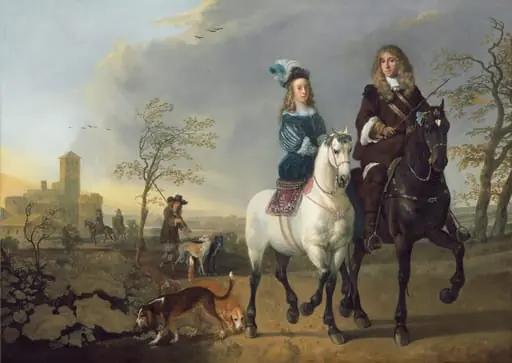 Lady and Gentleman on Horseback
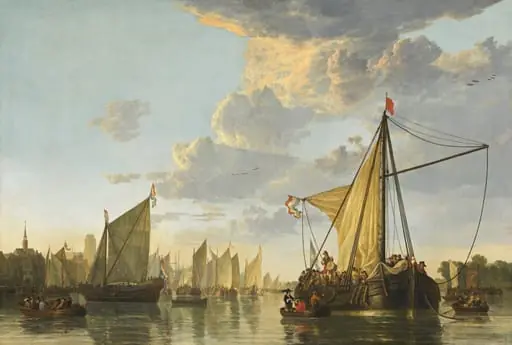 The Maas at Dordrecht
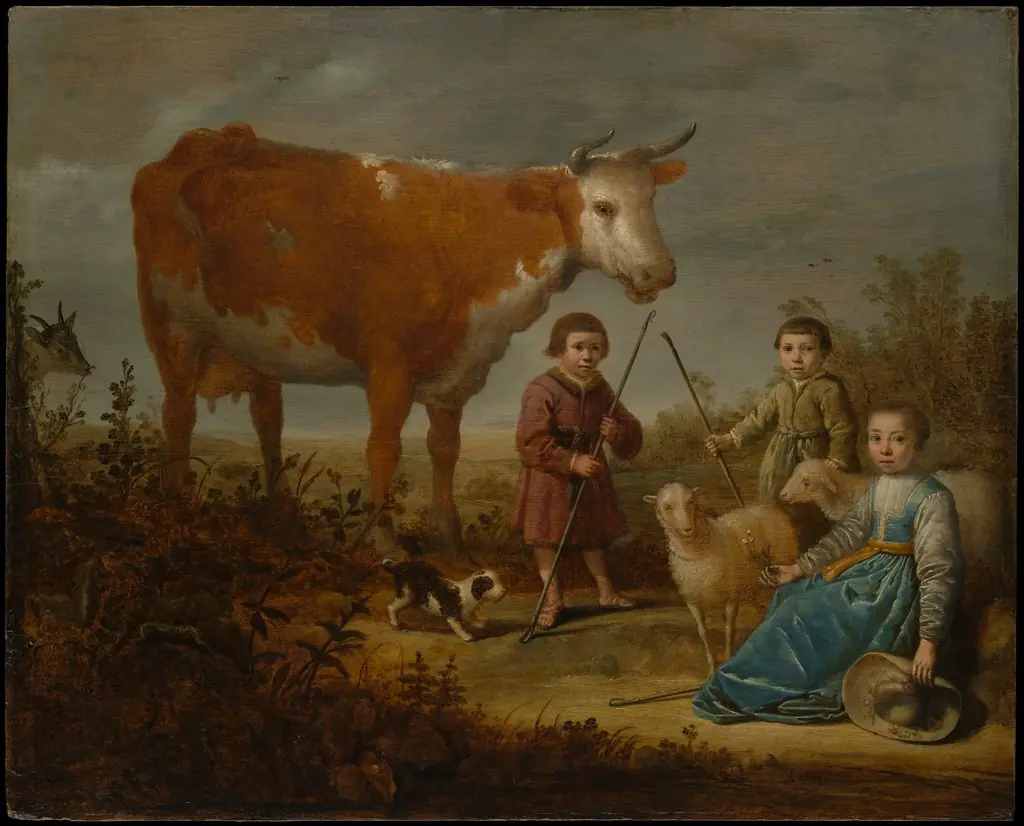 Children and a Cow
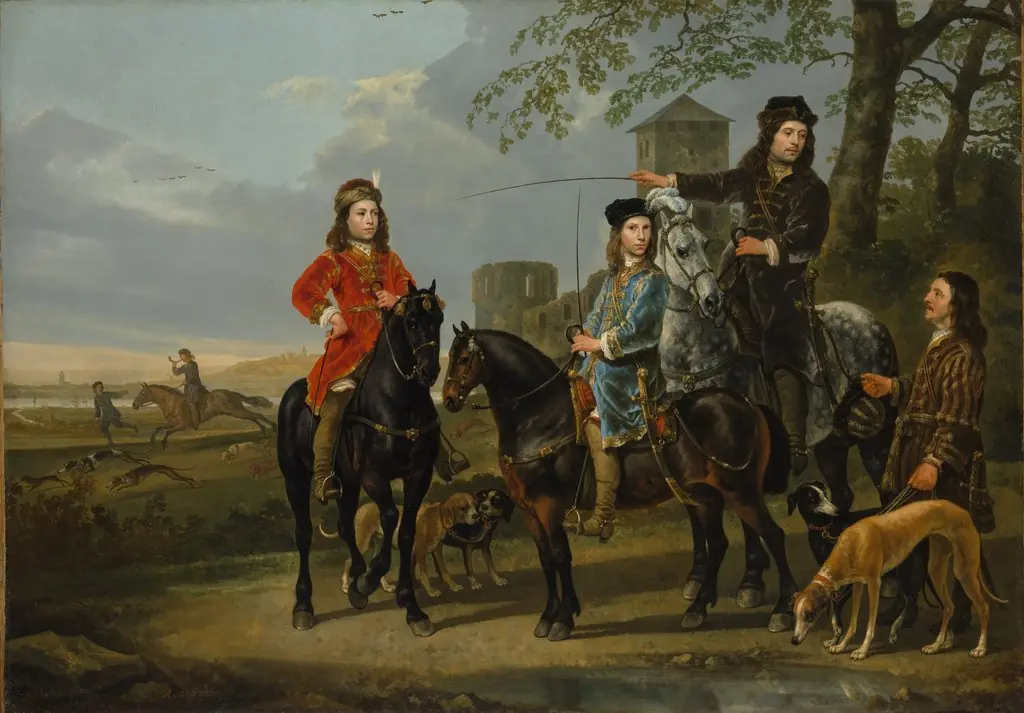 Equestrian Portrait of Cornelis (1639–1680) and Michiel Pompe van Meerdervoort (1638–1653) with Their Tutor and Coachman ("Starting for the Hunt")
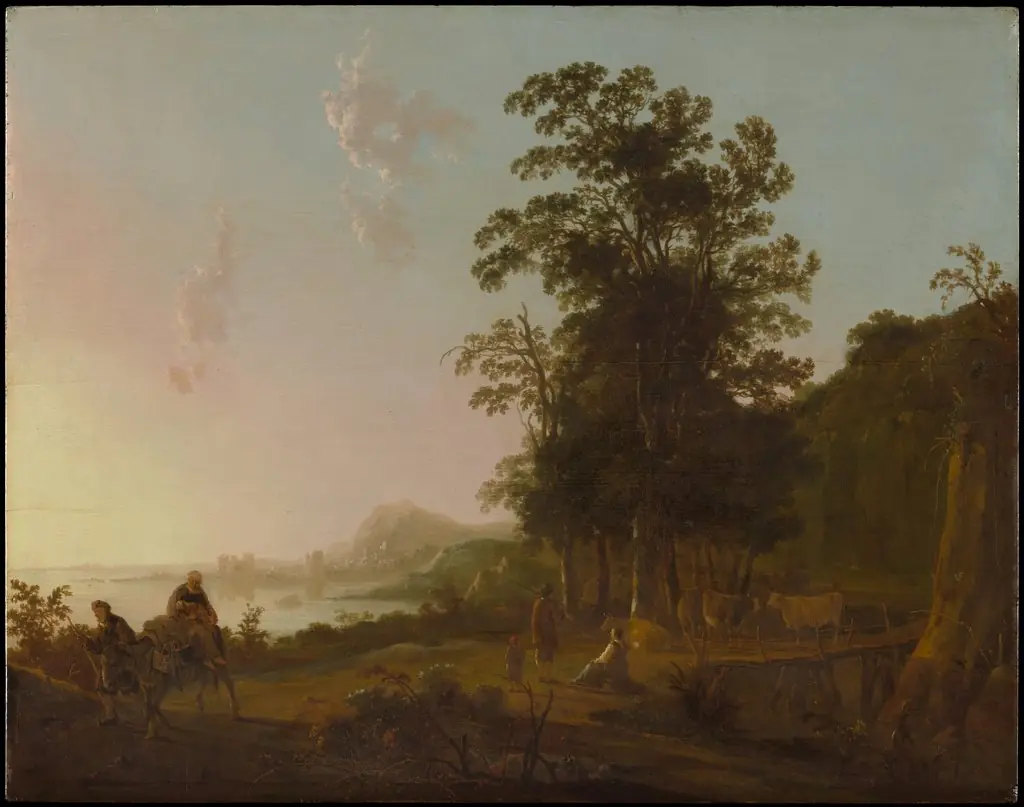 Landscape with the Flight into Egypt
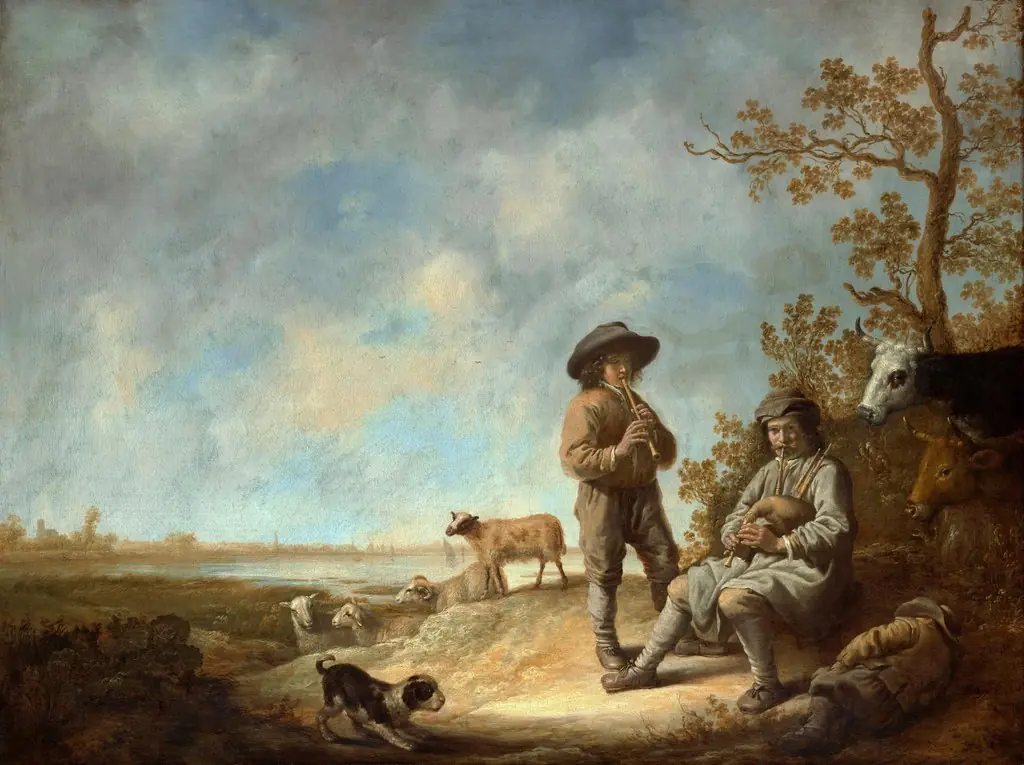 Piping Shepherds
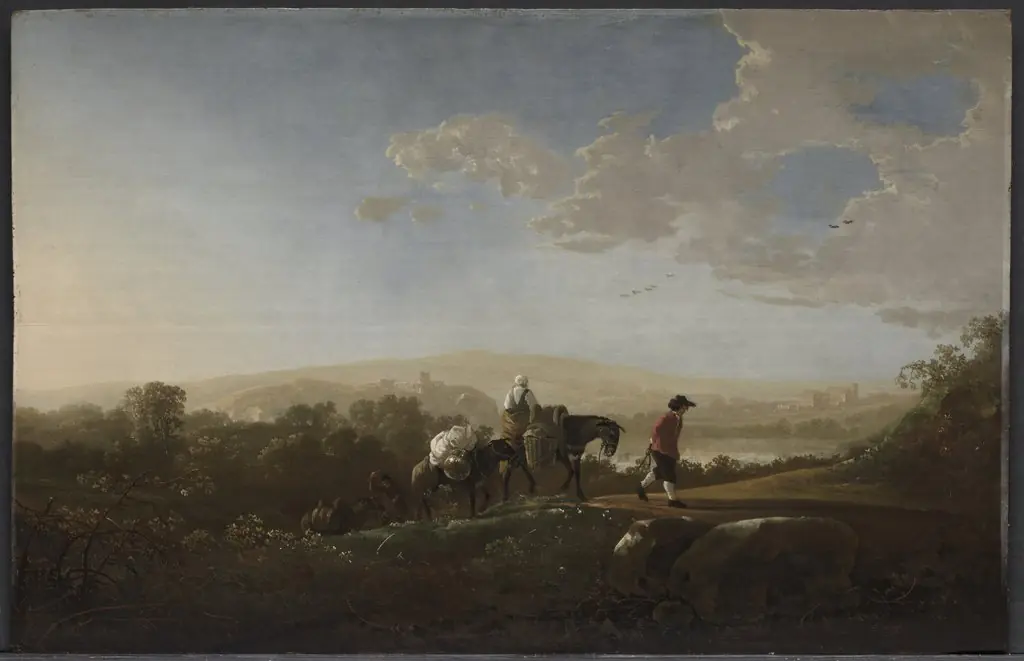 Travellers in Hilly Countryside
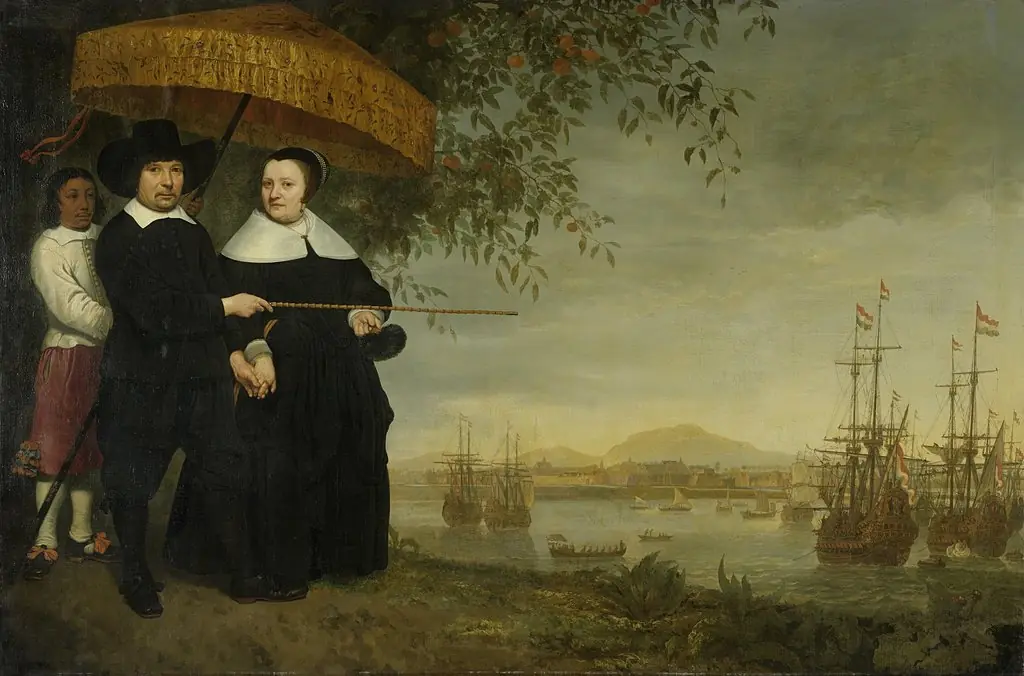 A Chief Merchant of the VOC with his Wife and an Enslaved Servant