Artwork
Sunrise on the Matterhorn
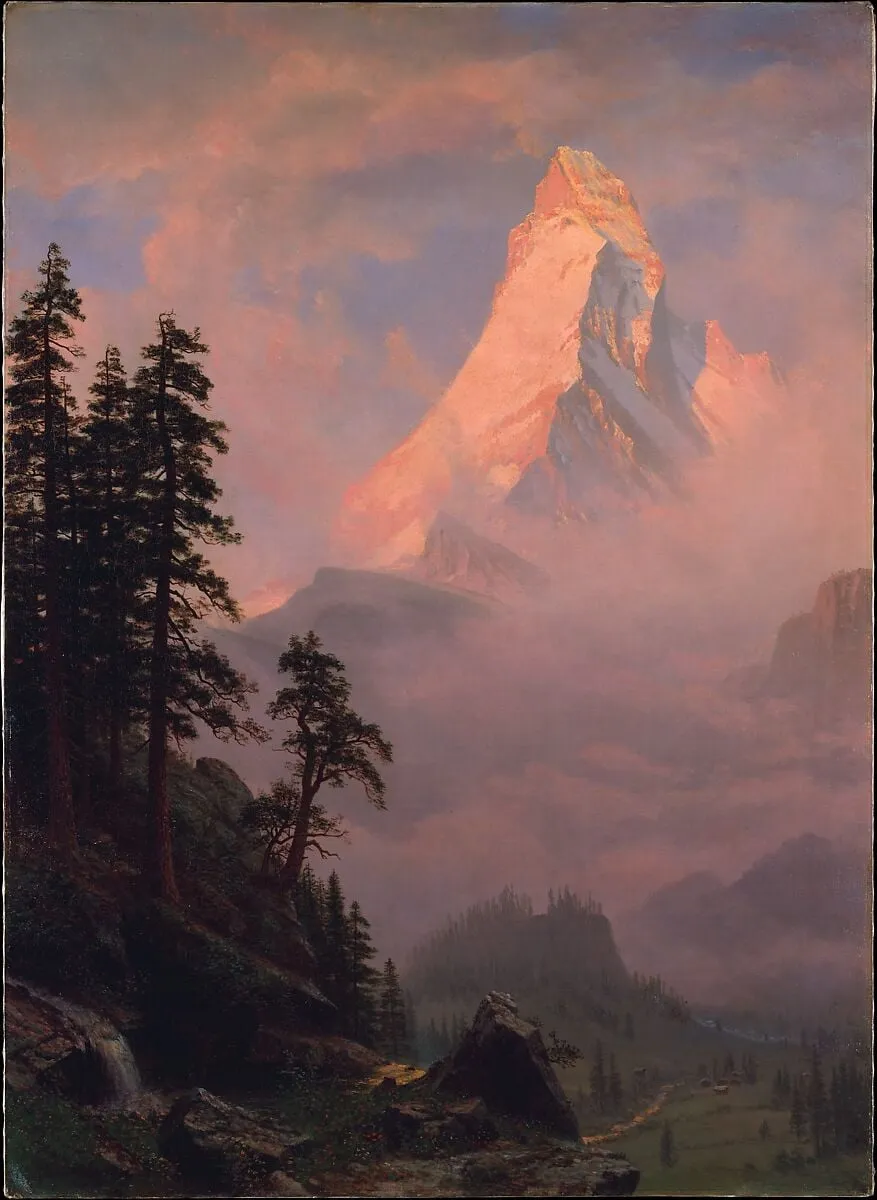
Sunrise on the Matterhorn is an oil painting by the American Impressionist artist Albert Bierstadt. It dates from 1875 and is held in the collection of the Metropolitan Museum of Art.
- Accession no.
- 66.114
- Credit line
- Gift of Mrs. Karl W. Koeniger, 1966
About this work
Pink dawn light catches the snow-capped summit of the Matterhorn while dark pines cling to the rocky foreground far below. Albert Bierstadt painted this tall, dramatic view of the Swiss Alps sometime after 1875, drawing on years of sketches from repeated trips to Switzerland. The canvas stands nearly five feet high.
Subject & Meaning
Bierstadt presents the mountain as a monumental, almost spiritual presence, with sunrise light illuminating its jagged silhouette against a luminous sky.
The painting depicts the Matterhorn, Switzerland's iconic peak, at dawn. Bierstadt presents the mountain as a monumental, almost spiritual presence, with sunrise light illuminating its jagged silhouette against a luminous sky. A solitary tree in the foreground provides scale and reinforces the Romantic motif of nature's overwhelming grandeur.
The work exemplifies the sublime in landscape painting: the Matterhorn appears both beautiful and terrifying in its immensity. As a symbol, the sunrise suggests renewal and transcendence, while the untamed alpine wilderness reflects 19th-century American and European fascination with pristine nature. Bierstadt's choice to paint this Swiss peak, rather than an American subject, also signals the international scope of Romantic landscape ideals.
Technique & Style
Sunrise on the Matterhorn is executed in oil on canvas, a medium Bierstadt favored for his landscape work. According to the Metropolitan Museum of Art's cataloguing, the painting measures 148.6 cm in height by 108.3 cm in width, giving it a vertical, portrait-oriented format well suited to emphasizing the towering peak of the Matterhorn. The work is classified within the museum's American Wing and belongs to the landscape genre.
The canvas support and oil medium allowed Bierstadt to render the atmospheric effects of dawn light striking the mountain, a hallmark of his Swiss subjects. The painting is held in the collection of the Metropolitan Museum of Art in New York.
History & Provenance
The exact dating of Sunrise on the Matterhorn is not firmly established, but the Metropolitan Museum of Art places its production around 1875, during one of Albert Bierstadt's trips to Switzerland in the later part of his career. The oil-on-canvas landscape depicts the Matterhorn at dawn. The painting is currently held in the collection of the Metropolitan Museum of Art in New York, within The American Wing, though the sources do not detail its acquisition history, prior ownership, or a specific accession number. No commission information or exhibition history is provided in the available sources.
Overview
Albert Bierstadt's painting, Sunrise on the Matterhorn, captures the iconic Swiss peak in oil on canvas. This work emerged from the American artist's extensive travels through Switzerland between 1867 and 1897, depicting the dramatic Alpine landscape. Created sometime after 1875, it reflects Bierstadt's sustained engagement with European mountain scenery, complementing his well-known depictions of the American West.
Context
Albert Bierstadt undertook multiple expeditions to Switzerland over three decades, from 1867 to 1897. These extensive travels provided him with a rich repository of visual information and sketches, which he later translated into large-scale studio paintings like Sunrise on the Matterhorn. His engagement with the European Alps paralleled his earlier and more famous explorations of the American West, demonstrating a consistent interest in monumental natural landscapes.
Artist & collection

Artist
Albert Bierstadt (January 7, 1830 – February 18, 1902) was a German-American painter best known for his lavish, sweeping landscapes of the American West.



- Wengeralpe im Berner Oberland (Jungfrau und Mönch)
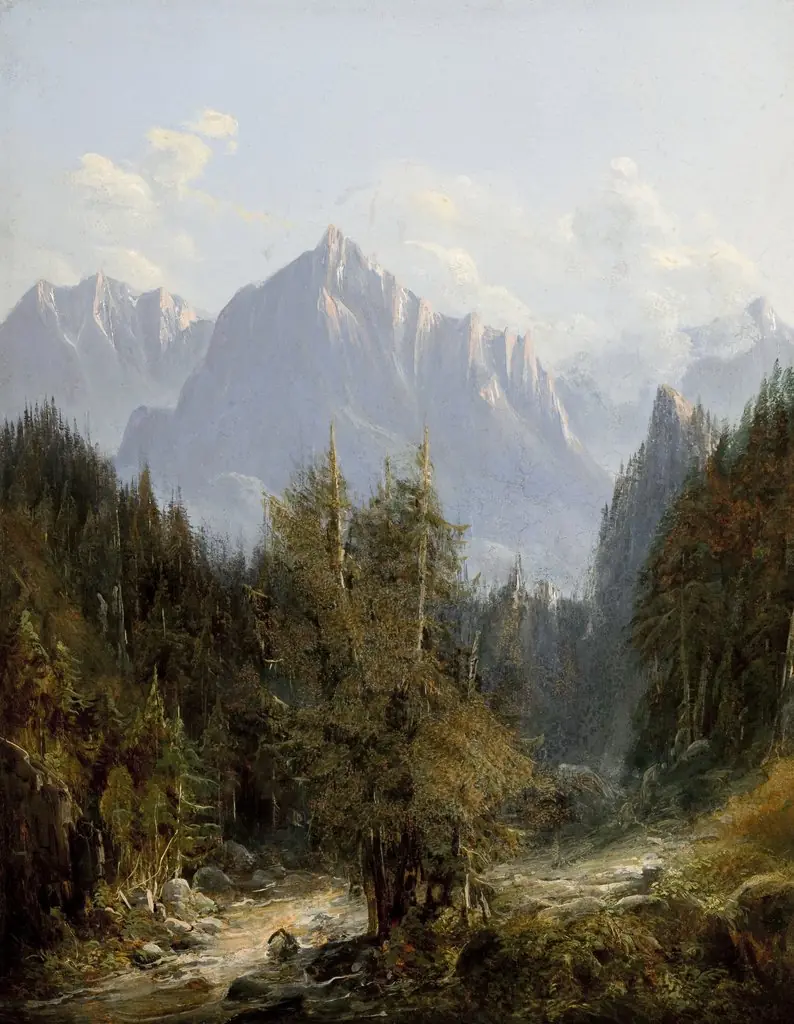 Road to the Morskie Oko Lake
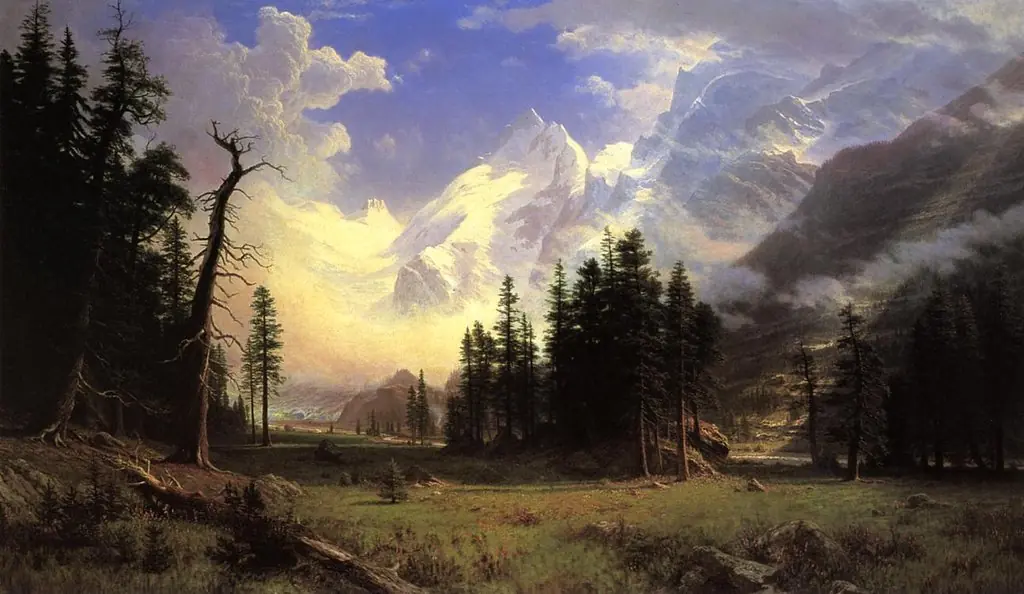 The Morteratsch Glacier Upper Engadine Valley Pontresina
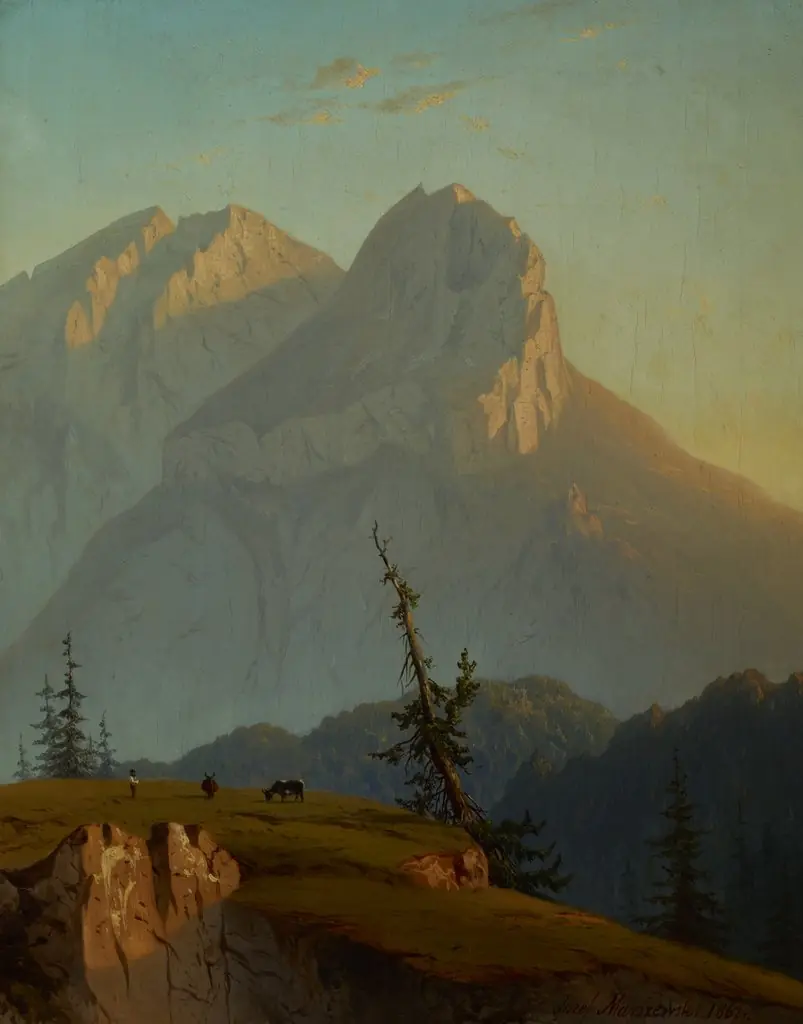 Mount Murań in the Tatra Mountains at Sunrise
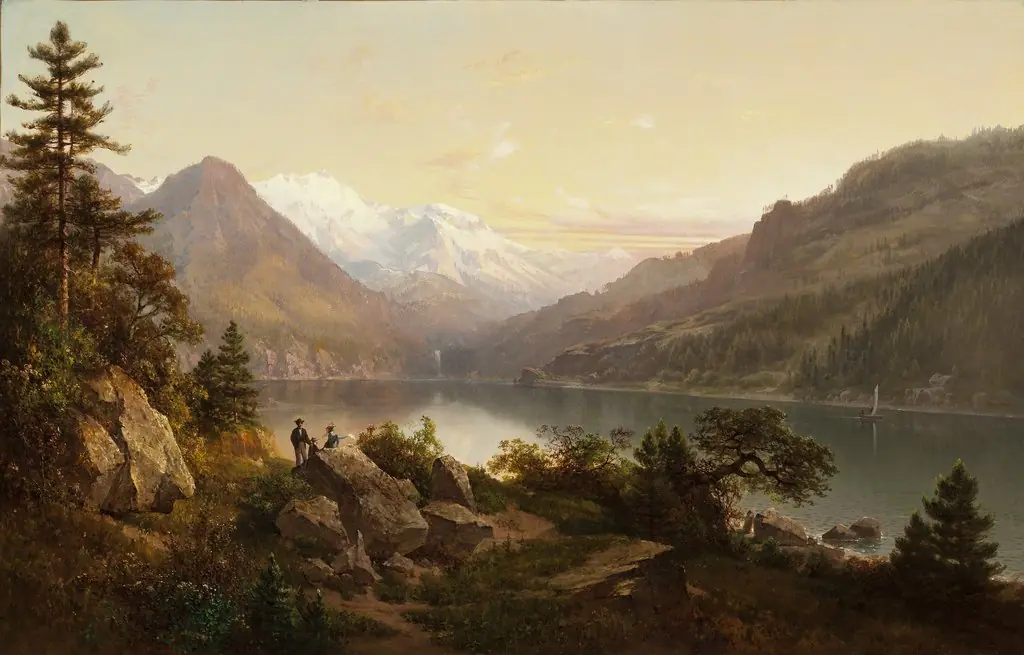 Emerald Bay, Lake Tahoe
 Estes Park, Long’s Peak
 Mountain Scene
 The Troll Peaks in Romsdalen: The Foot of Romsdalshorn to the Right
 Gebirgslandschaft mit dem Wiesbachhorn