Artwork
Ophelia
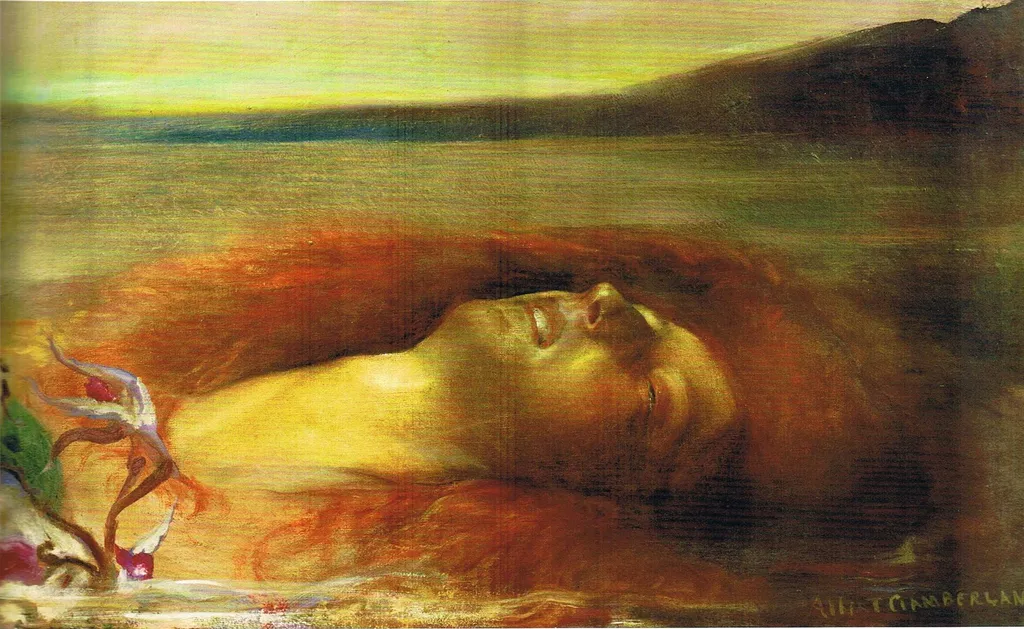
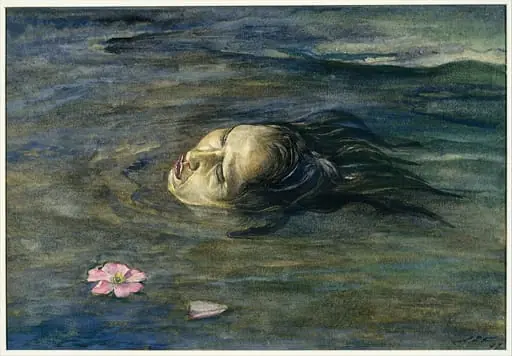
Ophelia is an unspecified painting by the Symbolist artist Albert Ciamberlani. It dates from 1900 and is held in the collection of the Royal Museums of Fine Arts of Belgium.
About this work
Overview
The painting Ophelia, created in 1900 by Albert Ciamberlani, is a symbolist work held in the Royal Museums of Fine Arts of Belgium. Ciamberlani was a Belgian artist who transitioned from law to art, studying under Jean-François Portaels and later teaching at the Royal Academy of Fine Arts in Antwerp.
Subject & Meaning
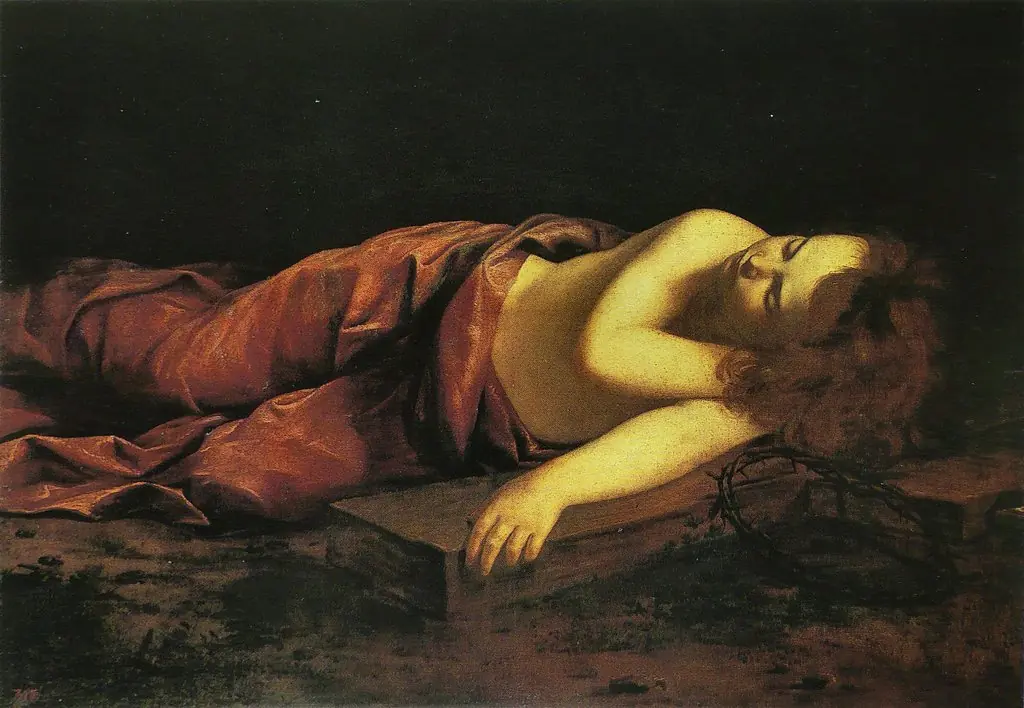
The painting depicts a woman, identified as Ophelia, lying serenely in a body of water with her dark hair flowing around her. The natural setting, with distant hills or mountains, is softly rendered, contributing to a dreamlike atmosphere. The subject is likely inspired by literary or poetic themes, characteristic of the symbolist movement.
Technique & Style
Ciamberlani's use of chiaroscuro is notable in Ophelia, with the subject's pale skin glowing softly against the surrounding darkness. The blurry background and the flowing hair create a sense of depth and atmosphere, typical of symbolist painting. The overall effect is peaceful and contemplative.
History & Provenance
Ophelia was painted by Albert Ciamberlani in 1900. The artist was influenced by Joséphin Péladan, a symbolist theorist. The painting is now part of the collection at the Royal Museums of Fine Arts of Belgium.
Context
Ciamberlani's work reflects the symbolist movement, which often drew on literary and poetic themes. As a professor at the Royal Academy of Fine Arts in Antwerp, he was well-positioned to influence the development of symbolist art in Belgium.
Artist & collection
Artist
Albert Louis Alexandre Vincent Marie Ciamberlani (1864–1956) was a Belgian symbolist painter.

Museum
Royal Museums of Fine Arts of Belgium
Continue through works from the same source collection.