Artwork
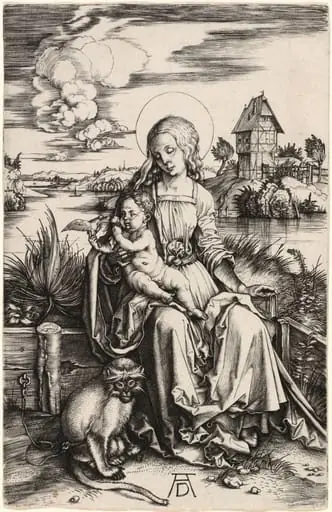
The Virgin and Child with a Monkey
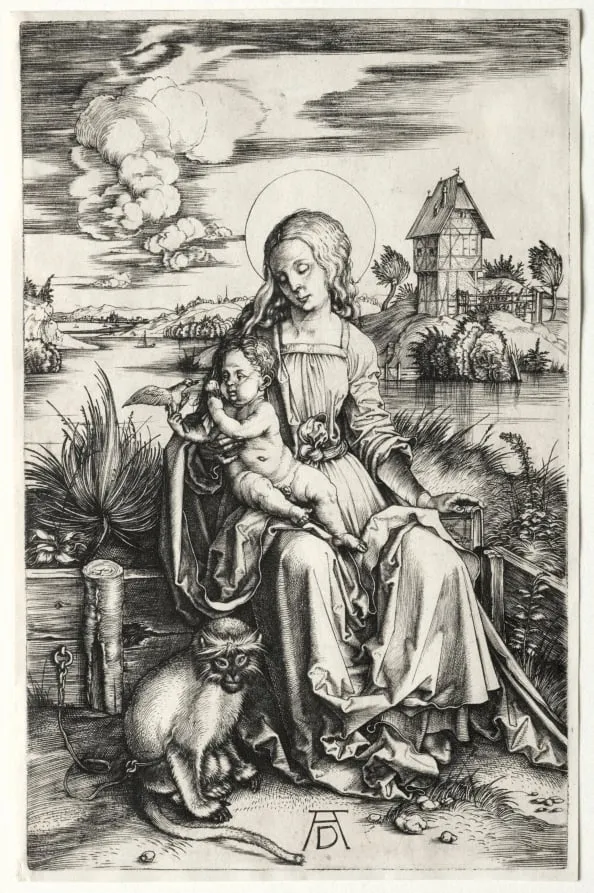
The Virgin and Child with a Monkey is a print by the Renaissance artist Albrecht Dürer. It dates from 1498 and is held in the collection of the Cleveland Museum of Art.
- Accession no.
- 1964.29
- Credit line
- Dudley P. Allen Fund
About this work
Overview
The Virgin and Child with a Monkey is a print by Albrecht Dürer depicting the Virgin Mary and Christ child in a garden.
Subject & Meaning
The scene is rich in symbolism, with the bird held by Christ representing souls to be saved, and the chained monkey signifying the taming of sinful desires through Mary's virtue.
Technique & Style
Dürer's use of chiaroscuro creates a sense of depth and volume, with light and shadow used to model the figures and their surroundings.
Context
The print reflects Catholic theology of the Renaissance, which associated the Virgin Mary with purity and the overcoming of original sin, often through botanical and zoological symbols.
Artist & collection
Artist
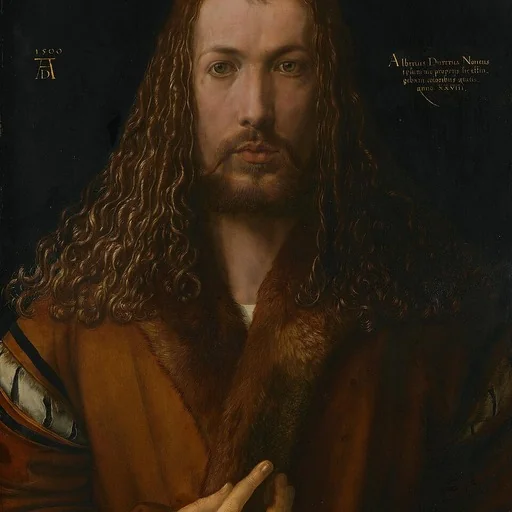
Albrecht Dürer spent his life in Nuremberg, a busy German city where artists traded prints like currency.

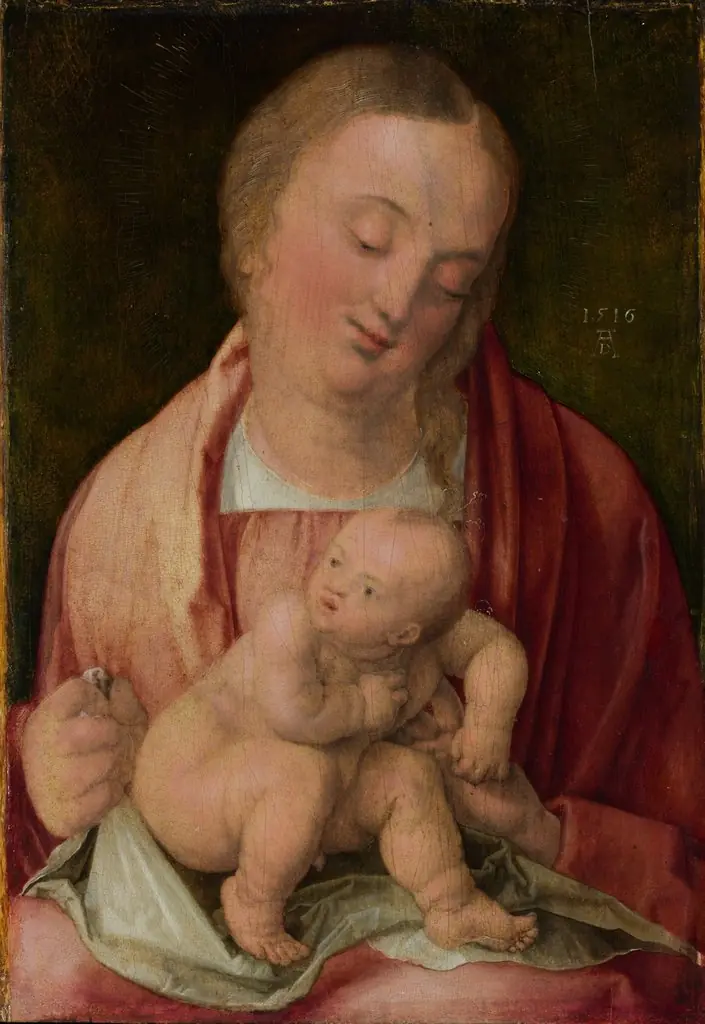
![Madonna and Child [obverse], by Albrecht Dürer](https://artifactworldgallery.com/img/albrecht-durer--madonna-and-child-obverse--d7b8ebf05d22ebe5-w320.webp)
![Lot and His Daughters [reverse], by Albrecht Dürer](https://artifactworldgallery.com/img/albrecht-durer--lot-and-his-daughters-reverse--b4ebf9b282faa17a-w320.webp)