Artwork
Self-Portrait
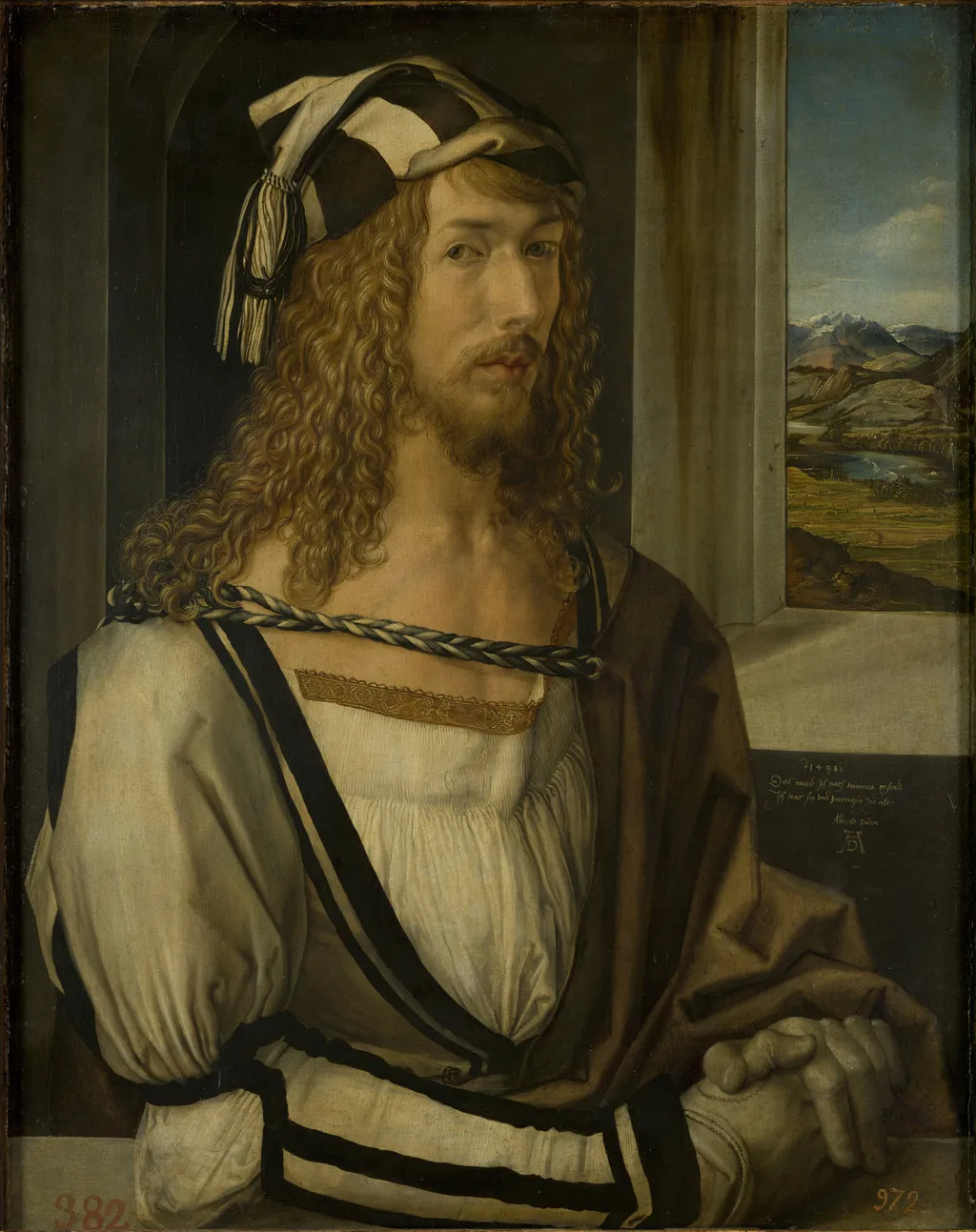
Self-Portrait is an oil painting by the High Renaissance artist Albrecht Dürer. It dates from 1500 and is held in the collection of the Museo del Prado.
About this work
In this work he shows himself in half length under an arch, wearing a tall hat and fine gloves, his expression confident and a little arrogant.
Self‑portrait is the second of Albrecht Dürer’s three painted self‑portraits, made in oil on wood panel in 1498. It was created after Dürer’s first trip to Italy, a time when he began to think about his place in society. In this work he shows himself in half length under an arch, wearing a tall hat and fine gloves, his expression confident and a little arrogant.
His presence fills the picture, from the hat down to his hand on the ledge. Look next at the museum: Museo del Prado.
Subject & Meaning
Dürer presents himself as a self-assured young artist of social standing, wearing extravagant clothing influenced by Italian fashion and holding his hands in gloves, a departure from his usual depictions of holding objects. The half-length composition under an arched window shows a flat landscape with a lake and snow-capped mountains, which may symbolize memories of his travels or an inner mental state. Light from the window illuminates his face and long blond hair, emphasizing delicate skin tones.
The portrait reflects his transition from youthful adventure to accepting responsibilities, as interpreted by Brion, who describes it as marking a farewell to his irresponsible youth and apprehension about the end of the 15th century. Dürer's extravagant self-representation serves as a 'chrysalis' shedding his youthful self, a theme Brion links to his observations of the artist's fears and subsequent rise in social status after returning to Nuremberg.
Technique & Style
The work is an oil painting on wood panel, measuring 52 cm in height by 41 cm in width, created in 1498. Dürer depicts himself in half-length, three-quarter view, turned toward the viewer beneath an arched opening that reveals a flat landscape with a lake and distant snow-capped mountains. Light streams from the window, illuminating his face, long blond hair, and delicate skin.
He wears flamboyant, Italianate attire: a fine linen chemise edged with gold braid, an open-fronted doublet, and a richly embroidered cloak. His hands rest on a ledge, enclosed in silk gloves, a pose unusual for his early career, when he typically included symbolic objects in his sitters' hands. The composition balances Flemish detail with Italianate monumentality, using vertical window frames and horizontal ledges to structure the space.
Dürer’s attire and self-presentation reflect his aspiration to the status of a learned gentleman, a role he had attained through his travels and rising reputation. The painting is signed and inscribed with the text 'Das malt ich nach meiner Gestalt / Ich war sechs und zwanzig Jahr alt / Albrecht Dürer', confirming the artist’s age and intent to portray himself according to his own image.
History & Provenance
Executed in 1498, the oil-on-panel self-portrait measures 52 × 41 cm and is inscribed with Dürer’s age, twenty-six, confirming the year of creation.
The painting entered English royal collections after the city of Nuremberg gifted it, together with Dürer’s Portrait of His Father at Seventy, to Charles I in 1636. It passed to Philip IV of Spain and remained in the Spanish royal collection until 1827, when it entered the Museo del Prado in Madrid.
Albrecht Dürer's 1498 Self-Portrait (also known as Self-Portrait with Gloves) is held in the Museo del Prado in Madrid. The work has been part of the museum's collection since 1827. Its provenance begins with a gift from the city of Nuremberg to King Charles I of England in 1636.
Following the execution of Charles I and the subsequent auction of his collection, the painting was acquired for the Spanish royal family by Philip IV in 1654. While some sources suggest the work arrived in Spain in 1686, other accounts confirm the acquisition by Philip IV occurred in 1654. The painting was previously paired with Portrait of Dürer's Father at 70 until the 17th century. No specific accession number is provided in the available records.
Context
The critical reception of Dürer's Self-Portrait (1498) has emphasized its role in elevating the artist's self-image within the evolving discourse of artistic status. Scholarship identifies the work as a pivotal moment in the artist's self-representation, where he adopts the visual language of nobility to assert his intellectual and social worth, reflecting broader Renaissance tensions between artistic vocation and societal hierarchy. The painting's provenance, including its gift to Charles I of England in 1636 and subsequent acquisition by Philip IV of Spain, underscores its transnational significance and enduring prestige.
Within art history, it marks the culmination of Dürer's early self-portraiture, bridging his formative travels and his emergence as a figure of cultural authority, as noted in analyses of his correspondence with Pirckheimer and the symbolic use of attire and setting to convey ambition and self-awareness.
Legacy
Albrecht Dürer's 1498 self-portrait is recognized as one of the most famous self-portraits in art history. The work established a precedent for the artist's elevated social status, depicting him not as a craftsman but as a refined gentleman, a concept that reflected the higher standing of artists in Italy compared to Germany. Its compositional structure, featuring a figure near a window opening onto a landscape, synthesized Flemish arrangements with Italian monumentality; this specific format was subsequently widely adopted by later Flemish and Italian painters.
The painting's historical trajectory, moving from a gift to Charles I of England to its acquisition by the Spanish royal family, further cemented its prominence within major European collections. Today, it remains a central work in the Museo del Prado, serving as a key example of the German Renaissance.
Overview
Albrecht Dürer’s second painted self‑portrait, executed in oil on a wooden panel in 1498, captures the artist at a pivotal moment following his inaugural journey to Italy. Rendered in a half‑length format beneath an architectural arch, the work presents Dürer turned toward the viewer, his figure dominating the composition from a towering hat to gloved hands resting on a ledge.
Own this work as a print
Artist & collection
Artist
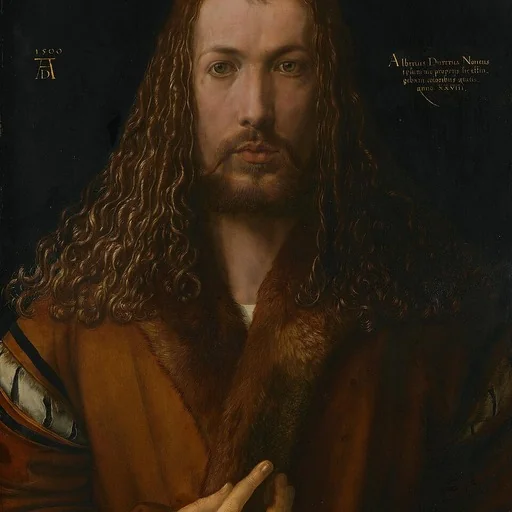
Albrecht Dürer spent his life in Nuremberg, a busy German city where artists traded prints like currency.

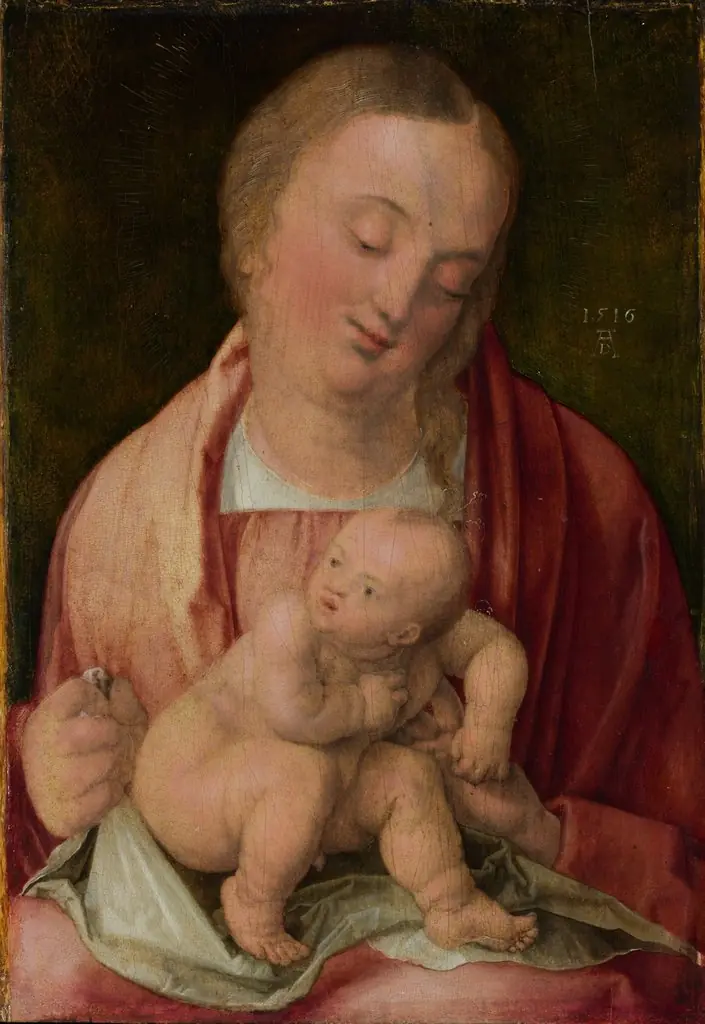
![Madonna and Child [obverse], by Albrecht Dürer](https://artifactworldgallery.com/img/albrecht-durer--madonna-and-child-obverse--d7b8ebf05d22ebe5-w320.webp)
![Lot and His Daughters [reverse], by Albrecht Dürer](https://artifactworldgallery.com/img/albrecht-durer--lot-and-his-daughters-reverse--b4ebf9b282faa17a-w320.webp)
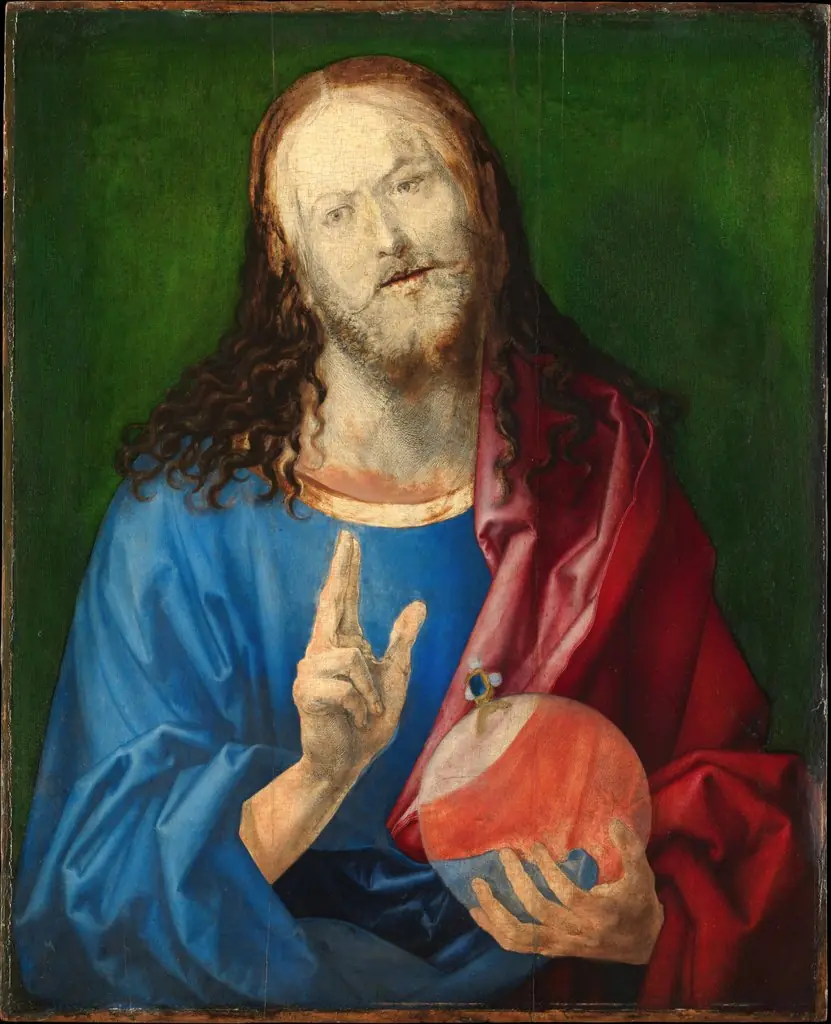
- Self-portrait of Albrecht Dürer
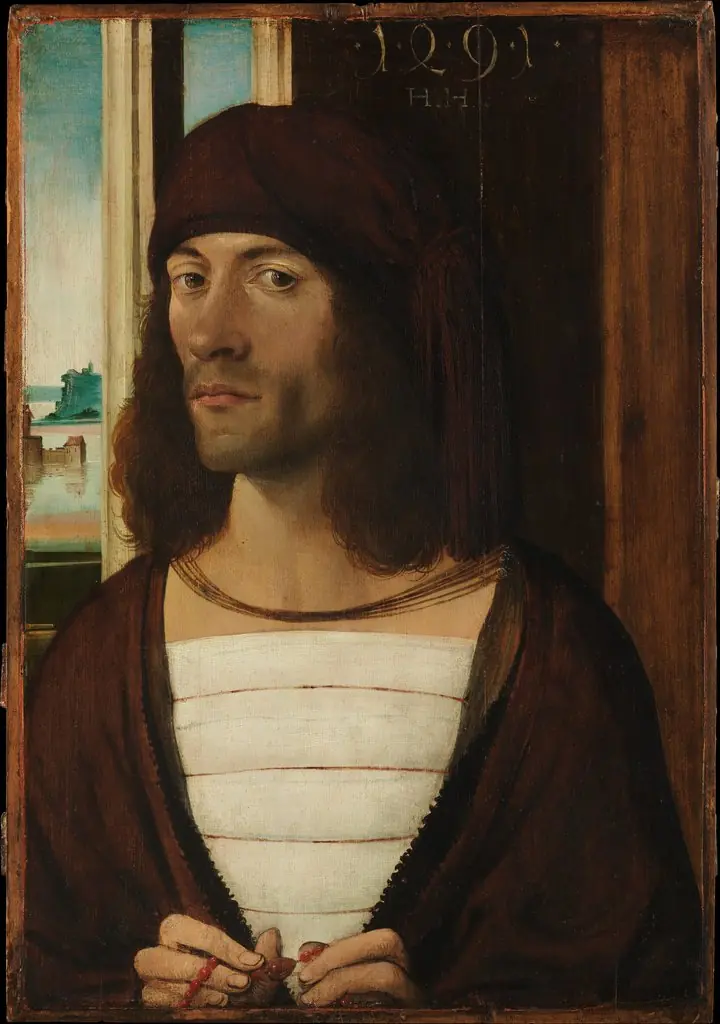 Portrait of a Man
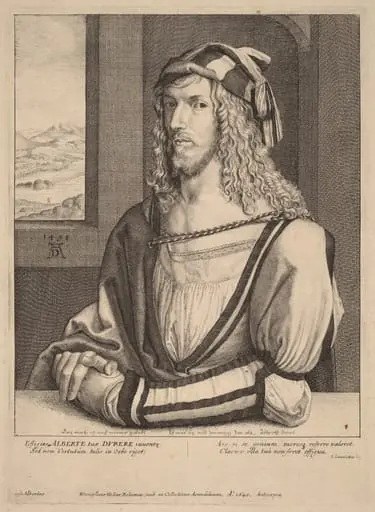 Albrecht Durer
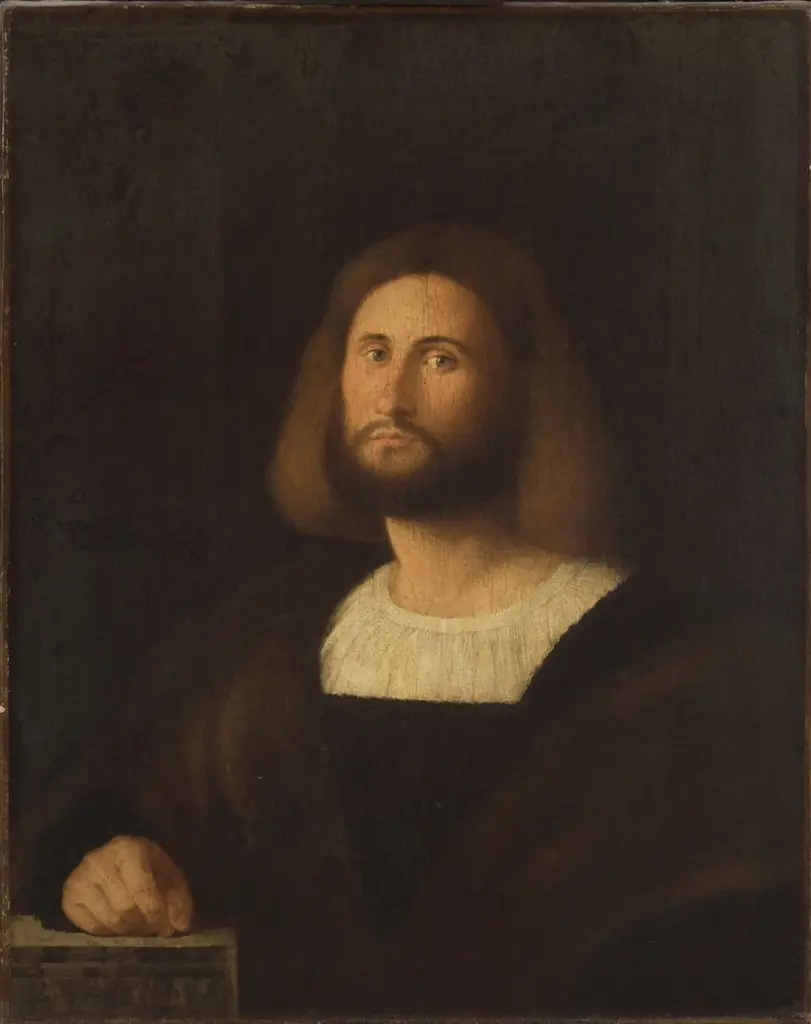 Portrait of a Gentleman
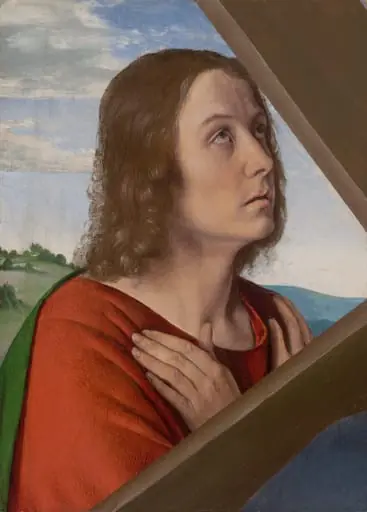 Fragment from Christ Carrying the Cross: Saint John the Evangelist
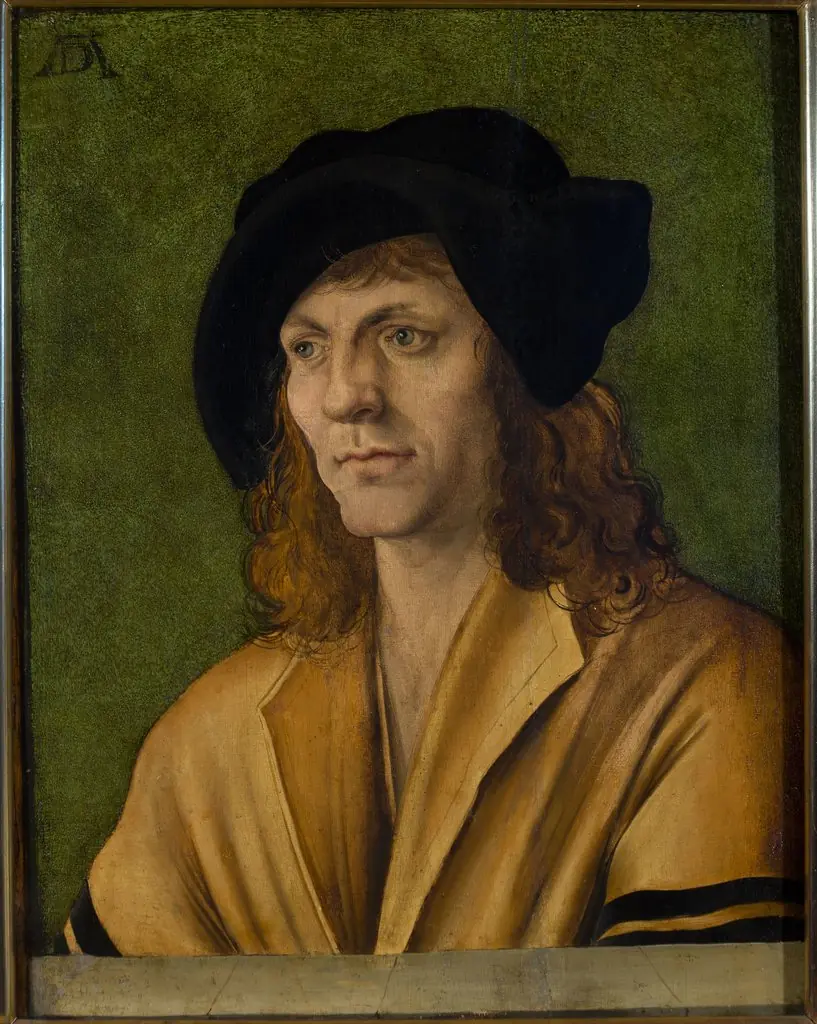 Portrait of a man in a yellow jacket
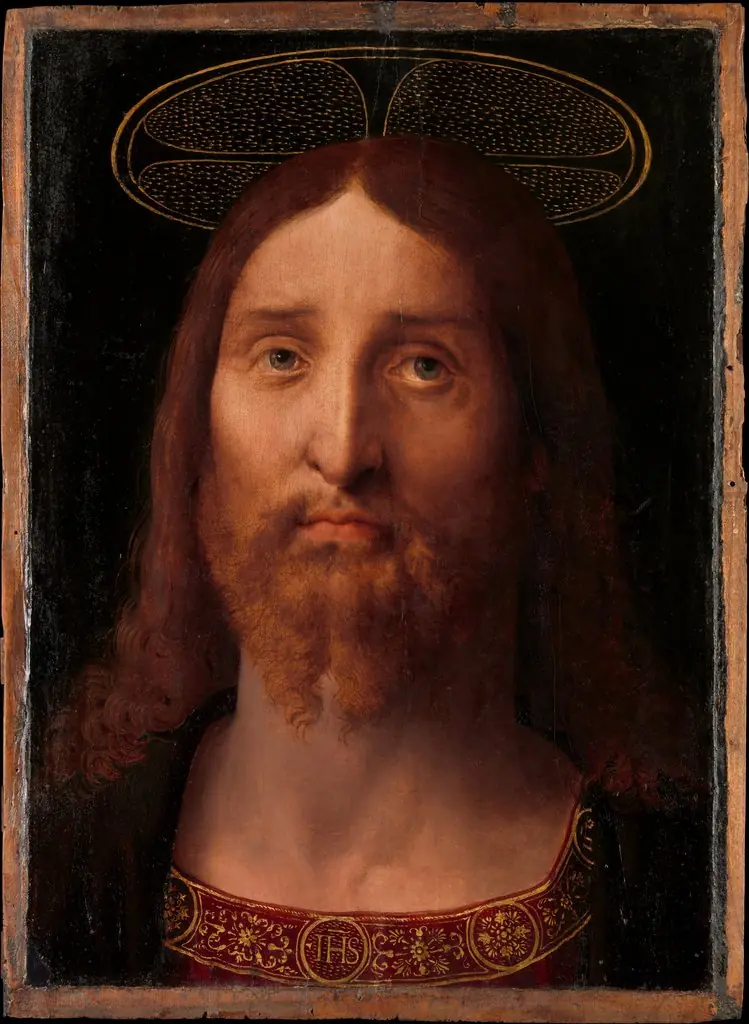 Head of Christ
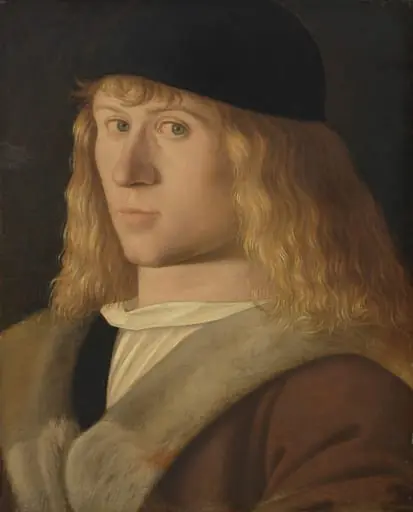 Portrait of a Young Man
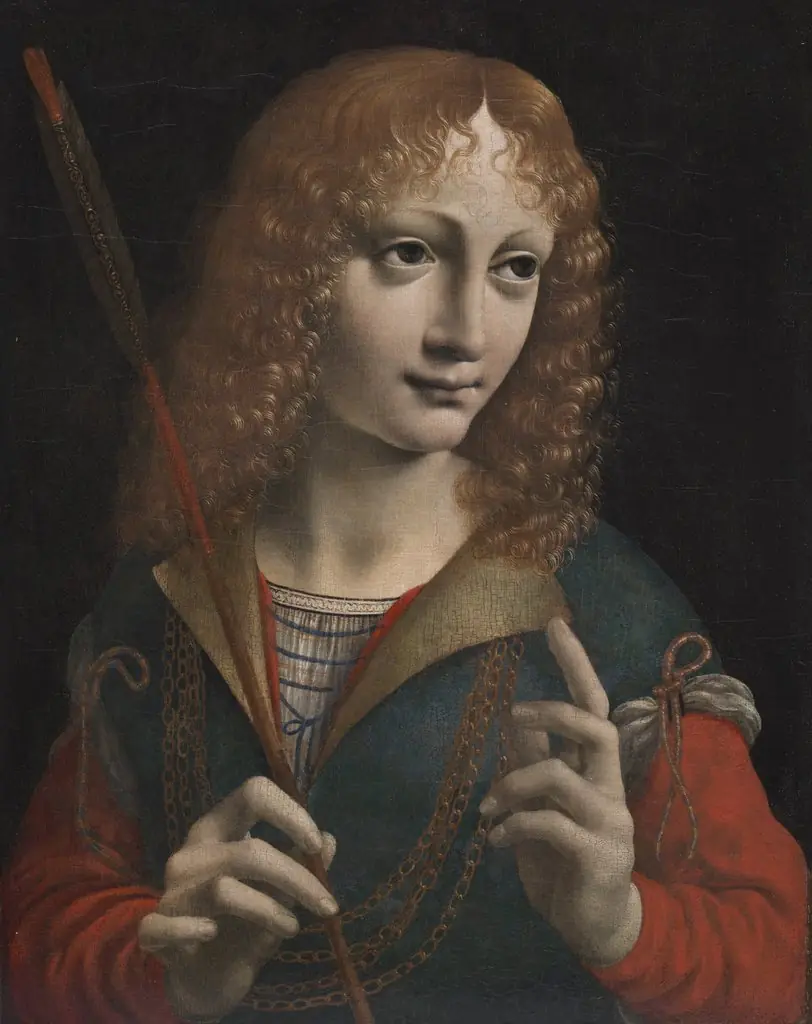 Portrait of a Youth as Saint Sebastian
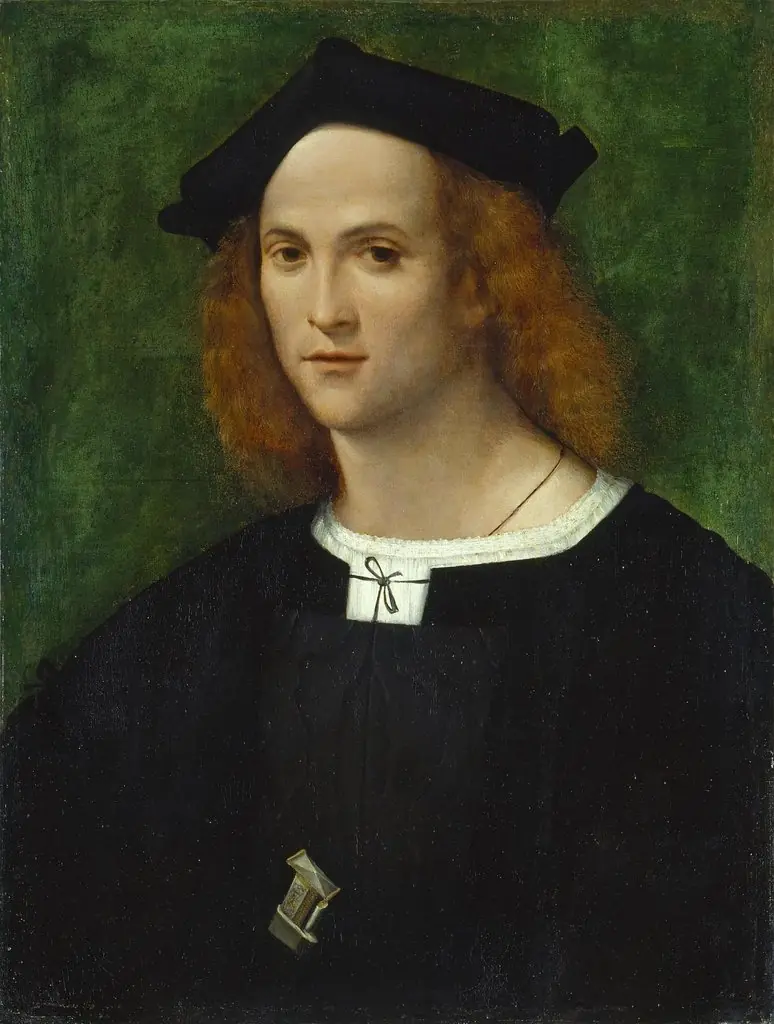 Portrait of a Young Man
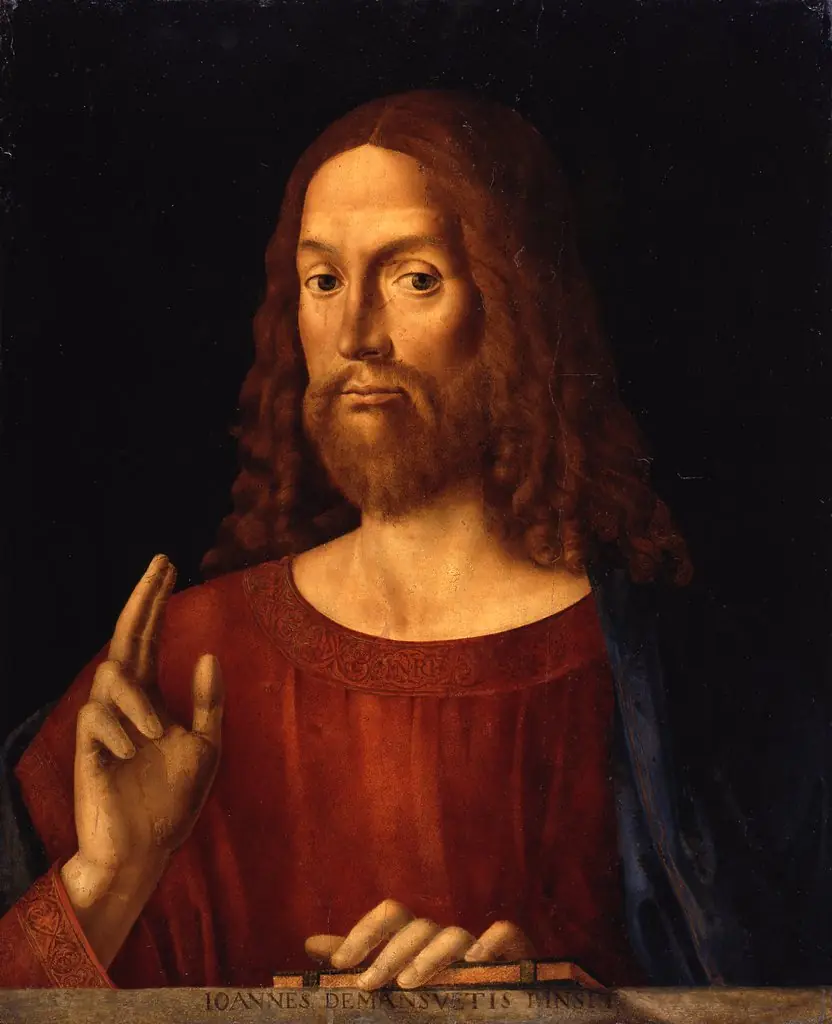 The blessing Christ
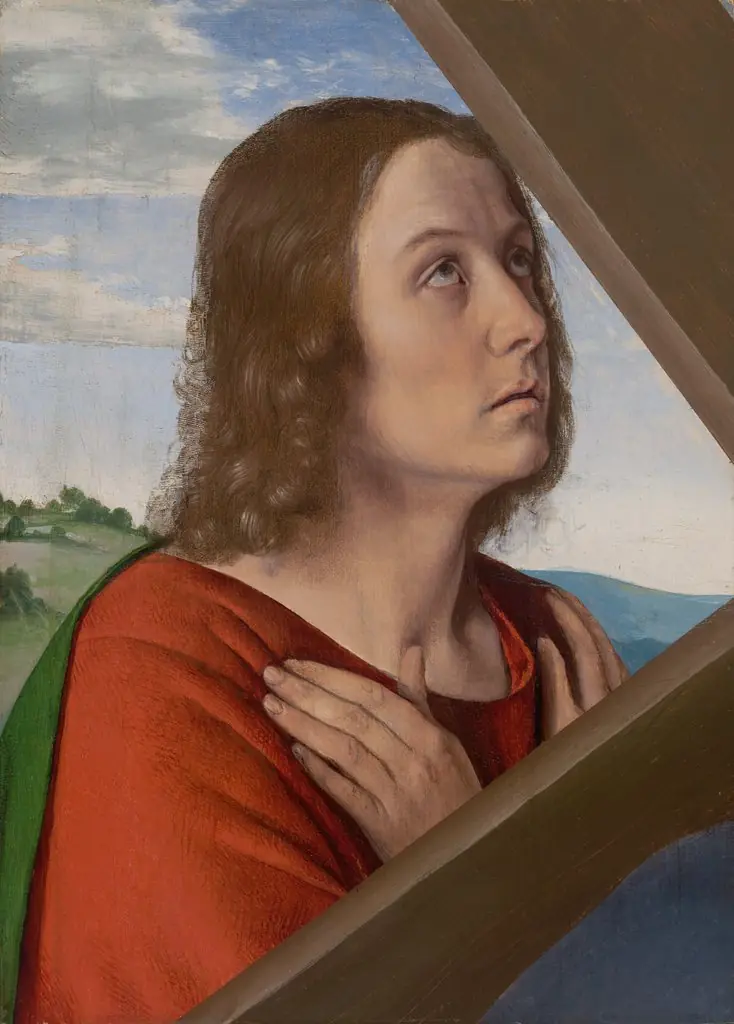 Fragment from Christ Carrying the Cross: Saint John the Evangelist