Artwork
The Virgin Mary in Prayer
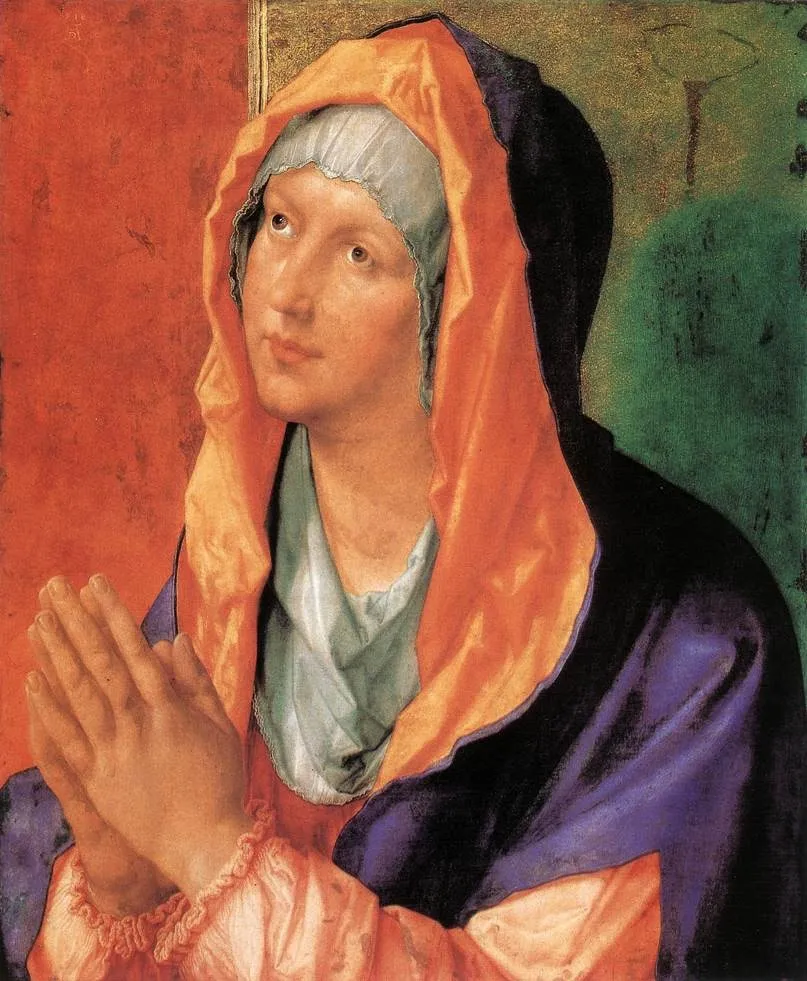
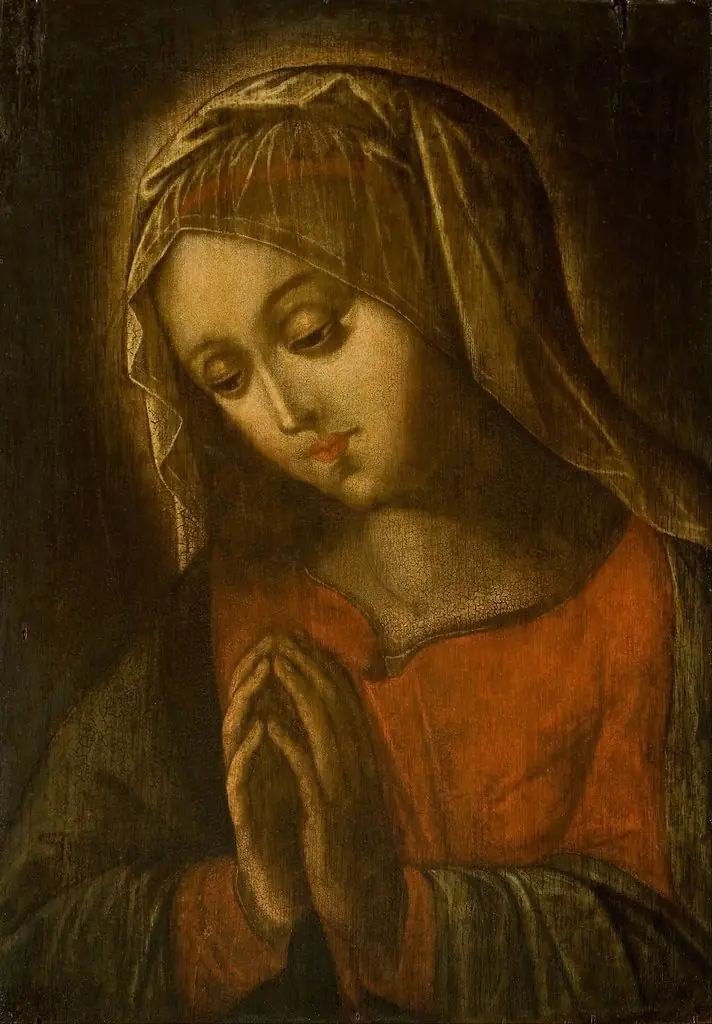
The Virgin Mary in Prayer is an oil painting by the Northern Renaissance artist Albrecht Dürer. It dates from 1518 and is held in the collection of the Gemäldegalerie Berlin.
About this work
Overview
It portrays a half-length figure of the Virgin with her hands clasped in devotion, her gaze directed upward toward the left.
The Virgin Mary in Prayer is a religious painting created by the German Renaissance artist Albrecht Durer in 1518. Executed in oil on a linden wood panel, the work measures 53 by 43 centimeters. It portrays a half-length figure of the Virgin with her hands clasped in devotion, her gaze directed upward toward the left. The painting is signed and dated 1518 in the upper left corner. It is currently held in the Gemaldegalerie in Berlin, having entered the museum's collection in 1894.
Subject & Meaning
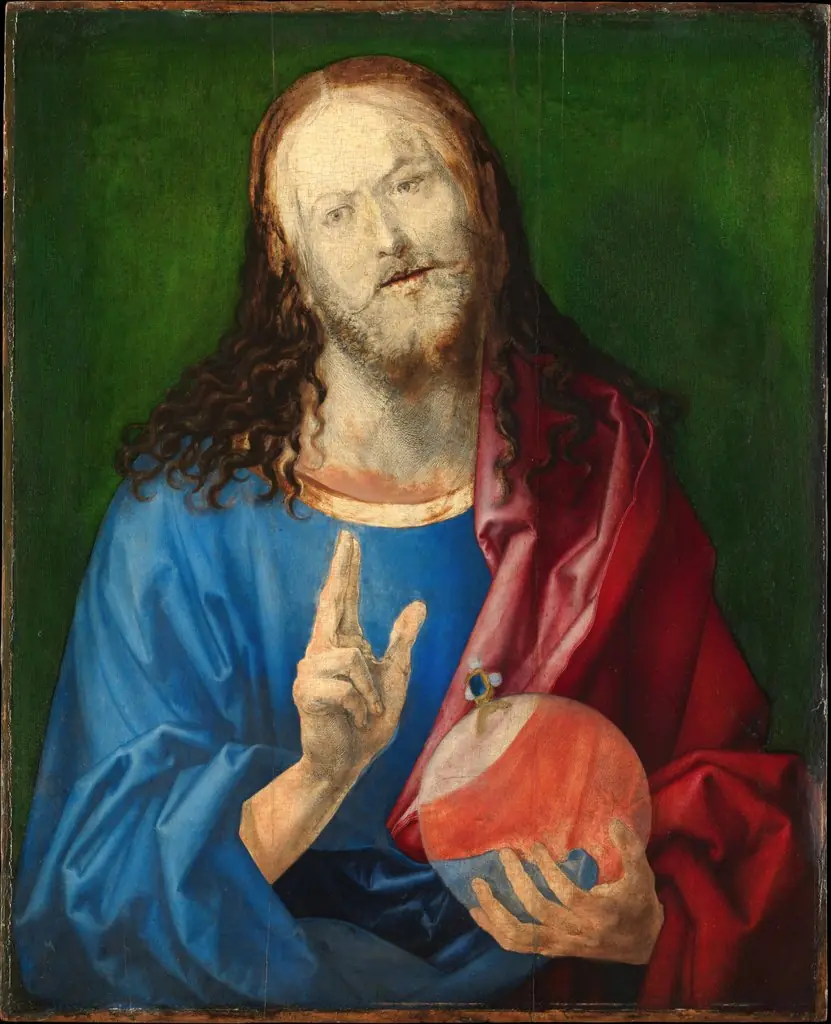
The painting depicts the Virgin Mary in a moment of solitary prayer, her hands pressed together at her chest and her head turned upward to the left. This directional gaze indicates that the panel originally functioned as the right half of a devotional diptych, intended to face a depiction of Christ on the left. Scholar Erwin Panofsky proposed that the missing companion piece was a Christ as the Man of Sorrows, while other scholars suggest it may have been an Ecce Homo. The upward gaze signifies Mary's communication with the divine, and the tightly cropped, intimate composition was designed for private devotion, creating a silent dialogue with the absent figure of Christ.
Technique & Style
Durer employed oil paint on a linden panel to achieve a highly refined surface, characterized by an enamel-like treatment of the skin and meticulous rendering of textile textures. The composition is tightly cropped, rendering the figure monumental within the space. The palette is exceptionally vibrant, balancing warm oranges and pinks against cool purples and greens. Mary wears a pale blue-green undergarment, an orange hooded veil lined with deep purple, and pinkish gathered cuffs. The background is divided vertically into warm red and mottled green zones. Light falling from the upper left illuminates the face and drapery, creating careful modeling and shadows. This chromatic luminosity reflects the influence of the Venetian tradition, particularly Giovanni Bellini, transposed into a Northern European compositional format.
History & Provenance
The painting was located in the Morosini-Gattemburg collection in Venice until it was put up for sale in 1894. Wilhelm von Bode acquired the panel at that auction and subsequently donated it to the Berlin art gallery, where it remains today. A fairly faithful copy of the work, painted on copper, exists in the Gallerie dell'Accademia and dates to the late sixteenth or early seventeenth century, attesting to the original's early reception and value.
Context
Created in 1518, the work emerges from a turbulent historical moment, as the Reformation was reshaping religious and political structures in Germany. Images functioned as powerful tools for devotion and cultural statements during this period. Durer, who had humanist leanings and actively cultivated his public persona, navigated this complex landscape through such paintings. The work embodies his role as a bridge between North and South, fusing Germanic rigor with the Mediterranean modernity he absorbed during his Venetian stays between 1505 and 1507. The rare orange fabric depicted in the veil was a specific material only found in the Venetian emporium, further anchoring the painting's stylistic and material ties to Italy.
Legacy
The painting's early influence is documented by the surviving copy housed in the Gallerie dell'Accademia, which demonstrates how Durer's devotional compositions were received and replicated at the turn of the seventeenth century. Panofsky's identification of the potential companion piece, a heavily repainted Redeemer in a private New York collection, has anchored subsequent scholarship regarding the work's original diptych format. The painting continues to be examined as a prime example of Durer's synthesis of Northern European traditions and Venetian colorism during the German Renaissance.
Artist & collection
Artist
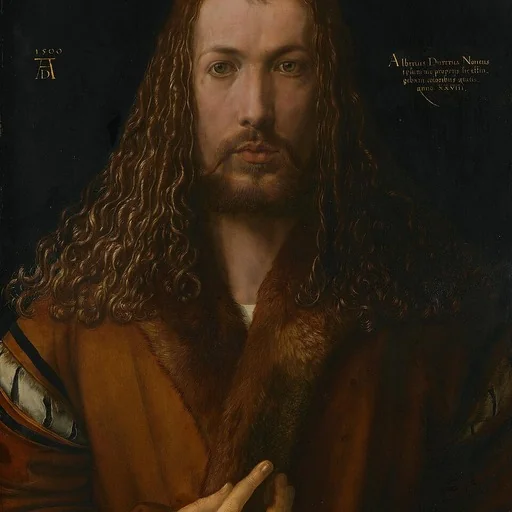
Albrecht Dürer spent his life in Nuremberg, a busy German city where artists traded prints like currency.

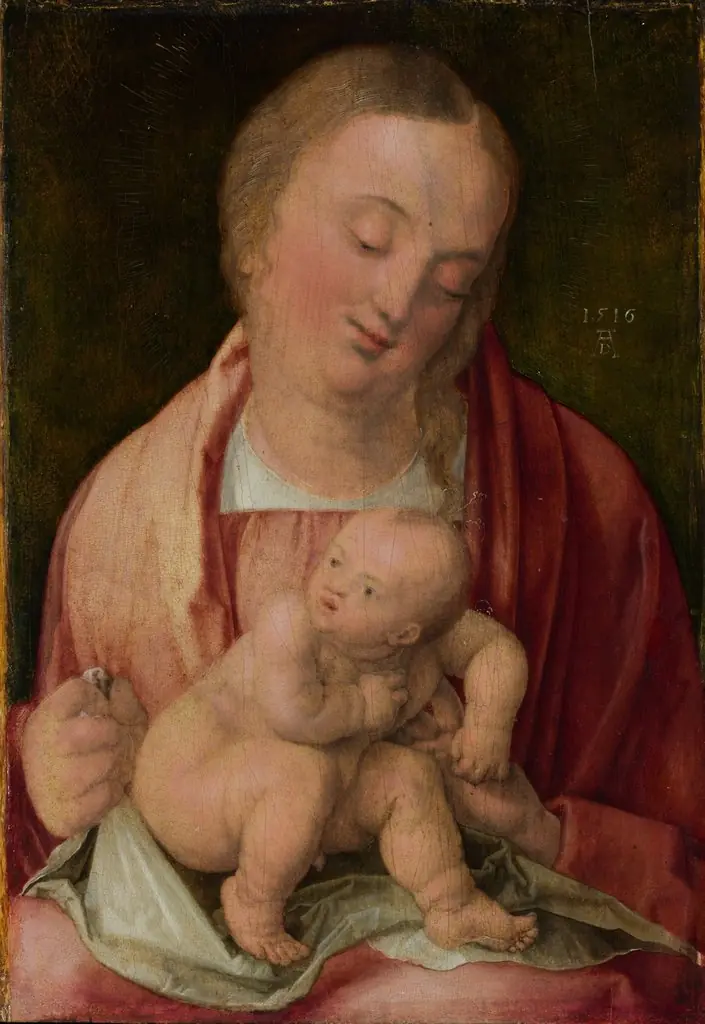
![Madonna and Child [obverse], by Albrecht Dürer](https://artifactworldgallery.com/img/albrecht-durer--madonna-and-child-obverse--d7b8ebf05d22ebe5-w320.webp)
![Lot and His Daughters [reverse], by Albrecht Dürer](https://artifactworldgallery.com/img/albrecht-durer--lot-and-his-daughters-reverse--b4ebf9b282faa17a-w320.webp)